

 Preview
 Send
Send Share
Share
 Details

 Download
 Similars
 X-Ray
X-Ray Diaporama
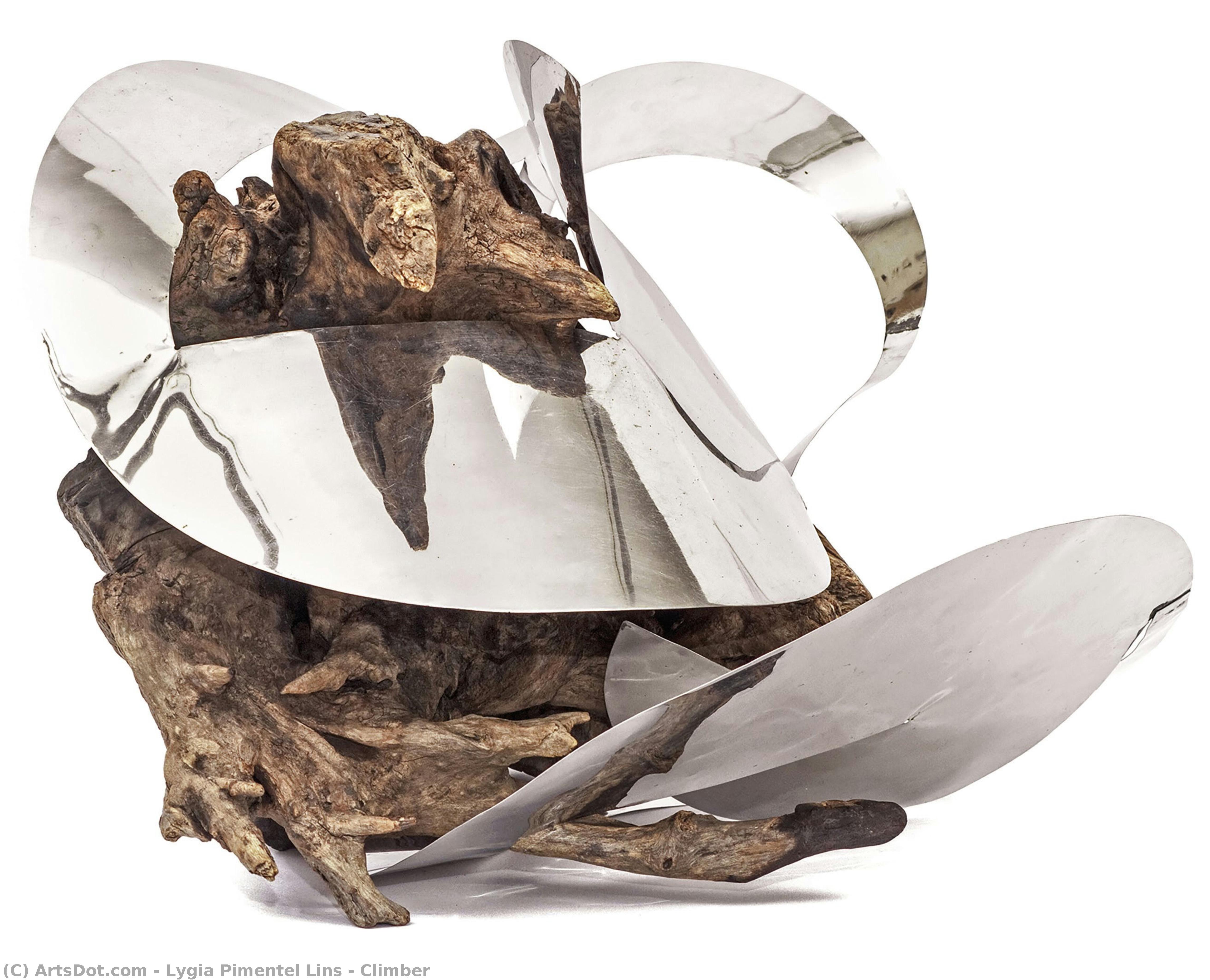
Climber


 Read More
Purchase a high-resolution, enhanced digital image, far superior to the online preview.
Each file is meticulously prepared by our in-house specialists using advanced tools and expert manual retouching. We ensure every image has exceptional clarity, precise color accuracy, and fine detail.
The final file is delivered via email within 72 hours, optimized for immediate use in professional, editorial, and print environments. This is the same quality trusted by top-tier design studios, publishers, and galleries.
Digital Image
Download a high-resolution file for personal display, printing, and creative projects. ( Buy Print Buy Hand Made Painting)
Included in Every Digital Image Order
Expert Digital Delivery, Guaranteed
When you choose ArtsDot.com, you're not just getting an image - you're receiving a professionally enhanced digital artwork, crafted with precision and backed by a satisfaction guarantee. Here's everything that comes with your order, automatically:

Fast Email Delivery
Your high-resolution digital image file will be emailed to you within 72 hours of ordering - ready for immediate use.

AI-Enhanced Digital File
Your artwork is professionally optimized using advanced AI tools and manual editing, ensuring maximum detail, clarity, and color accuracy.

Free Lifetime Re-Delivery
Accidentally deleted or lost your file? No worries - we'll resend it to you anytime, free of charge.

No Import Fees - Ever
Enjoy your artwork instantly with zero customs, duties, or delivery fees - digital downloads are always tax-free.

Color Accuracy Guarantee
We ensure your digital image reflects the original colors as closely as possible using professional tools and color management.

100-Day Satisfaction Guarantee
If you're not satisfied with your digital image, we'll revise it or refund 100% within 100 days - no questions asked.

100% Money-Back Guarantee
Not satisfied? Get a full refund within 100 days of receiving your digital file - no questions asked.

Bulk Order Discounts
Buy 3 images, save 10% - Buy 5, save 15% - Buy 10+, save 20%. Great for creative projects, galleries, and agencies.
Related Artworks





Artist Biography
A Life Dedicated to Participation: The Revolutionary Vision of Lygia Clark
Lygia Pimentel Lins, known universally as Lygia Clark, was a Brazilian artist who fundamentally altered the relationship between art and audience. Born in Belo Horizonte in 1920, her journey wasn’t one of static creation but of dynamic exploration—a relentless pursuit to dismantle the barriers separating artwork from life itself. Her early life saw a conventional path; marriage at eighteen and motherhood followed swiftly. However, this domesticity didn't stifle creativity but rather provided a fertile ground for observation and introspection that would later inform her groundbreaking work. She began formal artistic training in 1947 with Roberto Burle Marx, the renowned landscape architect, initially focusing on painting. This period laid the foundation of her visual language, yet it was her subsequent studies with Isaac Dobrinsky, Fernand Léger, and Arpad Szenes in Paris between 1950 and 1952 that truly broadened her artistic horizons, exposing her to European geometric abstraction and a burgeoning post-war avant-garde.From Concrete Foundations to Neo-Concrete Liberation
Clark’s early work was deeply rooted in the Constructivist movement, characterized by its emphasis on geometric forms and rational structures. She became a founding member of Rio de Janeiro's Frente group in 1953, actively participating in the city’s burgeoning art scene. However, she soon felt constrained by the detached objectivity of pure abstraction. This dissatisfaction led her to co-found the Neo-Concrete movement in 1959, alongside artists like Amilcar de Castro, Franz Weissmann, and poet Ferreira Gullar. The Neo-Concrete manifesto was a radical call for art that embraced subjectivity, intuition, and sensory experience—a deliberate rejection of the rigid idealism of its predecessor. This marked a pivotal turning point in Clark’s career. She began to move away from painting towards three-dimensional constructions, exploring modularity and flexibility with pieces like her *Superfícies moduladas* series. These weren't merely sculptures; they were spatial hypotheses, suggesting alternative living spaces and challenging the very definition of an artwork as a static object.The Birth of Interaction: Bichos and Beyond
The early 1960s witnessed the emergence of Clark’s most iconic creations—the *Bichos* (Critters). These hinged metal sculptures were designed to be physically manipulated by the viewer, inviting direct interaction and transforming the audience from passive observer to active participant. The *Bichos* weren't intended to be admired from afar; they demanded touch, movement, and exploration. This was a revolutionary concept—the artwork only came into being through its engagement with the body and mind of the beholder. Following this, Clark developed “propositions,” open-ended instructions using everyday materials like paper, plastic bags, and elastic, encouraging anyone to enact them. These weren’t artworks in the traditional sense but rather catalysts for experience, blurring the lines between art, life, and action. By 1966, she famously declared her abandonment of art, a statement that wasn't a rejection of creativity but a critique of its institutional constraints and an embrace of its potential as a social practice.Sensory Exploration and Art Therapy
Clark’s self-imposed exile to Paris during Brazil’s military dictatorship proved to be another transformative period. She taught at the Sorbonne, further refining her ideas about sensory perception and embodied experience. This led to increasingly multi-sensory works designed to heighten awareness of one's own body and its relationship with the surrounding environment. In the late 1970s and early 1980s, Clark began to integrate her artistic principles into art therapy, using her interactive objects in sessions with patients suffering from psychological distress. This wasn’t simply applying art as a therapeutic tool; it was a profound exploration of the healing power of sensory experience and self-discovery. Her work became a means of unlocking inner potential and fostering emotional well-being.A Lasting Legacy: Redefining Art's Boundaries
Lygia Clark returned to Rio de Janeiro in 1977, continuing her therapeutic practice until her untimely death from a heart attack in 1988. Her legacy extends far beyond the realm of Brazilian art; she is now recognized as a pivotal figure in the development of participatory art, relational aesthetics, and body art. Her work anticipated many of the key concerns of contemporary artistic practice—the breakdown of traditional hierarchies between artist and audience, the importance of embodied experience, and the potential for art to be a catalyst for social change. Clark’s influence can be seen in the work of countless artists who followed, challenging conventional notions of what art is and how it functions. She didn't just create objects; she created experiences—invitations to explore the boundaries of self, space, and perception. Her innovative spirit continues to inspire generations of artists and thinkers, solidifying her place as a true visionary of the 20th century.
lygia pimentel lins
1920 - 1988 , Brazil
Quick Facts
- Artistic Movement Or Style: Neo-Concrete, Constructivism
- Artists Or Movements Influenced By This Artist: ['Tropicalia']
- Artists Who Influenced This Artist:
- Amilcar de Castro
- Franz Weissmann
- Date Of Birth: October 23, 1920
- Date Of Death: April 25, 1988
- Full Name: Lygia Pimentel Lins
- Nationality: Brazilian
- Notable Artworks:
- Climber
- Bichos
- Place Of Birth: Belo Horizonte, Brazil