 Preview
 Send
Send Share
Share
 Details

 Download
 Similars
 X-Ray
X-Ray Diaporama
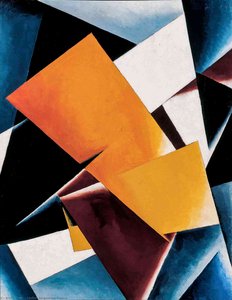
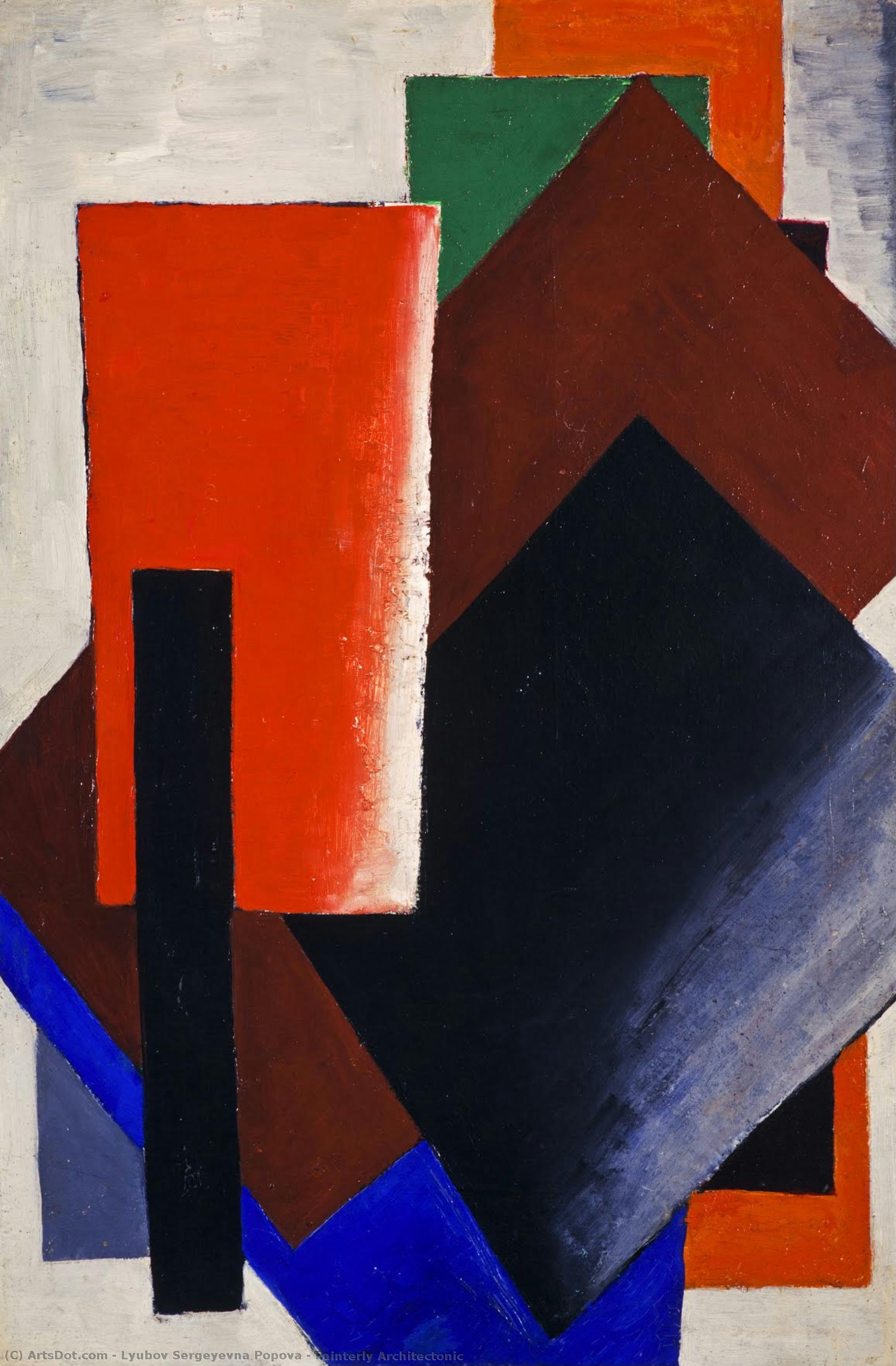
Painterly Architectonic


 Read More
Hand Made Oil Reproduction
Hand-painted oil on canvas in your size and frame, made to order by our artists. ( Buy Print Buy Image)




P118B $10

P118H $10

P118W $10

P438Z $10

P508JH $12

P508YH $12

P805H $10

P805Z $10

P919BZ $10

P919G $10

P919XJ $10

P959ZH $10

P968JZ $12

W106C $8

W218G $10

W218JH $8

W218Y $10

W307PJ $10

W316G $10

W316PJ $8

W316Y $10

W398PJ $8

W4111J $10

W500HY $15

W500JH $15

W692G $12

W849H $8

W940BG $15

W953PJ $8




Pick from our preset sizes that match the artwork's original proportions.

You may enter your own dimensions to fit a specific frame or space. If your selected size does not match the original image's proportions, we will either crop the artwork or extend the painting with additional hand-painted elements. A digital mockup will be sent for your approval before production begins.
Please note that the on-screen preview does not reflect the actual cropping or extension. Only the mockup will accurately show the final composition.
While custom sizes are available, we recommend selecting a dimension from the predefined list to preserve the original proportions.
After order, ArtsDot.com team will email client for instructions and provide a mockup preview
Worldwide Delivery () in 3/4 weeks instead of standard 5 weeks. (16 August). No compromise on quality.

Free Worldwide Express Shipping

High-Quality Linen Canvas

Full Shipping Insurance

Customs Tax Refund Guarantee

True Color Matching Guarantee

60-Day Return Policy (Defects Only)

100% Money-Back Guarantee

Bulk Discount Offer
 Glass option is only available in size under 110 CM

Painterly Architectonic
Reproduction Medium
Reproduction Size
-


Total Price
$ 263
Artwork Description
Lyubov Sergeyevna Popova’s Painterly Architectonic: A Dialogue Between Suprematism and Cubism
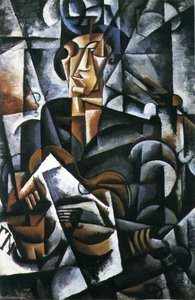
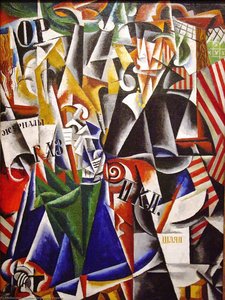
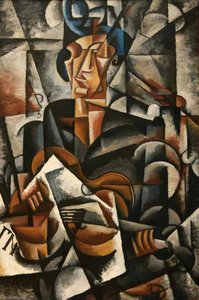
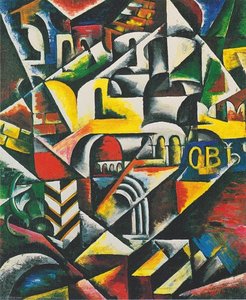
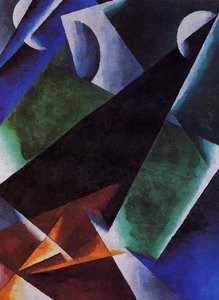
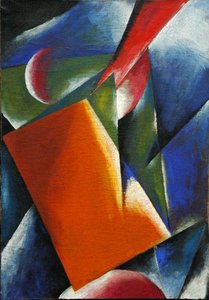
Painterly Architectonic by Lyubov Sergeyevna Popova stands as a testament to the dynamism of Russian avant-garde art in 1916, embodying a fascinating fusion between Kazimir Malevich's radical Suprematist principles and the geometric explorations pioneered by Pablo Picasso’s Cubism. Created during a period defined by seismic shifts – the waning days of Tsarist Russia and the burgeoning fervor for revolutionary ideals – this painting transcends mere visual representation, delving into profound conceptual concerns about form, space, and artistic expression itself.- Subject Matter: The artwork presents an abstract composition dominated by geometric shapes—primarily white, red, black, gray, and pink—arranged against a neutral white background. These forms are not static; they appear to push outwards from the canvas surface, creating a palpable sense of movement and tension.
- Style & Technique: Popova skillfully blends elements of Cubism and Suprematism. Like Malevich’s celebrated canvases, she employs colored geometric forms—specifically red triangles and white trapezoids—to prioritize pure artistic feeling over mimetic accuracy. Simultaneously, she adopts Tatlin's approach to spatial construction by layering planes that overlap and intersect, suggesting a three-dimensional space within the confines of a two-dimensional surface.
- Historical Context: Produced in the wake of the Russian Revolution, Painterly Architectonic reflects the artistic anxieties and aspirations of its time. Malevich’s Suprematism championed a rejection of traditional illusionism, advocating for an art that communicated directly with the viewer's intellect and emotions—a stance powerfully echoed in Popova’s work.
- Symbolism & Conceptual Depth: The term “architectonic,” adopted by Popova herself, underscores the painting’s conceptual core. It signifies a deliberate consideration of planes as solid material entities, mirroring Tatlin’s ambition to create an abstract relief construction. This approach elevates the artwork beyond mere visual aesthetics, inviting contemplation on the fundamental building blocks of artistic creation and its role in shaping perception.
- Emotional Impact: The painting's vibrant colors and assertive geometric forms evoke a feeling of energetic dynamism and intellectual engagement. It’s a piece that compels viewers to confront questions about representation, space, and the expressive potential of abstraction—a legacy of Popova’s pioneering vision for Russian art.
Displayed prominently at the Scottish National Gallery of Modern Art in Edinburgh, Painterly Architectonic exemplifies Popova's unwavering commitment to artistic innovation. Its meticulous execution – utilizing oil paint on canvas – ensures that every detail contributes to its overall impact, cementing its place as a cornerstone of Russian avant-garde art and an enduring source of inspiration for artists and collectors alike.
Further Exploration: Malevich’s Influence & Tatlin's Spatial Vision
Lyubov Popova’s artistic trajectory was inextricably linked to the groundbreaking ideas circulating within the Russian avant-garde movement. Her collaboration with Vladimir Tatlin, whose studio served as a crucible for experimentation and conceptual rethinking, profoundly shaped her approach to painting. Like Malevich, Popova recognized that art could transcend mere visual depiction, prioritizing instead the conveyance of pure feeling—a conviction reflected in Painterly Architectonic’s deliberate disregard for conventional spatial conventions.
Technical Considerations: Layered Planes & Geometric Precision
The painting's distinctive aesthetic derives from Popova’s masterful manipulation of color and form. She skillfully layered planes against a white background, creating what appears to be a shallow container for geometric shapes that seem to push outwards—a technique reminiscent of Malevich’s Suprematist canvases. The careful placement of the red triangle and white trapezoid contributes to this spatial illusion, demonstrating Popova's unwavering dedication to geometric precision.
A Legacy of Artistic Boldness
Lyubov Sergeyevna Popova’s Painterly Architectonic remains a captivating example of artistic courage—a defiant assertion of abstraction as a vehicle for intellectual and emotional expression. Its enduring appeal lies in its ability to provoke contemplation on fundamental questions about art's role in shaping perception and communicating profound ideas, securing its place as an unforgettable contribution to the history of Russian avant-garde art.
Related Artworks
![Stroyuschiysya Dom [house Under Construction] — Kazimir Malevich, Suprematism](/media/artworks/images/thumbnails/b4/ce/b4ce5fe6293f433c86e0a4cb029aa5bd.jpg)
Artist Biography
A Pioneer Forged in Revolution
Lyubov Sergeyevna Popova, born in 1889 in the burgeoning textile town of Ivanovo, Russia, was more than just a painter; she was a visionary architect of form and color, a dedicated theorist, and a fervent believer in art’s power to reshape society. Her life, though tragically cut short at thirty-five in 1924, unfolded against the backdrop of immense upheaval – the waning years of Tsarist Russia, revolution, and the birth of a new Soviet aesthetic. Born into a prosperous family—her father, Sergei Maximovich Popov, was a successful textile merchant with an innate appreciation for artistic expression—Popova enjoyed advantages that allowed her early inclinations toward art to flourish. This privileged upbringing provided access to quality education and exposure to creative possibilities, laying the foundation for her future contributions to the avant-garde movement. Her initial training in Moscow under artists like Stanislav Zhukovsky, Konstantin Yuon, and Ivan Dudin instilled a solid academic base, but it was her sojourn to Paris between 1912 and 1913 that proved truly transformative.From Cubist Fragmentation to Painterly Architectonics
Immersing herself in the ateliers of Henri Le Fauconnier and Jean Metzinger, Popova absorbed the radical principles of Cubism—the fracturing of form, multiple perspectives, and a rejection of traditional representation. This Parisian experience wasn’t merely about adopting a style; it was about dismantling established artistic conventions. Upon her return to Russia, however, she didn't simply replicate Cubism. Instead, she began a process of synthesis, blending its fragmented geometry with the dynamism of Futurism, the vibrant hues of Russian folk art, and the spiritual resonance of ancient icons encountered during extensive travels throughout Russia—particularly to Kiev, Pskov, and Novgorod. This fusion resulted in a uniquely Russian brand of abstraction, characterized by what she termed “painterly architectonics.” This concept moved beyond mere depiction, striving instead for compositions possessing structural integrity and spatial depth – dynamic arrangements of planes and colors that captured the energy of modern life. Early works like The Violin (1914) exemplify this approach, showcasing a bold departure from traditional representation and hinting at the powerful abstractions to come. She was actively seeking a visual language that could express not just what things *looked* like, but how they *felt* – their underlying energy and structure.Embracing Suprematism and Constructivism
By 1916, Popova had fully embraced non-objective art through her association with Kazimir Malevich’s Supremus group. She participated in collaborative projects at Verbovka folk centre alongside other avant-garde artists. Initially drawn to the spiritual undercurrents of Suprematism—Malevich's quest for pure feeling expressed through geometric forms—Popova increasingly diverged from his purely metaphysical interpretations. She believed that abstraction wasn’t an end in itself, but a means to explore material reality and understand the underlying structures of the world. This shift led her towards Constructivism, a movement emphasizing art's social utility and its integration with industrial production. Her work during this period—the Painterly-Architectonic series (1916-1918)—is crucial in defining her unique trajectory. These compositions, characterized by overlapping planes, strong color contrasts, and a sense of potential energy release, weren’t merely aesthetic exercises but explorations of form and space as building blocks for a new society. This commitment to practicality extended beyond painting; Popova made significant contributions to theatre design, creating innovative costumes and sets that reflected her Constructivist principles. “Production Clothing for Actor no.5' in Fernand Crommelynck’s play 'The magnanimous Cuckold” (1924) stands as a testament to her belief in art’s ability to transform everyday life, blurring the lines between artistic creation and functional design.A Legacy of Innovation and Social Engagement
Lyubov Popova's career was tragically cut short by illness in 1924, but her impact on the development of abstract art and design remains profound. She was a pioneering female artist who challenged gender norms within the traditionally male-dominated art world, demonstrating an unwavering commitment to artistic innovation. Her ability to synthesize diverse influences—Cubism, Futurism, Suprematism, Constructivism—created a unique visual language that continues to inspire artists today. Her legacy isn’t simply in her paintings and designs; it lies in her unwavering belief in art's power to shape a better future. She envisioned a world where art wasn’t confined to galleries but integrated into the fabric of everyday life, serving as a catalyst for social change.- Pioneering Spirit: Popova’s work laid the groundwork for Constructivist principles by emphasizing the relationship between art and material reality.
- Influence on Design: Her designs contributed significantly to the movement's focus on functional design and social utility.
- A Unique Synthesis: She masterfully blended diverse artistic influences, creating a style that was both intellectually rigorous and emotionally resonant.
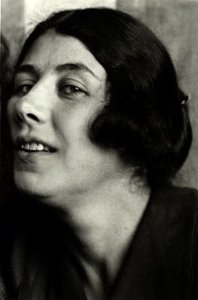
Lyubov Sergeyevna Popova
1889 - 1924 , Russia
Quick Facts
- Artistic Movement Or Style: Avant-Garde, Constructivism
- Artists Or Movements Influenced By This Artist: Constructivism
- Artists Who Influenced This Artist:
- Henri Le Fauconnier
- Jean Metzinger
- Kazimir Malevich
- Date Of Birth: 1889
- Date Of Death: 1924
- Full Name: Lyubov Sergeyevna Popova
- Nationality: Russian
- Notable Artworks:
- The Violin
- Painterly Architectonics
- Production Clothing for Actor no.5
- Place Of Birth: Ivanovo, Russia
Related Articles

Geometric Abstraction's 10 Defining Masterpieces | Art for Your Home - ArtsDot
Explore 10 defining masterpieces of Geometric Abstraction! Discover Kandinsky, Mondrian & Malevich’s iconic works. Find museum-quality art reproductions and curated decor ideas to elevate your home at ArtsDot.com.
Kazimir Malevich: 25 Masterpieces of Suprematism & Abstract Art | ArtsDot
Explore 25 iconic artworks by Kazimir Malevich, pioneer of Suprematism & abstract art. Discover the stories behind 'Black Square' and more! Find museum-quality prints & elevate your home decor with ArtsDot.com.
Beyond Form & Color: Geometric Abstraction's Evolution in 20th/21st Century Art
Explore the evolution of geometric abstraction from Cubism to contemporary art. Discover key artists like Malevich & Mondrian, investment insights, and expert collecting advice at ArtsDot.
Kandinsky's Masterpieces: 25 Paintings That Define Abstract Art | ArtsDot
Journey through Wassily Kandinsky's 25 most iconic abstract paintings. Explore his revolutionary use of color, form & spiritual expressionism. Find museum-quality Kandinsky reproductions and elevate your home decor with ArtsDot.com. Discover all masterpieces on ArtsDot.com!
Beyond Form & Color: Geometric Abstraction's Enduring Legacy in Art History
Explore the captivating world of geometric abstraction! Discover its origins, key artists like Malevich & Mondrian, and why this movement remains highly valued by art collectors today. Expert insights at ArtsDot.