 Preview
 Send
Send Share
Share
 Details

 Download
 Similars
 X-Ray
X-Ray Diaporama
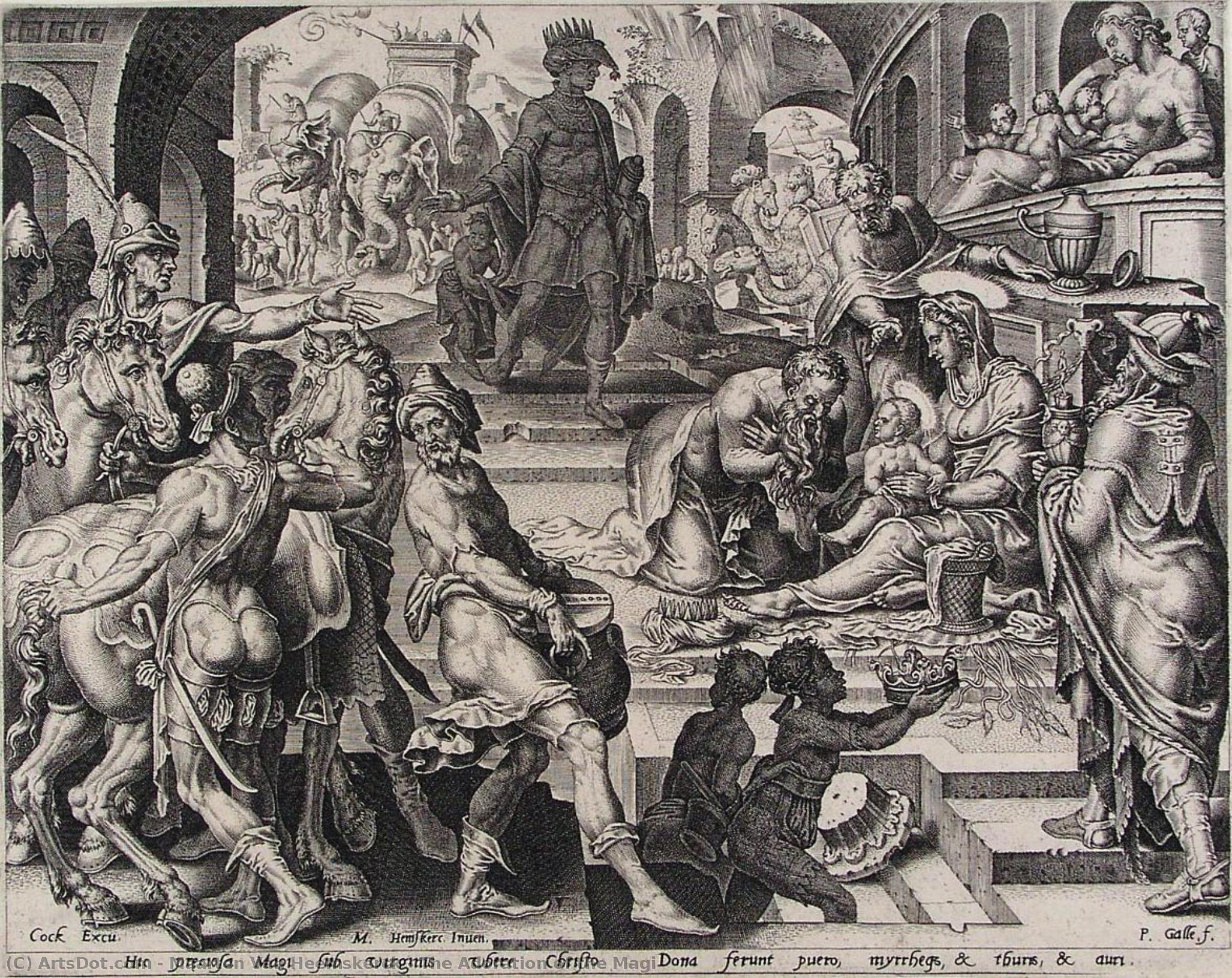
The Adoration of the Magi
 Renaissance
 1570
1570 20.0 x 26.0 cm
 Museum Boijmans Van Beuningen
 Read More
Purchase a high-resolution, enhanced digital image, far superior to the online preview.
Each file is meticulously prepared by our in-house specialists using advanced tools and expert manual retouching. We ensure every image has exceptional clarity, precise color accuracy, and fine detail.
The final file is delivered via email within 72 hours, optimized for immediate use in professional, editorial, and print environments. This is the same quality trusted by top-tier design studios, publishers, and galleries.
Digital Image
Download a high-resolution file for personal display, printing, and creative projects. ( Buy Print Buy Hand Made Painting)
Included in Every Digital Image Order
Expert Digital Delivery, Guaranteed
When you choose ArtsDot.com, you're not just getting an image - you're receiving a professionally enhanced digital artwork, crafted with precision and backed by a satisfaction guarantee. Here's everything that comes with your order, automatically:

Fast Email Delivery
Your high-resolution digital image file will be emailed to you within 72 hours of ordering - ready for immediate use.

AI-Enhanced Digital File
Your artwork is professionally optimized using advanced AI tools and manual editing, ensuring maximum detail, clarity, and color accuracy.

Free Lifetime Re-Delivery
Accidentally deleted or lost your file? No worries - we'll resend it to you anytime, free of charge.

No Import Fees - Ever
Enjoy your artwork instantly with zero customs, duties, or delivery fees - digital downloads are always tax-free.

Color Accuracy Guarantee
We ensure your digital image reflects the original colors as closely as possible using professional tools and color management.

60-Day Satisfaction Guarantee
If you're not satisfied with your digital image, we'll revise it or refund 100% within 60 days - no questions asked.

100% Money-Back Guarantee
Not satisfied? Get a full refund within 60 days of receiving your digital file - no questions asked.

Bulk Order Discounts
Buy 3 images, save 10% - Buy 5, save 15% - Buy 10+, save 20%. Great for creative projects, galleries, and agencies.
Related Artworks



Artist Biography
A Life Immersed in Renaissance Ideals: Maarten van Heemskerck
Maarten van Heemskerck, born around 1490 in Heemskerk, Netherlands, emerged as a pivotal figure during the Dutch Renaissance. His artistic journey unfolded against a backdrop of profound cultural shifts – the burgeoning influence of Italian Humanism and the religious turmoil preceding the Reformation. While precise details regarding his early life remain scarce, it’s understood he received initial training within the workshop of his father, Jan van Heemskerck, also an artist. However, Maarten's ambitions quickly transcended local boundaries, leading him to Haarlem where he joined the Guild of St. Luke in 1509. This marked a formal entry into the professional art world and set the stage for a career defined by intellectual curiosity and stylistic innovation. Van Heemskerck wasn’t merely a painter; he was a scholar-artist, deeply engaged with classical literature, mythology, and biblical themes. His early works already hint at this unique blend of Northern realism and Italianate grandeur.From Haarlem to Rome: A Pursuit of Classical Mastery
The defining moment in van Heemskerck’s artistic development arrived around 1530 when he embarked on a transformative journey to Italy, specifically Rome. This sojourn proved crucial, exposing him directly to the masterpieces of antiquity and the High Renaissance masters – Michelangelo, Raphael, and Leonardo da Vinci foremost among them. Unlike many Northern artists who merely incorporated Italian elements into their existing style, van Heemskerck underwent a fundamental shift in his approach. He meticulously studied classical sculpture, architecture, and painting, absorbing the principles of proportion, anatomy, and perspective that underpinned Renaissance art. This immersion is vividly reflected in his Roman drawings, which demonstrate an almost obsessive attention to detail and a fervent desire to understand the underlying structure of form. His time in Italy wasn’t simply about copying; it was about deciphering the language of classical beauty and translating it into his own artistic vocabulary. He also received commissions from prominent patrons, including Pope Clement VII, further solidifying his reputation within the Italian art scene.Mythological Narratives and Religious Vision
Upon returning to Haarlem in 1536, van Heemskerck embarked on a prolific period of painting characterized by two dominant themes: mythological scenes and religious subjects. His mythological works are particularly noteworthy for their monumental scale, dramatic compositions, and often unconventional interpretations. Unlike the delicate allegories favored by some contemporaries, van Heemskerck’s myths possess a raw energy and psychological intensity. Paintings like *The Cure of Aeneas* and *The Judgment of Paris* showcase his mastery of anatomy and perspective, while simultaneously exploring complex themes of love, fate, and human desire. Simultaneously, he undertook large-scale religious commissions, including altarpieces and church decorations. These works reveal a growing sense of spiritual fervor, influenced by the rising tide of Protestantism in the Netherlands. However, van Heemskerck’s religious paintings are not simply didactic illustrations; they are imbued with a profound emotional depth and a sophisticated understanding of theological concepts.The Influence of Humanism and Artistic Legacy
Van Heemskerck's art is deeply intertwined with the intellectual currents of Humanism, which emphasized the study of classical literature and philosophy as a means of achieving moral and spiritual enlightenment. His engagement with Ovid’s *Metamorphoses* and other classical texts provided him with a rich source of subject matter and inspired his exploration of universal human themes. He wasn't merely illustrating stories; he was using mythology to comment on contemporary society and explore the complexities of the human condition. His meticulous attention to detail, combined with his dramatic compositions and psychological insight, set him apart from many of his contemporaries. Later in life, van Heemskerck became a Deacon of the Haarlem Guild of St. Luke and dedicated himself increasingly to religious themes, reflecting the changing political and spiritual landscape of the Netherlands. His later works exhibit a more austere style, characterized by elongated figures and a heightened sense of spirituality. Maarten van Heemskerck died in 1574 leaving behind a substantial body of work that continues to captivate and inspire. His legacy lies not only in his technical virtuosity but also in his ability to synthesize Northern realism with Italian Renaissance ideals, creating a unique artistic vision that bridged two distinct cultural traditions.Major Achievements & Historical Significance
- Pioneering Integration of Classical Elements: Van Heemskerck was instrumental in introducing the principles of High Renaissance art to the Netherlands, significantly influencing the development of Dutch painting.
- Monumental Scale and Dramatic Composition: His large-scale mythological paintings established a new standard for ambition and complexity within Northern European art.
- Scholarly Approach to Art: He was one of the first Northern artists to demonstrate a deep understanding of classical literature and philosophy, incorporating these themes into his work.
- Influence on Mannerism: His later style, characterized by elongated figures and heightened emotionality, foreshadowed the emergence of Mannerism in Dutch art.
- Extensive Drawings & Prints: Van Heemskerck’s prolific output of drawings and prints ensured the widespread dissemination of his ideas and artistic techniques.