 Preview
 Send
Send Share
Share
 Details

 Download
 Similars
 X-Ray
X-Ray Diaporama
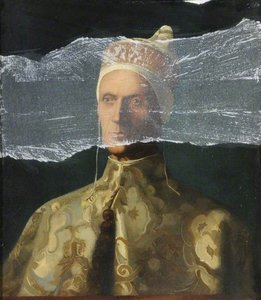
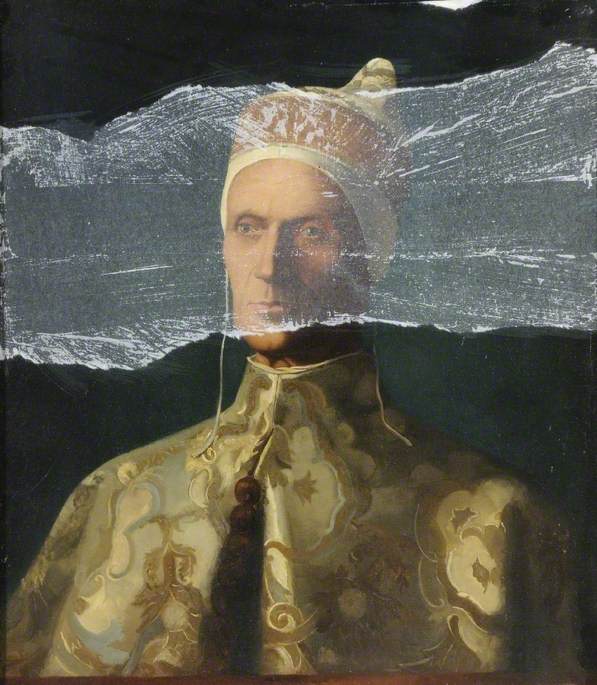
Doge Loredan (1436–1521) (after Giovanni Bellini)
 54.0 x 45.0 cm
 The Cooper Gallery
 Read More
Hand Made Oil Reproduction
Hand-painted oil on canvas in your size and frame, made to order by our artists. ( Buy Print Buy Image)




































Pick from our preset sizes that match the artwork's original proportions.

You may enter your own dimensions to fit a specific frame or space. If your selected size does not match the original image's proportions, we will either crop the artwork or extend the painting with additional hand-painted elements. A digital mockup will be sent for your approval before production begins.
Please note that the on-screen preview does not reflect the actual cropping or extension. Only the mockup will accurately show the final composition.
While custom sizes are available, we recommend selecting a dimension from the predefined list to preserve the original proportions.
After order, ArtsDot.com team will email client for instructions and provide a mockup preview
Worldwide Delivery () in 3/4 weeks instead of standard 5 weeks. (27 August). No compromise on quality.

Free Worldwide Express Shipping

High-Quality Linen Canvas

Full Shipping Insurance

Customs Tax Refund Guarantee

True Color Matching Guarantee

60-Day Return Policy (Defects Only)

100% Money-Back Guarantee

Bulk Discount Offer
 Glass option is only available in size under 110 CM

Doge Loredan (1436–1521) (after Giovanni Bellini)
Reproduction Medium
Reproduction Size
-


Total Price
$ 263
Related Artworks







Artist Biography
A Quiet Resonance: The Emergence of Madeline Moore
Madeline Moore is a contemporary artist whose work has rapidly garnered attention for its deeply emotive power and subtle exploration of the human condition within natural landscapes. Though relatively new to the wider art world, her paintings possess a maturity and resonance that belie her years, hinting at a profound inner life and dedicated study of both technique and feeling. Born in an undisclosed rural location – Moore intentionally maintains a degree of privacy regarding her personal history – she spent her formative years immersed in the quiet rhythms of nature, an environment which continues to be the primary source of inspiration for her art. This early connection fostered not just an appreciation for aesthetic beauty but also a sensitivity to the ephemeral qualities of light, atmosphere, and the unspoken narratives held within the land itself. Moore’s artistic journey wasn't one of formal training in prestigious institutions; instead, she is largely self-taught, honing her skills through relentless practice and independent exploration of master painters throughout history. This unconventional path has allowed her to develop a uniquely personal style, free from rigid academic constraints.The Language of Light and Shadow
Moore’s paintings are immediately recognizable for their atmospheric quality and restrained palette. She primarily works in oils, building layers of translucent color to create depth and luminosity. Her canvases aren't depictions *of* landscapes so much as they are evocations *through* them. Figures often appear within these scenes – solitary individuals or intimate pairings – but they are rarely the focal point. Instead, they serve as anchors for the viewer’s gaze, inviting contemplation of their relationship to the surrounding environment and, by extension, to their own inner worlds. The artist masterfully employs chiaroscuro, using dramatic contrasts between light and shadow to create a sense of mystery and emotional weight. This technique, reminiscent of Rembrandt and Caravaggio, imbues her work with a timeless quality, connecting it to the traditions of classical painting while simultaneously forging a distinctly modern sensibility. Moore’s color choices are deliberately muted – earthy tones of ochre, umber, and sienna dominate, punctuated by subtle hints of blues and greens. This limited palette reinforces the sense of quietude and introspection that pervades her work.Influences and Artistic Development
While self-taught, Moore has consistently cited a diverse range of artists as influences. The Romantic landscapes of Caspar David Friedrich are evident in her compositions’ emphasis on scale and the sublime power of nature. She also draws inspiration from the Symbolist movement, particularly the works of Odilon Redon and Pierre Puvis de Chavannes, whose dreamlike imagery and allegorical themes resonate with her own exploration of psychological states. However, Moore isn't simply replicating these influences; she synthesizes them into something entirely new. Her early work exhibited a greater degree of realism, but over time, she has moved towards a more abstracted style, prioritizing emotional expression over precise representation. This evolution reflects her growing confidence in her own artistic voice and her desire to convey the *feeling* of a place rather than its literal appearance. The influence of contemporary photographers like Gregory Crewdson is also discernible in her carefully staged compositions and cinematic lighting.Themes of Isolation, Memory, and Connection
Recurring themes within Moore’s oeuvre include isolation, memory, and the search for connection. Her figures often appear lost in thought, gazing into the distance or turned inward upon themselves, suggesting a sense of alienation from both their surroundings and each other.- The landscapes themselves are frequently depicted as vast and empty
- evoking a feeling of solitude and vulnerability.
- However, this isolation isn't necessarily negative
- it can also be seen as a space for introspection and self-discovery.