 Preview
 Send
Send Share
Share
 Details

 Download
 Similars
 X-Ray
X-Ray Diaporama
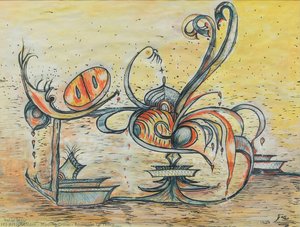
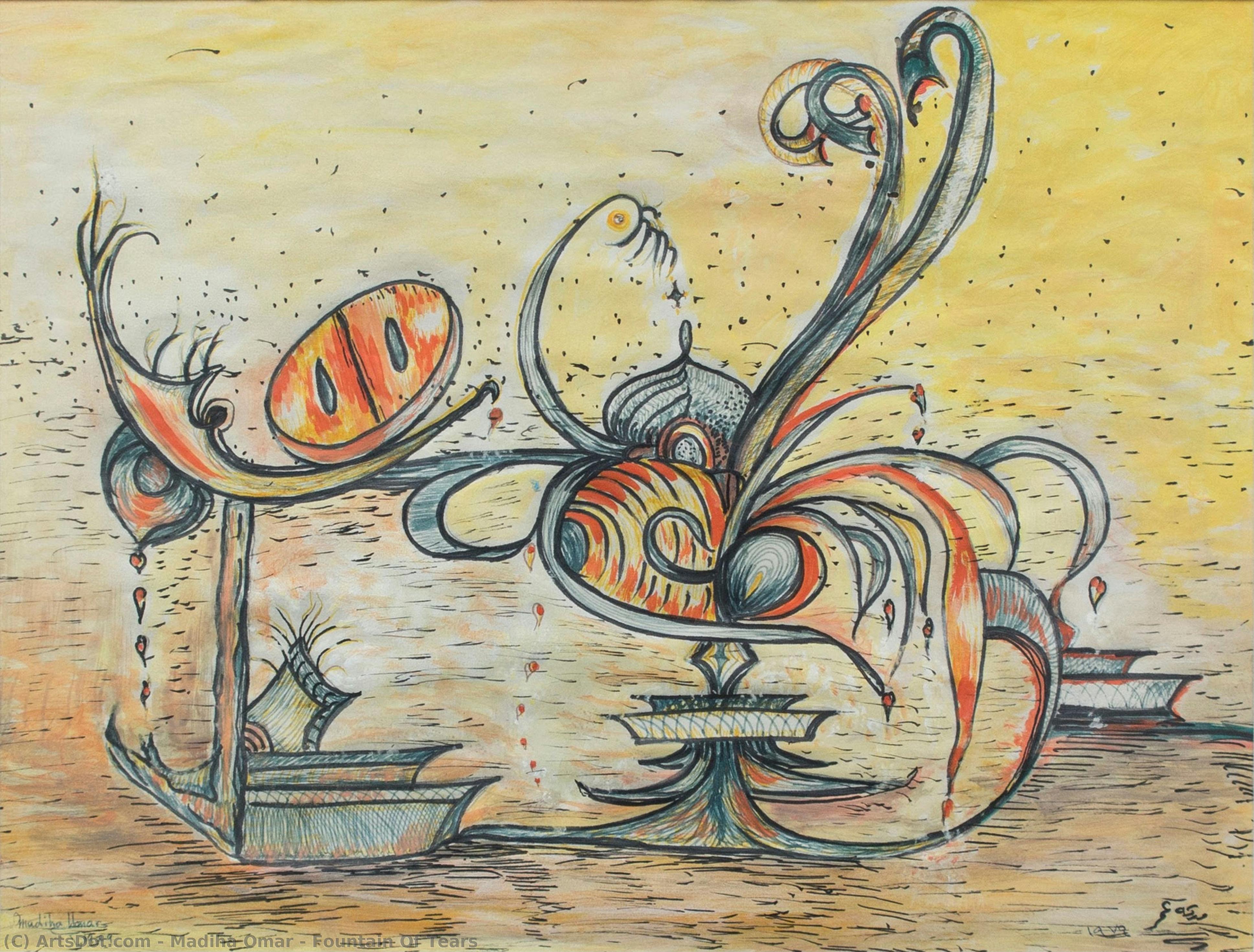
Fountain Of Tears
 Oil On Canvas
- WallArt
- Expressionism
 1979
1979- Modern
 30.0 x 40.0 cm
 Ibrahimi Collection
 Read More
Giclée / Art Print
Museum-quality giclée or canvas print with fast production and flexible finish options. ( Buy Hand Made Painting Buy Image)




































Pick from our preset sizes that match the artwork's original proportions.

You may enter your own dimensions to fit a specific frame or space. If your selected size does not match the original image's proportions, we will either crop the artwork or extend the image with a mirrored or solid-fill edge. A digital mockup will be sent for your approval before production begins.
Please note that the on-screen preview does not reflect the actual cropping or extension. Only the mockup will accurately show the final composition.
While custom sizes are available, we recommend selecting a dimension from the predefined list to preserve the original proportions.
Worldwide Delivery () in 2 weeks instead of standard 4/5 weeks. (24 August)

Free Worldwide Express Shipping

High-Quality Linen Canvas

Full Shipping Insurance

Customs Tax Refund Guarantee

True Color Matching Guarantee

60-Day Return Policy (Defects Only)

100% Money-Back Guarantee

Bulk Discount Offer
 Glass option is only available in size under 110 CM

Fountain Of Tears
Giclée / Art Print
Reproduction Size
-


Total Price
$ 63
Collectible Description
A Surreal Descent into the Deep
In the hauntingly beautiful Fountain Of Tears, created in 1979 by the visionary Syrian-Iraqi artist madiha omar, we are invited to witness a seascape that defies the boundaries of reality. The artwork presents an unsettling yet mesmerizing dreamscape where the ocean is not merely water, but a living, breathing entity of myth and memory. At the heart of this composition lies a massive, octopus-like creature, its undulating limbs intertwining with skeletal boats and human-shaped forms in a way that feels both organic and deeply distorted. This is not a depiction of nature as we know it, but rather an expressionistic vision where the marine world and the human psyche collide, creating a sense of profound movement and existential unease.
The style of the piece leans heavily into surrealism and abstract expressionism, utilizing loose, energetic brushstrokes that lend the canvas a palpable sense of life. There is no rigid structure here; instead, shapes are amorphous and flowing, eschewing sharp edges for a more fluid, dreamlike quality. The perspective is intentionally flattened, stripping away the comfort of three-dimensional depth to force the viewer into an intimate, almost claustrophobic encounter with the subject matter. This technique creates a sense of being submerged within the scene itself, caught in the swirling currents of the artist's imagination.
The Alchemy of Color and Texture
Technically, Fountain Of Tears is a masterclass in the use of texture and light to evoke emotion. The application of paint appears thick and layered, reminiscent of the impasto technique, which gives the surface a rugged, tactile quality. This physical depth mirrors the emotional complexity of the subject. The color palette is a striking dialogue between warmth and coolness; vibrant shades of orange and golden yellow clash beautifully against deep, melancholic blues and greys. This contrast does more than just please the eye—it creates a visual tension that reflects the internal struggle depicted in the work.
The lighting within the piece is diffused and ethereal, casting a soft, warm glow that seems to emanate from within the sea itself rather than from an external sun. There are no harsh shadows to ground the scene in reality; instead, the light wraps around the distorted forms, softening the edges of the nightmare and lending it a certain tragic beauty. For collectors and interior designers, this interplay of light and color offers a sophisticated focal point that can transform a room, providing a sense of depth and intellectual intrigue to any curated space.
Symbolism and the Legacy of Madiha Omar
Beyond its visual splendor, the painting serves as a profound symbolic vessel. The juxtaposition of marine life with humanoid elements suggests themes of isolation, the overwhelming power of nature, and perhaps a distorted reflection of how humanity interacts with the vast, uncontrollable forces of the world. As a pioneer of the hurufiyya movement, madiha omar often blended elements of Arabic calligraphy with abstract forms, and in this work, we see her ability to weave narrative through abstraction. The "fountain" of the title suggests a continuous, perhaps sorrowful, outpouring of emotion—a literal and metaphorical weeping of the sea.
Owning a reproduction of such a significant piece is an opportunity to bring a fragment of art history into one's personal environment. Fountain Of Tears is more than just a painting; it is an emotional journey that challenges the viewer to find meaning in the chaos. Whether you are an art enthusiast drawn to its surrealist mystery or a designer looking for a piece that sparks conversation and evokes deep feeling, this work stands as a testament to the enduring power of madiha omar’s unique, transformative vision.
Related Artworks




Artist Biography
Wassily Kandinsky: Pioneer of Abstraction
Born in Moscow in December 1866, Wassily Kandinsky’s life and artistic journey represent a radical transformation within the landscape of modern art. Initially pursuing law and economics – disciplines that initially seemed to dictate his family's expectations – Kandinsky found himself increasingly drawn to the burgeoning world of art, a passion ignited by a youthful encounter with Monet’s “Impression, Soleil Levant.” This pivotal moment marked a decisive shift away from conventional academic training and towards an exploration of color and form as fundamental expressive elements. His early artistic endeavors, including studies in charcoal and pen-and-ink, laid the groundwork for his later revolutionary approach, yet it was his time at the Moscow School of Art that truly shaped his nascent theories about art’s potential to transcend mere representation.
Kandinsky's formal training in Munich during the late 1890s proved transformative. He enrolled at the Academy of Fine Arts, but quickly found himself disillusioned with its rigid structure and emphasis on traditional techniques. He sought guidance from Gabriele Münter, a fellow artist who became both a close friend and collaborator, and together they explored new avenues of artistic expression. This period witnessed the development of his core ideas – that art could communicate directly through color and form, bypassing the need for realistic depiction. Influenced by synesthesia, a neurological condition where stimulation of one sense triggers experiences in another (such as seeing colors when hearing music), Kandinsky began to believe that visual elements possessed inherent emotional qualities, which he meticulously documented in his influential writings.
The early 20th century witnessed a period of intense experimentation for Kandinsky. He and Münter formed the “Blue Rider” group (Der Blaue Reiter) alongside figures like Franz Marc and August Macke, a collective dedicated to exploring spiritual and emotional content within art. Their work was characterized by vibrant colors, simplified forms, and an emphasis on expressing inner states of being. Kandinsky’s early paintings from this period, such as “Composition VII” (1913), demonstrate his growing commitment to abstraction – the deliberate rejection of recognizable imagery in favor of purely visual elements. These works are not merely decorative; they represent a profound attempt to capture and convey subjective experience through color, line, and shape.
The Development of Abstract Art
Kandinsky’s artistic evolution was inextricably linked to his intellectual development. He meticulously documented his theories on the spiritual potential of art in numerous essays and writings, most notably “Concerning the Spiritual in Art” (1911). In these texts, he argued that art should strive to evoke a sense of inner harmony and spiritual awakening, moving beyond mere imitation of the external world. He identified six basic elements – line, color, shape, texture, plane, and volume – each possessing its own inherent expressive power. Kandinsky believed that by consciously manipulating these elements, artists could create works that resonated with viewers on a deeper, emotional level.
The outbreak of World War I profoundly impacted Kandinsky’s life and work. He fled Russia following the Bolshevik Revolution, eventually settling in Munich and later Paris. During this period, he continued to refine his abstract style, experimenting with increasingly simplified forms and vibrant color palettes. His paintings from the 1920s and 30s, such as “Composition VIII” (1923), are characterized by a dynamic interplay of geometric shapes and colors that evoke a sense of movement and energy. Despite facing increasing censorship in Germany due to his Jewish heritage, Kandinsky remained committed to his artistic vision, believing that art could serve as a powerful force for social change.
Kandinsky’s Legacy and Influence
Wassily Kandinsky's contribution to the history of art is immeasurable. He is widely considered one of the pioneers of abstract art, demonstrating its potential not merely as an aesthetic exercise but as a means of expressing profound spiritual truths. His theoretical writings provided a framework for understanding abstraction, influencing generations of artists who followed in his footsteps. His bold experimentation with color and form paved the way for movements such as Bauhaus and Surrealism.
Beyond his individual artistic achievements, Kandinsky’s legacy extends to his role as an educator and theorist. He taught at the Bauhaus school in Germany and later at the Art Academies of Lyon and Paris, sharing his ideas with a new generation of artists. His work continues to inspire artists today, reminding us of the power of art to transcend the limitations of representation and connect us to something deeper within ourselves.
Key Works
- Improvisation 28 (1912): An early example of Kandinsky’s abstract style, featuring dynamic lines and colors that evoke a sense of movement and emotion.
- Composition VII (1913): A seminal work showcasing Kandinsky's exploration of color and form as expressive elements.
- Concerning the Spiritual in Art (1911): Kandinsky’s influential treatise outlining his theories on the spiritual potential of art.
- Composition VIII (1923): Demonstrates Kandinsky's continued experimentation with abstraction and geometric forms during the 1920s.
A Life Dedicated to Art
Wassily Kandinsky died in Neuilly-sur-Seine, France, in December 1944. His life was a testament to his unwavering dedication to art and his belief in its transformative power. His work continues to resonate with audiences around the world, offering a glimpse into the inner landscape of the human spirit and reminding us that art can be more than just a reflection of reality—it can be a pathway to transcendence.
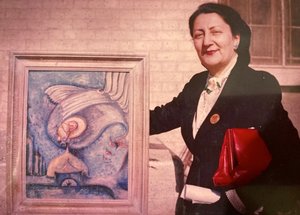
madiha omar
1908 - 2005 , Syrian Arab Republic
Quick Facts
- Artistic Movement Or Style: Abstraction, Expressionism
- Artists Or Movements Influenced By This Artist:
- Bauhaus
- Abstract art
- Artists Who Influenced This Artist:
- Paul Gauguin
- Vincent van Gogh
- Date Of Birth: 16 December 1866
- Date Of Death: 13 December 1944
- Full Name: Wassily Kandinsky
- Nationality: Russian/French
- Notable Artworks:
- Composition VII
- Improvisation 28
- Yellows and Greens
- Place Of Birth: Moscow, Russia
Related Articles
Abstract Expressionism's 10 Defining Masterpieces |
Explore 10 defining Abstract Expressionism masterpieces by Pollock, Rothko & de Kooning. Discover the stories behind these iconic paintings and find museum-quality art reproductions to elevate your home decor on .

Geometric Abstraction's 10 Defining Masterpieces | Art for Your Home - ArtsDot
Explore 10 defining masterpieces of Geometric Abstraction! Discover Kandinsky, Mondrian & Malevich’s iconic works. Find museum-quality art reproductions and curated decor ideas to elevate your home at ArtsDot.com.

Kandinsky's Masterpieces: 25 Paintings That Define Abstract Art | ArtsDot
Journey through Wassily Kandinsky's 25 most iconic abstract paintings. Explore his revolutionary use of color, form & spiritual expressionism. Find museum-quality Kandinsky reproductions and elevate your home decor with ArtsDot.com. Discover all masterpieces on ArtsDot.com!
Beyond Representation: Exploring Gesturality, Emotion, and Philosophical Underpinnings of Contemporary Abstract Painting
Explore the evolution of abstract painting with ArtsDot. Discover key artists, historical context & investment insights. Find museum-quality reproductions and expert appraisal services.
Navigating Abstract Expression: A Guide to Contemporary Movements for Emotional Resonance in Art Selection
Explore the evolution of Abstract Expressionism & discover contemporary movements for emotional resonance. Expert guidance for discerning art collectors seeking lasting value. ArtsDot.