

 Preview
 Send
Send Share
Share
 Details

 Download
 Similars
 X-Ray
X-Ray Diaporama
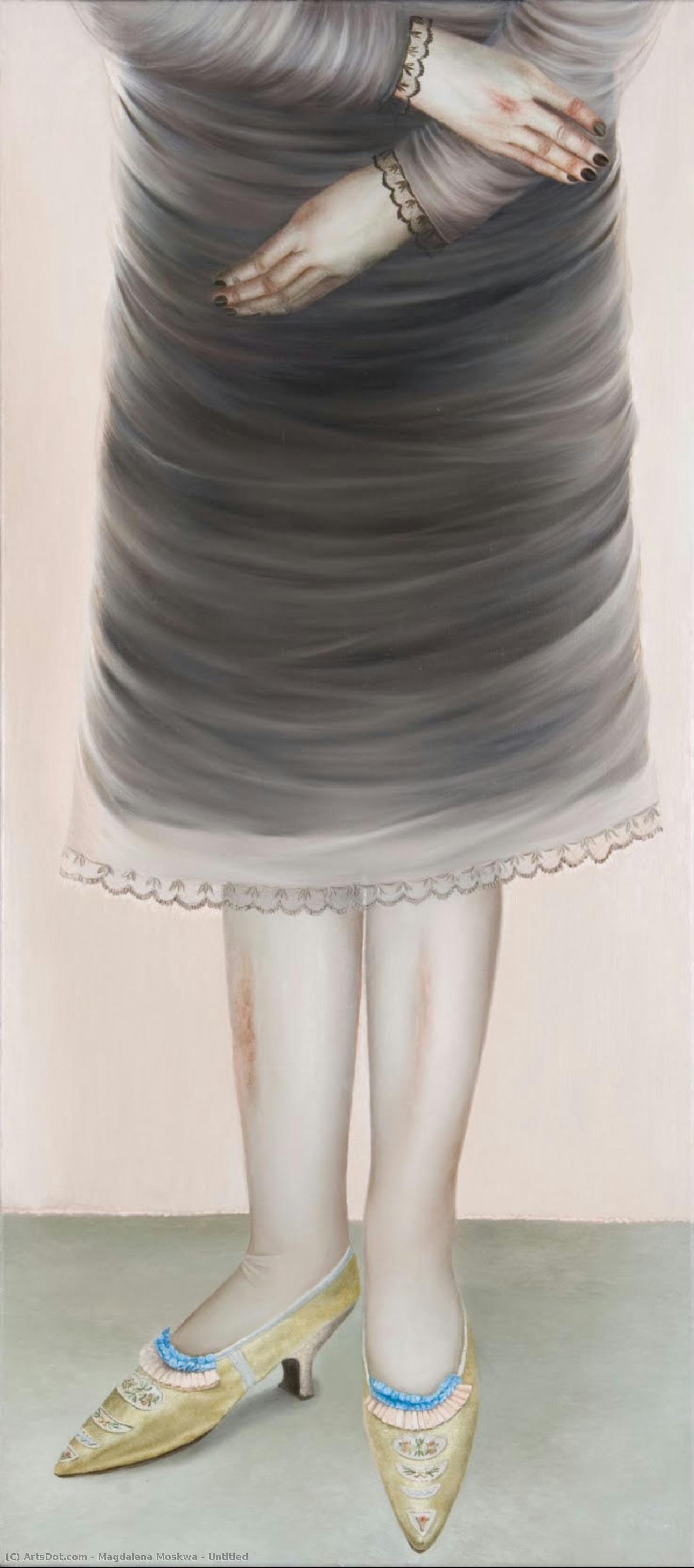
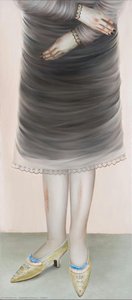
Untitled
 2003
2003 110.0 x 49.0 cm
 Read More
Giclée / Art Print
Museum-quality giclée or canvas print with fast production and flexible finish options. ( Buy Hand Made Painting Buy Image)




































Pick from our preset sizes that match the artwork's original proportions.

You may enter your own dimensions to fit a specific frame or space. If your selected size does not match the original image's proportions, we will either crop the artwork or extend the image with a mirrored or solid-fill edge. A digital mockup will be sent for your approval before production begins.
Please note that the on-screen preview does not reflect the actual cropping or extension. Only the mockup will accurately show the final composition.
While custom sizes are available, we recommend selecting a dimension from the predefined list to preserve the original proportions.
Worldwide Delivery () in 2 weeks instead of standard 4/5 weeks. (22 August)

Free Worldwide Express Shipping

High-Quality Linen Canvas

Full Shipping Insurance

Customs Tax Refund Guarantee

True Color Matching Guarantee

60-Day Return Policy (Defects Only)

100% Money-Back Guarantee

Bulk Discount Offer
 Glass option is only available in size under 110 CM

Untitled
Giclée / Art Print
Reproduction Size
-


Total Price
$ 63
Related Artworks






Artist Biography
The Visceral Poetics of Magdalena Moskwa
Born in Poddębice, Poland, in 1967, Magdalena Moskwa has emerged as a singular voice in contemporary art, an artist whose work exists at the haunting intersection of the physical and the metaphysical. Her artistic journey was forged within the prestigious halls of the Faculty of Textiles and Clothing at the Łódź State Collage of Art. It was here that she mastered the delicate complexities of textile manipulation, a skill that would later serve as the foundation for her profound sculptural explorations. Rather than viewing textiles merely as medium, Moskwa treats them as an extension of the human form, creating a visual language where fabric and flesh become inextricably linked.
The essence of Moskwa’s oeuvre lies in its refusal to shy away from the raw realities of existence. She acts as a provocateur of both beauty and pain, forcing her audience to confront the vulnerability of the human condition. Her work is deeply rooted in Christian iconography and symbolism, often drawing upon the somber traditions of martyrdom and spiritual devotion. One finds recurring motifs of fragmented bodies—limbs and torsos presented as sacred relics encased within containers. These pieces evoke the ancient veneration of saints' remains, transforming the gallery space into a site of profound spiritual contemplation where the boundaries between the mortal body and the eternal spirit begin to dissolve.
Technique and the Anatomy of Emotion
To encounter a Moskwa piece is to witness a meticulous obsession with detail. Her canvases are populated by unsettling yet mesmerizing depictions of skin, rendered with such precision that the viewer can almost feel its texture and fragility. In a deliberate departure from the idealized perfection found in traditional portraiture, Moskwa embraces anatomical imperfections. To her, these irregularities are not flaws but essential markers of authenticity and truth. By highlighting the visceral reality of the body, she rejects conventional aesthetics in favor of a more honest engagement with what it means to be human.
Her technical evolution is marked by an experimental spirit that defies easy categorization. In her early explorations, Moskwa sought to capture the psychic dimensions of her subjects by creating composite figures—merging images of different individuals to manifest complex emotional states. This pursuit of depth led her to develop highly innovative, multi-layered techniques. Her work often transcends the flat surface of a canvas through the use of:
- Oil on canvas blended with industrial and organic elements such as resins and aluminium slag.
- The transformation of soft textiles into sensual sculptures that mimic the curves and weight of biological forms.
- A sophisticated integration of embroidery, photography, and sculptural clothing to create a three-dimensional experience of texture.
Legacy and Artistic Significance
The significance of Magdalena Moskwa’s contribution to contemporary art lies in her ability to bridge the gap between the tactile and the transcendental. As noted by curators such as Maria Morzuch during her exhibitions at the Łódź Museum of Art, Moskwa possesses a rare ability to dissolve solid forms into something much more fluid and emotive. Her work does not merely represent the body; it inhabits it, using the very materials of clothing and textile to explore the relationship between our outer layers and our inner selves.
Through her uncompromising vision, Moskwa has established a legacy that challenges the viewer to look closer at the scars, the folds, and the fragments of our existence. She remains a vital figure in modern Polish art, reminding us that within the most unsettling images of flesh and decay, there resides an undeniable, breathtaking beauty.
magdalena moskwa
1967 - , Poland
Quick Facts
- Artistic Movement Or Style: Contemporary Art
- Date Of Birth: 1967
- Full Name: Magdalena Moskwa
- Nationality: Polish
- Notable Artworks: ['Untitled']
- Place Of Birth: Poddębice, Poland

