 Preview
 Send
Send Share
Share
 Details

 Download
 Similars
 X-Ray
X-Ray Diaporama
Green Tara Dispensing Boons to Ecstatic Devotees: Folio from a Manuscript of the Ashtasahasrika Prajnaparamita (Perfection of Wisdom)
 Manuscript
- Pala Buddhist Art
 1101
1101- High Medieval
 7.0 x 42.0 cm
 Read More
Giclée / Art Print
Museum-quality giclée or canvas print with fast production and flexible finish options. ( Buy Hand Made Painting Buy Image)




P118B $10

P118H $10

P118W $10

P438Z $10

P508JH $12

P508YH $12

P805H $10

P805Z $10

P919BZ $10

P919G $10

P919XJ $10

P959ZH $10

P968JZ $12

W106C $8

W218G $10

W218JH $8

W218Y $10

W307PJ $10

W316G $10

W316PJ $8

W316Y $10

W398PJ $8

W4111J $10

W500HY $15

W500JH $15

W692G $12

W849H $8

W940BG $15

W953PJ $8




Pick from our preset sizes that match the artwork's original proportions.

You may enter your own dimensions to fit a specific frame or space. If your selected size does not match the original image's proportions, we will either crop the artwork or extend the image with a mirrored or solid-fill edge. A digital mockup will be sent for your approval before production begins.
Please note that the on-screen preview does not reflect the actual cropping or extension. Only the mockup will accurately show the final composition.
While custom sizes are available, we recommend selecting a dimension from the predefined list to preserve the original proportions.
Worldwide Delivery () in 2 weeks instead of standard 4/5 weeks. (16 August)

Free Worldwide Express Shipping

High-Quality Linen Canvas

Full Shipping Insurance

Customs Tax Refund Guarantee

True Color Matching Guarantee

60-Day Return Policy (Defects Only)

100% Money-Back Guarantee

Bulk Discount Offer
 Glass option is only available in size under 110 CM

Green Tara Dispensing Boons to Ecstatic Devotees: Folio from a Manuscript of the Ashtasahasrika Prajnaparamita (Perfection of Wisdom)
Giclée / Art Print
Reproduction Size
-


Total Price
$ 63
Collectible Description
A Vision of Compassion: The Divine Grace of Green Tara
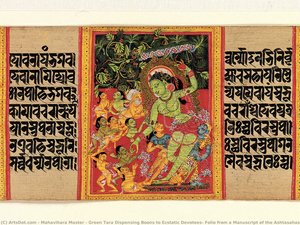
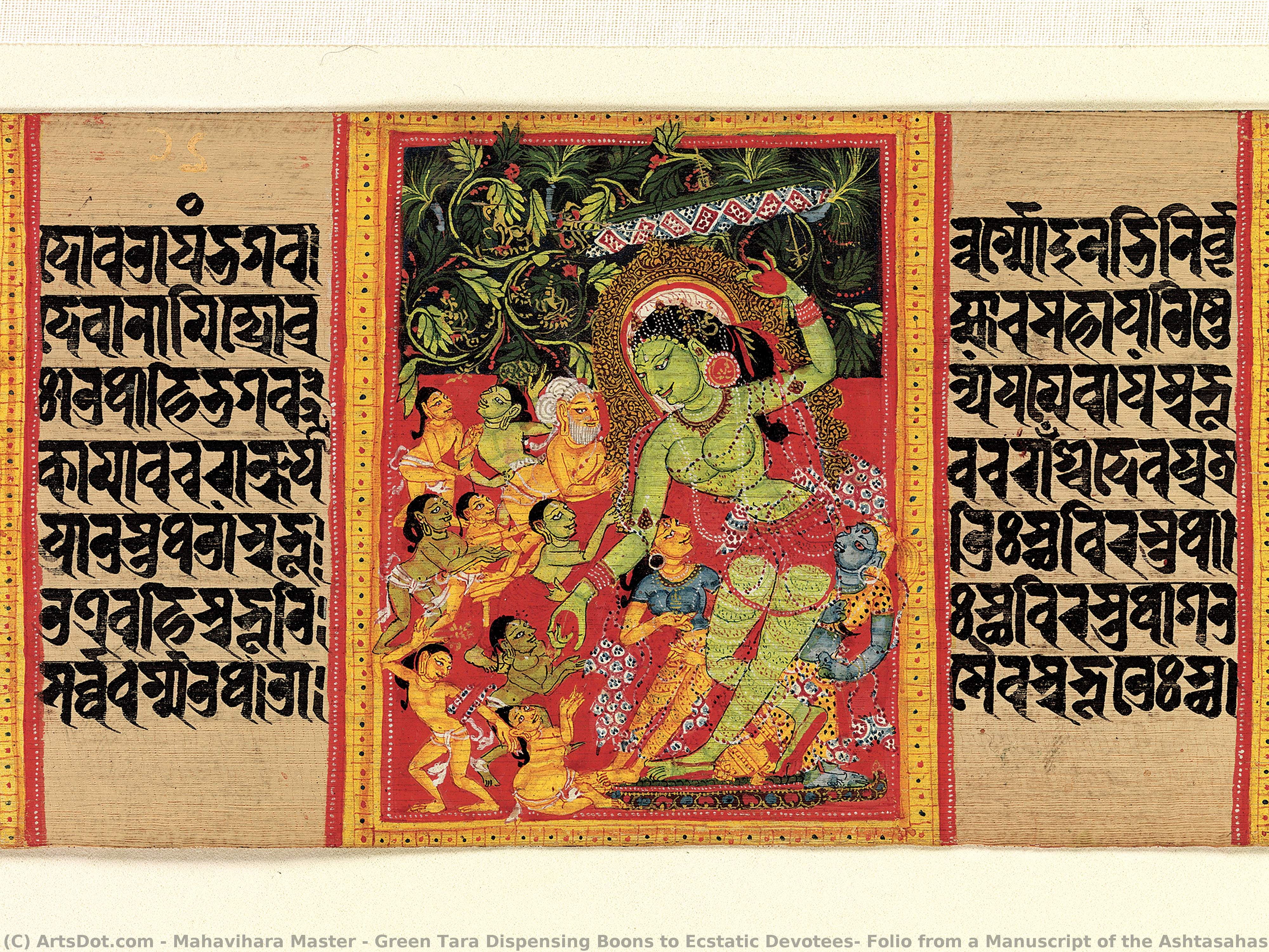
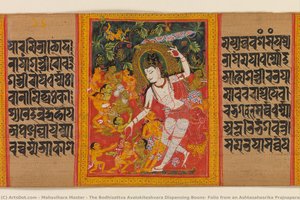
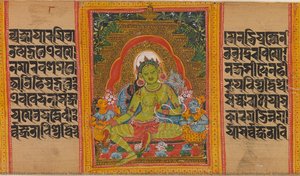
In the delicate, elongated world of eleventh-century Pala-era manuscript painting, few images resonate with as much profound tenderness as Green Tara Dispensing Boons to Ecstatic Devotees. This exquisite folio, a masterpiece from the Ashtasahasrika Prajnaparamita (Perfection of Wisdom) manuscript, serves as a window into a spiritual realm where the boundaries between the divine and the mortal dissolve. At the heart of this composition sits Green Tara, the bodhisattva of protection and compassion, captured in a moment of sublime generosity. Her presence is not merely static; she is rendered in a dynamic, twisting posture that breathes life into the palm-leaf medium, suggesting a rhythmic movement that connects her celestial essence to the earthly devotees gathered around her.
The artistry of the Mahavihara Master shines through in the meticulous way he balances intricate detail with emotional depth. As the eye wanders across the slender 7 x 42 cm surface, one is struck by the subtle interplay of color and form. The central figure of Tara is surrounded by a celestial assembly of at least twelve figures, each rendered with a grace that reflects the sophisticated aesthetic of the Somapura Mahavihara tradition. The artist employs a delicate technique to depict the varada mudra—the gesture of boon-granting—from which nectar drips with life-sustaining precision. This small, poignant detail, where nectar falls toward the mouth of a hungry ghost (preta), serves as a powerful metaphor for the alleviation of suffering and the infinite reach of Buddhist mercy.
Symbolism and the Mastery of Form
Beyond its aesthetic beauty, this artwork is a complex tapestry of religious symbolism designed to guide the viewer toward enlightenment. The contrast between the swollen, starving belly of the preta and the fluid, graceful limbs of Tara creates a visual tension that underscores the transformative power of compassion. The Mahavihara Master utilizes the unique format of the palm-leaf manuscript to experiment with volume and anatomy; unlike the more rigid, two-dimensional depictions of male bodhisattvas from this era, Tara’s form possesses a sculptural quality. This innovation suggests a deep connection to pan-Indian goddess traditions, blending Buddhist doctrine with a broader, more visceral sense of feminine divinity.
For the discerning collector or interior designer, this piece offers much more than mere decoration; it provides a focal point of meditative calm and spiritual sophistication. The vibrant yet harmonious palette, characteristic of the Pala period, brings an air of ancient wisdom into a modern space. Whether displayed as part of a curated collection of Eastern antiquities or used to anchor a room with a sense of historical gravity, a high-quality reproduction of this folio allows the timeless energy of Tara’s benevolence to permeate the contemporary environment. It is an invitation to contemplate the eternal cycle of devotion and the enduring hope for liberation from all forms of hardship.
Related Artworks
Artist Biography
Mahavihara Master: A Legacy of Buddhist Art from Bengal
Mahavihara Master, a name whispered in the halls of art history and revered within the Buddhist community, stands as one of the most significant figures in the artistic landscape of Pala-era India. Born in Bengaluru, India – though his precise birthdate remains shrouded in the mists of time – he emerged from the rich tradition of monastic painting centered around Somapura Mahavihara in modern-day Bangladesh. His work isn’t merely decorative; it's a profound visual meditation on Buddhist philosophy and practice, offering an intimate glimpse into the spiritual world of 12th-century Bengal.
Little is definitively known about his early life. He likely began his artistic training within the walls of Somapura Mahavihara, a renowned center of learning and artistic production during the Pala dynasty (8th to 12th centuries). This era witnessed a remarkable flourishing of Buddhist art in eastern India, fueled by royal patronage and a deep engagement with Mahayana Buddhism. The Master’s style reflects this environment – a harmonious blend of influences, incorporating elements from earlier Pan-Indian Ajanta styles while simultaneously forging a distinct regional identity.
The Ashtasahasrika Prajnaparamita Sutra: A Foundation for His Art
Mahavihara Master is most celebrated for his meticulous and profoundly moving illustrations of the Ashtasahasrika Prajnaparamita Sutra, a cornerstone text in Mahayana Buddhism. This vast treatise on the perfection of wisdom explores the path to enlightenment through profound contemplation and skillful means. The manuscript he illuminated – now shared between the National Museum in New Delhi and the Los Angeles County Museum of Art – is considered one of the finest examples of Pala-era Buddhist art, showcasing a remarkable level of detail and spiritual depth.
The sheer scale of the project demanded immense patience and skill. Each folio, meticulously rendered on palm leaves, depicts key moments within the sutra’s narrative, often featuring vibrant depictions of Bodhisattvas, deities, and enlightened beings. The Master's approach is characterized by a remarkable sense of volume – figures appear to emerge from the page with startling realism – achieved through subtle shading and masterful use of perspective. His color palette is equally restrained yet evocative, employing earthy tones and delicate washes to convey a profound sense of serenity and grace.
Key Works: Embodiments of Buddhist Wisdom
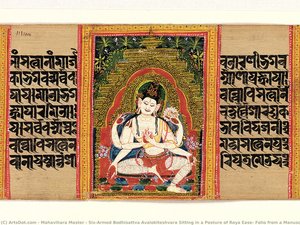
Among his most celebrated works are the depictions of Green Tara dispensing boons to ecstatic devotees and Avalokiteshvara, the Bodhisattva of Compassion. The “Green Tara” folio (circa 1101) is particularly striking for its dynamic composition and the palpable energy radiating from the central figure. She’s not merely a serene goddess; she's an active force of compassion, bestowing blessings upon her devotees with effortless grace. Similarly, the Avalokiteshvara folio captures the essence of his role as a guide to enlightenment, conveying both wisdom and empathy through his compassionate gaze and outstretched hands.
- Green Tara Dispensing Boons: A vibrant depiction showcasing the Bodhisattva’s boundless compassion.
- Bodhisattva Avalokiteshvara Dispensing Boons: An illustration emphasizing the path to enlightenment through wisdom and compassion.
Influence and Legacy
Mahavihara Master's work represents a pivotal moment in Indian Buddhist art, bridging the gap between earlier Pan-Indian styles and the evolving traditions of Bengal. His meticulous attention to detail, his profound understanding of Buddhist iconography, and his masterful use of color and perspective have secured his place as one of the most important artists of the Pala period. His influence can be seen in subsequent generations of Indian Buddhist painters, who continued to draw inspiration from his elegant style and spiritual depth.
Beyond its artistic merit, Mahavihara Master’s work offers a valuable window into the religious and cultural landscape of 12th-century Bengal. It reflects the fervent devotion to Buddhism that characterized the Pala dynasty, as well as the sophisticated intellectual traditions fostered within the monastic centers of the era. His legacy continues to inspire artists and scholars today, reminding us of the enduring power of Buddhist art to illuminate the path to enlightenment.
Further Exploration
The Bodhisattva Avalokiteshvara Dispensing Boons: Folio from an Ashtasahasrika Prajnaparamita Manuscript (Metropolitan Museum of Art)
Los Angeles County Museum of Art
Ravi Varma | Biography, Paintings, Royal Court Artist, & Printmaker (Britannica)
Mahavihara Master
India
Quick Facts
- Artistic Movement Or Style: Pala-era Buddhist
- Artists Or Movements Influenced By This Artist: ['Pala Empire']
- Artists Who Influenced This Artist: ['']
- Date Of Death: Living
- Full Name: Mahavihara Master
- Nationality: Indian
- Notable Artworks:
- Green Tara dispensing boons
- Bodhisattva Avalokiteshvara
- Place Of Birth: Bengaluru, India
Related Articles
Verdant Visions: Exploring the Symbolism & Aesthetic Impact of Green in Art History
Explore the rich history & symbolism of green in art! Discover iconic paintings, techniques, and how to bring verdant harmony into your home with ArtsDot's expert guide.
Dark Olive Green Masterpieces: 10 Iconic Paintings & Decor Ideas
Explore 10 iconic paintings where dark olive green reigns supreme! From Van Gogh to Rembrandt, discover art history's most captivating masterpieces & the stories behind them. Find museum-quality reproductions and curated decor ideas at .
Chrome Green Masterpieces: 10 Famous Paintings & Their Alluring Hues |
Explore 10 famous paintings where 'Chrome Green' reigns supreme! Discover Monet, Manet & Van Gogh’s masterpieces. Learn the stories behind these iconic artworks and find museum-quality art reproductions for your home at .

Emerald Visions: Top 10 Paintings Dominated by Cadmium Green |
Explore 10 iconic paintings where cadmium green reigns supreme! From Monet to Van Gogh, discover the stories behind these masterpieces & the power of color. Find museum-quality art reproductions and elevate your home decor on .

Seafoam & Masterpieces: 10 Paintings Dominated by Medium Sea Green | ArtsDot
Dive into serenity with 10 famous paintings bathed in calming medium sea green. Explore Impressionist masterpieces by Monet, Degas & Renoir. Find museum-quality art reproductions and elevate your home decor at ArtsDot.com.