

 Preview
 Send
Send Share
Share
 Details

 Download
 Similars
 X-Ray
X-Ray Diaporama
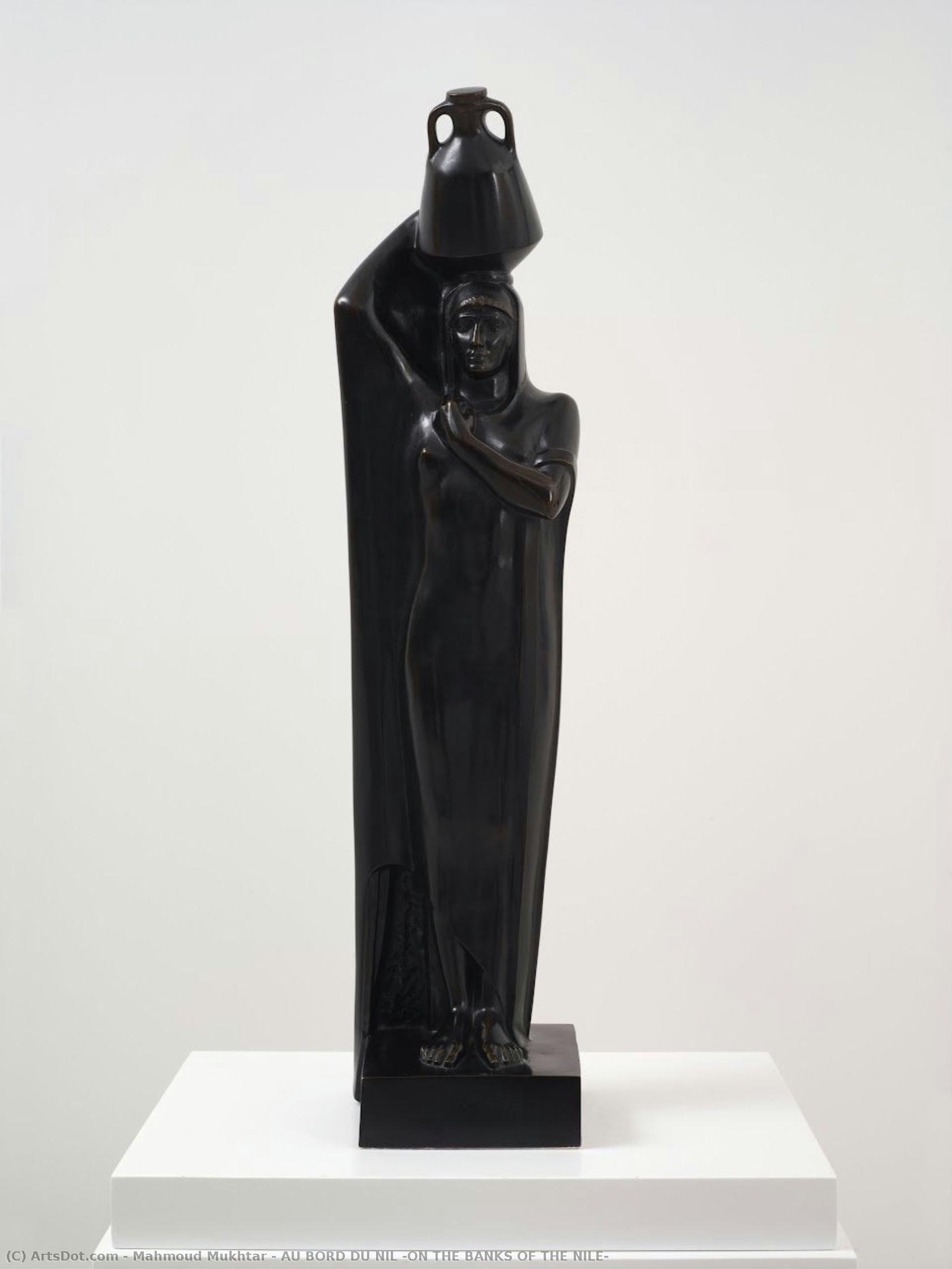
AU BORD DU NIL (ON THE BANKS OF THE NILE)
 Modern Egyptian Art
 61.0 x 14.0 cm
 The Ramzi and Saeda Dalloul Art Foundation
 Read More
Hand Made Oil Reproduction
Hand-painted oil on canvas in your size and frame, made to order by our artists. ( Buy Print Buy Image)




































Pick from our preset sizes that match the artwork's original proportions.

You may enter your own dimensions to fit a specific frame or space. If your selected size does not match the original image's proportions, we will either crop the artwork or extend the painting with additional hand-painted elements. A digital mockup will be sent for your approval before production begins.
Please note that the on-screen preview does not reflect the actual cropping or extension. Only the mockup will accurately show the final composition.
While custom sizes are available, we recommend selecting a dimension from the predefined list to preserve the original proportions.
After order, ArtsDot.com team will email client for instructions and provide a mockup preview
Worldwide Delivery () in 3/4 weeks instead of standard 5 weeks. (31 August). No compromise on quality.

Free Worldwide Express Shipping

High-Quality Linen Canvas

Full Shipping Insurance

Customs Tax Refund Guarantee

True Color Matching Guarantee

60-Day Return Policy (Defects Only)

100% Money-Back Guarantee

Bulk Discount Offer
 Glass option is only available in size under 110 CM

AU BORD DU NIL (ON THE BANKS OF THE NILE)
Reproduction Medium
Reproduction Size
-


Total Price
$ 288
Related Artworks


Artist Biography
The Sculptor of the Nile: The Legacy of Mahmoud Mokhtar
Mahmoud Mokhtar, widely revered as the father of modern Egyptian sculpture, was a visionary whose hands breathed new life into the ancient soul of his nation. Born in 1891 in the rural village of Douar Skoura, within the fertile Nile Delta, his earliest artistic impulses were shaped by the very earth he inhabited. As a child, he spent countless hours molding small figures from the rich, silty mud of the Nile riverbanks—a primal connection to the medium that would later define his monumental career. This deep-rooted intimacy with the landscape and its people provided the foundational vocabulary for an art form that sought to bridge the gap between Egypt's glorious Pharaonic past and its burgeoning modern identity. His journey from the quietude of the Delta to the global stage was paved by a rigorous formal education. After joining the inaugural class at the College of Fine Arts in Cairo in 1908, Mokhtar sought further refinement in the heart of the European avant-garde. Enrolling at the prestigious École des Beaux-Arts in Paris, he studied under the master Jules Coutan, absorbing the disciplined techniques of classical academic sculpture. Yet, it was in the intellectual ferment of Paris that his true genius began to coalesce. Immersed in a world where ancient symbolism met modern innovation, Mokhtar learned to synthesize European sculptural precision with the profound, symbolic weight of Egyptian heritage.A Synthesis of Tradition and Modernity
Mokhtar’s artistic style is characterized by a breathtaking fusion of monumental grandeur and delicate emotional resonance. He possessed a unique ability to utilize materials such as dark granite, basalt, marble, and bronze to evoke the timelessness of ancient monuments while addressing the contemporary struggles of his era. His work often centered on the fellaha—the Egyptian peasant—and the rhythms of rural life, elevating the common person to a subject of epic significance. Through his mastery of subtractive carving and minimalist design, he captured the essence of a nation in transition, imbuing his figures with a sense of dignity, resilience, and quiet strength. One of his most profound achievements lies in his ability to translate political and social movements into permanent stone. Inspired by the fervor of the Egyptian Revolution of 1919, he created works like Nahdat Misr (Egypt's Awakening), which served as a powerful symbol of national renaissance. His magnum opus, Au Bord du Nil (On the Banks of the Nile), stands as a testament to his ability to weave narrative and symbolism into a single, striking form. In this work, the struggle of a solitary figure against the elements becomes a metaphor for the enduring spirit of the Egyptian people, rendered with a hauntingly beautiful simplicity that continues to captivate viewers today.Historical Significance and Eternal Influence
Though his life was tragically short, ending in 1934, the impact of Mahmoud Mokhtar on the trajectory of Middle Eastern art is immeasurable. He did not merely create statues; he forged a new visual language for a modernizing Egypt. By reclaiming Egyptian motifs from the realm of mere archaeology and placing them within the context of contemporary fine art, he helped establish the "Pioneers" movement, signaling the birth of Egyptian modernism. His ability to look backward toward the majesty of the Pharaohs while looking forward toward a sovereign future allowed him to create an art that was both deeply nationalistic and universally profound. Today, his legacy is preserved within the walls of the Mahmoud Mokhtar Museum in Cairo, a sanctuary for his diverse collection of bronze, stone, and plaster works. His influence persists in every sculptor who seeks to find the sacred within the secular and the eternal within the ephemeral. As we look upon his works, we do not merely see stone and metal; we witness the heartbeat of a nation, captured forever by a man who understood that the true essence of art lies in the soil from which it grows.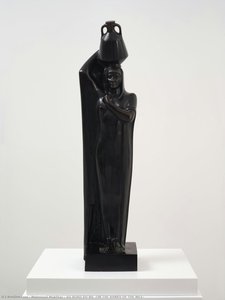
mahmoud mukhtar
1891 - 1934 , Egypt
Quick Facts
- Artistic Movement Or Style: Modern Egyptian Sculpture
- Artists Or Movements Influenced By This Artist: ['Ancient Egypt Art']
- Artists Who Influenced This Artist: ['Jules Coutan']
- Date Of Birth: May 10, 1891
- Date Of Death: March 28, 1934
- Full Name: Mahmoud Mokhtar
- Nationality: Egyptian
- Notable Artworks:
- Au Bord du Nil
- Nahdat Misr
- Place Of Birth: Douar Skoura, Egypt
Related Articles

Bronze Sculptures That Defined Art History | ArtsDot
Journey through art history with our Top 10 bronze sculptures! Explore masterpieces by Rodin, Michelangelo & more. Discover stories behind iconic statues and find museum-quality reproductions for your home decor at ArtsDot.com.

The Enduring Form: Exploring Themes & Techniques in Sculpture Across Historical Periods
Explore the rich history of sculpture from ancient masterpieces to contemporary innovations. Discover key techniques, influential artists & investment potential for discerning art collectors.

Bronze Age to Modern Masters: 10 Sculptures That Redefined Art | ArtsDot
Journey through art history with 10 legendary bronze sculptures – from Michelangelo's David to Rodin’s Thinker. Explore the stories, techniques & timeless beauty of these masterpieces. Find museum-quality reproductions & elevate your home decor on ArtsDot.com.

The Enduring Form: Sculpture Across History, Technique & Emotional Resonance
Explore the rich history of sculpture with ArtsDot. Discover key techniques, influential artists & investment potential for discerning collectors. Expert insights into valuing and collecting timeless masterpieces.
The Enduring Legacy of Bronze Sculpture: History, Techniques & Contemporary Interpretations
Explore the rich history & enduring appeal of bronze sculpture. Learn about casting techniques, iconic artists, collecting tips, & contemporary interpretations. Expert insights for discerning art collectors.

