 Preview
 Send
Send Share
Share
 Details

 Download
 Similars
 X-Ray
X-Ray Diaporama
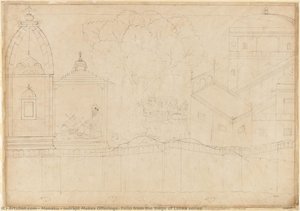
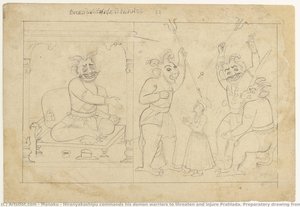
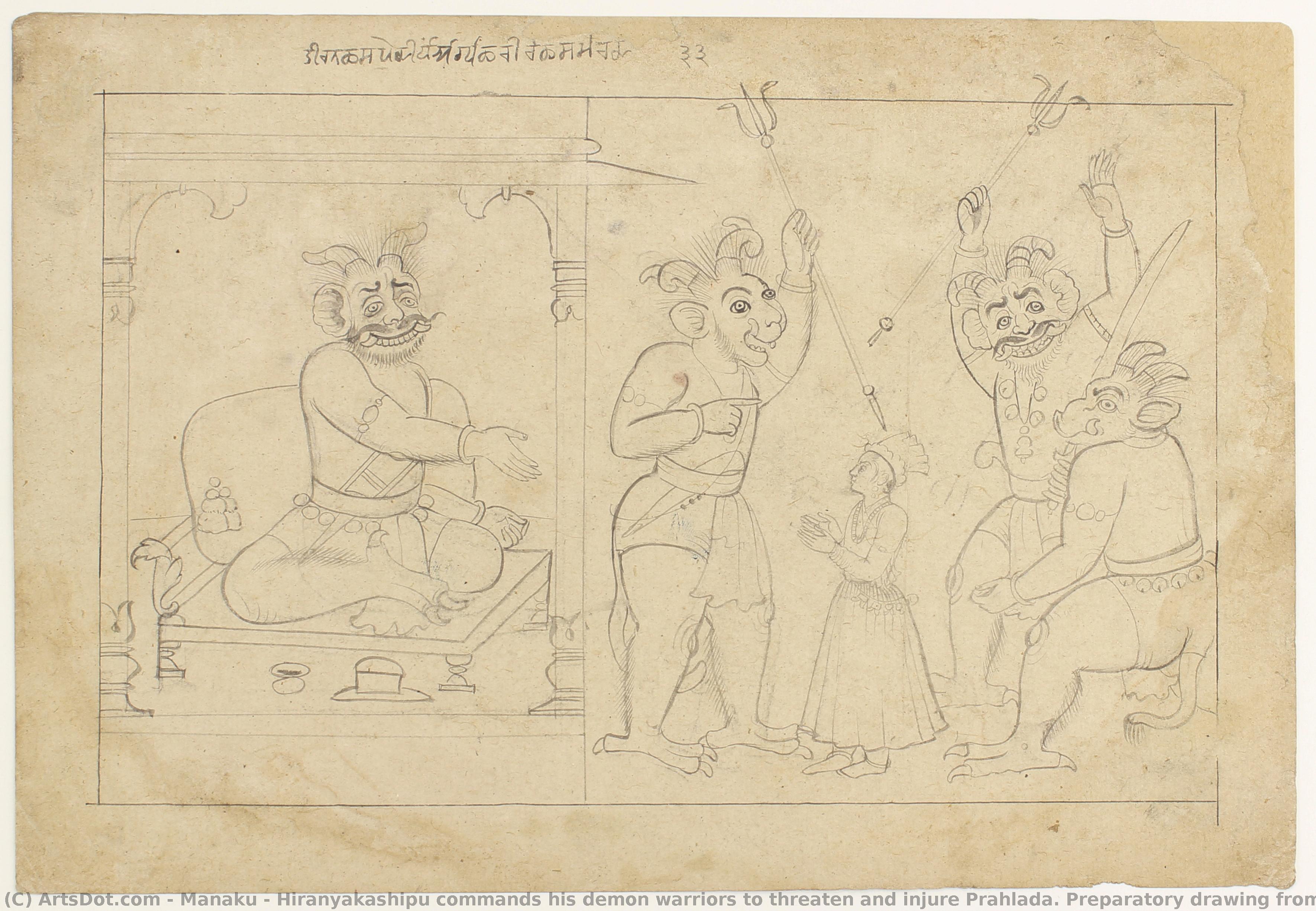
Hiranyakashipu commands his demon warriors to threaten and injure Prahlada. Preparatory drawing from the ‘Small Bhagavata Purana’ Series
 1740
1740 22.0 x 32.0 cm
 Read More
Giclée / Art Print
Museum-quality giclée or canvas print with fast production and flexible finish options. ( Buy Hand Made Painting Buy Image)




































Pick from our preset sizes that match the artwork's original proportions.

You may enter your own dimensions to fit a specific frame or space. If your selected size does not match the original image's proportions, we will either crop the artwork or extend the image with a mirrored or solid-fill edge. A digital mockup will be sent for your approval before production begins.
Please note that the on-screen preview does not reflect the actual cropping or extension. Only the mockup will accurately show the final composition.
While custom sizes are available, we recommend selecting a dimension from the predefined list to preserve the original proportions.
Worldwide Delivery () in 2 weeks instead of standard 4/5 weeks. (24 August)

Free Worldwide Express Shipping

High-Quality Linen Canvas

Full Shipping Insurance

Customs Tax Refund Guarantee

True Color Matching Guarantee

60-Day Return Policy (Defects Only)

100% Money-Back Guarantee

Bulk Discount Offer
 Glass option is only available in size under 110 CM

Hiranyakashipu commands his demon warriors to threaten and injure Prahlada. Preparatory drawing from the ‘Small Bhagavata Purana’ Series
Giclée / Art Print
Reproduction Size
-


Total Price
$ 63
Collectible Description
Related Artworks
Artist Biography
Manaku: A Rediscovered Master of Pahari Painting
Life and Obscurity
- Born around 1700 in Guler, a small hill state in present-day Himachal Pradesh, India.
- Died in 1760. His life remains largely shrouded in obscurity, overshadowed by the fame of his younger brother, Nainsukh.
- Rediscovery: For centuries, Manaku’s contributions were almost entirely forgotten until art historians like B.N. Goswamy brought his work to light and recognized his significant role in Pahari painting.
Artistic Style and Influences
- Pahari Painting: Manaku is now celebrated as a key exponent of the Pahari style, characterized by its delicate brushwork, vibrant colors, and focus on themes from Hindu mythology and courtly life.
- Mughal Influence: The art of Guler, and thus Manaku’s work, was significantly influenced by the waning Mughal Empire. Artists migrating from the Mughal courts brought with them techniques and aesthetics that blended with local traditions.
- His father, Seu, a prominent artist himself, served as an early mentor, instilling in him foundational skills and artistic principles.
Major Works and Themes
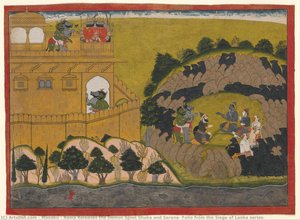
- Rama Releases the Demon Spies: (folio from the Siege of Lanka series) – A powerful depiction of a pivotal moment from the Ramayana, showcasing Manaku’s skill in narrative storytelling.
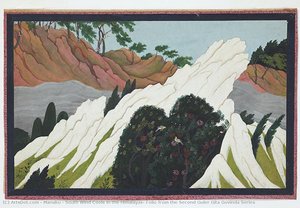
- South Wind Cools in the Himalayas: (folio from the Second Guler Gita Govinda series) – Demonstrates his mastery in portraying scenes from the Gita Govinda, a celebrated work of Sanskrit poetry focused on the love between Krishna and Radha.
- Hiranyakashipu Commands His Demon Warriors: (preparatory drawing from the ‘Small Bhagavata Purana’ series) – Exemplifies his ability to convey complex narratives with dynamic composition and expressive figures.
- His works often feature themes of devotion, heroism, love, and the eternal struggle between good and evil.
Artistic Development & Achievements
- Only four extant works bear Manaku’s signature, making each piece exceptionally valuable and insightful into his artistic practice.
- Unique Vision: While influenced by Mughal aesthetics, Manaku developed a distinct style characterized by a refined sense of color, delicate detailing, and an ability to capture emotional depth in his figures.
- He contributed significantly to the development of Pahari painting, establishing a foundation for future generations of artists in the region.
Historical Significance & Legacy
- Manaku’s rediscovery has enriched our understanding of 18th-century Indian art and the vibrant artistic traditions of the Pahari region.
- Family Atelier: He was part of a prolific family of artists – the Seu-Manaku-Nainsukh lineage – that played a crucial role in shaping the course of Pahari painting for over 150 years.
- His work continues to inspire art enthusiasts and scholars, offering a glimpse into a rich cultural heritage and the artistic brilliance of a previously overlooked master.
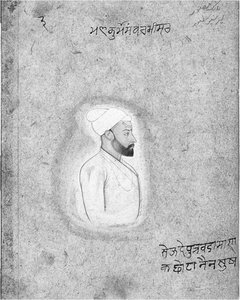
Manaku
1760 , India
Quick Facts
- Birth_Date: c. 1700
- Birth_Place: Guler, India
- Death_Date: 1760
- Influenced: Nainsukh
- Influenced_By: Mughal painting (through Seu)
- Movement: Pahari Painting
- Name: Manaku
- Nationality: Indian
- Notable_Works:
- Rama releases the demon spies Shuka and Sarana
- South Wind cools in the Himalayas
- Hiranyakashipu commands his demon warriors to threaten and injure Prahlada