 Preview
 Send
Send Share
Share
 Details

 Download
 Similars
 X-Ray
X-Ray Diaporama
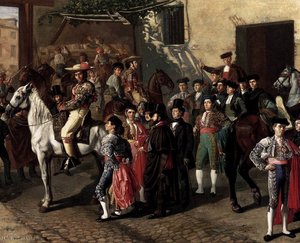
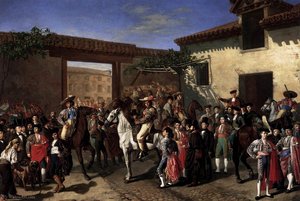
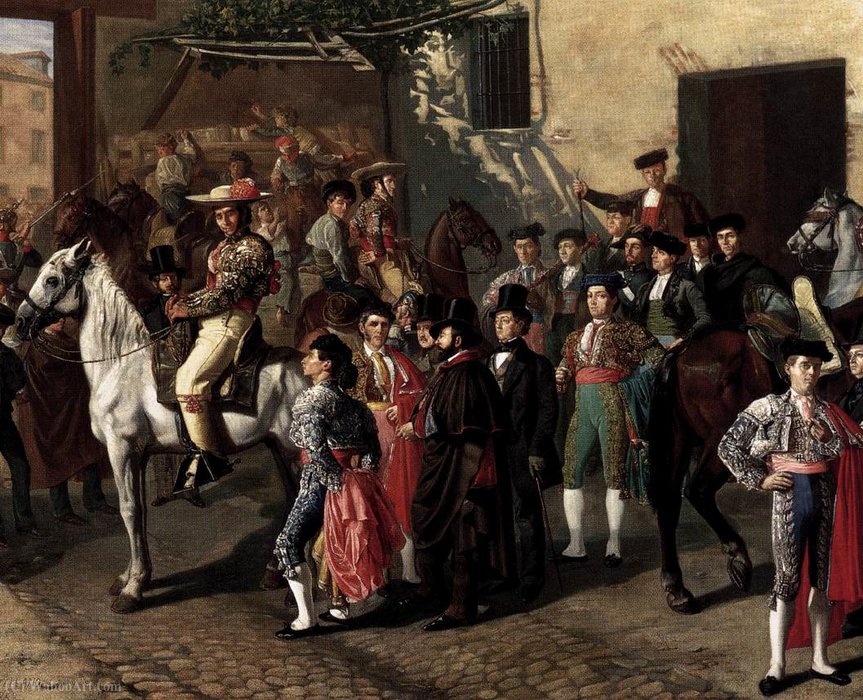
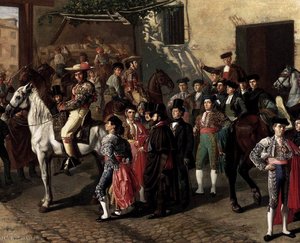
Horses in a Courtyard by the Bullring before the Bullfight, Madrid (detail)
 Read More
Giclée / Art Print
Museum-quality giclée or canvas print with fast production and flexible finish options. ( Buy Hand Made Painting Buy Image)




































Pick from our preset sizes that match the artwork's original proportions.

You may enter your own dimensions to fit a specific frame or space. If your selected size does not match the original image's proportions, we will either crop the artwork or extend the image with a mirrored or solid-fill edge. A digital mockup will be sent for your approval before production begins.
Please note that the on-screen preview does not reflect the actual cropping or extension. Only the mockup will accurately show the final composition.
While custom sizes are available, we recommend selecting a dimension from the predefined list to preserve the original proportions.
Worldwide Delivery () in 2 weeks instead of standard 4/5 weeks. (24 August)

Free Worldwide Express Shipping

High-Quality Linen Canvas

Full Shipping Insurance

Customs Tax Refund Guarantee

True Color Matching Guarantee

60-Day Return Policy (Defects Only)

100% Money-Back Guarantee

Bulk Discount Offer
 Glass option is only available in size under 110 CM

Horses in a Courtyard by the Bullring before the Bullfight, Madrid (detail)
Giclée / Art Print
Reproduction Size
-


Total Price
$ 63
Related Artworks
Artist Biography
A Soul Steeped in the Spirit of Spain – The Life and Art of Manuel Castellano
Manuel Rodríguez de la Parra Castellano, more commonly known as Manuel Castellano (1826-1880), stands as a pivotal figure in 19th-century Spanish art. More than simply a painter, he was a ‘costumbrista,’ an artist deeply invested in capturing the essence of everyday life – particularly the vibrant and often dramatic world of bullfighting – within the rich tapestry of Spanish culture. His work transcends mere documentation; it’s imbued with a palpable sense of emotion, theatricality, and a keen understanding of the human condition, making him a significant voice in a period grappling with rapid social and political change.
Born in Madrid in 1826, Castellano's artistic journey began at the prestigious Academia de Bellas Artes de San Fernando. However, he quickly distinguished himself through his apprenticeship under Carlos Luis Ribera, a renowned decorator who served as chief artist for the Congress of Deputies. This early exposure to grand historical and political scenes undoubtedly shaped his approach to composition and detail, though it was in the realm of ‘costumbrismo’ that Castellano truly found his voice. He wasn't interested in idealized representations; instead, he sought to portray the raw, unvarnished reality of Spanish life – its passions, its rituals, and its inherent contradictions.
The World of Bullfighting: A Central Theme
Castellano’s most enduring legacy lies in his captivating depictions of bullfights. These weren't simply scenes of spectacle; they were meticulously rendered studies of human behavior under pressure – the bravery of the matador, the fury of the bull, and the collective anticipation of the crowd. His 1856 painting, “Picadors Preparing Their Horses at the Old Bullring in Madrid,” is a prime example. It’s not merely a visual record; it's a theatrical tableau brimming with energy and tension. The inclusion of portraits of prominent bullfighters like Paquiro—a deliberate act of homage—elevates the work beyond a simple depiction of an event, transforming it into a celebration of Spanish tradition and masculine prowess.
His later works, such as “The Deaths of Luis Daoíz and Pedro Velarde” (1862) and “Fernando Valenzuela in Prison” (1866), explored darker themes – mortality, injustice, and the consequences of violence. These paintings are not celebratory; they’re imbued with a somber reflection on human suffering, reflecting the turbulent political climate of Spain at the time. The meticulous detail with which he portrays these scenes—the agony of the dying, the despair of the imprisoned—demonstrates a profound empathy for his subjects.
Beyond the Arena: A Collector and Observer
Castellano’s artistic pursuits extended beyond painting. He was an avid collector of photographs, amassing over 20,000 images – primarily portraits and scenic vistas – that offer invaluable insights into Spanish society during his lifetime. This collection, now housed in the Biblioteca Nacional, is a testament to his keen eye for detail and his fascination with capturing the essence of everyday life. His interest in photography—a relatively new medium at the time—suggests a desire to document and preserve the visual record of his era.
Furthermore, Castellano’s travels and connections exposed him to diverse artistic influences. He spent formative years studying in Rome and Venice, absorbing the techniques and philosophies of the Old Masters. His brief sojourn in Paris further broadened his horizons, introducing him to the burgeoning trends of European art. This exposure to a wide range of artistic traditions undoubtedly informed his own distinctive style.
A Lasting Legacy: Influence and Recognition
Manuel Castellano’s work exerted a significant influence on subsequent generations of Spanish artists. His commitment to ‘costumbrismo’ helped to establish this genre as a legitimate form of artistic expression, providing a platform for depicting the realities of everyday life in Spain. While he may not be as widely celebrated as some of his contemporaries, his paintings—particularly those focused on bullfighting—continue to resonate with audiences today, offering a captivating glimpse into the soul of Spanish culture.
His nephew’s decision to sell over 6,000 engravings from his uncle's collection to the museum further cemented Castellano’s place in art history. His legacy lives on through his paintings, his photographs, and the enduring fascination they evoke – a testament to an artist who truly captured the spirit of Spain.
Quick Facts
- Artistic Movement Or Style: Costumbrista, Romantic
- Artists Or Movements Influenced By This Artist: ['Romanticism']
- Artists Who Influenced This Artist: ['Carlos Luis Ribera']
- Date Of Birth: Feb 3, 1823/1826
- Date Of Death: Apr 3, 1880
- Full Name: Manuel Rodríguez de la Parra Castellano
- Nationality: Spanish
- Notable Artworks:
- Picadors at Bullring
- Deaths of Daoíz & Velarde
- Fernando Valenzuela in Prison
- Conde de Villamediana's Death
- Place Of Birth: Madrid, Spain