 Preview
 Send
Send Share
Share
 Details

 Download
 Similars
 X-Ray
X-Ray Diaporama
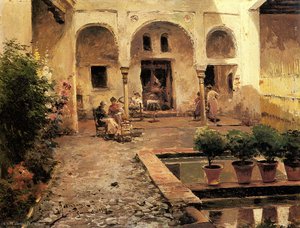
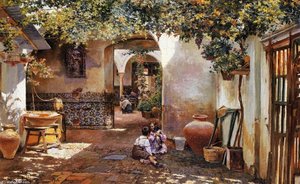
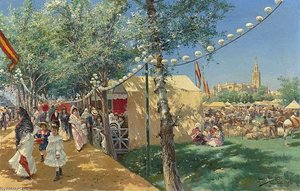
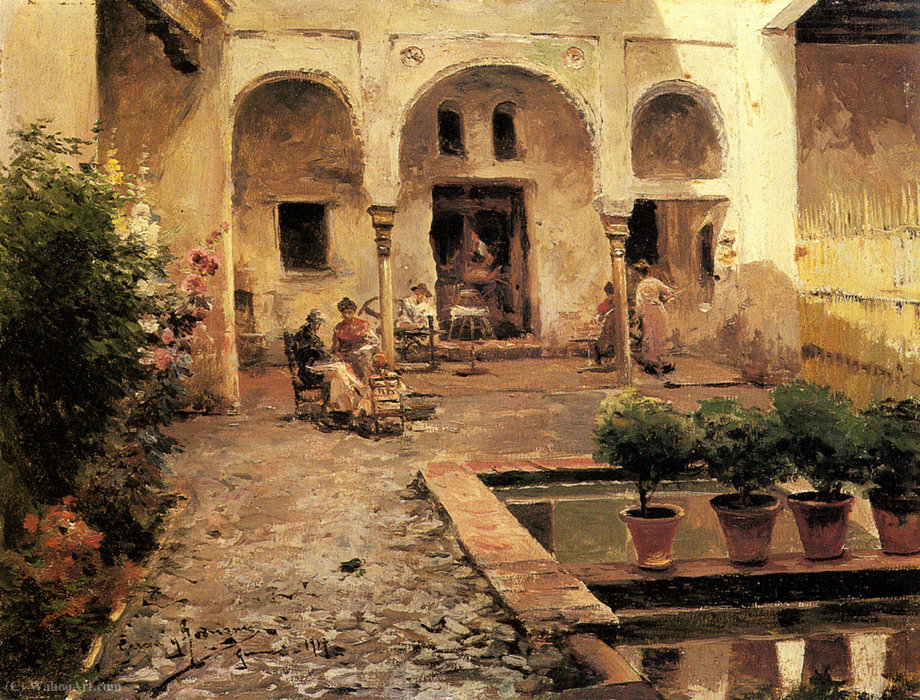
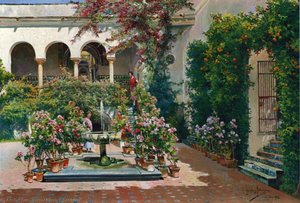
Figures in a Spanish Courtyard


 Read More
Hand Made Oil Reproduction
Hand-painted oil on canvas in your size and frame, made to order by our artists. ( Buy Print Buy Image)




P118B $10

P118H $10

P118W $10

P438Z $10

P508JH $12

P508YH $12

P805H $10

P805Z $10

P919BZ $10

P919G $10

P919XJ $10

P959ZH $10

P968JZ $12

W106C $8

W218G $10

W218JH $8

W218Y $10

W307PJ $10

W316G $10

W316PJ $8

W316Y $10

W398PJ $8

W4111J $10

W500HY $15

W500JH $15

W692G $12

W849H $8

W940BG $15

W953PJ $8




Pick from our preset sizes that match the artwork's original proportions.

You may enter your own dimensions to fit a specific frame or space. If your selected size does not match the original image's proportions, we will either crop the artwork or extend the painting with additional hand-painted elements. A digital mockup will be sent for your approval before production begins.
Please note that the on-screen preview does not reflect the actual cropping or extension. Only the mockup will accurately show the final composition.
While custom sizes are available, we recommend selecting a dimension from the predefined list to preserve the original proportions.
After order, ArtsDot.com team will email client for instructions and provide a mockup preview
Worldwide Delivery () in 3/4 weeks instead of standard 5 weeks. (17 August). No compromise on quality.

Free Worldwide Express Shipping

High-Quality Linen Canvas

Full Shipping Insurance

Customs Tax Refund Guarantee

True Color Matching Guarantee

60-Day Return Policy (Defects Only)

100% Money-Back Guarantee

Bulk Discount Offer
 Glass option is only available in size under 110 CM

Figures in a Spanish Courtyard
Reproduction Medium
Reproduction Size
-


Total Price
$ 263
Artwork Description
A Window into Seville: Manuel García y Rodríguez’s ‘Figures in a Spanish Courtyard’
Manuel García y Rodríguez's “Figures in a Spanish Courtyard” is more than just a depiction of an outdoor scene; it’s a meticulously crafted snapshot of life in 19th-century Spain, rendered with the characteristic warmth and detail of costumbrismo. This painting transports us to a tranquil Seville courtyard, inviting contemplation of everyday moments – conversation, leisure, and the simple beauty of human connection. The artist's skill lies not just in his technical ability but in his profound understanding of capturing regional identity and atmosphere.

The scene unfolds with a quiet realism, showcasing several figures engaged in various activities. The arrangement of the chairs and tables suggests an intimate gathering, perhaps a family enjoying an afternoon conversation or a group of friends sharing stories. Notice the subtle variations in clothing – indicative of social standing and regional customs – adding layers of visual information to the composition. García’s attention to detail extends to the potted plant on the right, introducing a touch of naturalism that grounds the scene within its outdoor setting.
The Costumbrismo Movement & José de la Vega's Influence
García y Rodríguez was a key figure in the costumbrismo movement, a Spanish artistic trend prominent during the late 19th century. Costumbrismo sought to portray the authentic life and traditions of Spain – its people, landscapes, customs, and regional variations – with an emphasis on accuracy and emotional resonance. This approach was heavily influenced by José de la Vega Marrugal, who encouraged artists to focus on depicting everyday scenes rather than grand historical or mythological subjects. De la Vega’s guidance instilled in García a deep respect for the nuances of Sevillian life, which is vividly reflected in this painting.
The Escuela de Bellas Artes de Sevilla provided García with a rigorous artistic education, exposing him to the techniques and styles of prominent Sevillian artists like Eduardo Cano. This training undoubtedly shaped his approach to composition, color palette, and brushwork – elements that contribute significantly to the painting’s overall charm and authenticity.
Technique & Composition: A Study in Light and Atmosphere
García y Rodríguez employs a loose, impressionistic technique, prioritizing capturing the fleeting effects of light and atmosphere over precise detail. The brushstrokes are visible, contributing to a sense of spontaneity and immediacy. Note how he skillfully uses light to define forms and create depth within the courtyard – particularly evident in the dappled shadows cast by the foliage and the warm glow illuminating the figures. The composition is balanced and harmonious, guiding the viewer’s eye through the scene with subtle variations in scale and perspective.
Symbolism & Emotional Impact
Beyond its realistic depiction of daily life, “Figures in a Spanish Courtyard” evokes a sense of nostalgia and tranquility. It invites us to imagine ourselves part of this quiet moment, appreciating the simple pleasures of conversation, companionship, and connection with nature. The painting’s enduring appeal lies in its ability to capture a timeless quality – a reminder that human experiences remain constant across generations and cultures. This reproduction offers a beautiful opportunity to bring a piece of authentic Spanish artistry into your home or office.
Related Artworks
Artist Biography
A Vision of Seville: The Life and Art of Manuel García y Rodríguez
Born in the vibrant heart of Seville in 1863, Manuel García y Rodríguez emerged as a definitive voice in Spanish costumbrismo, a movement dedicated to the soulful preservation of regional traditions and everyday life. While his early inclinations leaned toward the rhythmic world of music, he soon found a more enduring language through the brush and canvas. This transition was nurtured by the mentorship of José de la Vega Marrugal, whose guidance provided the foundational discipline required for a lifetime of mastery. His formal training at the Escuela de Bellas Artes de Sevilla placed him under the tutelage of legendary figures such as Eduardo Cano, Manuel Ussel de Guimbarda, and Emilio Sánchez Perrier, ensuring that his work was deeply rooted in the prestigious Sevillian artistic lineage.
The trajectory of García’s career was marked by rapid ascent and international acclaim. His ability to capture the essence of Spanish identity earned him prestigious accolades at the National Exhibition of Fine Arts in 1887, 1890, and 1895. These triumphs were not confined to Spain; his talent resonated globally, securing his place in major international showcases such as the Exposition Universelle in 1889 and the World's Columbian Exposition. Such recognition culminated in his 1899 induction into the Real Academia de Bellas Artes de San Fernando, an honor that solidified his status among the elite of the Spanish art establishment and cemented his legacy as a guardian of cultural heritage.
Evolution of Style: From Tradition to Impressionistic Light
As the nineteenth century gave way to the twentieth, García’s artistic vision underwent a profound metamorphosis. While he remained a master of costumbrismo—the meticulous depiction of local customs—he began to embrace the broader European trends of his era, most notably the allure of Orientalism. His travels and fascination with the vibrant, sun-drenched culture of Tangier introduced a new layer of complexity to his work. In these later pieces, one can observe an infusion of Impressionistic techniques, where the artist moved beyond mere documentation to capture the ephemeral dance of light and atmosphere.
This stylistic evolution is beautifully evident in his treatment of landscape and interior spaces. Whether portraying the lush, tranquil gardens of Andalusia or the intimate corners of a domestic patio, García utilized a sensitive palette to convey emotional resonance. His work often features:
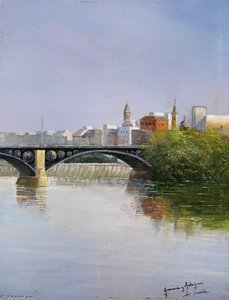
- Atmospheric Landscapes: Works like A River Landscape With Seville Beyond demonstrate his ability to blend meticulous detail with a warm, evocative color palette that captures the rural essence of Spain.
- Domestic Intimacy: In paintings such as Mother and Daughter Sewing on a Patio, he elevates simple, everyday moments into timeless studies of serenity and familial connection.
- Cultural Vibrancy: His depictions of communal life, seen in masterpieces like Festival in Seville, celebrate the rhythmic energy and festive spirit of his native city.
Legacy and Historical Significance
The historical significance of Manuel García y Rodríguez lies in his unique ability to bridge the gap between the rigid academic traditions of the past and the fluid, light-focused innovations of the modern era. He did not merely paint scenes; he captured the very soul of Andalusia, preserving the textures of its courtyards, the warmth of its sunlight, and the dignity of its people. Through his mastery of both costumbrista realism and Impressionistic light, he created a visual archive of a vanishing way of life.
Today, his works continue to resonate within the halls of prestigious institutions, such as the Museo Carmen Thyssen, where they serve as vital links to Spain's cultural golden age. His legacy remains an enduring testament to the power of art to transform the mundane into the magnificent, ensuring that the spirit of 19th-century Seville remains eternally vibrant for future generations.
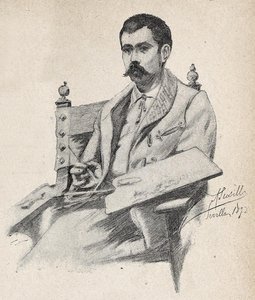
Manuel García y Rodríguez
1863 - 1925 , Spain
Quick Facts
- Artistic Movement Or Style: Costumbrismo & Landscape art
- Artists Or Movements Influenced By This Artist: ['Alcalá de Guadaira school']
- Artists Who Influenced This Artist: ['José de la Vega Marrugal']
- Date Of Death: 1925
- Full Name: Manuel García y Rodríguez
- Nationality: Spanish
- Notable Artworks:
- Festival in Seville
- A river landscape with Seville beyond
- Patio with children
- Place Of Birth: Seville, Spain
Related Articles

Goya's Masterpieces: Explore 25 Iconic Paintings & Art Prints | ArtsDot
Delve into the world of Francisco Goya with ArtsDot. Explore 25 iconic paintings – from 'The Third of May' to his haunting Black Paintings. Discover the stories, techniques & emotions behind these Spanish masterpieces. Find museum-quality art reproductions for your home at ArtsDot.com!
Manuel Benedito Vives: A Study of Light, Color & Emotional Resonance in Contemporary Spanish Painting
Explore the captivating world of Manuel Benedito Vives, a celebrated Spanish painter influenced by Sorolla. Discover his masterful portraits, luminous landscapes & enduring legacy – a favorite of the Spanish Royal Family. Art collectors will appreciate this in-depth study.
Rafael de Penagos: A Study in Spanish Portraiture & Artistic Identity
Explore the life & art of Rafael de Penagos, a leading Spanish Art Deco illustrator. Discover his iconic 'Penagos Woman', commercial work, and lasting legacy. Learn about this pivotal figure in 20th-century Spanish art history.
Prado Masterpieces: Explore 25 Iconic Artworks & Bring Spanish Beauty Home
Journey through 25 Prado Museum masterpieces! Explore Velázquez, Goya & El Greco's iconic Spanish art. Discover the stories behind these timeless paintings and find museum-quality reproductions for your home at ArtsDot.com.
Ignacio Díaz Olano: Bridging Realism & Costumbrismo in Spanish Portraiture
Explore the captivating works of Ignacio Díaz Olano, a pivotal Spanish Realist painter. Discover his intimate portraits, evocative scenes of Andalusia, and unique 'Costumbrista' style. Learn about his legacy & find museum-quality reproductions.