Menu
FREE ART CONSULTATION
Buy Print Buy PrintBuy Hand Made Painting Buy Hand Made Painting SendSend
DetailsDetails Add to favorites Add to favorites DownloadDownload SimilarsSimilars DiaporamaDiaporama

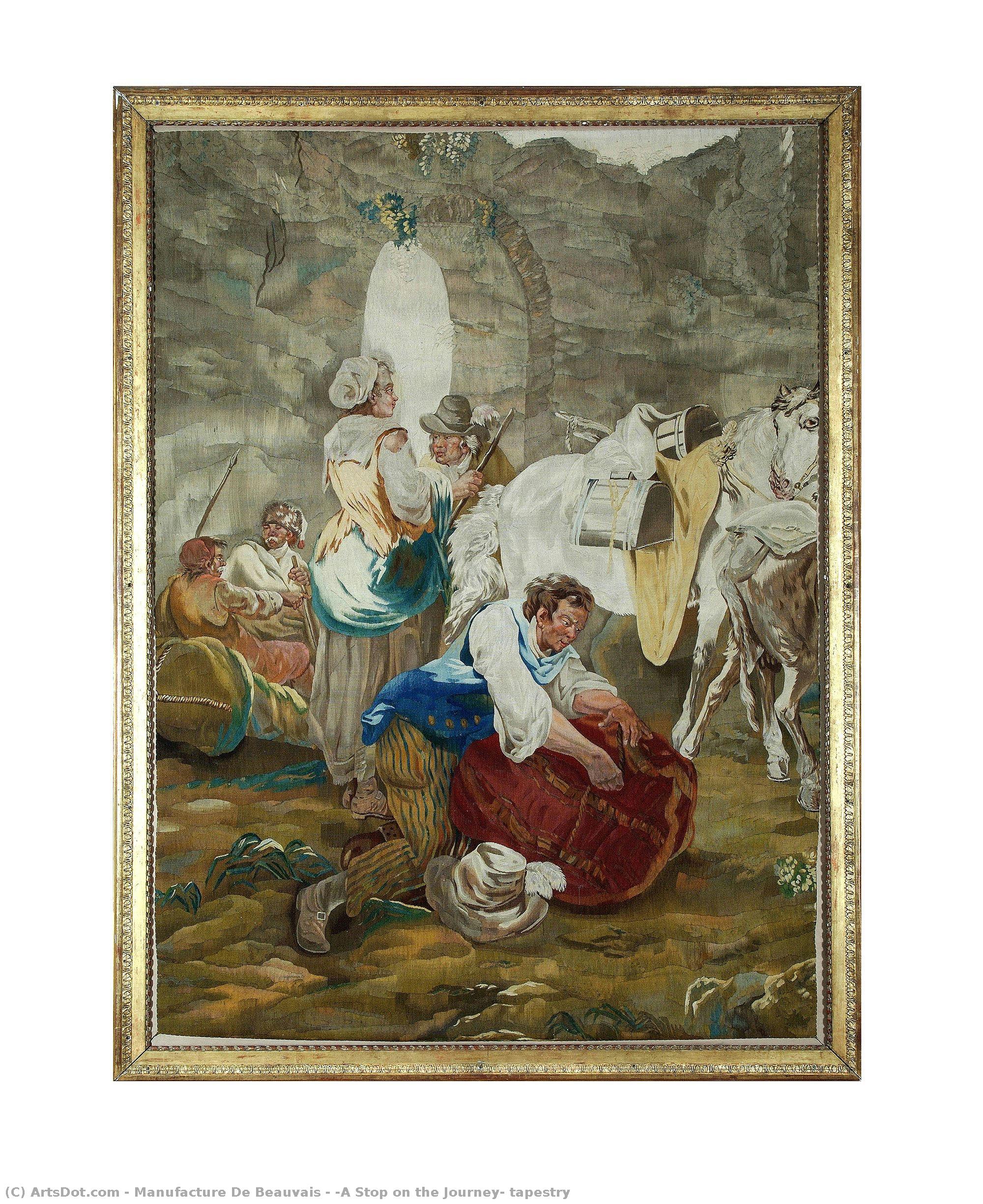
“A Stop on the Journey” tapestry

A serene silk tapestry by Manufacture De Beauvais from 1780 captures a charming scene of travelers and horses gathered in conversation, offering a timeless piece of French history to grace your collection.

Manufacture de Beauvais is renowned for its exquisite French tapestry weaving tradition, creating iconic works like the 'Hunting Series' and adorning royal residences with luxurious art; discover their timeless elegance.

Purchase a high-resolution, enhanced digital image, far superior to the online preview.

Each file is meticulously prepared by our in-house specialists using advanced tools and expert manual retouching. We ensure every image has exceptional clarity, precise color accuracy, and fine detail.

The final file is delivered via email within 72 hours, optimized for immediate use in professional, editorial, and print environments. This is the same quality trusted by top-tier design studios, publishers, and galleries.

Digital Image

Download a high-resolution file for personal display, printing, and creative projects. (Buy Print Buy PrintBuy Hand Made Painting Buy Hand Made Painting)

Total Price

$ 24.00

Included in Every Digital Image Order

Expert Digital Delivery, Guaranteed

When you choose ArtsDot.com, you're not just getting an image - you're receiving a professionally enhanced digital artwork, crafted with precision and backed by a satisfaction guarantee. Here's everything that comes with your order, automatically:

shipping_icon
Fast Email Delivery

Your high-resolution digital image file will be emailed to you within 72 hours of ordering - ready for immediate use.

canvas_icon
AI-Enhanced Digital File

Your artwork is professionally optimized using advanced AI tools and manual editing, ensuring maximum detail, clarity, and color accuracy.

insurance_icon
Free Lifetime Re-Delivery

Accidentally deleted or lost your file? No worries - we'll resend it to you anytime, free of charge.

tax_icon
No Import Fees - Ever

Enjoy your artwork instantly with zero customs, duties, or delivery fees - digital downloads are always tax-free.

color_icon
Color Accuracy Guarantee

We ensure your digital image reflects the original colors as closely as possible using professional tools and color management.

return_icon
60-Day Satisfaction Guarantee

If you're not satisfied with your digital image, we'll revise it or refund 100% within 60 days - no questions asked.

guarantee_icon
100% Money-Back Guarantee

Not satisfied? Get a full refund within 60 days of receiving your digital file - no questions asked.

discount_icon
Bulk Order Discounts

Buy 3 images, save 10% - Buy 5, save 15% - Buy 10+, save 20%. Great for creative projects, galleries, and agencies.

Quick Facts

  • Year: 1780
  • Notable elements: Horses, people, and a clock
  • Medium: Silk tapestry
  • Artist: Manufacture De Beauvais
  • Subject or theme: People gathered around horses

Collectible Description

A Moment Frozen in Silk: The Elegance of “A Stop on the Journey”

In the delicate interplay of light and thread, “A Stop on the Journey” emerges as a breathtaking testament to the golden age of French textile artistry. This exquisite silk tapestry, dating back to 1780, invites the viewer into a pastoral dreamscape where time seems to decelerate. The scene captures a transient moment of repose, depicting a group of travelers gathered in a quiet communion with nature and one another. As eyes wander across the lustrous surface, one encounters a rhythmic arrangement of figures—some standing in contemplative grace, others kneeling or seated upon the earth—all woven into a narrative of shared humanity. The presence of three majestic horses, positioned strategically across the composition, adds a sense of noble movement and vitality to the stillness, suggesting that while the journey has paused, the spirit of adventure remains ever-present.

The technical mastery displayed in this piece is nothing short of extraordinary. Produced by the legendary Manufacture De Beauvais, the tapestry utilizes the shimmering properties of silk to create a depth of color and a luminosity that mere paint could never achieve. The weavers have achieved a painterly effect, where the transitions between shadow and light are as soft as a whisper. This technique allows for a remarkable level of detail, from the subtle musculature of the horses to the intricate textures of the travelers' garments. For the discerning collector or interior designer, such a piece serves as more than mere decoration; it is a window into a lost era of refinement, offering a tactile richness that breathes life and sophisticated warmth into any grand salon or curated gallery space.

The Legacy of Beauvais and the Art of Narrative Weaving

To understand the profound impact of this tapestry, one must look to its origin within the prestigious Manufacture De Beauvais. Established under the royal patronage of King Henry IV and Marie de Medici, the Beauvais workshop was never a mere factory of imitation; it was a laboratory of original artistic vision. Unlike other workshops that relied heavily on existing patterns, Beauvais invited the most celebrated artists of the eighteenth century to compose unique models specifically designed for the loom. This commitment to originality ensured that every tapestry was a singular masterpiece. In “A Stop on the Journey,” we see the culmination of this tradition—a work where the medium of silk and wool is used not just to depict a scene, but to elevate a simple moment of rest into an allegorical celebration of peace and companionship.

The symbolism embedded within the composition adds layers of intellectual depth for the art enthusiast. The inclusion of a clock near the upper-left corner serves as a poignant memento mori, a subtle reminder of the fleeting nature of time amidst the eternal beauty of the landscape. It contrasts the transient pause of the travelers with the relentless march of the hours, urging the viewer to cherish the present moment. This tension between the ephemeral and the enduring is what gives the tapestry its emotional resonance. For those seeking to adorn a home with art that inspires reflection, this reproduction offers an unparalleled opportunity to possess a fragment of history—a piece that speaks of elegance, the beauty of the natural world, and the timeless human desire for connection.

Artist Biography

The Enduring Legacy of Manufacture de Beauvais: Tapestry Weaving Through Time

For over four centuries, the name Manufacture de Beauvais has been synonymous with exquisite tapestry weaving – a tradition born from royal ambition and nurtured by generations of skilled artisans. Unlike many workshops focused on replicating existing designs, Beauvais distinguished itself early on as a center for *original* compositions, attracting leading artists of the day to create models specifically for translation into wool and silk. Its story begins in 1607, under the patronage of King Henry IV and his wife Marie de Medici, who envisioned establishing a French tapestry workshop rivaling the famed Gobelins manufactory. Initially intended to produce luxury goods for the court and as diplomatic gifts, Beauvais quickly evolved beyond mere imitation, forging its own distinct aesthetic path. The early decades saw a focus on mythological subjects, allegorical scenes, and depictions of pastoral life, reflecting the prevailing Baroque taste. Artists like Philippe de Champaigne contributed designs that were then meticulously rendered by weavers, often members of established families passing down their expertise through generations.

From Royal Workshop to Independent Enterprise

The 17th century witnessed Beauvais flourish under successive royal patrons – Louis XIII and particularly Louis XIV, the “Sun King.” This period saw a shift towards larger-scale productions, ambitious narratives, and an increasing emphasis on technical virtuosity. The workshop’s weavers mastered complex techniques like *haute lisse* (high warp) weaving, allowing for incredibly detailed and nuanced imagery. However, the relationship between the Crown and Beauvais wasn't always smooth. By the late 17th century, financial pressures led to a gradual loosening of royal control. In 1690, Jean-Baptiste Colbert de Torcy secured permission to operate the workshop as an independent enterprise, though still under royal license. This marked a pivotal moment – Beauvais transitioned from being solely a producer for the court to catering to a wider clientele of nobles and wealthy collectors. The workshop began to embrace new styles, including the Rococo aesthetic in the 18th century, characterized by its delicate ornamentation, playful themes, and pastel color palettes. Figures like François Boucher and Jean-Honoré Fragonard became key contributors, their paintings inspiring some of Beauvais’s most celebrated tapestries.

The Age of Boucher and Fragonard: Rococo Splendor

The 18th century represents the golden age of Manufacture de Beauvais. The workshop perfectly captured the spirit of the Rococo era, producing tapestries that were not merely decorative objects but embodiments of aristocratic taste and lifestyle. François Boucher’s designs, with their idyllic scenes of love, leisure, and mythology, proved immensely popular. Tapestries like “The Triumph of Venus” and “Diana Bathing” became iconic representations of the period. Jean-Honoré Fragonard also contributed significantly, his playful and sensual compositions lending themselves beautifully to the tapestry medium. The weavers of Beauvais demonstrated an extraordinary ability to translate the delicate brushstrokes and luminous colors of these paintings into wool and silk, creating tapestries that possessed a remarkable sense of depth and texture. Beyond Boucher and Fragonard, other prominent artists like Joseph Marie Crevoisier contributed designs, ensuring a diverse and consistently high quality of production. This period also saw an expansion in the workshop’s output beyond large-scale tapestries to include smaller pieces – *verdure* tapestries (landscapes with figures) and upholstery fabrics – broadening its appeal to a wider market.

Challenges and Resilience: The 19th and 20th Centuries

The French Revolution brought significant upheaval to Manufacture de Beauvais, as it did to many aristocratic institutions. The demand for luxury goods plummeted, and the workshop struggled to adapt to changing tastes. While production continued throughout the 19th century, it was often characterized by a reliance on replicating earlier designs rather than embracing innovation. Attempts were made to revive the workshop’s fortunes through collaborations with contemporary artists, but these efforts met with limited success. The rise of industrial weaving posed another significant challenge, as machine-made fabrics became increasingly affordable and accessible. However, Beauvais persevered, maintaining its commitment to handwoven tapestries and preserving traditional techniques. In the 20th century, a renewed appreciation for craftsmanship and historical artistry led to a resurgence in demand for Beauvais tapestries. The workshop began to focus on limited edition productions and collaborations with designers seeking to revive the legacy of its past masters.

A Continuing Tradition: Beauvais Today

Today, Manufacture de Beauvais remains one of the few surviving tapestry workshops in France still employing traditional handweaving techniques. It stands as a testament to the enduring power of artistic collaboration and the dedication of generations of skilled artisans. While the workshop no longer operates on the same scale as it did during its 18th-century heyday, it continues to produce exquisite tapestries for collectors and institutions worldwide. The designs often draw inspiration from the workshop’s rich historical archive, ensuring that the legacy of Boucher, Fragonard, and their predecessors lives on. Beauvais is not simply a producer of decorative objects; it is a living repository of artistic knowledge and technical expertise. Its tapestries represent a unique fusion of painting, weaving, and craftsmanship – a testament to the enduring beauty and timeless appeal of this remarkable art form. The workshop actively promotes its heritage through exhibitions, workshops, and collaborations, ensuring that the tradition of Beauvais tapestry weaving continues to inspire and captivate audiences for generations to come.