 Preview
 Send
Send Share
Share
 Details

 Download
 Similars
 X-Ray
X-Ray Diaporama
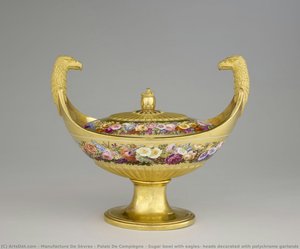
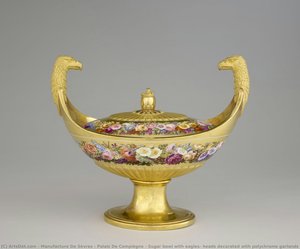
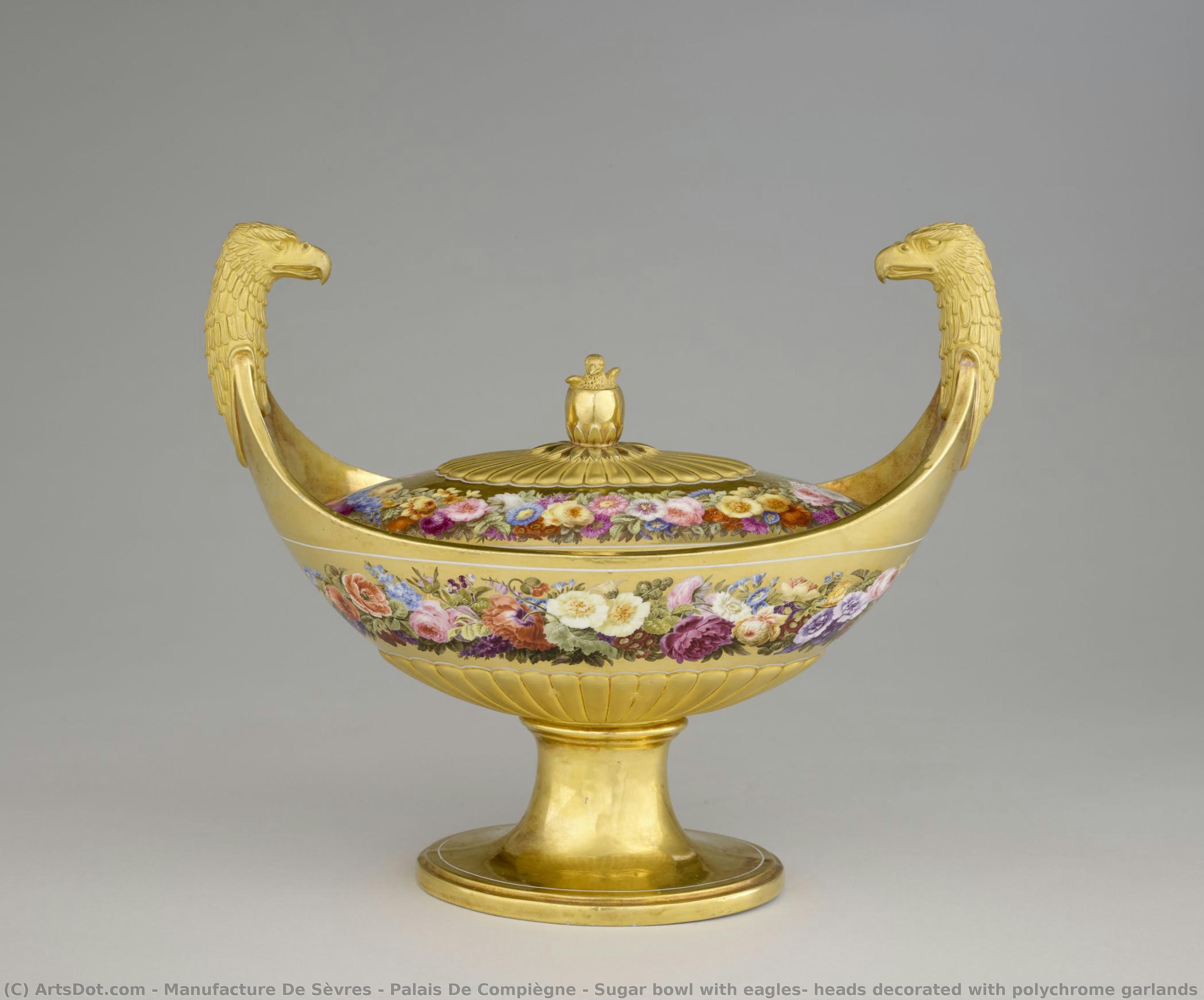
Sugar bowl with eagles’ heads decorated with polychrome garlands of flowers on a gold background,


 Read More
Giclée / Art Print
Museum-quality giclée or canvas print with fast production and flexible finish options. ( Buy Hand Made Painting Buy Image)




































Pick from our preset sizes that match the artwork's original proportions.

You may enter your own dimensions to fit a specific frame or space. If your selected size does not match the original image's proportions, we will either crop the artwork or extend the image with a mirrored or solid-fill edge. A digital mockup will be sent for your approval before production begins.
Please note that the on-screen preview does not reflect the actual cropping or extension. Only the mockup will accurately show the final composition.
While custom sizes are available, we recommend selecting a dimension from the predefined list to preserve the original proportions.
Worldwide Delivery () in 2 weeks instead of standard 4/5 weeks. (24 August)

Free Worldwide Express Shipping

High-Quality Linen Canvas

Full Shipping Insurance

Customs Tax Refund Guarantee

True Color Matching Guarantee

60-Day Return Policy (Defects Only)

100% Money-Back Guarantee

Bulk Discount Offer
 Glass option is only available in size under 110 CM

Sugar bowl with eagles’ heads decorated with polychrome garlands of flowers on a gold background,
Giclée / Art Print
Reproduction Size
-


Total Price
$ 63
Collectible Description
Related Artworks





Artist Biography
The Legacy of Luxury: Manufacture de Sèvres and the Palais de Compiègne
The story of the Manufacture de Sèvres, inextricably linked to the opulence of French royalty and later, the ambitious decorative schemes of Napoleon I, is a fascinating chronicle of artistic innovation, technical mastery, and the enduring pursuit of beauty. While not a single artist in the traditional sense, the “Manufacture de Sèvres – Palais de Compiègne” represents a collective genius—a workshop dedicated to producing porcelain objects of unparalleled quality for the imperial residence at Compiègne. To understand its significance, one must journey back to the 18th century and the origins of French hard-paste porcelain. Initially struggling to replicate the coveted Chinese formulas, France found success through the efforts of chemists and artisans who eventually unlocked the secrets of kaolin production. The factory, initially a private venture under Louis XV, was absorbed into the royal holdings in 1756, becoming the *Manufacture Royale de Sèvres*. This marked a turning point; the focus shifted from mere imitation to original designs, pushing the boundaries of artistic expression and technical possibility.From Royal Patronage to Imperial Grandeur
The French Revolution brought upheaval, but remarkably, the Manufacture survived, adapting to new patrons and tastes. However, it was under Napoleon I that Sèvres truly flourished again, becoming a powerful instrument in projecting imperial power and prestige. The emperor envisioned Compiègne as a rival to Versailles, a palace embodying both classical grandeur and modern sophistication. Porcelain played a central role in this vision. Napoleon commissioned vast services, decorative panels, vases, and *objets d'art* specifically for the palace, demanding designs that reflected his military victories, dynastic ambitions, and personal iconography. The work produced for Compiègne wasn’t simply about ornamentation; it was propaganda rendered in exquisite porcelain, a visual testament to Napoleon’s reign. The factory employed leading artists of the day – painters, gilders, sculptors – all working collaboratively under the direction of skilled *directeurs*. This period saw a revival of neoclassical motifs, often combined with depictions of military scenes, allegorical figures representing peace and prosperity, and portraits of the imperial family.Techniques and Artistic Characteristics
The porcelain produced for Compiègne is distinguished by its exceptional technical quality and refined aesthetic. Sèvres artisans perfected techniques such as *bleu celeste* (sky blue), a particularly difficult color to achieve, and intricate gilding using real gold leaf. The factory was renowned for its ground colors – rich blues, greens, pinks, and yellows – applied with remarkable evenness and luminosity. Painting styles varied depending on the commission, but often featured delicate floral arrangements, scenes inspired by classical mythology, or detailed depictions of historical events. The use of *moulages* (pre-cast porcelain shapes) allowed for consistent forms, while hand-painted decoration ensured each piece was unique. Groundwork and gilding were particularly important elements, often forming elaborate borders and enhancing the overall richness of the design. The artisans also excelled in creating complex shapes – vases with multiple handles, ewers with sculpted figures, and intricate serving dishes – demonstrating a mastery of both form and function. The emphasis was always on elegance, refinement, and meticulous attention to detail.Themes and Symbolism at Compiègne
A close examination of the porcelain created for the Palais de Compiègne reveals a carefully constructed visual language steeped in symbolism. Military trophies – swords, shields, banners – celebrated Napoleon’s victories in Italy, Egypt, and beyond. Allegorical figures representing France, Peace, and Victory reinforced the emperor's role as a bringer of stability and prosperity. Portraits of Napoleon and Josephine were frequently incorporated into designs, often depicted alongside symbols of imperial power such as eagles, bees, and laurel wreaths. The use of classical motifs – Greek key patterns, acanthus leaves, and mythological scenes – evoked the grandeur of ancient Rome, associating Napoleon with the great emperors of antiquity.- Depictions of landscapes
- Botanical studies
- Scenes from Homer’s *Iliad* and *Odyssey*