 Preview
 Send
Send Share
Share
 Details

 Download
 Similars
 X-Ray
X-Ray Diaporama
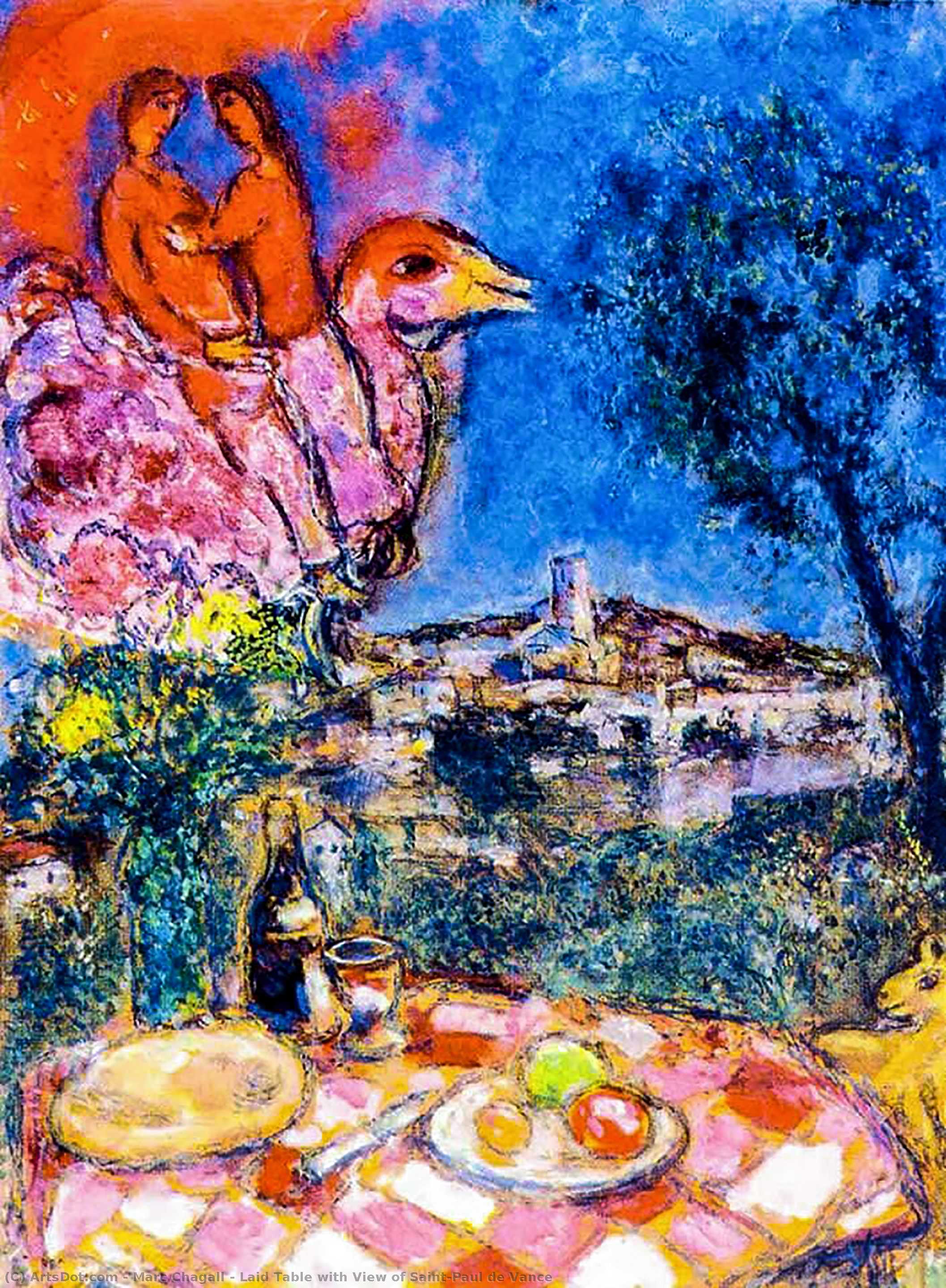
Laid Table with View of Saint-Paul de Vance
 Oil On Canvas
- WallArt
- Naive Art (Primitivism)
 1968
1968- Modern
 100.0 x 73.0 cm
 Read More
Hand Made Oil Reproduction
Hand-painted oil on canvas in your size and frame, made to order by our artists. ( Buy Print Buy Image)




P118B $10

P118H $10

P118W $10

P438Z $10

P508JH $12

P508YH $12

P805H $10

P805Z $10

P919BZ $10

P919G $10

P919XJ $10

P959ZH $10

P968JZ $12

W106C $8

W218G $10

W218JH $8

W218Y $10

W307PJ $10

W316G $10

W316PJ $8

W316Y $10

W398PJ $8

W4111J $10

W500HY $15

W500JH $15

W692G $12

W849H $8

W940BG $15

W953PJ $8




Pick from our preset sizes that match the artwork's original proportions.

You may enter your own dimensions to fit a specific frame or space. If your selected size does not match the original image's proportions, we will either crop the artwork or extend the painting with additional hand-painted elements. A digital mockup will be sent for your approval before production begins.
Please note that the on-screen preview does not reflect the actual cropping or extension. Only the mockup will accurately show the final composition.
While custom sizes are available, we recommend selecting a dimension from the predefined list to preserve the original proportions.
After order, ArtsDot.com team will email client for instructions and provide a mockup preview
Worldwide Delivery () in 3/4 weeks instead of standard 5 weeks. (17 August). No compromise on quality.

Free Worldwide Express Shipping

High-Quality Linen Canvas

Full Shipping Insurance

Customs Tax Refund Guarantee

True Color Matching Guarantee

60-Day Return Policy (Defects Only)

100% Money-Back Guarantee

Bulk Discount Offer
 Glass option is only available in size under 110 CM

Laid Table with View of Saint-Paul de Vance
Reproduction Medium
Reproduction Size
-


Total Price
$ 263
Artwork Description
A Window into Chagall’s Dreamscape
In the vast, luminous tapestry of modern art, few threads are as vibrant or as emotionally resonant as those woven by Marc Chagall. His 1968 masterpiece, Laid Table with View of Saint-Paul de Vence, serves as a profound invitation into the artist's inner landscape—a realm where the boundaries between reality and memory dissolve into a dreamlike haze. This painting is not merely a depiction of a quiet afternoon in the French countryside; it is a poetic translation of the intangible. Through his signature Naïve Art style, Chagall bypasses the rigid constraints of academic realism to embrace a world defined by simplicity, directness, and an almost childlike wonder. To gaze upon this canvas is to step into a sanctuary where color reigns supreme and every brushstroke carries the weight of a cherished memory.
The composition unfolds with a captivating intimacy, centering on a table set for two, suggesting a moment of shared tenderness and quiet romance. The foreground is alive with the tactile joy of abundance; plates are laden with apples and oranges, rendered not as mere fruit, but as glowing, luminous spheres of pure pigment. These elements act as potent symbols of fertility, earthly pleasure, and the sweetness of life itself. A patterned tablecloth, dancing with pink and yellow squares, adds a rhythmic, cheerful energy to the scene, while a bottle—perhaps containing wine or water—stands ready to toast to the tranquility of the moment. The figures seated at the table, though slightly abstracted, possess a soulful presence that anchors the viewer in their shared connection.
A Symphony of Color and Technique
Chagall’s technical mastery lies in his ability to manipulate color to evoke profound emotional responses. Influenced by the bold, liberated palettes of Fauvism and the fragmented perspectives of Cubism, he developed a language that prioritized feeling over precise observation. In this work, we see the culmination of his lifelong dialogue with these movements. The technique utilizes flattened planes of color and fluid, expressive brushstrokes that lend a sense of perpetual motion to the scene. There is no heavy shadow or oppressive depth here; instead, light seems to emanate from within the pigments themselves, creating a luminous atmosphere that feels both ethereal and deeply grounded.
Beyond the table, the eye is led toward the breathtaking vista of Saint-Paul de Vence. A solitary tree stands as a sentinel in the middle ground, its branches reaching upward toward a serene blue sky dotted with soft, drifting clouds. In the far distance, the faint, picturesque outlines of the village emerge, reminding us of the real-world inspiration that fueled his imagination. This juxtaposition of the intimate foreground and the expansive background creates a sense of infinite space, mirroring the way a single memory can expand to encompass an entire lifetime.
An Eternal Inspiration for the Modern Collector
For the discerning collector or interior designer, Laid Table with View of Saint-Paul de Vence offers much more than mere decoration; it offers an atmosphere. The painting possesses a unique ability to transform a space, infusing a room with a sense of peace, nostalgia, and whimsical joy. Its vibrant palette can serve as a focal point in a contemporary setting, providing a burst of color that stimulates the senses without overwhelming the environment. Because the work draws so heavily from the universal themes of love, nature, and abundance, it remains timelessly relevant.
Owning a high-quality reproduction of this Chagall masterpiece allows one to curate an environment of intellectual and emotional depth. It is a piece that invites conversation, prompting viewers to reflect on their own dreams and the beauty found in life's simplest moments. Whether placed in a sunlit studio or a sophisticated living area, this painting acts as a perennial window into a world where magic is always possible and every meal is a celebration of existence.
Related Artworks
Artist Biography
A Life Painted in Dreams: The World of Marc Chagall
Marc Chagall, born Moishe Shagal in 1887 in the small Belarussian town of Liozna near Vitebsk, wasn’t merely a painter; he was a poet of color, a weaver of dreams, and a chronicler of memory. His life, spanning nearly a century, mirrored the tumultuous currents of the 20th century, yet his art remained steadfastly rooted in a deeply personal vision—one infused with the folklore of his Hasidic Jewish upbringing and an unwavering belief in the power of imagination. Vitebsk itself was more than just a birthplace; it became the emotional core of his artistic universe, a recurring motif populated by flying figures, whimsical animals, and the vibrant hues of remembered landscapes. The town’s unique blend of cultures—Russian Orthodox churches alongside bustling Jewish marketplaces—forged an aesthetic sensibility that would defy easy categorization throughout his long career. Though he sought formal training first with a local sign painter and later in St. Petersburg under Léon Bakst, and then in Paris at the Académie de la Grande Chaumière, Chagall never fully embraced any single artistic movement. He absorbed elements of Cubism, Symbolism, and Fauvism, but always filtered them through his own intensely personal lens, creating a style that was uniquely, unmistakably Chagall.Forging a Unique Visual Language
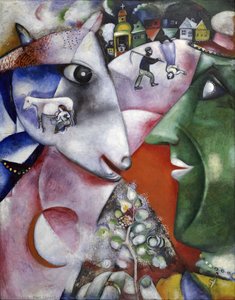
Chagall’s early works already hinted at the distinctive language he would develop. Paintings like I and the Village (1911) are not simply depictions of place; they are explorations of identity, memory, and the relationship between the individual and community. The village isn't rendered realistically but as a fragmented collection of recollections, imbued with symbolic meaning. This ability to transmute personal experience into universal themes became a hallmark of his art. His palette was bold and expressive, often employing vibrant, non-naturalistic colors to convey emotion rather than literal representation. Figures float and dance across the canvas, defying gravity and logic, creating a dreamlike atmosphere that invites viewers into his inner world. This stylistic approach wasn’t accidental; it stemmed from a desire to move beyond mere imitation of reality and capture the essence of feeling, the weight of memory, and the power of folklore. The Russian Revolution brought Chagall back to Vitebsk, where he became involved in cultural initiatives, establishing an art school that briefly flourished before succumbing to the restrictions imposed by the new regime. This period was marked by both creative energy and political disillusionment, a tension that would continue to shape his artistic trajectory.A Life Between Worlds: Paris, New York, and Beyond
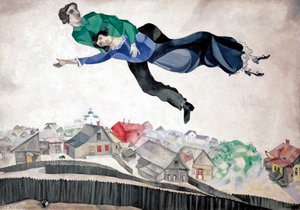
Eventually, Chagall left Russia for good, settling in France in 1923. This marked the beginning of a period of international recognition and prolific creativity. Works like Over Vitebsk (1920-1922) demonstrate his continued engagement with his childhood memories, while paintings inspired by biblical stories—such as Jacob’s Dream—reveal a growing interest in religious themes. The outbreak of World War II forced him to flee occupied France for the United States, where he spent seven years in New York City. This period was marked by profound emotional upheaval and artistic experimentation. He found solace in his art, creating powerful works that reflected the anxieties and uncertainties of the time. White Crucifixion (1938), a haunting depiction of suffering and persecution, stands as a testament to this era. After the war, Chagall returned to France, where he continued to paint and create until his death in 1985 at the age of 97.Legacy and Enduring Influence
In his later years, Marc Chagall received numerous prestigious commissions, including the ceiling of the Paris Opera (1964), a breathtaking explosion of color and form that celebrated musical masterpieces, and stunning stained glass windows for the Hadassah Hebrew University Medical Center synagogue in Jerusalem. These large-scale projects allowed him to translate his artistic vision into architectural spaces, creating immersive environments that continue to inspire awe and wonder. Chagall’s influence on subsequent generations of artists is undeniable. His lyrical quality, emotional depth, and imaginative power resonated with Surrealists and other movements that embraced fantasy and symbolism. He bridged the gap between European modernism and Jewish cultural identity, becoming known as “the quintessential Jewish artist of the twentieth century.” His ability to synthesize personal experience, folklore, and universal themes continues to resonate with audiences worldwide. His work reminds us of the power of art to transcend boundaries, to connect us to our shared humanity, and to illuminate the beauty and mystery of life.A Lasting Impression
Marc Chagall’s legacy extends beyond his paintings and stained glass; it resides in the enduring power of his vision—a vision that celebrates love, memory, and the boundless possibilities of the human imagination. He left behind a body of work that is both deeply personal and universally accessible, inviting viewers to lose themselves in a world painted with dreams and illuminated by hope. The Musée Marc Chagall in Nice stands as a testament to his enduring influence, housing an extensive collection of his works and offering visitors a glimpse into the heart and soul of this extraordinary artist. His art continues to inspire, challenge, and move us, ensuring that his vibrant and imaginative spirit will live on for generations to come.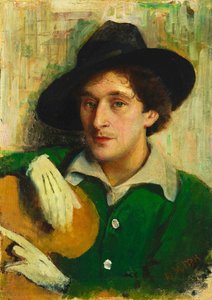
Marc Chagall
1887 - 1985 , Belarus
Quick Facts
- Artistic Movement Or Style: Modernism, Cubism
- Artists Or Movements Influenced By This Artist:
- Surrealism
- Modern artists
- Artists Who Influenced This Artist:
- Bakst
- Delaunay
- Borovikovsky
- Date Of Birth: July 6, 1887
- Date Of Death: March 28, 1985
- Full Name: Marc Chagall
- Nationality: Russian-French
- Notable Artworks:
- I and the Village
- Over Vitebsk
- White Crucifixion
- Place Of Birth: Liozna, Belarus
Related Articles
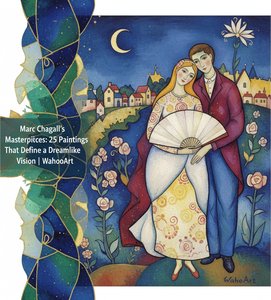
Marc Chagall's Masterpieces: 25 Paintings That Define a Dreamlike Vision | ArtsDot
Journey into the dreamlike world of Marc Chagall! Explore 25 iconic paintings, from 'I and the Village' to his vibrant surrealist masterpieces. Discover the stories & techniques behind these timeless artworks – find museum-quality Chagall reproductions on ArtsDot.com.

Cézanne's Masterpieces: 25 Iconic Artworks to Transform Your Space
Journey through 25 iconic artworks by Paul Cézanne – a master of Impressionism and Post-Impressionism. Explore his landscapes, still lifes, and the stories behind these timeless masterpieces. Discover museum-quality reproductions & curated decor at ArtsDot.com.

Goya's Masterpieces: Explore 25 Iconic Paintings & Art Prints | ArtsDot
Delve into the world of Francisco Goya with ArtsDot. Explore 25 iconic paintings – from 'The Third of May' to his haunting Black Paintings. Discover the stories, techniques & emotions behind these Spanish masterpieces. Find museum-quality art reproductions for your home at ArtsDot.com!

Demandes Commerciales
APS ofrece reproducciones de bellas artes y encargos personalizados desde 2004. Confían en nosotros corporaciones, hoteles y coleccionistas selectos para obras de arte de calidad museística, servicio discreto y soluciones artísticas completas. ¡Póngase en contacto con nosotros para obtener un presupuesto personalizado!
Paul Klee's Masterpieces: Explore 25 Iconic Paintings & Prints | ArtsDot
Journey through Paul Klee's 25 most iconic paintings & prints. Explore his abstract style, Bauhaus influence, and vibrant color palettes. Find museum-quality art reproductions & decor ideas at ArtsDot.com. Discover all masterpieces online.