 Preview
 Send
Send Share
Share
 Details

 Download
 Similars
 X-Ray
X-Ray Diaporama
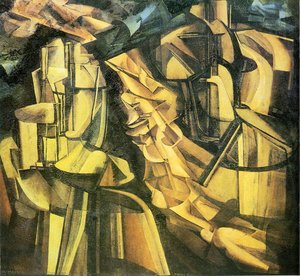
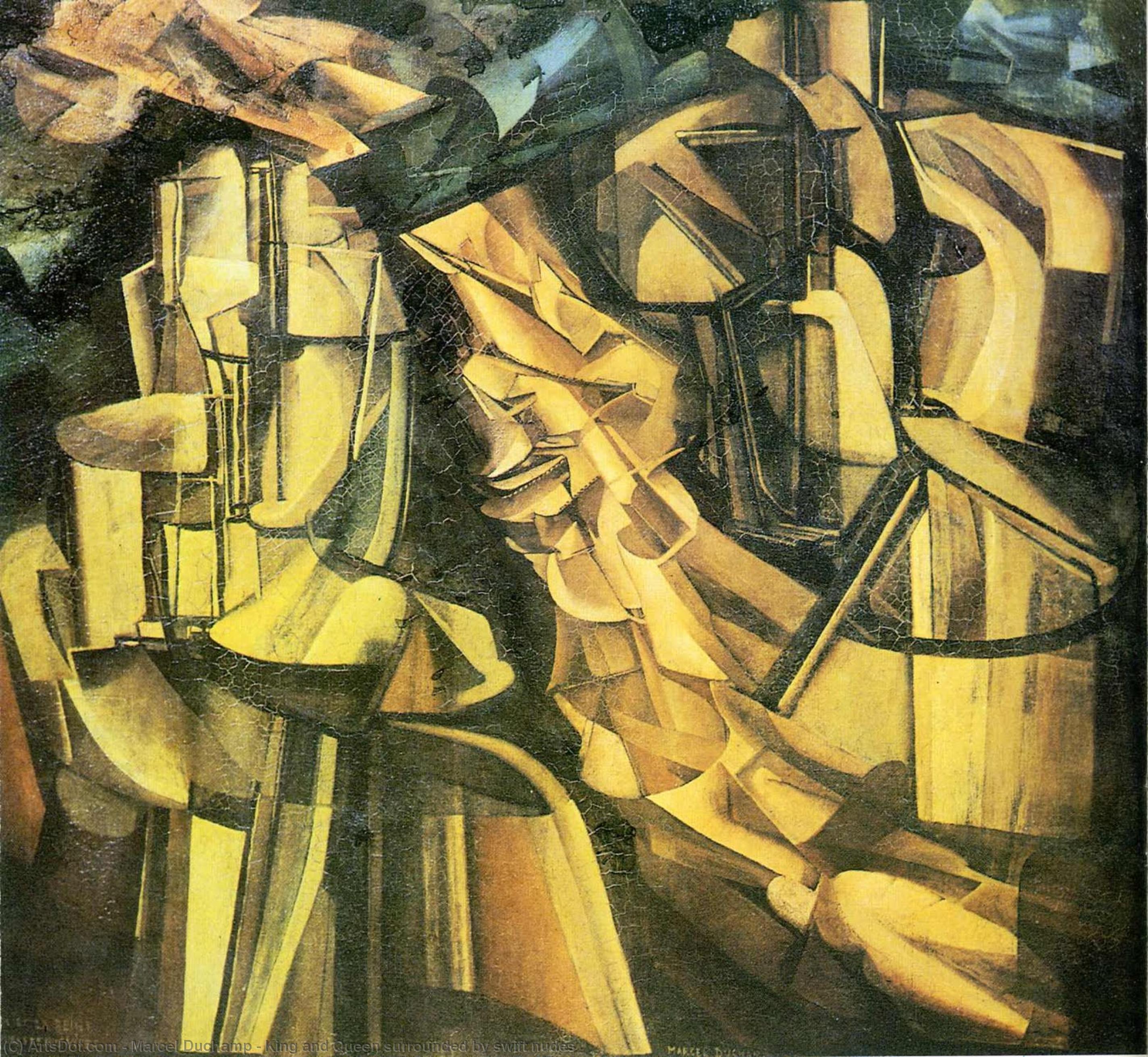
King and Queen surrounded by swift nudes
 Acrylic On Canvas
- WallArt
- Cubism
 1912
1912- Modern
 114.0 x 128.0 cm
 Read More
Hand Made Oil Reproduction
Hand-painted oil on canvas in your size and frame, made to order by our artists. ( Buy Print Buy Image)




P118B $10

P118H $10

P118W $10

P438Z $10

P508JH $12

P508YH $12

P805H $10

P805Z $10

P919BZ $10

P919G $10

P919XJ $10

P959ZH $10

P968JZ $12

W106C $8

W218G $10

W218JH $8

W218Y $10

W307PJ $10

W316G $10

W316PJ $8

W316Y $10

W398PJ $8

W4111J $10

W500HY $15

W500JH $15

W692G $12

W849H $8

W940BG $15

W953PJ $8




Pick from our preset sizes that match the artwork's original proportions.

You may enter your own dimensions to fit a specific frame or space. If your selected size does not match the original image's proportions, we will either crop the artwork or extend the painting with additional hand-painted elements. A digital mockup will be sent for your approval before production begins.
Please note that the on-screen preview does not reflect the actual cropping or extension. Only the mockup will accurately show the final composition.
While custom sizes are available, we recommend selecting a dimension from the predefined list to preserve the original proportions.
After order, ArtsDot.com team will email client for instructions and provide a mockup preview
Worldwide Delivery () in 3/4 weeks instead of standard 5 weeks. (17 August). No compromise on quality.

Free Worldwide Express Shipping

High-Quality Linen Canvas

Full Shipping Insurance

Customs Tax Refund Guarantee

True Color Matching Guarantee

60-Day Return Policy (Defects Only)

100% Money-Back Guarantee

Bulk Discount Offer
 Glass option is only available in size under 110 CM

King and Queen surrounded by swift nudes
Reproduction Medium
Reproduction Size
-


Total Price
$ 263
Artwork Description
King and Queen Surrounded by Swift Nudes
Marcel Duchamp, a pioneer of the Dada movement and one of the most influential artists of the 20th century, created the painting “King and Queen Surrounded by Swift Nudes” in 1912. This work is a quintessential example of Cubism, a style that revolutionized modern art. Its impact reverberates through artistic history, challenging conventional notions of beauty and representation.Context and Style
Cubism, pioneered by Pablo Picasso and Georges Braque, fundamentally altered the visual landscape of early 20th-century art. Rejecting traditional perspective—the illusion of depth—artists like Duchamp embraced fragmentation and multiple viewpoints simultaneously within a single image. “King and Queen Surrounded by Swift Nudes” embodies this radical spirit, meticulously crafted in oil on canvas. Measuring 114 x 128 cm, the painting’s palette is dominated by yellow – a hue that imbues the artwork with warmth and vibrancy—creating an atmosphere of contemplative energy. Geometric shapes intertwine to form abstracted forms, deliberately disrupting any easy visual interpretation. This stylistic choice wasn't merely aesthetic; it was a deliberate rejection of academic conventions, signaling Duchamp’s commitment to conceptual art.The Salon de la Section d’Or
Duchamp’s involvement with the Section d’Or (Golden Section), a collective of artists united by Cubist ideals and Orphism—a fusion of Cubism and musical notation—played a crucial role in disseminating Cubist principles to a wider audience. The Salon de la Section d’Or, held in October 1912, served as a pivotal moment, exposing Cubist works to the discerning gaze of Parisian society. This exhibition solidified Duchamp's position at the forefront of artistic innovation and propelled him into the spotlight as a visionary artist.Relevance and Influence
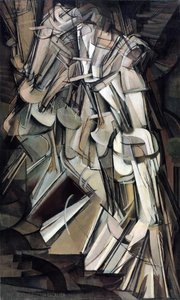
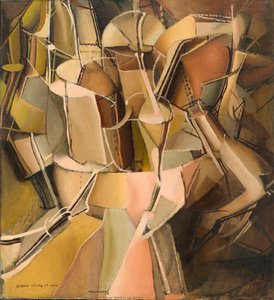
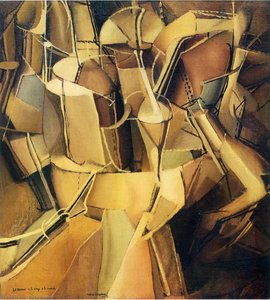
“King and Queen Surrounded by Swift Nudes” transcends its formal qualities; it’s a testament to Duchamp’s singular vision and technical prowess. His groundbreaking approach to art has exerted an enduring influence on subsequent generations of artists, prompting them to question established artistic standards and explore alternative modes of expression. For those seeking inspiration or contemplating acquiring a reproduction of this masterpiece, consider exploring “Transition of Virgin into a Bride,” another notable piece by Duchamp—available at ArtsDot.com – showcasing his distinctive style and conceptual exploration. Furthermore, the Philadelphia Museum of Art houses “Nude Descending a Staircase, No.2,” widely regarded as a cornerstone of Modernist art, offering viewers an opportunity to immerse themselves in Duchamp’s legacy.- “Transition of Virgin into a Bride
- Marcel Duchamp
- King and Queen Surrounded by Swift Nudes
- Philadelphia Museum of Art
Related Artworks
Artist Biography
A Revolutionary Spirit: The Life and Art of Marcel Duchamp
Marcel Duchamp, born Henri-Robert-Marcel Duchamp in 1887 in Blainville-Crevon, Normandy, was more than an artist; he was a philosophical provocateur who fundamentally altered the course of modern art. His early life, though seemingly conventional – nurtured within a family that appreciated artistic expression with both brothers pursuing successful careers as artists – hinted at the iconoclasm to come. Duchamp initially pursued formal training, mastering traditional techniques and experimenting with post-impressionist styles. However, this academic foundation served not as an end in itself, but as a springboard for questioning the very nature of art, its purpose, and its definition. He wasn’t content merely to depict the world; he sought to challenge how we perceive it, and what constitutes artistic value. This restless intellectual curiosity would become the defining characteristic of his prolific career.From Cubism to Dada: A Rejection of Convention
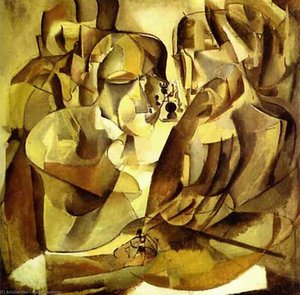
Duchamp's artistic journey was marked by a constant evolution, a deliberate shedding of established norms. His initial engagement with Cubism, evident in works like *Portrait of Chess Players* (1911), demonstrated an interest in fragmented forms and multiple perspectives – a departure from traditional representation. Yet, he quickly moved beyond purely aesthetic concerns, recognizing that simply rearranging visual elements wasn’t enough to address the deeper questions swirling within him. The horrors of World War I fueled this discontent, leading Duchamp to embrace Dadaism, a movement born out of disillusionment and a rejection of logic, reason, and traditional artistic values. It was within the Dadaist framework that Duchamp truly began to dismantle conventional notions of art. He wasn’t interested in creating beautiful objects; he wanted to provoke thought, challenge assumptions, and expose the arbitrariness of aesthetic judgment. This period saw the birth of his most radical innovation: the ‘readymade’.The Readymades and the Subversion of Art
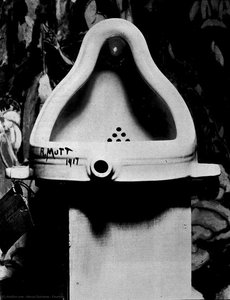
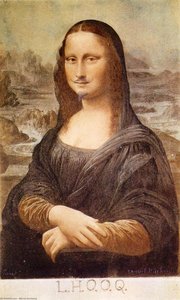
The introduction of readymades – ordinary manufactured objects selected and presented as art – was Duchamp’s most significant contribution to the 20th century. These weren't simply found objects; they were deliberate acts of artistic subversion. By taking an everyday item, like a urinal (*Fountain*, 1917), signing it “R. Mutt,” and submitting it to an art exhibition, Duchamp challenged the very definition of artistic skill and authorship. Was it the artist’s hand that created the work, or was it the artist's *idea*? This question became central to his practice and laid the groundwork for Conceptual Art. Other notable readymades like *L.H.O.O.Q.* (1919), a postcard reproduction of the Mona Lisa defaced with a mustache and goatee, were playful yet pointed critiques of art history and established cultural icons. These works weren’t meant to be admired for their aesthetic qualities; they were intended to provoke debate and force viewers to reconsider their preconceived notions about what constitutes art. Duchamp believed that art should reside in the mind, not merely in the eye.Legacy and Enduring Influence
Marcel Duchamp's impact on subsequent generations of artists is immeasurable. He fundamentally altered our understanding of art, paving the way for movements like Conceptual Art, Minimalism, Pop Art, and countless others. His emphasis on the artist’s idea – the concept behind the work – over its aesthetic qualities continues to inspire artists today.- Cubism: Early exploration of fractured forms and spatial representation.
- Dadaism: Rejection of logic, reason, and traditional artistic values in response to World War I.
- Conceptual Art: Emphasis on the idea behind the artwork rather than its aesthetic qualities.

Marcel Duchamp
1887 - 1968 , France
Quick Facts
- Artistic Movement Or Style:
- Cubism
- Dadaism
- Conceptual Art
- Artists Or Movements Influenced By This Artist:
- Conceptual Art
- Pop Art
- Minimalism
- Date Of Birth: July 28, 1887
- Date Of Death: October 2, 1968
- Full Name: Marcel Duchamp
- Nationality: French-American
- Notable Artworks:
- Fountain
- L.H.O.O.Q.
- The Large Glass
- Boîte-en-valise
- Place Of Birth: Blainville, France
Related Articles
Marcel Duchamp: Challenging Conventions & Redefining Art in the 20th Century
Explore the revolutionary art of Marcel Duchamp! Discover how his Dadaist readymades challenged artistic conventions & redefined modern art. A deep dive into 'Fountain', conceptual shifts, and his lasting impact.
Golden Hues: 10 Masterpieces Dominated by Chrome Yellow | ArtsDot
Immerse yourself in golden light! Explore 10 famous paintings dominated by 'Chrome Yellow', from Van Gogh’s Sunflowers to Monet's Haystacks. Discover the stories behind these iconic Impressionist & Post-Impressionist masterpieces and find museum-quality art reproductions at ArtsDot.com.
René Magritte's Masterpieces: 25 Surrealist Paintings for Art Lovers | ArtsDot
Explore 25 iconic René Magritte paintings & delve into the world of surrealism. Discover the stories behind 'The Son of Man', 'Golconda' & more. Find museum-quality art reproductions and elevate your home decor with ArtsDot.com.
Golden Hues: Top 10 Paintings Dominated by Yellow Ochre |
Explore 10 iconic paintings bathed in golden yellow ochre! From Van Gogh's sunflowers to Monet’s haystacks, discover the stories behind these masterpieces. Find museum-quality art reproductions & elevate your home decor on .
Deconstructing Reality: Cubism's Revolutionary Impact on 20th-Century Art
Explore the revolutionary impact of Cubism on 20th-century art. Discover Picasso, Braque & beyond with our expert guide to this pivotal movement. Learn about Analytic & Synthetic Cubism's techniques and lasting legacy.