

 Preview
 Send
Send Share
Share
 Details

 Download
 Similars
 X-Ray
X-Ray Diaporama
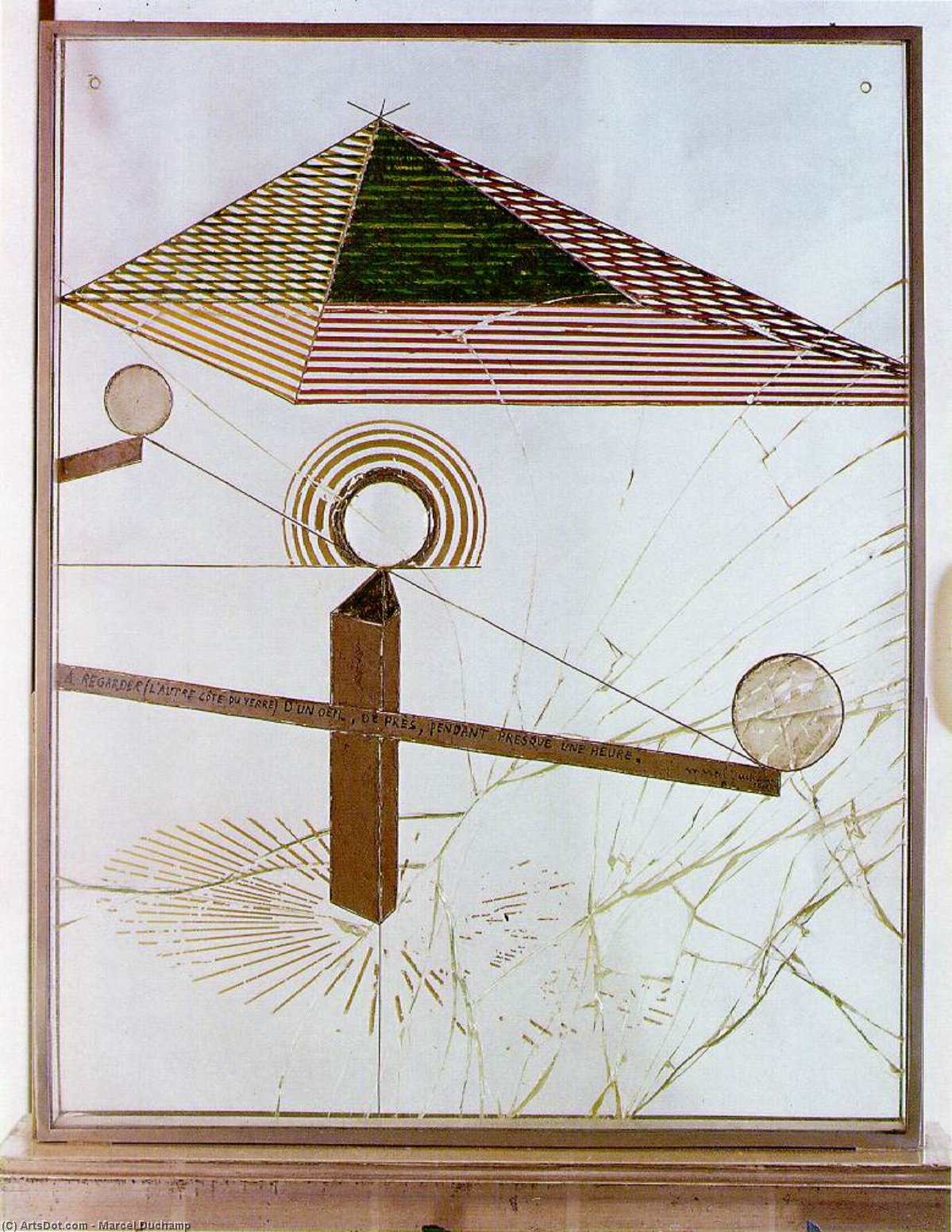
To be looked at (from the Other Side of the Glass) with One Eye, Close to, for Almost an Hour


 Read More
Purchase a high-resolution, enhanced digital image, far superior to the online preview.
Each file is meticulously prepared by our in-house specialists using advanced tools and expert manual retouching. We ensure every image has exceptional clarity, precise color accuracy, and fine detail.
The final file is delivered via email within 72 hours, optimized for immediate use in professional, editorial, and print environments. This is the same quality trusted by top-tier design studios, publishers, and galleries.
Digital Image
Download a high-resolution file for personal display, printing, and creative projects. ( Buy Print Buy Hand Made Painting)
Included in Every Digital Image Order
Expert Digital Delivery, Guaranteed
When you choose ArtsDot.com, you're not just getting an image - you're receiving a professionally enhanced digital artwork, crafted with precision and backed by a satisfaction guarantee. Here's everything that comes with your order, automatically:

Fast Email Delivery
Your high-resolution digital image file will be emailed to you within 72 hours of ordering - ready for immediate use.

AI-Enhanced Digital File
Your artwork is professionally optimized using advanced AI tools and manual editing, ensuring maximum detail, clarity, and color accuracy.

Free Lifetime Re-Delivery
Accidentally deleted or lost your file? No worries - we'll resend it to you anytime, free of charge.

No Import Fees - Ever
Enjoy your artwork instantly with zero customs, duties, or delivery fees - digital downloads are always tax-free.

Color Accuracy Guarantee
We ensure your digital image reflects the original colors as closely as possible using professional tools and color management.

60-Day Satisfaction Guarantee
If you're not satisfied with your digital image, we'll revise it or refund 100% within 60 days - no questions asked.

100% Money-Back Guarantee
Not satisfied? Get a full refund within 60 days of receiving your digital file - no questions asked.

Bulk Order Discounts
Buy 3 images, save 10% - Buy 5, save 15% - Buy 10+, save 20%. Great for creative projects, galleries, and agencies.
Collectible Description
Marcel Duchamp: A Revolutionary Artist
Marcel Duchamp (1887-1968) stands as one of the most influential figures in modern art, forever altering our understanding of what constitutes artistic creation and challenging conventional notions of beauty. His relentless questioning of established norms—a characteristic that permeated his entire oeuvre—established him as a pioneer of Conceptual Art and cemented his legacy as an artist who fundamentally reshaped the landscape of 20th-century visual culture. Born in Blainville-sur-Mer, Normandy, Duchamp initially pursued traditional artistic training, mastering techniques honed by Impressionism and Post-Impressionism. However, he swiftly abandoned these stylistic constraints, embarking on a path marked by experimentation and intellectual rigor that would ultimately propel him to the forefront of Dadaism and subsequently herald the dawn of Conceptual Art. His refusal to adhere to aesthetic standards—a deliberate act of defiance against artistic conventions—became his defining trait and fueled his groundbreaking explorations into the very nature of art itself.- Cubism: Duchamp’s early work demonstrates an engagement with Cubist principles, evident in pieces like *Portrait of Chess Players* (1911). He skillfully employed fragmented forms and multiple perspectives—techniques championed by Picasso and Braque—to depict subjects from unconventional viewpoints.
- Dadaism: Embracing the nihilistic spirit of Dadaism, Duchamp rejected artistic dogma and embraced chance as a creative force. This radical stance manifested in his provocative readymades, elevating ordinary objects into artworks through alteration of context or meaning.
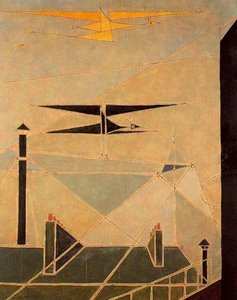
To Be Looked At (From The Other Side Of The Glass) With One Eye, Close To, For Almost An Hour
Created in 1918 during the tumultuous period of World War I, *To Be Looked At* embodies Duchamp’s core artistic philosophy—a deliberate provocation designed to disrupt viewers' perceptions and provoke contemplation. This seemingly simple piece—consisting of a glass panel adorned with a mustache and goatee—is far from accidental; it serves as an instruction manual for the audience, urging them to observe it intently through one eye, close up, for approximately sixty minutes. The work’s title itself is deliberately ambiguous, referencing ophthalmology and inviting viewers to consider how perception shapes our experience of art. Duchamp's fascination with optics—particularly the phenomenon of magnification—is palpable in this piece, which utilizes a convex lens to distort the image and heighten its impact on the observer. As curator Anne Umland eloquently articulated, “The title of this work, which Duchamp said he ‘intended to sound like an oculist’s prescription,’ tells the viewer exactly how to look at it.”Influence And Legacy
Duchamp's readymades irrevocably altered the trajectory of modern art, inspiring movements such as Minimalism and Pop Art. His willingness to challenge artistic hierarchies—to elevate commonplace objects into artworks—established him as a visionary who questioned the boundaries between art and everyday life. The piece resides prominently within the Raymond Duchamp-Villon Museum in Karuizawa, Japan, showcasing an impressive collection of artworks spanning diverse periods and movements—including Dadaism—and solidifying Duchamp’s position as a pivotal figure in artistic history.Reproductions And Availability
At ArtsDot.com, we offer meticulously crafted oil painting reproductions of *To Be Looked At*, ensuring that every nuance of the original artwork is faithfully recreated with exceptional precision and accuracy. Our skilled artists employ traditional techniques—inherited from masters like Rembrandt and Vermeer—to painstakingly reproduce Duchamp’s vision, capturing the subtle interplay of light and shadow and conveying the emotional depth inherent in his masterpiece. Explore our expansive collection of Marcel Duchamp's works, including *Fresh Widow* and *Chocolate Grinder No.2*, at /art/list/?Filter=7YLJ6S-Marcel-Duchamp-To-be-looked-at-(from-the-Other-Side-of-the-Glass)-with-One-... For a deeper understanding of Duchamp’s life and artistic journey, visit his page on https://ArtsDot.com/@/Marcel-Duchamp. To learn more about the Raymond Duchamp-Villon Museum and its remarkable collection, read /art/list/?Filter=A@D3ALVX-Raymond-Duchamp-Villon-Museum-A-Comprehensive-Guide.Related Artworks
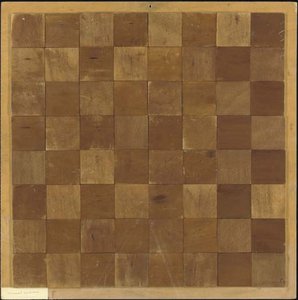
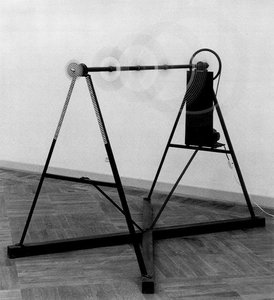
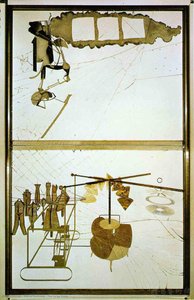
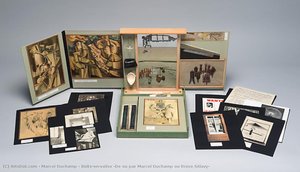
Artist Biography
A Revolutionary Spirit: The Life and Art of Marcel Duchamp
Marcel Duchamp, born Henri-Robert-Marcel Duchamp in 1887 in Blainville-Crevon, Normandy, was more than an artist; he was a philosophical provocateur who fundamentally altered the course of modern art. His early life, though seemingly conventional – nurtured within a family that appreciated artistic expression with both brothers pursuing successful careers as artists – hinted at the iconoclasm to come. Duchamp initially pursued formal training, mastering traditional techniques and experimenting with post-impressionist styles. However, this academic foundation served not as an end in itself, but as a springboard for questioning the very nature of art, its purpose, and its definition. He wasn’t content merely to depict the world; he sought to challenge how we perceive it, and what constitutes artistic value. This restless intellectual curiosity would become the defining characteristic of his prolific career.From Cubism to Dada: A Rejection of Convention
Duchamp's artistic journey was marked by a constant evolution, a deliberate shedding of established norms. His initial engagement with Cubism, evident in works like *Portrait of Chess Players* (1911), demonstrated an interest in fragmented forms and multiple perspectives – a departure from traditional representation. Yet, he quickly moved beyond purely aesthetic concerns, recognizing that simply rearranging visual elements wasn’t enough to address the deeper questions swirling within him. The horrors of World War I fueled this discontent, leading Duchamp to embrace Dadaism, a movement born out of disillusionment and a rejection of logic, reason, and traditional artistic values. It was within the Dadaist framework that Duchamp truly began to dismantle conventional notions of art. He wasn’t interested in creating beautiful objects; he wanted to provoke thought, challenge assumptions, and expose the arbitrariness of aesthetic judgment. This period saw the birth of his most radical innovation: the ‘readymade’.The Readymades and the Subversion of Art
The introduction of readymades – ordinary manufactured objects selected and presented as art – was Duchamp’s most significant contribution to the 20th century. These weren't simply found objects; they were deliberate acts of artistic subversion. By taking an everyday item, like a urinal (*Fountain*, 1917), signing it “R. Mutt,” and submitting it to an art exhibition, Duchamp challenged the very definition of artistic skill and authorship. Was it the artist’s hand that created the work, or was it the artist's *idea*? This question became central to his practice and laid the groundwork for Conceptual Art. Other notable readymades like *L.H.O.O.Q.* (1919), a postcard reproduction of the Mona Lisa defaced with a mustache and goatee, were playful yet pointed critiques of art history and established cultural icons. These works weren’t meant to be admired for their aesthetic qualities; they were intended to provoke debate and force viewers to reconsider their preconceived notions about what constitutes art. Duchamp believed that art should reside in the mind, not merely in the eye.Legacy and Enduring Influence
Marcel Duchamp's impact on subsequent generations of artists is immeasurable. He fundamentally altered our understanding of art, paving the way for movements like Conceptual Art, Minimalism, Pop Art, and countless others. His emphasis on the artist’s idea – the concept behind the work – over its aesthetic qualities continues to inspire artists today.- Cubism: Early exploration of fractured forms and spatial representation.
- Dadaism: Rejection of logic, reason, and traditional artistic values in response to World War I.
- Conceptual Art: Emphasis on the idea behind the artwork rather than its aesthetic qualities.
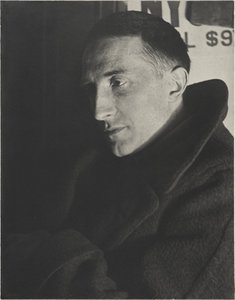
Marcel Duchamp
1887 - 1968 , France
Quick Facts
- Artistic Movement Or Style:
- Cubism
- Dadaism
- Conceptual Art
- Artists Or Movements Influenced By This Artist:
- Conceptual Art
- Pop Art
- Minimalism
- Date Of Birth: July 28, 1887
- Date Of Death: October 2, 1968
- Full Name: Marcel Duchamp
- Nationality: French-American
- Notable Artworks:
- Fountain
- L.H.O.O.Q.
- The Large Glass
- Boîte-en-valise
- Place Of Birth: Blainville, France

