

 Preview
 Send
Send Share
Share
 Details

 Download
 Similars
 X-Ray
X-Ray Diaporama
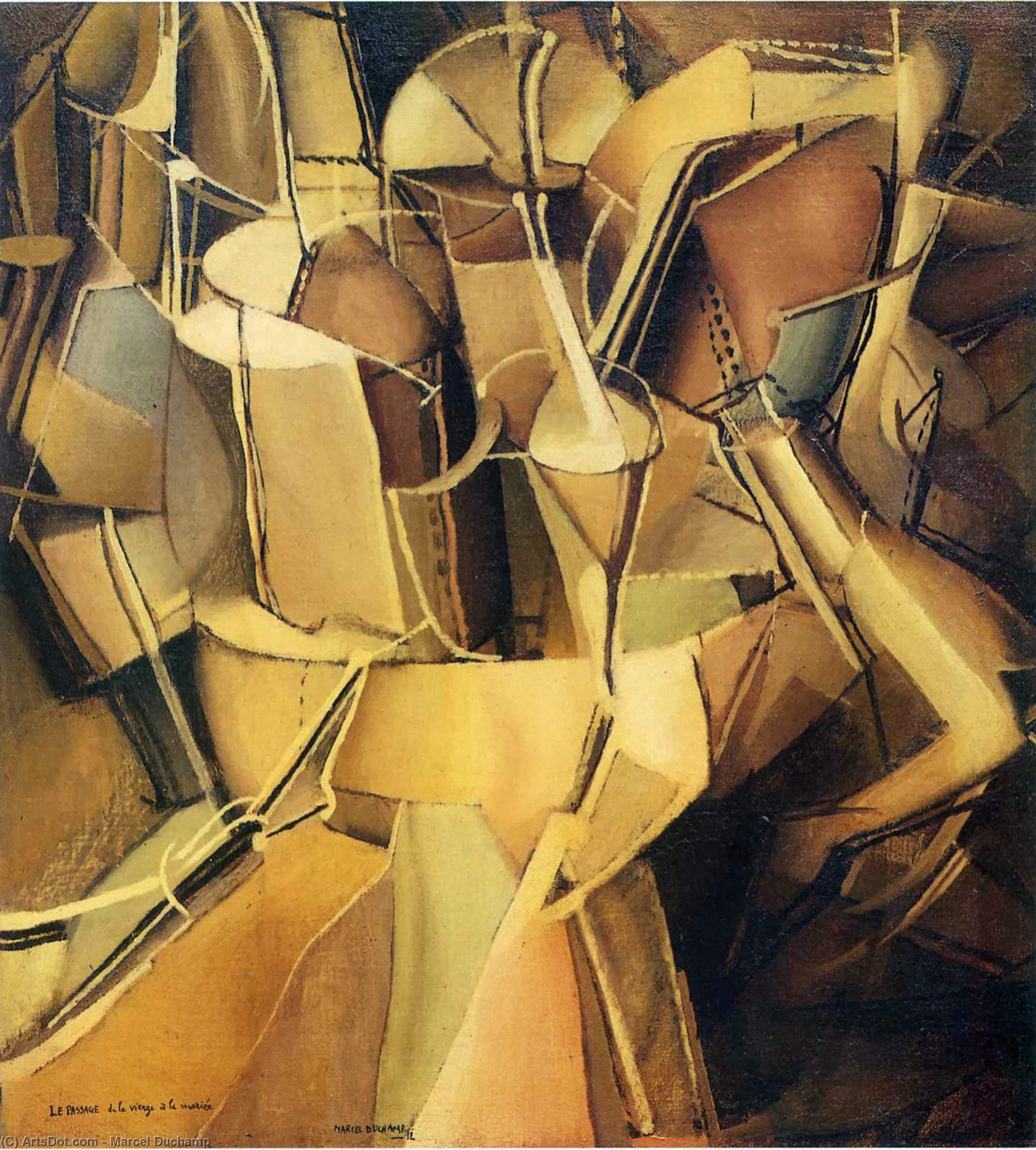
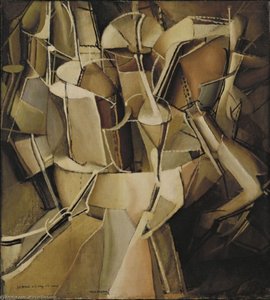
Transition of Virgin into a Bride
 Acrylic On Canvas
- WallArt
- Cubism
 1912
1912- Modern
 59.0 x 53.0 cm
 Read More
Purchase a high-resolution, enhanced digital image, far superior to the online preview.
Each file is meticulously prepared by our in-house specialists using advanced tools and expert manual retouching. We ensure every image has exceptional clarity, precise color accuracy, and fine detail.
The final file is delivered via email within 72 hours, optimized for immediate use in professional, editorial, and print environments. This is the same quality trusted by top-tier design studios, publishers, and galleries.
Digital Image
Download a high-resolution file for personal display, printing, and creative projects. ( Buy Print Buy Hand Made Painting)
Included in Every Digital Image Order
Expert Digital Delivery, Guaranteed
When you choose ArtsDot.com, you're not just getting an image - you're receiving a professionally enhanced digital artwork, crafted with precision and backed by a satisfaction guarantee. Here's everything that comes with your order, automatically:

Fast Email Delivery
Your high-resolution digital image file will be emailed to you within 72 hours of ordering - ready for immediate use.

AI-Enhanced Digital File
Your artwork is professionally optimized using advanced AI tools and manual editing, ensuring maximum detail, clarity, and color accuracy.

Free Lifetime Re-Delivery
Accidentally deleted or lost your file? No worries - we'll resend it to you anytime, free of charge.

No Import Fees - Ever
Enjoy your artwork instantly with zero customs, duties, or delivery fees - digital downloads are always tax-free.

Color Accuracy Guarantee
We ensure your digital image reflects the original colors as closely as possible using professional tools and color management.

60-Day Satisfaction Guarantee
If you're not satisfied with your digital image, we'll revise it or refund 100% within 60 days - no questions asked.

100% Money-Back Guarantee
Not satisfied? Get a full refund within 60 days of receiving your digital file - no questions asked.

Bulk Order Discounts
Buy 3 images, save 10% - Buy 5, save 15% - Buy 10+, save 20%. Great for creative projects, galleries, and agencies.
Collectible Description
Transition of Virgin into a Bride
Marcel Duchamp's Transition of Virgin into a Bride, created in 1912, is a seminal work that exemplifies the artist's innovative approach to cubism. This painting, measuring 59 x 53 cm and executed in oil on canvas, showcases Duchamp’s unique style and technique.The Artistic Context
During the early 20th century, art movements like Cubism and Dada were gaining prominence. Mixed media art, which involves combining different materials to create a new whole, was also becoming increasingly popular. As discussed in Mixed Media Art: A Comprehensive Overview, this art form has been around for centuries but gained significant attention during the 20th century. The exploration of new artistic expressions was driven by a desire to challenge established conventions and explore uncharted territories—a reaction against academic traditions that had dominated European painting for decades. Artists sought to break free from representational constraints and embrace abstraction, experimenting with geometric forms and fragmented perspectives as ways to convey emotion and experience.Composition and Symbolism
The painting features a woman's face as its central focus, positioned in the center of the canvas. The background is composed of various shapes and forms that create an intricate and complex composition. Several chairs are scattered throughout the painting, adding depth and interest to the scene. These elements contribute to the overall cubist aesthetic, characteristic of Duchamp’s work. The artist deliberately disrupted traditional notions of perspective and spatial representation, opting instead for a fractured visual language that mirrored the psychological complexities of modern life. This technique—breaking down objects into geometric planes—was not merely stylistic; it was intended to convey a sense of disorientation and uncertainty, reflecting the anxieties of the era. The woman's face represents the transition from virginity to marriage, symbolizing a significant life change. It embodies themes of innocence, vulnerability, and transformation—concepts that resonated deeply with artists grappling with questions of identity and societal expectations. The chairs may signify the various stages or roles that one assumes during this transition—stability versus movement, comfort versus challenge—further enriching the painting’s symbolic dimension. Duchamp's masterful use of color—muted tones dominated by earthy hues—reinforced these themes, creating a contemplative mood that invites viewers to contemplate the complexities of human experience.Artistic Influence
Marcel Duchamp was a pioneer in the Cubist movement, influencing many artists who followed. His work can be seen as part of the broader history of Western painting, which has evolved over centuries. As noted in Western Painting, this tradition includes representational and traditional modes of production, with more modern, abstract, and conceptual forms gaining favor from the mid-19th century onwards. Duchamp’s radical departure from conventional artistic practices paved the way for subsequent movements like Surrealism and Conceptual Art—demonstrating the transformative power of artistic experimentation.Conclusion
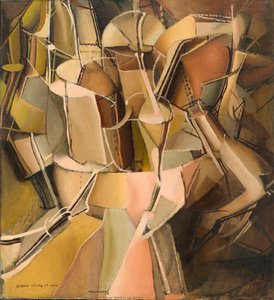
Transition of Virgin into a Bride is a masterpiece that showcases Marcel Duchamp’s innovative approach to cubism. The painting's intricate composition and symbolism make it a captivating piece of art. For those interested in exploring more of Duchamp’s work, Painting by 'Marcel Duchamp' | Marcel Duchamp: Transition of Virgin into a Bride and Painting by 'Marcel Duchamp' | Marcel Duchamp: The Passage from Virgin to Bride are available on ArtsDot. This painting is a testament to the artist’s contribution to the history of painting, which spans across cultures and continents. As discussed in The History of Painting, this continuous river of creativity continues into the 21st century, with artists like Marcel Duchamp leaving a lasting impact on the art world. ArtsDot.com offers handmade oil painting reproductions of Transition of Virgin into a Bride and other works by Marcel Duchamp. These high-quality reproductions allow art enthusiasts to own a piece of history, bringing the beauty and significance of these artworks into their homes.Related Artworks
Artist Biography
A Revolutionary Spirit: The Life and Art of Marcel Duchamp
Marcel Duchamp, born Henri-Robert-Marcel Duchamp in 1887 in Blainville-Crevon, Normandy, was more than an artist; he was a philosophical provocateur who fundamentally altered the course of modern art. His early life, though seemingly conventional – nurtured within a family that appreciated artistic expression with both brothers pursuing successful careers as artists – hinted at the iconoclasm to come. Duchamp initially pursued formal training, mastering traditional techniques and experimenting with post-impressionist styles. However, this academic foundation served not as an end in itself, but as a springboard for questioning the very nature of art, its purpose, and its definition. He wasn’t content merely to depict the world; he sought to challenge how we perceive it, and what constitutes artistic value. This restless intellectual curiosity would become the defining characteristic of his prolific career.From Cubism to Dada: A Rejection of Convention
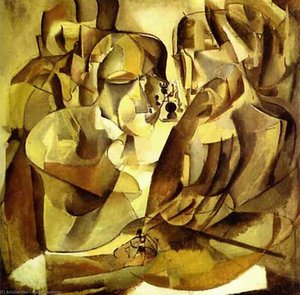
Duchamp's artistic journey was marked by a constant evolution, a deliberate shedding of established norms. His initial engagement with Cubism, evident in works like *Portrait of Chess Players* (1911), demonstrated an interest in fragmented forms and multiple perspectives – a departure from traditional representation. Yet, he quickly moved beyond purely aesthetic concerns, recognizing that simply rearranging visual elements wasn’t enough to address the deeper questions swirling within him. The horrors of World War I fueled this discontent, leading Duchamp to embrace Dadaism, a movement born out of disillusionment and a rejection of logic, reason, and traditional artistic values. It was within the Dadaist framework that Duchamp truly began to dismantle conventional notions of art. He wasn’t interested in creating beautiful objects; he wanted to provoke thought, challenge assumptions, and expose the arbitrariness of aesthetic judgment. This period saw the birth of his most radical innovation: the ‘readymade’.The Readymades and the Subversion of Art
The introduction of readymades – ordinary manufactured objects selected and presented as art – was Duchamp’s most significant contribution to the 20th century. These weren't simply found objects; they were deliberate acts of artistic subversion. By taking an everyday item, like a urinal (*Fountain*, 1917), signing it “R. Mutt,” and submitting it to an art exhibition, Duchamp challenged the very definition of artistic skill and authorship. Was it the artist’s hand that created the work, or was it the artist's *idea*? This question became central to his practice and laid the groundwork for Conceptual Art. Other notable readymades like *L.H.O.O.Q.* (1919), a postcard reproduction of the Mona Lisa defaced with a mustache and goatee, were playful yet pointed critiques of art history and established cultural icons. These works weren’t meant to be admired for their aesthetic qualities; they were intended to provoke debate and force viewers to reconsider their preconceived notions about what constitutes art. Duchamp believed that art should reside in the mind, not merely in the eye.Legacy and Enduring Influence
Marcel Duchamp's impact on subsequent generations of artists is immeasurable. He fundamentally altered our understanding of art, paving the way for movements like Conceptual Art, Minimalism, Pop Art, and countless others. His emphasis on the artist’s idea – the concept behind the work – over its aesthetic qualities continues to inspire artists today.- Cubism: Early exploration of fractured forms and spatial representation.
- Dadaism: Rejection of logic, reason, and traditional artistic values in response to World War I.
- Conceptual Art: Emphasis on the idea behind the artwork rather than its aesthetic qualities.
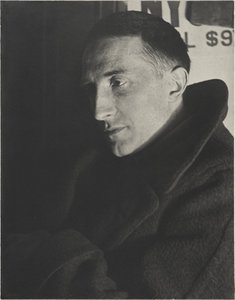
Marcel Duchamp
1887 - 1968 , France
Quick Facts
- Artistic Movement Or Style:
- Cubism
- Dadaism
- Conceptual Art
- Artists Or Movements Influenced By This Artist:
- Conceptual Art
- Pop Art
- Minimalism
- Date Of Birth: July 28, 1887
- Date Of Death: October 2, 1968
- Full Name: Marcel Duchamp
- Nationality: French-American
- Notable Artworks:
- Fountain
- L.H.O.O.Q.
- The Large Glass
- Boîte-en-valise
- Place Of Birth: Blainville, France

