

 Preview
 Send
Send Share
Share
 Details

 Download
 Similars
 X-Ray
X-Ray Diaporama
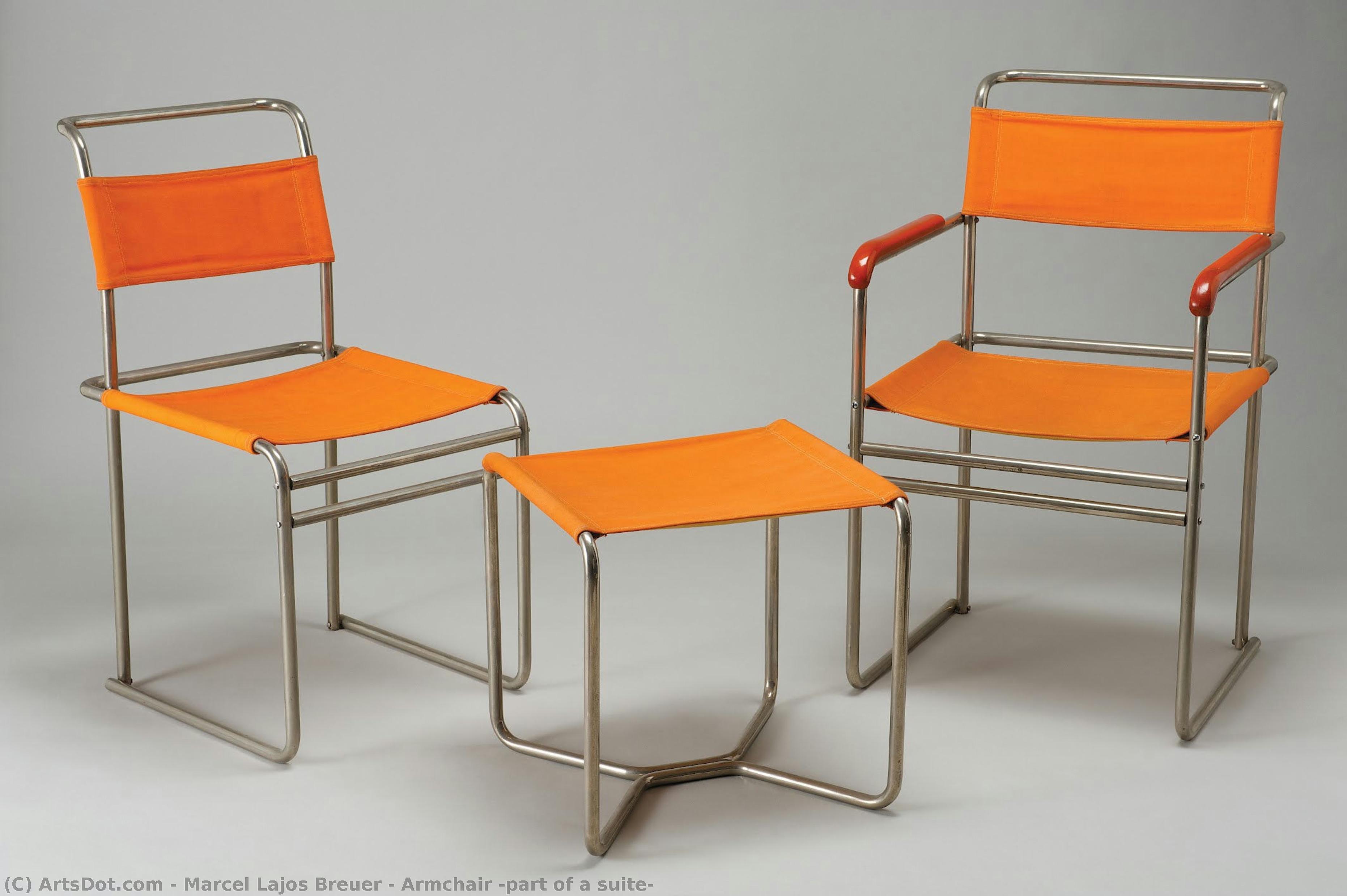
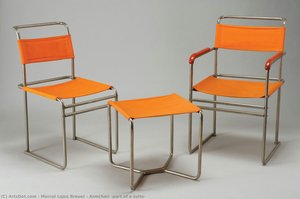
Armchair (part of a suite)
 1926
1926 52.0 x 88.0 cm
 Museum of Applied Arts
 Read More
Giclée / Art Print
Museum-quality giclée or canvas print with fast production and flexible finish options. ( Buy Hand Made Painting Buy Image)




































Pick from our preset sizes that match the artwork's original proportions.

You may enter your own dimensions to fit a specific frame or space. If your selected size does not match the original image's proportions, we will either crop the artwork or extend the image with a mirrored or solid-fill edge. A digital mockup will be sent for your approval before production begins.
Please note that the on-screen preview does not reflect the actual cropping or extension. Only the mockup will accurately show the final composition.
While custom sizes are available, we recommend selecting a dimension from the predefined list to preserve the original proportions.
Worldwide Delivery () in 2 weeks instead of standard 4/5 weeks. (25 August)

Free Worldwide Express Shipping

High-Quality Linen Canvas

Full Shipping Insurance

Customs Tax Refund Guarantee

True Color Matching Guarantee

60-Day Return Policy (Defects Only)

100% Money-Back Guarantee

Bulk Discount Offer
 Glass option is only available in size under 110 CM

Armchair (part of a suite)
Giclée / Art Print
Reproduction Size
-


Total Price
$ 63
Collectible Description
Related Artworks









Artist Biography
The Architect of Minimalism: The Life and Legacy of Marcel Breuer
In the grand tapestry of twentieth-century modernism, few threads are as structurally sound or aesthetically pure as those woven by Marcel Lajos Breuer. Born in 1902 amidst the cultural richness of Pécs, Hungary, Breuer emerged from a world on the precipice of radical change. His early years, steeped in the intellectual currents of the Austro-Hungarian Empire, provided the foundation for a career that would eventually redefine the very boundaries between furniture, sculpture, and habitable space. To understand Breuer is to understand the transition from the ornate traditions of the past to the streamlined, industrial efficiency of the future—a journey that took him from the workshops of the Bauhaus to the skyline of New York City.
The true crucible of his genius was undoubtedly the Bauhaus. Enrolling in 1924, Breuer entered an environment where the boundaries between art and industry were being intentionally dissolved. Under the influence of visionaries like Walter Gropius, he embraced a philosophy where form followed function with uncompromising precision. It was within the school's carpentry workshop that Breuer began to experiment with materials that would become his signature. His fascination with the structural possibilities of tubular steel—inspired perhaps by the curved handlebars of an Adler bicycle—led to the creation of the legendary Wassily Chair. This piece was not merely a seat; it was a manifesto in metal and fabric, stripping away the bulk of traditional upholstery to reveal a skeletal, geometric elegance that remains a cornerstone of modern design.
A Symphony of Steel and Stone
As his career progressed, Breuer’s vision expanded from the intimate scale of furniture to the monumental scale of architecture. His work became a dialogue between the lightness of industrial materials and the heavy, tactile presence of natural elements. In his architectural practice, he mastered the art of the cantilever, creating structures that seemed to defy gravity through daring projections and suspended volumes. This period saw him exploring the textures of wood, stone, and glass, blending them into a cohesive language that spoke of both permanence and transparency.
His architectural repertoire was remarkably diverse, ranging from private residences to massive institutional landmarks. Notable achievements include:
- The Wassily and Cesca Chairs: Iconic furniture pieces that revolutionized the concept of lightweight, mass-producible design.
- Brutalist Masterpieces: Buildings characterized by their raw, honest use of concrete, reflecting a sculptural approach to urban landscapes.
- Residential Innovations: Projects like the Breuer House II in New Canaan, which utilized cantilevered designs and organic materials to harmonize with the surrounding landscape.
- Institutional Impact: The design of museums, libraries, and research facilities, such as the former IBM Research facility, which integrated cutting-edge technology into structural form.
The Enduring Resonance of a Modernist Master
Breuer’s migration to the United States in 1937 marked a new chapter in his evolution, as he brought the avant-garde sensibilities of Europe to the burgeoning American landscape. He became a naturalized citizen, yet he remained a bridge between two worlds, infusing American architecture with the rigorous discipline of the Bauhaus while embracing the expansive possibilities of the New World. His ability to adapt—moving from the delicate precision of bentwood and steel to the rugged, expressive power of Brutalism—demonstrates a rare versatility that few of his contemporaries could match.
Today, the legacy of Marcel Breuer is felt every time we sit in a chair that prioritizes clarity over clutter or walk through a building that celebrates its own structural truth. He did not merely design objects and buildings; he designed a way of seeing the world—one where beauty is found in the essential, and where the strength of a structure lies in its honesty. His life remains a testament to the idea that true innovation does not require excess, but rather a profound understanding of the soul of the material.
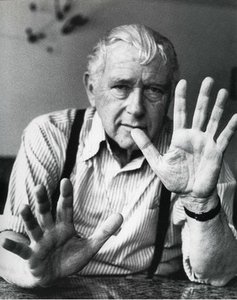
marcel lajos breuer
1902 - 1981 , Hungary
Quick Facts
- Artistic Movement Or Style: Modernist Architecture & Furniture Design
- Artists Or Movements Influenced By This Artist: ['Bauhaus']
- Artists Who Influenced This Artist:
- Walter Gropius
- Ludwig Mies van der Rohe
- Date Of Birth: May 21, 1902
- Date Of Death: July 1, 1981
- Full Name: Marcel Lajos Breuer
- Nationality: Hungarian, American
- Notable Artworks:
- Wassily Chair
- Villa Müller
- Harnishmacher House
- Place Of Birth: Pécs, Hungary
![Reclining Chair [Chaise Longue No. 313]](/media/artworks/images-thumb/c9/ce/c9cee35b87b28a3e295557ab938011c5.jpg)

