 Preview
 Send
Send Share
Share
 Details

 Download
 Similars
 X-Ray
X-Ray Diaporama
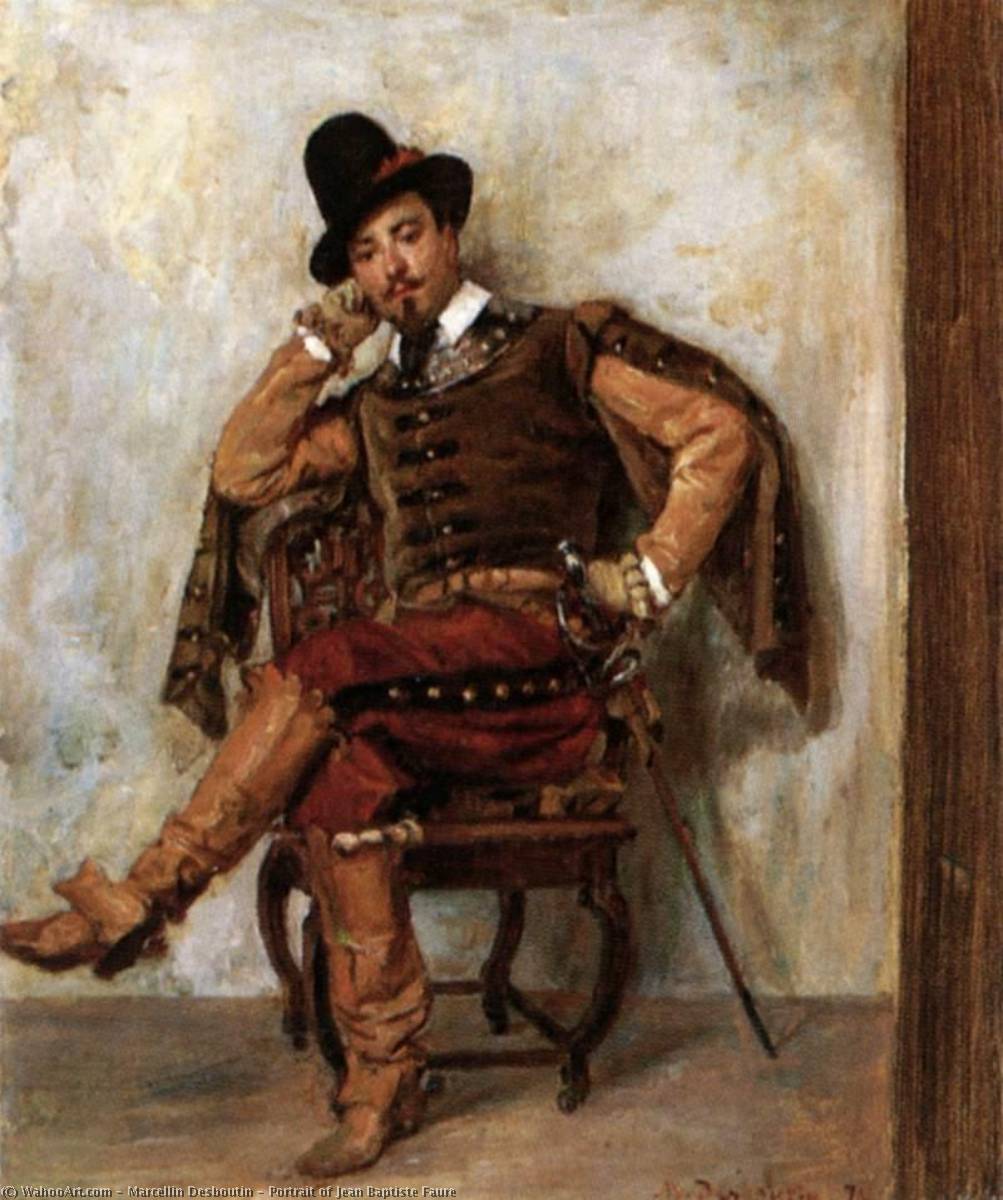
Portrait of Jean Baptiste Faure
 1874
1874 41.0 x 33.0 cm
 Read More
Hand Made Oil Reproduction
Hand-painted oil on canvas in your size and frame, made to order by our artists. ( Buy Print Buy Image)




































Pick from our preset sizes that match the artwork's original proportions.

You may enter your own dimensions to fit a specific frame or space. If your selected size does not match the original image's proportions, we will either crop the artwork or extend the painting with additional hand-painted elements. A digital mockup will be sent for your approval before production begins.
Please note that the on-screen preview does not reflect the actual cropping or extension. Only the mockup will accurately show the final composition.
While custom sizes are available, we recommend selecting a dimension from the predefined list to preserve the original proportions.
After order, ArtsDot.com team will email client for instructions and provide a mockup preview
Worldwide Delivery () in 3/4 weeks instead of standard 5 weeks. (25 August). No compromise on quality.

Free Worldwide Express Shipping

High-Quality Linen Canvas

Full Shipping Insurance

Customs Tax Refund Guarantee

True Color Matching Guarantee

60-Day Return Policy (Defects Only)

100% Money-Back Guarantee

Bulk Discount Offer
 Glass option is only available in size under 110 CM

Portrait of Jean Baptiste Faure
Reproduction Medium
Reproduction Size
-


Total Price
$ 263
Related Artworks








Artist Biography
Marcellin Desboutin: A Parisian Impressionist Painter
Marcellin Gilbert Desboutin (1823-1902) stands as a quietly influential figure in the vibrant tapestry of late 19th-century French art, particularly within the Impressionist movement. Born in Cérilly, Allier, he descended from a lineage steeped in aristocratic tradition – his father, Barthélémy Desboutin, served as bodyguard to Louis XVIII – and his upbringing instilled in him a refined sensibility that would permeate his artistic endeavors. This background shaped not only his personal life but also profoundly impacted his artistic vision. Desboutin’s early education encompassed both law studies and dramatic writing, demonstrating an intellectual curiosity that extended beyond the visual arts. However, it was his encounter with sculptor Louis-Jules Étex at the École nationale supérieure des beaux-arts in Paris that truly ignited his passion for painting. Under Étex's tutelage and subsequently with Thomas Couture, he honed his skills, absorbing techniques rooted in academic tradition while simultaneously embracing a burgeoning interest in capturing fleeting moments of light and color—a hallmark of Impressionism. His travels across Europe – Britain, Belgium, the Netherlands, and Italy – broadened his artistic horizons and exposed him to diverse cultural influences. The artist’s formative years coincided with significant historical events, notably the Franco-Prussian War of 1870–71, which disrupted performances of his play “La Maison du théâtre français,” a collaborative effort with Jules Amigues. Yet, amidst these challenges, Desboutin persevered, establishing himself in Florence and cultivating friendships with luminaries like Edgar Degas and Auguste Renoir. Their shared patronage at the Café Guerbois fostered intellectual exchange and cemented their position as central figures within Parisian artistic circles. Notably, he connected with Émile Zola and Edmond & Jules de Goncourt, engaging in stimulating conversations that fueled his creative spirit. Desboutin’s artistic output was characterized by a remarkable versatility. He pursued engraving alongside painting, producing drypoint sketches that showcased meticulous detail and expressive tonal qualities. His participation in the second Impressionist exhibition solidified his association with the movement, presenting six paintings including “Street Singer” and “The Cellist,” which captured the essence of Parisian urban life with sensitivity and nuance. He became a prolific portrait artist, immortalizing prominent figures such as Degas, Renoir, Morisot, Puvis de Chavannes, Labiche, Villard, Satie, Peladan, and Goncourt—each portrait imbued with psychological insight and artistic finesse. Perhaps Desboutin’s most enduring legacy resides in his masterful interpretation of Eugène Froment-David's paintings – specifically five compositions by Fragonard discovered in a villa near Grasse. These drypoint prints, “Surprise,” “Rencontre,” “Confiance,” “Le Amoureux couronné et abandonné,” are considered masterpieces of Impressionist printmaking, demonstrating Desboutin’s ability to distill the spirit of a celebrated artist into evocative monochrome images. He continued his artistic pursuits until his death in Paris in 1902, leaving behind a substantial body of work that continues to inspire admiration and scholarly study.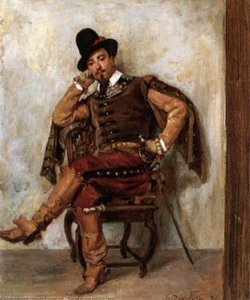
marcellin desboutin
1823 - 1902
Quick Facts
- Artistic Movement Or Style: Impressionism
- Artists Or Movements Influenced By This Artist: ['Edgar Degas']
- Artists Who Influenced This Artist:
- Thomas Couture
- Louis-Jules Étex
- Date Of Birth: August 26, 1823
- Date Of Death: 1902
- Full Name: Marcellin Gilbert Desboutin
- Nationality: French
- Notable Artworks:
- Street Singer
- The Cellist
- Surprise
- Rendezvous
- Confidence
- The Lover Crowned and Abandoned
- Place Of Birth: Cérilly, Allier