

 Preview
 Send
Send Share
Share
 Details

 Download
 Similars
 X-Ray
X-Ray Diaporama
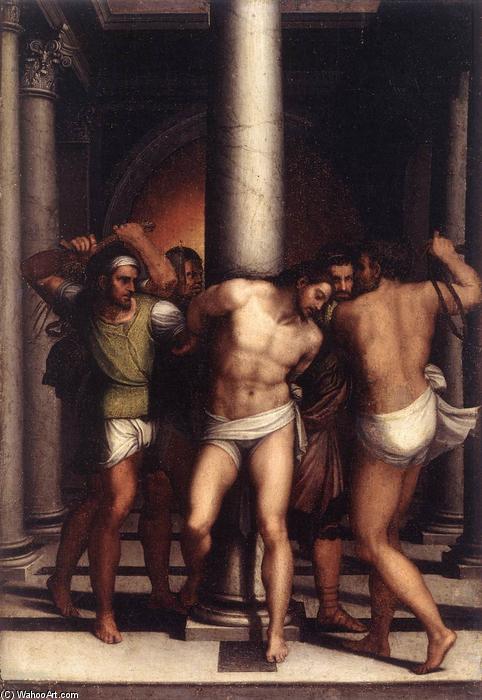
The Flagellation of Christ
 Oil On Canvas
- WallArt
- Baroque
 1560
1560- Renaissance
 50.0 x 39.0 cm
 Galleria Borghese
 Read More
Purchase a high-resolution, enhanced digital image, far superior to the online preview.
Each file is meticulously prepared by our in-house specialists using advanced tools and expert manual retouching. We ensure every image has exceptional clarity, precise color accuracy, and fine detail.
The final file is delivered via email within 72 hours, optimized for immediate use in professional, editorial, and print environments. This is the same quality trusted by top-tier design studios, publishers, and galleries.
Digital Image
Download a high-resolution file for personal display, printing, and creative projects. ( Buy Print Buy Hand Made Painting)
Included in Every Digital Image Order
Expert Digital Delivery, Guaranteed
When you choose ArtsDot.com, you're not just getting an image - you're receiving a professionally enhanced digital artwork, crafted with precision and backed by a satisfaction guarantee. Here's everything that comes with your order, automatically:

Fast Email Delivery
Your high-resolution digital image file will be emailed to you within 72 hours of ordering - ready for immediate use.

AI-Enhanced Digital File
Your artwork is professionally optimized using advanced AI tools and manual editing, ensuring maximum detail, clarity, and color accuracy.

Free Lifetime Re-Delivery
Accidentally deleted or lost your file? No worries - we'll resend it to you anytime, free of charge.

No Import Fees - Ever
Enjoy your artwork instantly with zero customs, duties, or delivery fees - digital downloads are always tax-free.

Color Accuracy Guarantee
We ensure your digital image reflects the original colors as closely as possible using professional tools and color management.

60-Day Satisfaction Guarantee
If you're not satisfied with your digital image, we'll revise it or refund 100% within 60 days - no questions asked.

100% Money-Back Guarantee
Not satisfied? Get a full refund within 60 days of receiving your digital file - no questions asked.

Bulk Order Discounts
Buy 3 images, save 10% - Buy 5, save 15% - Buy 10+, save 20%. Great for creative projects, galleries, and agencies.
Collectible Description
The Agony Captured: An Encounter with The Flagellation of Christ
To stand before this depiction of The Flagellation of Christ is to be drawn into the very crucible of human suffering and divine endurance. Marcello Venusti’s masterful rendering, executed in oil on canvas, transports the viewer directly into a moment of profound historical and spiritual weight. The scene unfolds with visceral intensity: central figures are locked in a brutal tableau where one man, representing Christ, bears the unimaginable torment of the whip. The composition is not merely a depiction of violence; it is a carefully orchestrated meditation on sacrifice, rendered with the dramatic flair characteristic of the late Renaissance transitioning into the Baroque era.
Baroque Drama and Somber Earth Tones
Venusti’s technique here is nothing short of breathtaking. The artist employs a dramatic use of light and shadow—a hallmark of the period's most compelling styles—to carve out the figures from the surrounding gloom. This chiaroscuro effect heightens the emotional stakes, casting deep shadows that lend an almost sculptural weight to every muscle, every fold of cloth. The palette itself is dominated by rich earth tones: ochres, deep siennas, and muted browns. These colors do not merely decorate the scene; they absorb the light, contributing profoundly to the somber, contemplative mood that permeates the entire canvas. One can almost feel the cool stone of the architectural setting—the columns and arches suggesting a public forum or sacred courtyard.
Symbolism in Classical Attire
Every element within this painting speaks volumes. The classical attire worn by the figures grounds the narrative in antiquity, lending an air of timeless gravity to the event. The observer, standing slightly apart, acts as a silent witness, inviting the viewer into their contemplation. Symbolically, the flagellation is the ultimate act of redemptive suffering. Venusti captures not just the physical pain inflicted by the whip, but the spiritual fortitude required to endure it. It is a complex interplay between human cruelty and divine acceptance, making the piece rich with layers for deep personal reflection.
A Masterpiece for Contemplative Spaces
For those seeking art that commands attention while simultaneously inviting quiet introspection, this reproduction offers unparalleled depth. Its size, approximately 50 x 39 cm, makes it a perfect focal point for a gallery wall or a richly appointed study. The combination of Venusti’s meticulous detail and the dramatic energy inherent in the composition ensures that the piece will engage both the seasoned art connoisseur and the discerning interior designer alike. Owning this work is to curate not just decoration, but a profound moment of artistic contemplation.
Related Artworks
Artist Biography
The Silent Architect of Michelangelo’s Legacy
In the vibrant, often turbulent landscape of mid-16th-century Rome, certain names resonate with the thunderous force of creation, while others exist in the delicate, essential space of refinement. Marcello Venusti belongs to that profound second category—a painter whose hands worked in the shadow of giants, yet whose vision possessed a singular, corrective grace. Born near Como in the rugged terrain of Mazzo di Valtellina around 1512, Venusti emerged from the Italian foothills to become a vital conduit for the Mannerist aesthetic. His journey was one of profound apprenticeship and intellectual absorption, shaped significantly by his early training under the esteemed Perino del Vaga. This formative connection anchored him within the sophisticated stylistic currents of Rome, preparing him to translate the monumental language of the High Renaissance into the more stylized, elongated, and emotive vocabulary of Mannerism.
Venusti’s historical significance is inextricably linked to his extraordinary relationship with the works of Michelangelo Buonarroti. While many artists of his era sought only to mimic the masters, Venusti acted as a meticulous bridge between vision and reality. His most celebrated achievement remains the scaled oil copy of the Last Judgment, commissioned by Cardinal Alessandro Farnese. This was no mere reproduction; it was a scholarly endeavor completed during Michelangelo’s own lifetime and, crucially, with his explicit approval. Through this work, Venusti captured a fleeting moment in art history, preserving the raw, muscular purity of the Sistine Chapel frescoes before the later, more conservative additions of drapery altered their original impact. In doing so, he became an accidental historian, providing modern scholars with the most accurate window into the unadorned majesty of Michelangelo’s late masterpiece.
A Mastery of Devotion and Detail
Beyond his role as a faithful interpreter of Michelangelo, Venusti’s independent oeuvre reveals an artist deeply engaged with the spiritual and dramatic demands of Roman ecclesiastical commissions. His brushwork often navigated the tension between the anatomical rigor of his training and the graceful, sometimes artificial elegance characteristic of the Mannerist movement. In works such as Christ in the Garden, housed in the Galleria Doria Pamphilj, one observes a profound ability to evoke psychological depth through light and form. He did not merely paint figures; he orchestrated scenes of intense theological weight, often working from designs provided by Michelangelo himself, such as his Annunciation for the church of Santa Maria della Pace or the Christ bearing His Cross found in the Palazzo Borghese.
The breadth of Venusti’s contributions to the Roman landscape is evidenced by the sheer variety of his sacred subjects:
- Biblical Narratives: His ability to render complex scenes like the Holy Family and the Christ expelling the Money-Changers demonstrates a command over both large-scale composition and intimate human emotion.
- Ecclesiastical Altarpieces: Venusti was a sought-after hand for Roman churches, decorating spaces such as Santa Maria sopra Minerva with depictions of the Resurrected Christ and contributing to the Chapel of St. James Apostle.
- Stylistic Refinement: His talent lay in his "quiet adjustments," where he subtly corrected discrepancies in scale between figures, ensuring that even when following a master's design, the final composition achieved a harmonious, balanced reality.
As we reflect on the life of Marcello Venusti, we see an artist who found greatness not by eclipsing his predecessors, but by illuminating them. He was a painter of precision and a custodian of beauty, ensuring that the monumental visions of the Renaissance were preserved, refined, and passed down to future generations with unwavering fidelity.
Marcello Venusti
1510 - 1579 , Italy
Quick Facts
- Artistic Movement Or Style: Mannerist
- Artists Or Movements Influenced By This Artist: ['Renaissance']
- Artists Who Influenced This Artist: ['Michelangelo']
- Date Of Death: 1579
- Full Name: Marcello Venusti
- Nationality: Italian
- Notable Artworks:
- Christ at the Column
- The Flagellation of Christ
- Annunciation
- Christ in the Garden
- Place Of Birth: Como, Italy

