 Preview
 Send
Send Share
Share
 Details

 Download
 Similars
 X-Ray
X-Ray Diaporama
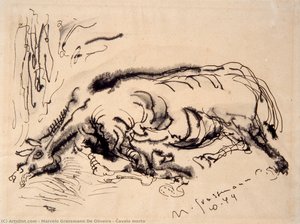
Cavalo morto


 Read More
Hand Made Oil Reproduction
Hand-painted oil on canvas in your size and frame, made to order by our artists. ( Buy Print Buy Image)




P118B $10

P118H $10

P118W $10

P438Z $10

P508JH $12

P508YH $12

P805H $10

P805Z $10

P919BZ $10

P919G $10

P919XJ $10

P959ZH $10

P968JZ $12

W106C $8

W218G $10

W218JH $8

W218Y $10

W307PJ $10

W316G $10

W316PJ $8

W316Y $10

W398PJ $8

W4111J $10

W500HY $15

W500JH $15

W692G $12

W849H $8

W940BG $15

W953PJ $8




Pick from our preset sizes that match the artwork's original proportions.

You may enter your own dimensions to fit a specific frame or space. If your selected size does not match the original image's proportions, we will either crop the artwork or extend the painting with additional hand-painted elements. A digital mockup will be sent for your approval before production begins.
Please note that the on-screen preview does not reflect the actual cropping or extension. Only the mockup will accurately show the final composition.
While custom sizes are available, we recommend selecting a dimension from the predefined list to preserve the original proportions.
After order, ArtsDot.com team will email client for instructions and provide a mockup preview
Worldwide Delivery () in 3/4 weeks instead of standard 5 weeks. (17 August). No compromise on quality.

Free Worldwide Express Shipping

High-Quality Linen Canvas

Full Shipping Insurance

Customs Tax Refund Guarantee

True Color Matching Guarantee

60-Day Return Policy (Defects Only)

100% Money-Back Guarantee

Bulk Discount Offer
 Glass option is only available in size under 110 CM

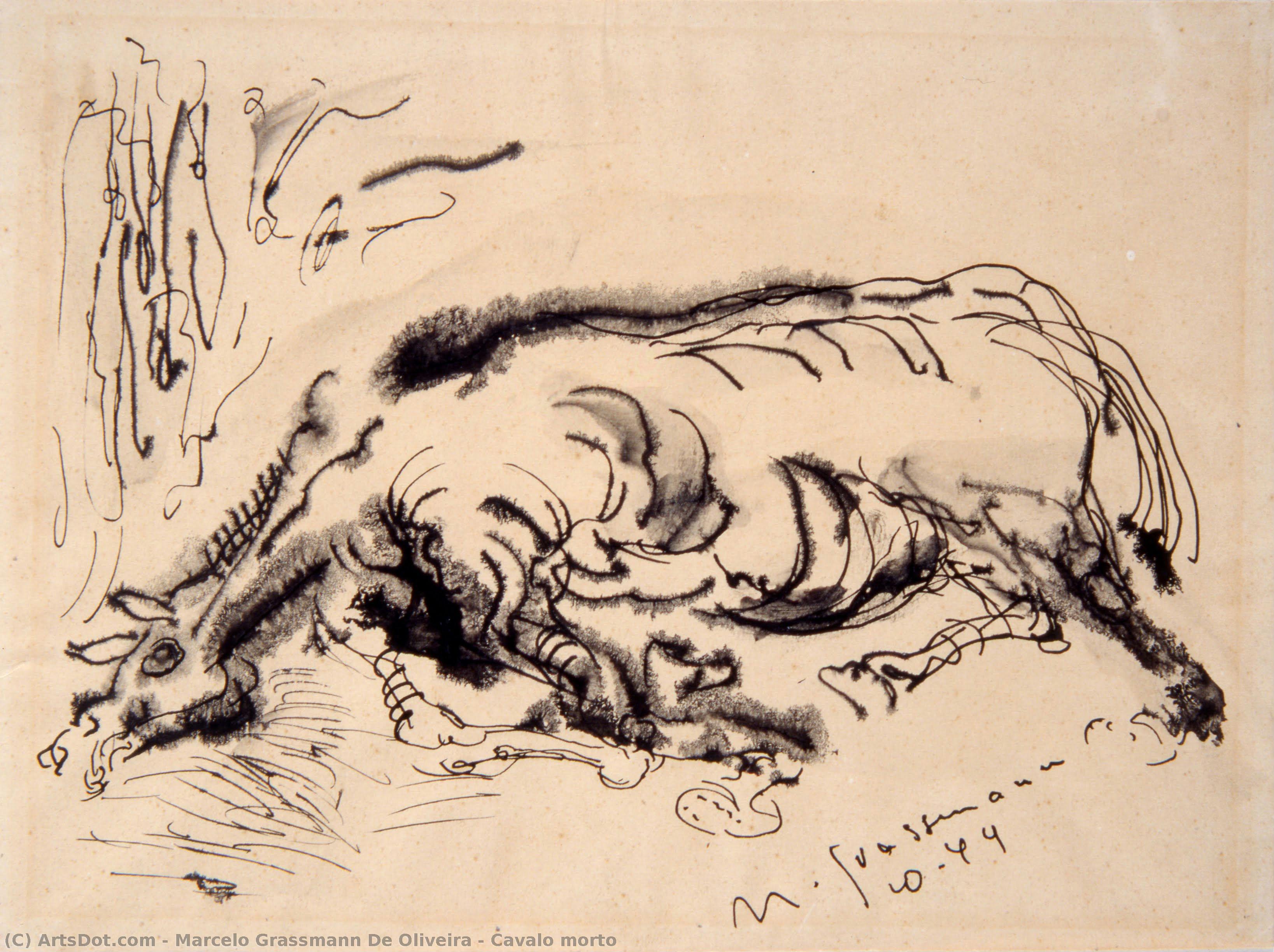
Cavalo morto
Reproduction Medium
Reproduction Size
-


Total Price
$ 263
Artwork Description
The Somber Elegance of Mortality
In the hauntingly beautiful drawing Cavalo morto, created in 1944, the Brazilian master Marcelo Grassmann de Oliveira invites us into a profound meditation on the cycle of life and the inevitability of decay. This striking black and white work captures a lifeless horse resting upon the earth, its emaciated form rendered with a precision that transcends mere anatomical study. The composition is anchored by the heavy, stillness of the subject, whose head rests low against the ground in a posture of finality. Through the stark contrast of light and shadow, Grassmann transforms a scene of biological end into a poetic, almost sculptural moment of repose, where the boundaries between the physical body and the surrounding void begin to blur.
The artist’s technique in this early period reflects a deep-seated mastery of line and tonal depth. By eschewing color, Grassmann utilizes the monochromatic spectrum to emphasize texture and form, allowing the viewer to feel the skeletal fragility and the weight of the animal's descent into the earth. The use of light does not merely illuminate the subject; it carves it out from the darkness, creating a dramatic chiaroscuro effect that heightens the emotional gravity of the piece. This mastery of engraving-like precision in his drawing suggests the influence of his later celebrated works in metal and wood, where every stroke serves to build a sense of atmospheric tension and surrealist mystery.
Symbolism and the Dreamlike Vision
To understand Cavalo morto, one must look through the lens of Grassmann’s broader artistic universe. Throughout his career, the artist was deeply moved by themes of death, knights, and dreamlike imagery, often drawing inspiration from the dark, fantastic worlds of Alfred Kubin. In this work, the dead horse serves as a potent symbol of the ephemeral nature of strength and vitality. The horse, traditionally a symbol of power, movement, and nobility, is here stripped of its agency, reduced to a quiet monument of mortality. This juxtaposition creates a hauntingly beautiful tension that resonates with anyone who has contemplated the fleeting beauty of existence.
For the discerning collector or interior designer, this piece offers more than just visual impact; it provides a focal point for deep contemplation. The artwork possesses a timeless quality that allows it to integrate seamlessly into sophisticated, contemporary spaces—particularly those that favor minimalist or dramatic aesthetics. A high-quality reproduction of this drawing brings a sense of historical weight and intellectual depth to a room, acting as a conversation piece that invites guests to linger on its shadows and find beauty in the melancholic. It is an exquisite choice for those seeking to curate a collection defined by emotional resonance, technical brilliance, and the profound mystery of the human—and animal—condition.
Related Artworks
Artist Biography
Marcelo Grassmann de Oliveira: A Life in Engraving and Drawing
- Born: September 23, 1925, São João do Rio Preto, Brazil
- Died: June 21, 2013
- Nationality: Brazilian
- Known For: Engravings, Drawings, Metal Engraving, Wood Engraving
Early Life and Artistic Development
- Initially pursued sculpture before discovering his passion for engraving in the 1940s.
- Transitioned from wood engraving to metal engraving in the 1950s, marking a significant shift in his artistic practice.
- Influenced by Austrian artist Alfred Kubin and prominent Brazilian engravers Oswaldo Goeldi and Livio Abramo. These influences shaped his early style and thematic concerns.
- Developed a distinctive visual language characterized by dreamlike imagery and recurring motifs such as knights, maidens, death, horses, and crabs – often imbued with symbolic meaning.
Artistic Style and Major Themes
- Dreamlike Imagery: Grassmann's work is renowned for its surreal and evocative atmosphere, transporting viewers to fantastical realms.
- Recurring Motifs: The consistent presence of knights, maidens, death, horses, and crabs suggests a fascination with themes of mortality, chivalry, mythology, and the subconscious.
- Technical Mastery: His engravings demonstrate exceptional technical skill, showcasing intricate detail and precise linework.
- Symbolism: The figures and scenes in his work are often laden with symbolic meaning, inviting multiple interpretations.
- Exploration of the Human Condition: Through his fantastical imagery, Grassmann explored universal themes of life, death, love, loss, and the search for meaning.
Recognition and Achievements
- International Awards: Received numerous prestigious awards throughout his career, including first prizes at the I Salon of Modern Art of Rio de Janeiro (1953), the III Biennale of São Paulo (1955), and the XXXI Biennale of Venice (1958) for sacred art.
- Exhibitions: Participated in significant international exhibitions, including the III Biennale for Graphic Arts in Florence (1972).
- Museum Collections: His works are held in prominent museum collections worldwide, including the Museum of Modern Art (MoMA) in New York, the Bibliothèque Nationale in Paris, the Museum of Fine Arts in Dallas, and the Pinacoteca do Estado in São Paulo.
Legacy and Historical Significance
- Unique Contribution to Brazilian Art: Grassmann made a significant contribution to Brazilian art through his innovative approach to engraving and draughtsmanship.
- Influence on Subsequent Artists: His unique style and technical skill have inspired generations of artists in Brazil and beyond.
- Preservation of Cultural Heritage: His works serve as valuable documents of Brazilian culture and artistic expression, offering insights into the country's history and identity.
- Enduring Appeal: Grassmann’s art continues to resonate with audiences today due to its timeless themes, captivating imagery, and exceptional craftsmanship.
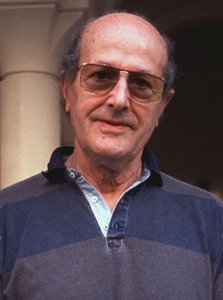
marcelo grassmann de oliveira
1925 - 2013 , Brazil
Quick Facts
- Artistic Movement Or Style: Engraving and draughtsmanship
- Artists Who Influenced This Artist:
- Alfred Kubin
- Oswaldo Goeldi
- Livio Abramo
- Date Of Birth: September 23, 1925
- Date Of Death: June 21, 2013
- Full Name: Marcelo Grassmann de Oliveira
- Nationality: Brazilian
- Notable Artworks:
- Cavalos
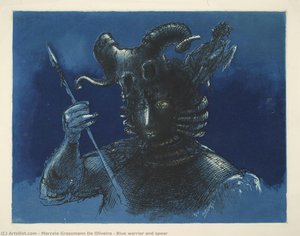
- Blue warrior and spear
- Place Of Birth: São João do Rio Preto, Brazil
Related Articles

White on Canvas: 10 Masterpieces & Timeless Elegance for Your Home Decor
Explore 10 iconic white paintings by Monet, Whistler & Rothko! Discover the stories behind these serene masterpieces and their impact on art history. Find museum-quality reproductions for your home decor at .

Dark Masterpieces: 10 Iconic Paintings Dominated by Black Tones |
Explore 10 iconic paintings dominated by black tones, from Rembrandt’s chiaroscuro to Goya's dark expressions. Discover the stories behind these masterpieces & find museum-quality art reproductions for your home at .

Monochrome Visions: Exploring the Aesthetic & Historical Significance of Black & White Photography
Explore the rich history & artistic power of black and white photography. From early techniques to iconic masters like Ansel Adams, discover why monochrome continues to captivate art lovers today. Expert insights for collectors.
Somber Masterpieces: 10 Artworks That Stir the Soul |
Delve into 10 somber masterpieces by Rembrandt, Munch & Van Gogh. Explore emotional art history, dark palettes & powerful expression. Find museum-quality reproductions & curated wall decor ideas at . Discover all masterpieces online.
Mars Black Masterpieces: 10 Iconic Paintings & Timeless Art Decor Ideas
Delve into the power of 'Mars Black' with 10 iconic paintings by masters like Rembrandt & Caravaggio. Explore dramatic chiaroscuro, gothic art, and timeless beauty. Find museum-quality reproductions & elevate your home decor on .