

 Preview
 Send
Send Share
Share
 Details

 Download
 Similars
 X-Ray
X-Ray Diaporama
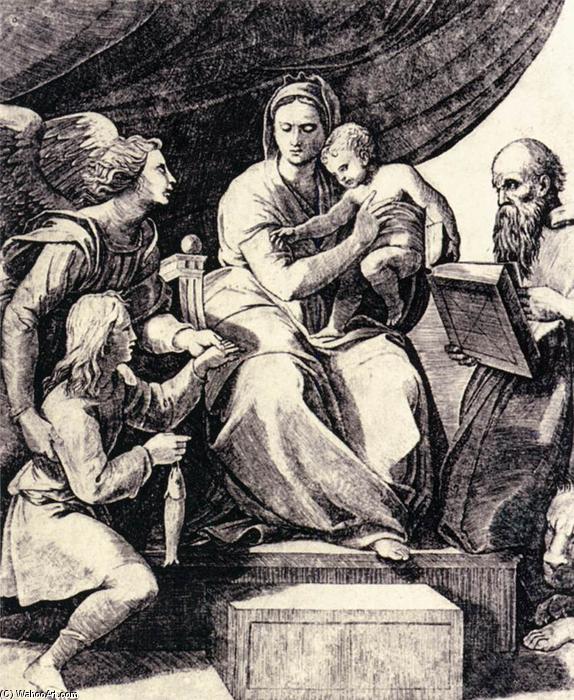
Madonna of the Fish


 Read More
Purchase a high-resolution, enhanced digital image, far superior to the online preview.
Each file is meticulously prepared by our in-house specialists using advanced tools and expert manual retouching. We ensure every image has exceptional clarity, precise color accuracy, and fine detail.
The final file is delivered via email within 72 hours, optimized for immediate use in professional, editorial, and print environments. This is the same quality trusted by top-tier design studios, publishers, and galleries.
Digital Image
Download a high-resolution file for personal display, printing, and creative projects. ( Buy Print Buy Hand Made Painting)
Included in Every Digital Image Order
Expert Digital Delivery, Guaranteed
When you choose ArtsDot.com, you're not just getting an image - you're receiving a professionally enhanced digital artwork, crafted with precision and backed by a satisfaction guarantee. Here's everything that comes with your order, automatically:

Fast Email Delivery
Your high-resolution digital image file will be emailed to you within 72 hours of ordering - ready for immediate use.

AI-Enhanced Digital File
Your artwork is professionally optimized using advanced AI tools and manual editing, ensuring maximum detail, clarity, and color accuracy.

Free Lifetime Re-Delivery
Accidentally deleted or lost your file? No worries - we'll resend it to you anytime, free of charge.

No Import Fees - Ever
Enjoy your artwork instantly with zero customs, duties, or delivery fees - digital downloads are always tax-free.

Color Accuracy Guarantee
We ensure your digital image reflects the original colors as closely as possible using professional tools and color management.

60-Day Satisfaction Guarantee
If you're not satisfied with your digital image, we'll revise it or refund 100% within 60 days - no questions asked.

100% Money-Back Guarantee
Not satisfied? Get a full refund within 60 days of receiving your digital file - no questions asked.

Bulk Order Discounts
Buy 3 images, save 10% - Buy 5, save 15% - Buy 10+, save 20%. Great for creative projects, galleries, and agencies.
The Silent Master of Reproduction: Marco Dente da Ravenna and Raphael’s Madonna of the Fish
Marco Dente da Ravenna (circa 1486 – 1527) remains an artist whose legacy is profoundly shaped by his extraordinary skill—not in groundbreaking originality, but in meticulous reproduction. His story isn't one of solitary genius, but rather of diligent apprenticeship under Marcantonio Raimondi, where he honed his craft and ultimately became a pivotal figure in disseminating Raphael’s artistic vision across Europe. This dedication to faithfully recreating masterpieces cemented his place within art history despite the relative obscurity of his own individual style—a stylistic distinction that belies the immense influence of his work. The engraving itself is a testament to Dente's mastery. Executed around 1512, it’s a monochrome depiction of Raphael’s “Madonna with the Fish,” a painting that had rapidly gained renown thanks to Raimondi’s skillful adaptation. This wasn’t merely copying; it was an act of artistic stewardship—a recognition that Raphael’s aesthetic sensibilities were destined to resonate far beyond Urbino and Rome. The printmaking process itself – etching, aquatint, and burin – demanded precision and patience, reflecting the Renaissance ideal of meticulous craftsmanship. Dente skillfully captured Raphael's nuanced composition, prioritizing clarity of form and tonal gradation to convey the serene dignity inherent in the biblical narrative. The scene portrays Mary cradling Jesus amidst a richly ornamented throne-like structure, attended by an angel and an elderly man—figures imbued with symbolic significance. The angel’s outstretched wings represent divine grace and protection, while the elder embodies wisdom and spiritual guidance. Beneath them kneel two individuals – likely Mary Magdalene and John the Baptist – demonstrating reverence for the sacred image. Raphael's original painting was a cornerstone of humanist art, emphasizing human dignity and portraying religious themes with profound emotional depth. Dente’s engraving faithfully reproduces this emotive quality, inviting viewers to contemplate the Madonna’s maternal tenderness and Jesus’ divine innocence. Furthermore, the engraving’s background—a dark curtain—creates an atmosphere of solemn contemplation, mirroring the contemplative mood conveyed by Raphael's masterpiece. This stylistic choice underscores the importance of visual harmony and contributes to the overall impression of spiritual grandeur. The meticulous attention to detail – from the folds of Mary’s robe to the delicate rendering of Jesus’ halo – speaks volumes about Dente’s commitment to artistic excellence. It exemplifies the Renaissance preoccupation with realism, striving to capture not just what was seen but also what was felt. The engraving's enduring appeal lies in its ability to transmit Raphael’s vision to a wider audience—a feat achieved through the transformative process of printmaking. Marco Dente da Ravenna didn’t forge new artistic paths; he perfected an established technique, ensuring that Raphael’s iconic image continued to inspire generations of artists and admirers alike. His contribution to art history isn't measured by innovation but by unwavering dedication to preserving and disseminating beauty—a legacy worthy of remembrance as a cornerstone of Renaissance visual culture.Related Artworks
Artist Biography
Marco Dente da Ravenna: The Silent Master of Reproduction
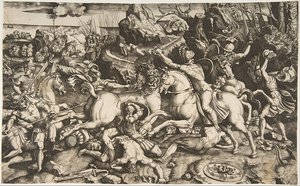
Marco Dente da Ravenna (circa 1486 – 1527) remains a figure shrouded in intriguing mystery, a silent master whose legacy is largely defined by his extraordinary skill in reproduction rather than groundbreaking originality. Born and raised in the vibrant city of Ravenna, a crucible of artistic innovation during the High Renaissance, Dente’s career unfolded within the influential workshop of Marcantonio Raimondi, where he honed his craft and ultimately became a pivotal figure in shaping the visual landscape of his time. His story is not one of solitary genius, but rather of meticulous apprenticeship, shrewd observation, and an uncanny ability to capture the essence of other artists' visions – a skill that paradoxically cemented his place within art history despite the relative obscurity of his own individual style.
Dente’s early life offers little in the way of documented detail. He was part of a prominent family in Ravenna, a city renowned for its rich artistic heritage and burgeoning printmaking scene. His training began under Marcantonio Raimondi, a master engraver known for his meticulous reproductions of classical sculptures and Raphael's drawings. This apprenticeship instilled in Dente a deep respect for the techniques of engraving and a keen understanding of how to translate complex imagery onto metal plates. Crucially, it also exposed him to the prevailing artistic trends of the era – particularly the renewed interest in antiquity and the influence of Raphael’s idealized depictions of classical forms.
The Reproduction Game: Technique and Context
What distinguishes Dente from many of his contemporaries is not a distinctive personal style, but rather his almost obsessive dedication to reproduction. Unlike artists who sought to create entirely original works, Dente specialized in meticulously copying the prints of others – primarily those produced by Marcantonio Raimondi and, most significantly, Raphael. This practice wasn’t simply mechanical; it required an extraordinary level of technical skill, a deep understanding of perspective, anatomy, and composition, and a remarkable ability to discern subtle nuances in tone and detail. His engravings were not mere copies; they were carefully crafted interpretations that sought to faithfully replicate the spirit and character of the original.
The context surrounding Dente’s work is equally important. During the early 16th century, there was a burgeoning market for images of classical antiquity – particularly casts of ancient sculptures. These casts were highly prized by wealthy patrons and collectors, but they were often difficult to transport or display. Prints offered a relatively inexpensive and accessible way to experience these masterpieces. Raimondi’s workshop, and subsequently Dente's, played a crucial role in supplying this demand, producing numerous copies of Raphael’s drawings and other classical models. This system was driven by commercial considerations – the need to replicate and distribute images efficiently – but it also had significant artistic implications, shaping the visual culture of the time.
Notable Works: Echoes of Raphael and Antiquity
Despite his specialization in reproduction, Dente produced a remarkable body of work that reveals both his technical mastery and his deep engagement with the artistic traditions he was replicating. His most celebrated engraving is undoubtedly his depiction of Laocoön and his two sons (circa 1520-21), a powerful and dramatic interpretation of the ancient Greek tragedy. This print, based on a lost Raphael drawing, showcases Dente’s ability to capture the dynamism and pathos of the scene with remarkable precision. The composition is meticulously rendered, the figures are anatomically accurate, and the overall effect is one of intense emotional drama.
Other notable works include his engravings of The Massacre of the Innocents (1520-21) – a harrowing depiction based on a drawing by Baccio Bandinelli – and The Judgment of Paris. These prints, like Laocoön, demonstrate Dente’s ability to translate complex narratives and visual concepts onto metal plates with remarkable skill. Throughout his oeuvre, there is a clear influence of Raphael's style—a refined elegance, balanced compositions, and an emphasis on idealized beauty. However, Dente’s engravings are not simply imitations; they possess a unique character and expressiveness that distinguish them from the originals.
A Tragic End and Lasting Legacy
Dente's career was tragically cut short by the Sack of Rome in 1527. As the city fell to invading forces, his workshop – along with countless other artistic treasures – was destroyed, erasing much of his output from existence. The loss was devastating, not only for Dente himself but also for art historians who were struggling to understand his role and significance. Despite this destruction, fragments of his work have survived, offering tantalizing glimpses into the mind of a remarkable artist.
Today, Marco Dente da Ravenna is recognized as one of the most important engravers of the High Renaissance. While he may not be celebrated for his originality, his meticulous reproductions played a crucial role in shaping the visual culture of his time and preserving the legacy of Raphael and other masters. His story serves as a poignant reminder that artistic influence can take many forms – sometimes through imitation, sometimes through subtle interpretation, and always through the enduring power of skill and dedication.
marco dente da ravenna
1486 - 1527 , Italy
Quick Facts
- Artistic Movement Or Style: Mannerism
- Artists Or Movements Influenced By This Artist:
- Marcantonio Raimondi's School
- Renaissance Printmaking
- Artists Who Influenced This Artist:
- Marcantonio Raimondi
- Raphael
- Date Of Birth: c. 1486
- Date Of Death: 1527
- Full Name: Marco Dente da Ravenna
- Nationality: Italian
- Notable Artworks:
- Birth of Venus
- Laocoön
- Massacre Innocents
- Judgement Paris
- Place Of Birth: Ravenna, Italy

