 Preview
 Send
Send Share
Share
 Details

 Download
 Similars
 X-Ray
X-Ray Diaporama
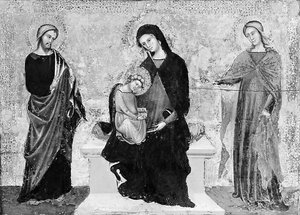
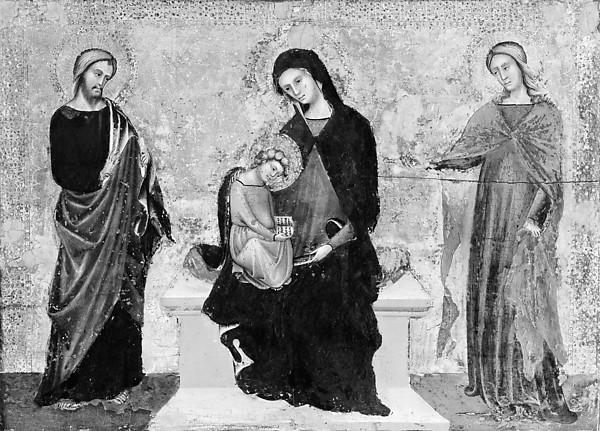
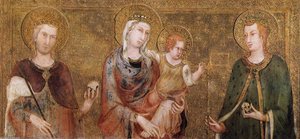
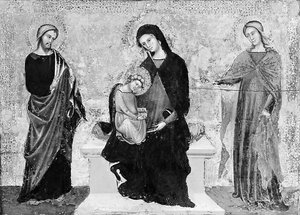
Madonna and Child Enthroned with Saints James Minor and Lucy
 31.0 x 44.0 cm
 Read More
Hand Made Oil Reproduction
Hand-painted oil on canvas in your size and frame, made to order by our artists. ( Buy Print Buy Image)




































Pick from our preset sizes that match the artwork's original proportions.

You may enter your own dimensions to fit a specific frame or space. If your selected size does not match the original image's proportions, we will either crop the artwork or extend the painting with additional hand-painted elements. A digital mockup will be sent for your approval before production begins.
Please note that the on-screen preview does not reflect the actual cropping or extension. Only the mockup will accurately show the final composition.
While custom sizes are available, we recommend selecting a dimension from the predefined list to preserve the original proportions.
After order, ArtsDot.com team will email client for instructions and provide a mockup preview
Worldwide Delivery () in 3/4 weeks instead of standard 5 weeks. (2 September). No compromise on quality.

Free Worldwide Express Shipping

High-Quality Linen Canvas

Full Shipping Insurance

Customs Tax Refund Guarantee

True Color Matching Guarantee

60-Day Return Policy (Defects Only)

100% Money-Back Guarantee

Bulk Discount Offer
 Glass option is only available in size under 110 CM

Madonna and Child Enthroned with Saints James Minor and Lucy
Reproduction Medium
Reproduction Size
-


Total Price
$ 313
Related Artworks




Artist Biography
The Architect of Venetian Painting
In the shimmering, maritime heart of the fourteenth century, a transformative era was unfolding within the lagoons of Venice, and at its center stood Paolo Veneziano. Often revered as the undisputed founder of the Venetian School, this master artist—also known by names such as Paolo da Venezia or Veneziano Paolo—did more than merely paint; he forged a visual identity for a rising maritime republic. Born into a lineage of painters, likely the son of Martino and brother to Marco, Paolo’s very existence was woven into the fabric of Venetian artistic tradition. His career, which flourished between the second and third quarters of the 1300s, coincided with a period of profound cultural consolidation, where Venice began to assert itself not just as a commercial powerhouse, but as a beacon of unparalleled aesthetic innovation.
The soul of Veneziano’s work lies in its exquisite, complex fusion of disparate worlds. To understand his genius is to understand the unique position of Venice itself—a crossroads of East and West. His formative years were steeped in the luminous, spiritual grandeur of Byzantine art, a tradition brought to the Venetian lagoons through trade and deep ecclesiastical ties to Constantinople. This influence is most palpable in his use of radiant colors, stylized drapery, and the iconic golden backgrounds that seem to emanate a divine light. Yet, Paolo was no mere imitator of Eastern icons. He possessed the visionary foresight to integrate the burgeoning Gothic elements flowing from regions like Rimini, introducing sharper contours, richer textures, and a nascent naturalism that breathed life into his human figures.
A Legacy Written in Gold and Pigment
The sheer scale of Veneziano’s impact is best measured by the prestigious commissions that adorned the most sacred spaces of his era. His workshop was a prolific engine of creativity, producing altarpieces and polyptychs that commanded the attention of both the Venetian clergy and the Adriatic nobility. One of his most monumental achievements remains his work for St. Mark’s Basilica, where he decorated the sanctuary with breathtaking compositions depicting Saint Mark Evangelist and the Virgin Mary. These works were not merely decorations; they were theological statements rendered in tempera and gold, designed to inspire awe and reinforce the spiritual authority of the Venetian state.
Beyond the walls of great basilicas, the reach of his workshop extended far across the Adriatic coast, influencing churches in Bologna and various Dalmatian towns. His ability to blend the following elements created a style that was uniquely "Venetian":
- Luminous Color Palettes: Drawing from the Byzantine tradition to create depth and spiritual radiance.
- Gothic Naturalism: The introduction of more fluid, organic forms and expressive human emotion.
- Intricate Ornamentation: A mastery of detail that mirrored the luxury and wealth of the Venetian Republic.
- Workshop Collaboration: A sophisticated system of production that allowed for a vast and consistent output of high-quality sacred art.
As history progressed, the distinction between works executed by Paolo’s own hand and those produced by his skilled assistants became secondary to the collective impact of his studio. He established a stylistic blueprint that would guide generations of Venetian painters, paving the way for the later Renaissance masters who would eventually move away from the gold ground toward the atmospheric landscapes of the much later centuries. Even today, when we gaze upon the remnants of his polyptychs in museums like the National Gallery of Art or the Getty, we are witnessing the dawn of a movement—a moment when the light of Byzantium met the grace of the Gothic to create something entirely new, enduring, and profoundly beautiful.
marco di paolo veneziano
1362 -
Quick Facts
- Artistic Movement Or Style: Byzantine-influenced art; Gothic art
- Artists Or Movements Influenced By This Artist: ['Venetian School']
- Artists Who Influenced This Artist: ['Byzantine artists']
- Full Name: Paolo Veneziano
- Nationality: Italian
- Notable Artworks:
- Madonna and Child Enthroned with Saints James Minor and Lucy
- Panel of a Polyptych
- Place Of Birth: Venice