 Preview
 Send
Send Share
Share
 Details

 Download
 Similars
 X-Ray
X-Ray Diaporama
Rumi


 Read More
Hand Made Oil Reproduction
Hand-painted oil on canvas in your size and frame, made to order by our artists. ( Buy Print Buy Image)




P118B $10

P118H $10

P118W $10

P438Z $10

P508JH $12

P508YH $12

P805H $10

P805Z $10

P919BZ $10

P919G $10

P919XJ $10

P959ZH $10

P968JZ $12

W106C $8

W218G $10

W218JH $8

W218Y $10

W307PJ $10

W316G $10

W316PJ $8

W316Y $10

W398PJ $8

W4111J $10

W500HY $15

W500JH $15

W692G $12

W849H $8

W940BG $15

W953PJ $8




Pick from our preset sizes that match the artwork's original proportions.

You may enter your own dimensions to fit a specific frame or space. If your selected size does not match the original image's proportions, we will either crop the artwork or extend the painting with additional hand-painted elements. A digital mockup will be sent for your approval before production begins.
Please note that the on-screen preview does not reflect the actual cropping or extension. Only the mockup will accurately show the final composition.
While custom sizes are available, we recommend selecting a dimension from the predefined list to preserve the original proportions.
After order, ArtsDot.com team will email client for instructions and provide a mockup preview
Worldwide Delivery () in 3/4 weeks instead of standard 5 weeks. (17 August). No compromise on quality.

Free Worldwide Express Shipping

High-Quality Linen Canvas

Full Shipping Insurance

Customs Tax Refund Guarantee

True Color Matching Guarantee

60-Day Return Policy (Defects Only)

100% Money-Back Guarantee

Bulk Discount Offer
 Glass option is only available in size under 110 CM

Rumi
Reproduction Medium
Reproduction Size
-


Total Price
$ 263
Artwork Description
The Enigmatic Rumi: A Meditation on Mysticism and Movement
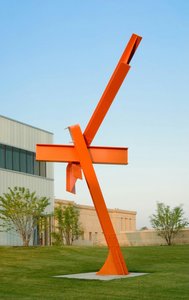
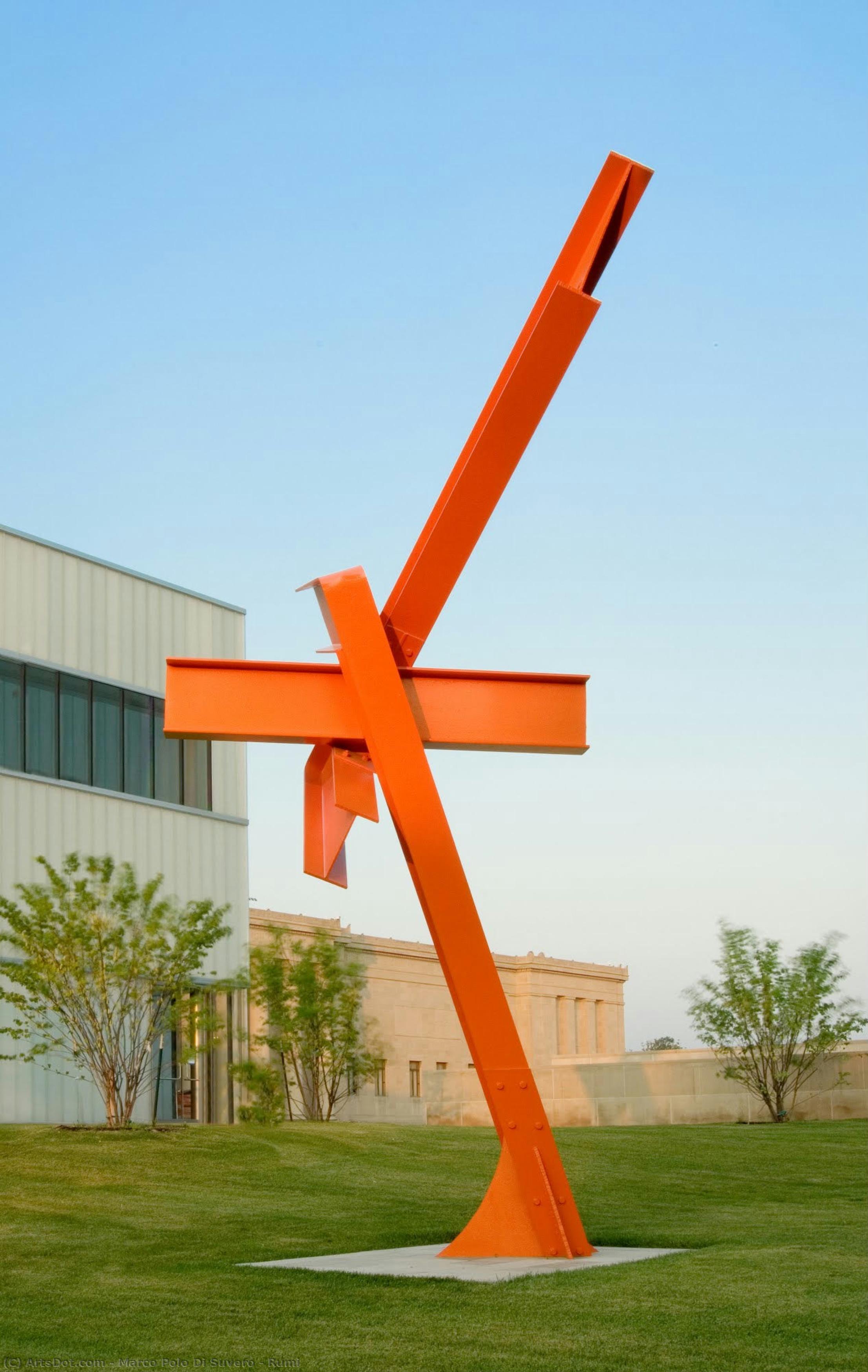
Mark di Suvero’s sculpture, *Rumi*, is not merely a steel structure; it's an invitation into a realm of ecstatic contemplation. Born from the industrial bones of construction – colossal I-beams salvaged from demolished buildings – the piece transforms raw materials into a dynamic embodiment of spiritual yearning. The vibrant orange hue, echoing the iconic San Francisco Golden Gate Bridge, immediately draws the eye, while the bold red triangle perched atop the structure acts as a visual anchor, simultaneously grounding and elevating the composition. This striking interplay of color and form speaks to the core themes explored within the work: the convergence of earthly materiality with transcendent experience. Di Suvero himself described his intention as “to be multicultural,” striving to unify diverse cultural perspectives through art – a sentiment powerfully realized in *Rumi’s* evocative dance between the tangible and the divine.A Spiritual Echo: Rumi, Shams, and the Mevlevi Order
The sculpture's title is inextricably linked to its profound inspiration: Jala al-Din Rumi, the 13th-century Persian poet and spiritual leader whose writings ignited the mystical tradition of Sufism. Rumi’s poetry, particularly his *Masnavi*, explores themes of love, devotion, and the ecstatic journey towards God – concepts that resonate deeply within *Rumi*’s form. The sculpture directly references the Mevlevi Order, known for its whirling dervishes who perform a mesmerizing ritual dance intended to induce trance-like states and facilitate union with the divine. Di Suvero consciously evokes this movement through the sculpture's inherent instability; the I-beams are deliberately allowed to swing and rotate, mirroring the swirling motion of the dervishes and suggesting an ongoing, dynamic process of spiritual transformation. The reference to Shams Tabrīzī, Rumi’s enigmatic mentor and source of intense inspiration, adds another layer of complexity – a reminder of the transformative power of a single guiding force.The Language of Steel: Di Suvero's Process and Materials
Di Suvero’s approach to sculpture is deeply rooted in his background as a construction worker. He embraces industrial materials—steel, concrete, and often salvaged elements—as the very foundation of his art. *Rumi* exemplifies this philosophy perfectly; the massive I-beams are not simply shaped into an abstract form but are left exposed, revealing their structural integrity and celebrating the beauty inherent in raw, unrefined materials. His method involves a unique combination of engineering precision and intuitive design – he often uses cranes to manipulate the steel during construction, allowing for a degree of spontaneity and organic growth within the final piece. This hands-on approach imbues *Rumi* with a palpable sense of energy and dynamism, reflecting the artist’s own physical engagement with his craft.Symbolism and Emotional Resonance
Beyond its immediate visual impact, *Rumi* is rich in symbolic meaning. The orange color represents warmth, vitality, and spiritual illumination – qualities associated with Rumi's teachings. The red triangle, a recurring motif in Di Suvero’s work, can be interpreted as a symbol of the divine spark or the point of intersection between the earthly and the transcendent. The sculpture’s overall form—a dynamic, asymmetrical structure—suggests an ongoing process of becoming, reflecting the journey of spiritual growth and self-discovery. *Rumi* doesn't offer easy answers; instead, it invites viewers to contemplate their own relationship with faith, movement, and the mysteries of existence. It is a piece that lingers in the mind long after viewing, prompting reflection on the interconnectedness of all things.A Timeless Masterpiece: Reproduction Possibilities
The power of *Rumi* lies not only in its original form but also in its capacity to inspire and uplift. High-quality reproductions offer an accessible way to bring this iconic artwork into any space. ArtsDot’s meticulous hand-painted reproductions capture the sculpture's vibrant colors, dynamic movement, and profound symbolism with exceptional accuracy. Whether adorning a gallery wall or serving as a focal point in a contemporary interior, *Rumi* continues to resonate with its message of spiritual yearning and boundless possibility.Related Artworks
Artist Biography
Mark di Suvero: A Life in Abstract Sculpture
Early Life and Origins
- Born: September 18, 1933, Shanghai, China.
- Family Background: Di Suvero was born to Matilde Millo di Suvero and Vittorio di Suvero (later Victor E.), both Italian of Sephardic Jewish descent. His father served as a U.S. Navy attaché.
- The family relocated from Shanghai to Tientsin in 1936, facing increasing political instability.
- Immigration to the US: In February 1941, amidst the outbreak of World War II, the di Suvero family immigrated to San Francisco aboard the S.S. President Cleveland, escaping potential persecution.
Education and Early Artistic Development
- Di Suvero attended City College of San Francisco (1953-1954) and later the University of California, Santa Barbara (1954-1955).
- Turning Point: He began sculpting after realizing he couldn’t contribute uniquely to his philosophy major.
- He completed a B.A. in Philosophy at the University of California, Berkeley in 1957.
- Move to New York City: In 1957, di Suvero moved to New York City to pursue his sculpting career.
Artistic Style and Influences
- Abstract Expressionism: Di Suvero is primarily known as an Abstract Expressionist sculptor, creating large-scale, dynamic works.
- Materials & Techniques: He initially incorporated found materials – wood and metal from demolition sites – into his sculptures. Later he became proficient in arc welding after a life changing accident.
- His work is characterized by its raw energy, industrial aesthetic, and philosophical depth.
- Influences: While not explicitly stated, the influence of artists like David Smith and Julio González can be seen in his early exploration of metal sculpture.
A Life-Altering Accident & Recovery
- The Accident: In March 1960, di Suvero suffered a near-fatal elevator accident at a construction site, resulting in a broken back and severe spinal injuries.
- Rehabilitation & Innovation: During his four-year recovery, he learned arc welding, which became integral to his artistic process.
- His experience with physical limitations profoundly impacted his work, leading to a deeper exploration of form and resilience.
Major Achievements & Recognition
- First Solo Exhibit: Gained recognition with his first solo exhibit at the Green Gallery in Manhattan in 1960, receiving critical acclaim.
- Founding Member of Park Place Gallery (1963), a significant platform for avant-garde art.
- Innovative Use of Cranes: Pioneered the use of cranes in sculpture construction with “Are Years What? (For Marianne Moore)” (1967).
- National Medal of Arts: Received the National Medal of Arts in 2010, acknowledging his significant contributions to American art.
- Founded the Athena Foundation and Socrates Sculpture Park, supporting artists and public art initiatives.
Historical Significance & Legacy
- Public Art Advocate: Di Suvero is a strong advocate for public art, believing in its accessibility and power to engage communities.
- Influence on Sculpture: His large-scale steel sculptures have influenced generations of artists working with industrial materials.
- His work continues to be exhibited internationally, solidifying his position as a leading figure in contemporary sculpture.

marco polo di suvero
1933 - , China
Quick Facts
- Birth Date: 1933-09-18
- Birth Place: Shanghai, China
- Movement: Abstract Expressionism
- Name: Mark di Suvero
- Nationality: American
- Notable Works:
- Are Years What? (For Marianne Moore)
- Praise for Elohim Adonai
- Rumi
- Hankchampion
Related Articles
Mark Rothko's Masterpieces: 25 Paintings That Define Abstract Expressionism | ArtsDot
Explore 25 iconic Mark Rothko paintings that define Abstract Expressionism. Discover the stories, colors & emotions behind these masterpieces. Find museum-quality art reproductions and curated decor ideas at ArtsDot.com.

Giotto's Masterpieces: 25 Renaissance Artworks for Your Home | ArtsDot
Explore 25 breathtaking artworks by Giotto di Bondone, a Renaissance master. Discover the stories behind iconic frescoes & paintings like the Scrovegni Chapel cycle. Find museum-quality Giotto reproductions and elevate your home decor with ArtsDot.com.

Bronze Sculptures That Defined Art History | ArtsDot
Journey through art history with our Top 10 bronze sculptures! Explore masterpieces by Rodin, Michelangelo & more. Discover stories behind iconic statues and find museum-quality reproductions for your home decor at ArtsDot.com.

The Enduring Form: Exploring Themes & Techniques in Sculpture Across Historical Periods
Explore the rich history of sculpture from ancient masterpieces to contemporary innovations. Discover key techniques, influential artists & investment potential for discerning art collectors.
The Enduring Form: Sculpture Across History, Technique & Emotional Resonance
Explore the rich history of sculpture with ArtsDot. Discover key techniques, influential artists & investment potential for discerning collectors. Expert insights into valuing and collecting timeless masterpieces.