 Preview
 Send
Send Share
Share
 Details

 Download
 Similars
 X-Ray
X-Ray Diaporama
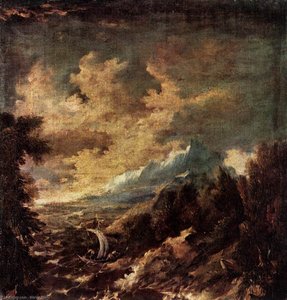
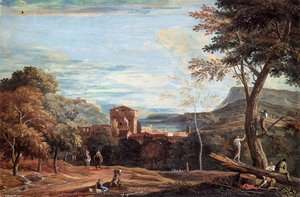
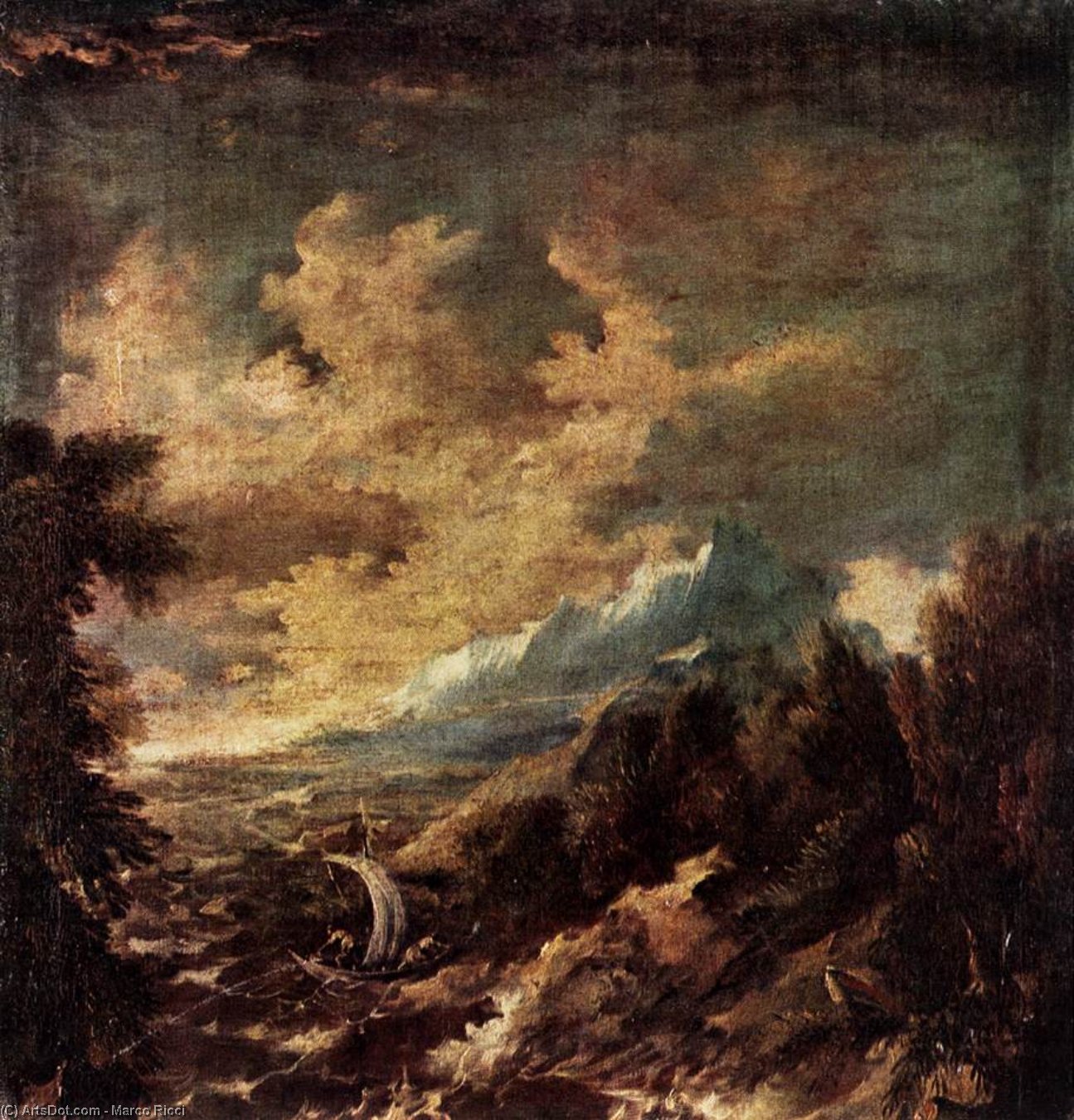
Stormy Region
 Acrylic On Canvas
- WallArt
- Venetian Baroque
 1705
1705 72.0 x 68.0 cm
 Szépmûvészeti Múzeum
 Read More
Hand Made Oil Reproduction
Hand-painted oil on canvas in your size and frame, made to order by our artists. ( Buy Print Buy Image)




P118B $10

P118H $10

P118W $10

P438Z $10

P508JH $12

P508YH $12

P805H $10

P805Z $10

P919BZ $10

P919G $10

P919XJ $10

P959ZH $10

P968JZ $12

W106C $8

W218G $10

W218JH $8

W218Y $10

W307PJ $10

W316G $10

W316PJ $8

W316Y $10

W398PJ $8

W4111J $10

W500HY $15

W500JH $15

W692G $12

W849H $8

W940BG $15

W953PJ $8




Pick from our preset sizes that match the artwork's original proportions.

You may enter your own dimensions to fit a specific frame or space. If your selected size does not match the original image's proportions, we will either crop the artwork or extend the painting with additional hand-painted elements. A digital mockup will be sent for your approval before production begins.
Please note that the on-screen preview does not reflect the actual cropping or extension. Only the mockup will accurately show the final composition.
While custom sizes are available, we recommend selecting a dimension from the predefined list to preserve the original proportions.
After order, ArtsDot.com team will email client for instructions and provide a mockup preview
Worldwide Delivery () in 3/4 weeks instead of standard 5 weeks. (17 August). No compromise on quality.

Free Worldwide Express Shipping

High-Quality Linen Canvas

Full Shipping Insurance

Customs Tax Refund Guarantee

True Color Matching Guarantee

60-Day Return Policy (Defects Only)

100% Money-Back Guarantee

Bulk Discount Offer
 Glass option is only available in size under 110 CM

Stormy Region
Reproduction Medium
Reproduction Size
-


Total Price
$ 263
Artwork Description
A Dramatic Landscape Captured in Venetian Baroque
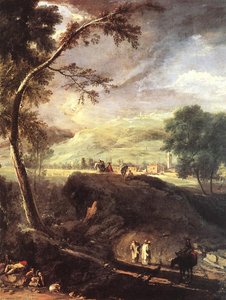
Marco Ricci’s “Stormy Region,” painted in 1705, stands as a testament to the Venetian Baroque's fascination with capturing the sublime—the awe-inspiring grandeur of nature infused with turbulent emotion. This landscape masterpiece exemplifies Ricci’s distinctive style, characterized by masterful atmospheric perspective and an expressive handling of color that conveys the raw power of the elements. The painting depicts a mountainous vista dominated by a brooding expanse of water, reflecting the dramatic sky above in shades of grey and violet—a visual echo of the tempestuous conditions prevalent during its creation.The Artist's Influences: Lorrain and Rosa
Ricci’s artistic development was profoundly shaped by influential masters like Claude Lorrain and Gaspard Dughet, who championed idealized depictions of nature imbued with spiritual contemplation. Similarly, Salvatore Rosa instilled in Ricci a passion for portraying dramatic scenes brimming with emotional intensity—a stylistic hallmark that distinguishes his oeuvre from more restrained contemporary artists. These influences are palpable in “Stormy Region,” where Ricci skillfully employs techniques reminiscent of Lorrain’s luminous landscapes and Rosa’s emotionally charged compositions.Technique and Composition: Atmospheric Perspective and Dramatic Lighting
Ricci's meticulous attention to detail is evident in the painting’s masterful execution. He utilizes atmospheric perspective—a technique perfected during this period—to create a convincing illusion of depth, subtly blurring distant mountains and diminishing color saturation as they recede into the haze. Furthermore, Ricci employs dramatic lighting—particularly greenish highlights reminiscent of lightning—to heighten the scene's emotional impact and emphasize the turbulent energy of the storm. The placement of two boats on the water adds to the composition’s dynamism, symbolizing human resilience against the forces of nature.Symbolism: Confrontation with Chaos and Spiritual Reflection
“Stormy Region” transcends mere visual representation; it embodies a deeper symbolic resonance. The tumultuous sea serves as a metaphor for life's challenges—the unpredictable surges of fortune and misfortune that confront humanity. Yet, amidst this chaos, the painting invites contemplation on themes of faith and perseverance. The figures scattered across the landscape represent individuals grappling with existential questions, mirroring the broader spiritual concerns of the Baroque era. Ricci’s depiction captures not only the beauty of the natural world but also its capacity to inspire awe and provoke introspection.Legacy: A Venetian Master Rediscovered
Though largely forgotten during Ricci's lifetime—his work gaining recognition primarily through the Belluno exhibition in 1963— “Stormy Region” now occupies a prominent place in Venetian Settecento art history. It represents a pivotal moment in Ricci’s artistic trajectory, marking a decisive shift toward expressive landscapes that solidified his reputation as one of Venice's foremost landscape painters. This evocative artwork continues to captivate viewers today, offering a glimpse into the artistic spirit of its time and demonstrating Ricci’s enduring contribution to European art heritage.Related Artworks


Artist Biography
The Venetian Pioneer of the Landscape
Marco Ricci stands as a pivotal figure in the grand tapestry of Venetian Baroque painting, a master whose brush breathed life into the atmospheric expanses of the 18th century. Born in Belluno, Italy, in 1676, Ricci’s artistic journey was deeply rooted in a lineage of excellence. His early training began under the watchful eye of his uncle, the celebrated Sebastiano Ricci, likely within the vibrant artistic hubs of Milan during the mid-1690s. This foundational period established a profound connection to the Venetian tradition, as he moved toward Venice in 1696 to join forces with his uncle. Together, they embarked on a collaborative career that would redefine the boundaries of landscape painting, blending classical grandeur with a new, more expressive sensibility.
The evolution of Ricci’s style was shaped by a rich confluence of influences that bridged the gap between the structured ideals of the past and the burgeoning freedom of the Rococo. He absorbed the luminous, atmospheric perspective of Claude Lorrain and Gaspard Dughet, masters who had perfected the art of the idealized nature scene. Yet, there was a more rugged, emotive current in his work, drawn from the expressive brushwork of Salvatore Rosa and the loose, energetic application seen in the works of Alessandro Magnasco. This unique synthesis allowed Ricci to move beyond mere topographical recording, instead creating landscapes that felt alive with movement, light, and a sense of dramatic narrative.
A Legacy of Collaboration and Grandeur
One of the most remarkable aspects of Ricci’s career was his profound willingness to engage in the collaborative spirit of his era. His work often blurred the lines between individual authorship and collective genius, particularly in large-scale decorative projects. A notable example of this grandeur can be found in his contributions to the decoration of Palazzo Fenzi's Sala d'Ercole alongside Sebastiano Ricci, where he demonstrated an ability to command vast architectural spaces with sweeping vistas and intricate detail. This talent for large-scale design extended into the theatrical realm, where his skill in opera scene design allowed him to manipulate light and space to create immersive, imaginary worlds.
Ricci’s influence was not confined to the borders of the Serenissima Republic. Driven by the encouragement of Charles Montagu, the 4th Earl of Manchester—Venice’s ambassador to England—Ricci undertook a transformative journey to London in late 1708. This English connection expanded his horizons and introduced his Venetian sensibilities to a new international audience, further cementing his reputation as a pan-European master. His ability to adapt his style to different cultural contexts while maintaining his core identity as a landscape innovator remains a testament to his versatility.
Masterpieces of Light and Atmosphere
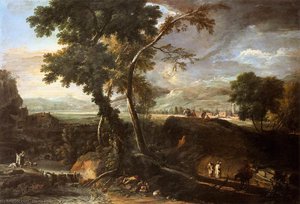
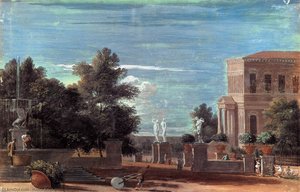
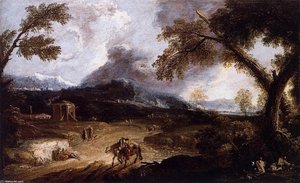
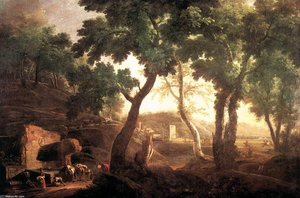
The enduring allure of Marco Ricci’s oeuvre lies in his ability to capture the ephemeral qualities of the natural world. His paintings often serve as windows into an idealized past, where classical architecture and untamed nature exist in a delicate, harmonious balance. Whether depicting a serene Villa in a Park Setting or a more dynamic Landscape with River and Figures, Ricci utilized light to guide the viewer's eye through complex compositions, creating depth and a sense of profound tranquility.
His technical mastery is evident in several key areas of his work:
- Atmospheric Perspective: The use of soft, hazy tones to create an illusion of vast distance and airiness.
- Dynamic Brushwork: A spirited application of paint that conveys the movement of water, wind, and foliage.
- Narrative Integration: The seamless placement of figures within landscapes to suggest stories of classical mythology or pastoral life.
- Architectural Harmony: The integration of ruins and villas to evoke a sense of history and the passage of time.
Ultimately, Marco Ricci was more than just a painter of scenery; he was an architect of emotion. Through his innovative approach to the landscape genre, he paved the way for the later triumphs of Canaletto and Guardi, ensuring that the Venetian tradition of landscape painting would remain a cornerstone of European art history.

Marco Ricci
1676 - 1730 , Italy
Quick Facts
- Artistic Movement Or Style: Baroque
- Artists Or Movements Influenced By This Artist: ['Alessandro Magnasco']
- Artists Who Influenced This Artist:
- Sebastiano Ricci
- Claude Lorrain
- Gaspard Dughet
- Salvator Rosa
- Date Of Birth: June 6, 1676
- Date Of Death: January 21, 1730
- Full Name: Marco Ricci
- Nationality: Italian
- Notable Artworks:
- Landscape with Streams, Monks, and Washerwomen
- Villa in a Park Setting
- Place Of Birth: Belluno, Italy
Related Articles

Sebastiano Ricci: Venetian Master of Baroque Illusionism & Rococo Grace
Explore the captivating world of Sebastiano Ricci, a leading Venetian Baroque painter renowned for his luminous frescoes & illusionistic masterpieces. Discover his life, techniques, and lasting influence on art history.

Beyond the Horizon: 10 Landscape Masterpieces for Your Home Decor
Journey through 10 breathtaking landscape paintings by Monet, Van Gogh & more! Explore iconic artworks, artistic techniques & find inspiration for your home decor. Museum-quality reproductions at ArtsDot.com. Discover all masterpieces on ArtsDot.com

Romantic Landscapes: 10 Masterpieces for Your Home | ArtsDot
Journey through 10 Romantic landscape masterpieces by Friedrich, Turner & Cole. Explore emotional art, sublime nature scenes & iconic 19th-century paintings. Find museum-quality reproductions for your home at ArtsDot.com – discover the full collection online!

Evocations of Place: A Historical Journey Through Landscape Art
Explore the rich history of landscape art with ArtsDot. Discover renowned artists, movements like Impressionism & Romanticism, and expert guidance for collecting timeless pieces. Find your perfect serene escape today!

John Constable's Masterpieces: Explore 25 Iconic Landscapes for Your Home
Journey through John Constable's 25 most celebrated landscapes. Explore Romanticism, Dedham Vale & his masterful use of light in iconic paintings like 'Hay Wain'. Find museum-quality art reproductions and elevate your home decor on ArtsDot.com.