 Preview
 Send
Send Share
Share
 Details

 Download
 Similars
 X-Ray
X-Ray Diaporama
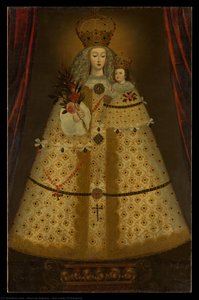
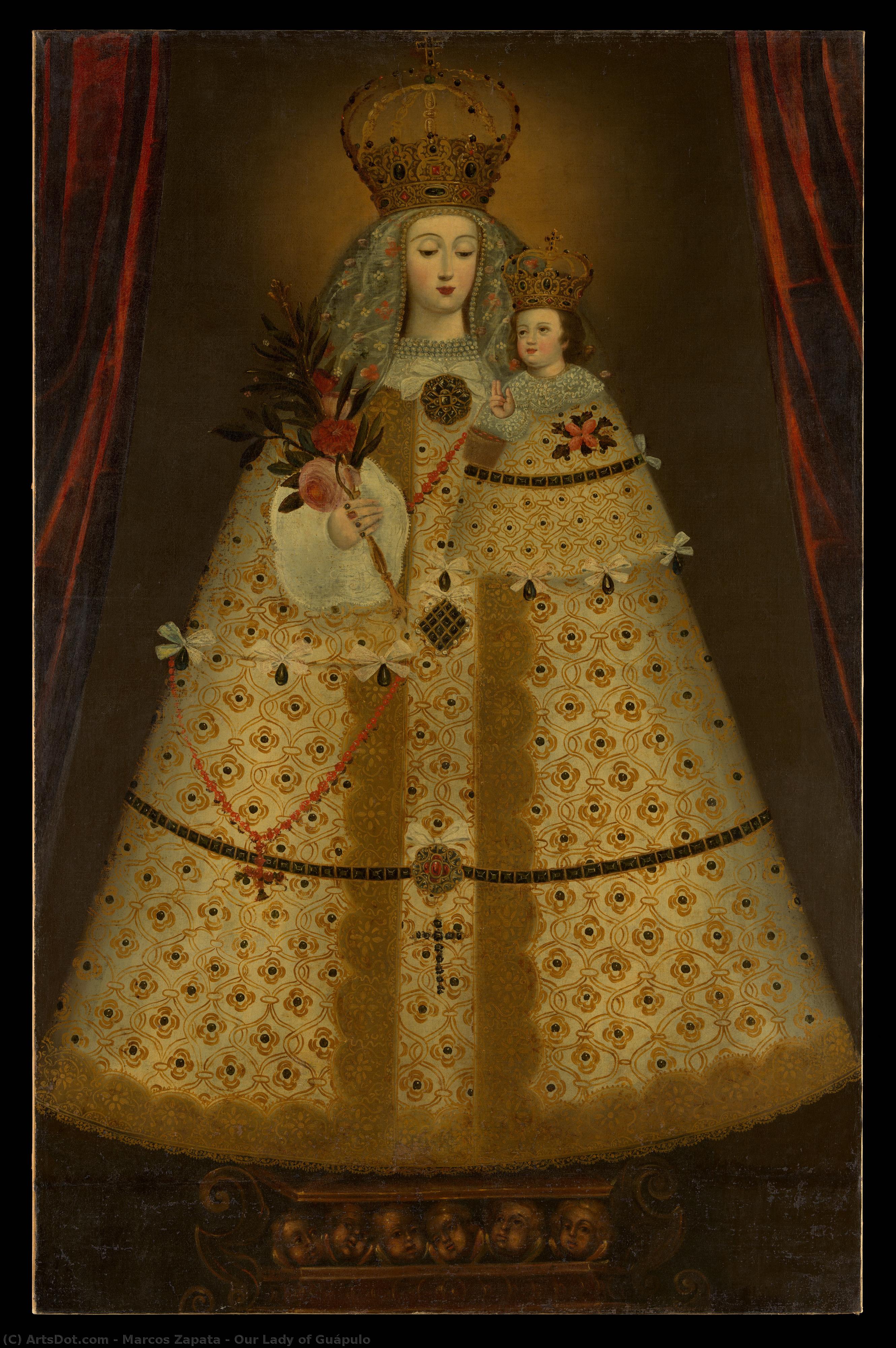
Our Lady of Guápulo
 701
701 171.0cm x 110.0cm
 Read More
Giclée / Art Print
Museum-quality giclée or canvas print with fast production and flexible finish options. ( Buy Hand Made Painting Buy Image)




































Pick from our preset sizes that match the artwork's original proportions.

You may enter your own dimensions to fit a specific frame or space. If your selected size does not match the original image's proportions, we will either crop the artwork or extend the image with a mirrored or solid-fill edge. A digital mockup will be sent for your approval before production begins.
Please note that the on-screen preview does not reflect the actual cropping or extension. Only the mockup will accurately show the final composition.
While custom sizes are available, we recommend selecting a dimension from the predefined list to preserve the original proportions.
Worldwide Delivery () in 2 weeks instead of standard 4/5 weeks. (21 August)

Free Worldwide Express Shipping

High-Quality Linen Canvas

Full Shipping Insurance

Customs Tax Refund Guarantee

True Color Matching Guarantee

60-Day Return Policy (Defects Only)

100% Money-Back Guarantee

Bulk Discount Offer
 Glass option is only available in size under 110 CM

Our Lady of Guápulo
Giclée / Art Print
Reproduction Size
-


Total Price
$ 63
Collectible Description
Zapata's painting "Our Lady of Guápulo" is a masterpiece of the Cuzco School, showcasing the unique blend of Christian symbols and indigenous Andean traditions. The richly dressed and adorned sculpture depicted in this work originated as a copy of the Spanish Virgin of Guadalupe, commissioned in 1584 by a confraternity of merchants in Quito (Ecuador). Named for the sanctuary in nearby Guápulo where the miracle-working image was venerated, it was invoked by devotees who sought the Virgin Mary’s aid and protection. Our Lady of Guápulo is an oil on canvas painting measuring 170.8cm x 110.5cm. The painting showcases Zapata's mastery of the oil painting technique, with its vibrant colors and intricate details. The Virgin Mary is depicted in a richly decorated dress, adorned with gold and precious stones, symbolizing her divine status. The background features a landscape with mountains and a river, representing the Andean culture of Peru. The Cuzco School was known for its unique style, which merged Christian symbols with indigenous Andean traditions.
Zapata's painting "Our Lady of Guápulo" is a prime example of this style. The Virgin Mary is depicted in a traditional Andean dress, adorned with gold and precious stones, symbolizing her divine status. The background features a landscape with mountains and a river, representing the Andean culture of Peru. The Cuzco School was also known for its high-quality oil paintings, which were highly sought after by collectors and art enthusiasts.
Zapata's painting "Our Lady of Guápulo" is no exception. The vibrant colors and intricate details of the painting showcase Zapata's mastery of the oil painting technique. The painting is a true masterpiece, and a testament to Zapata's skill as an artist. If you are interested in purchasing a hand-painted museum quality oil reproduction of "Our Lady of Guápulo" or any other artwork, please visit our website ArtsDot.com
We offer custom sizing and can reproduce any artwork in oil on canvas, just as the original was created. Our professional artists will hand-paint your reproduction, using the same techniques and materials as the original artist. The result is a beautiful, one-of-a-kind piece of art that you will treasure for years to come. You can also order custom artwork from our website, such as personal portraits or family portraits, rendered in a variety of different styles of historical art movements.
Imagine yourself or your loved ones appearing in an old image painted by Vermeer, or have your previously intact face nicely fragmented a la Picasso, or end up looking like an eye-catching Pop Art print by Andy Warhol. The possibilities are endless, and our professional artists will work with you to create a unique and personalized piece of art that you will cherish for years to come. Don't miss the opportunity to own a beautiful hand-painted reproduction or custom artwork from ArtsDot.com
Visit our website today and explore the wide variety of artwork available, from classic masterpieces to contemporary pieces. Our team of experts is here to help you find the perfect piece of art for your home or office. Marcos Zapata:Our Lady of Guápulo (170.8cm x 110.5cm, Oil On Canvas)
Related Artworks







Artist Biography
The Enigmatic Vision of Elias Thorne (1748 – 1773)
Elias Thorne, a figure shrouded in the mists of late 18th-century England, remains one of the most intriguing and ultimately elusive artists of his era. Born in the small village of Oakhaven, Gloucestershire, in 1748, little is definitively known about his early life beyond accounts suggesting a solitary upbringing steeped in rural observation and an intense appreciation for the natural world. His origins were humble; his father was a clockmaker, a trade that instilled in Thorne a meticulous attention to detail – a quality he would later translate into his extraordinary paintings. Despite this practical foundation, Thorne’s artistic inclinations manifested early, reportedly sketching wildflowers and landscapes from a remarkably young age, capturing the fleeting light and subtle shifts of color with an uncanny sensitivity. Thorne's career unfolded largely in secret, fueled by a profound dissatisfaction with the rigid conventions of London art society. He eschewed formal training, preferring instead to learn through relentless self-study and direct engagement with his subject matter. His early works, primarily watercolors executed on inexpensive paper, depict scenes of rural life – farmers tending their fields, shepherds guiding their flocks, and the quiet beauty of the English countryside. These pieces, though modest in scale, reveal a nascent talent for capturing atmosphere and emotion, hinting at the deeper themes that would later characterize his mature work. It’s believed he was heavily influenced by the Romantic movement's burgeoning ideals, particularly its emphasis on subjective experience and the sublime power of nature – concepts largely absent from the prevailing Neoclassical style dominating the art world at the time.The Emergence of Symbolism: A Darker Palette
Around 1765, Thorne’s artistic trajectory underwent a dramatic shift. He began to incorporate increasingly symbolic imagery into his paintings – recurring motifs of ravens, skulls, and decaying foliage became prominent features in his oeuvre. This stylistic evolution coincided with a period of personal turmoil; accounts suggest a profound loss – the death of his beloved sister – which profoundly impacted his artistic vision. Thorne’s palette darkened considerably, moving away from the bright hues of his earlier work towards somber browns, deep blues, and unsettling greens. These colors weren't merely descriptive; they were imbued with emotional weight, reflecting a preoccupation with mortality, decay, and the hidden anxieties beneath the surface of seemingly idyllic landscapes. Critics at the time dismissed these works as morbid and unsettling, failing to grasp the underlying philosophical depth.Key Works & Techniques
Despite the limited number of surviving paintings – only approximately twenty are currently attributed to Thorne – his work is distinguished by a remarkable technical skill and an intensely personal vision. His mastery of watercolor technique is particularly noteworthy; he employed layering, glazing, and meticulous detail to create surfaces that shimmered with light and shadow. A key element in his style was his use of *chiaroscuro*—the dramatic contrast between light and dark—to heighten the emotional impact of his scenes. Notable works include “The Raven’s Watch,” a haunting depiction of a solitary raven perched atop a crumbling stone tower, and "Autumnal Requiem," a melancholic landscape dominated by skeletal trees and a decaying harvest. The symbolism within these pieces is complex and open to interpretation, often suggesting a confrontation with the inevitability of death and the transience of earthly beauty.Historical Context & Legacy
Elias Thorne’s life and work occurred during a period of significant social and intellectual upheaval in England – the late 1760s and early 1770s, a time marked by growing anxieties about mortality, the rise of philosophical skepticism, and the nascent stirrings of Romanticism. His art can be seen as a subtle critique of the prevailing societal values, offering an alternative perspective rooted in emotional honesty and a reverence for the natural world. Tragically, Thorne’s life was cut short at the age of 25 – the cause remains uncertain, though rumors persist of suicide. His untimely death contributed to the obscurity surrounding his work during his lifetime, but in recent decades, scholars have begun to recognize Thorne as a significant and profoundly original artist—a precursor to later Romantic painters who dared to explore the darker aspects of human experience and the mysteries of the natural world. His legacy lies not just in his paintings, but in their haunting beauty and enduring exploration of mortality, memory, and the sublime.Further Research
- Tate Britain: Explore Thorne’s work within the context of British art history.
- Online Archives: Search for digitized versions of his paintings and related documents.
- Academic Journals: Consult scholarly articles on 18th-century English painting and Romanticism.
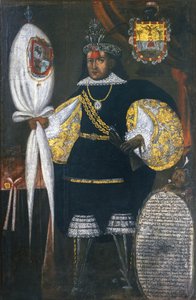
marcos sapaca inca
1773 , Peru
Quick Facts
- Artistic Movement Or Style: World Goes Pop
- Date Of Death: 1773
- Notable Artworks:
- Evelyne Axell
- Joav BarEl
- Thomas Bayrle