 Preview
 Send
Send Share
Share
 Details

 Download
 Similars
 X-Ray
X-Ray Diaporama
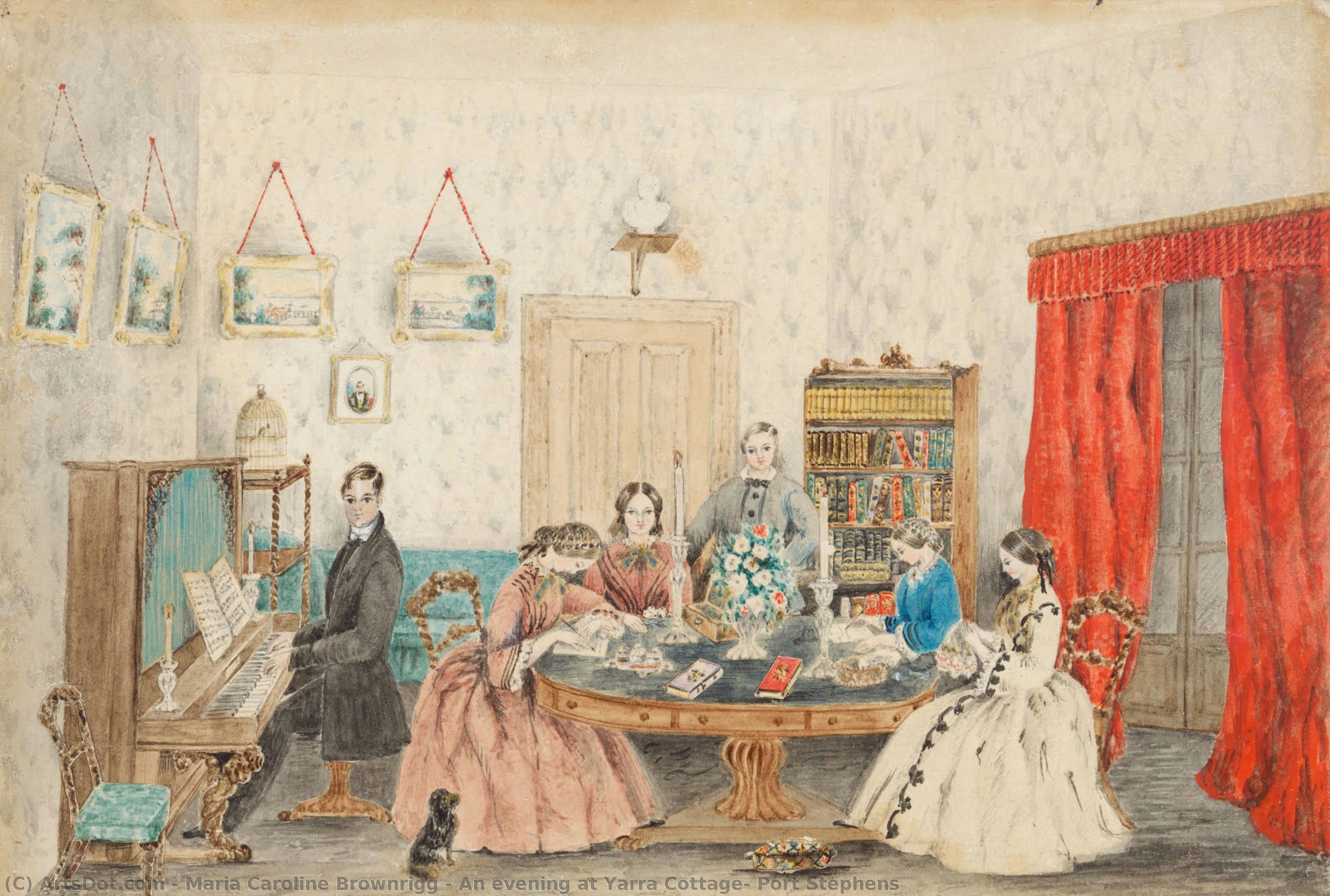
An evening at Yarra Cottage, Port Stephens
 1857
1857 18.0 x 26.0 cm
 National Portrait Gallery
 Read More
Hand Made Oil Reproduction
Hand-painted oil on canvas in your size and frame, made to order by our artists. ( Buy Print Buy Image)




































Pick from our preset sizes that match the artwork's original proportions.

You may enter your own dimensions to fit a specific frame or space. If your selected size does not match the original image's proportions, we will either crop the artwork or extend the painting with additional hand-painted elements. A digital mockup will be sent for your approval before production begins.
Please note that the on-screen preview does not reflect the actual cropping or extension. Only the mockup will accurately show the final composition.
While custom sizes are available, we recommend selecting a dimension from the predefined list to preserve the original proportions.
After order, ArtsDot.com team will email client for instructions and provide a mockup preview
Worldwide Delivery () in 3/4 weeks instead of standard 5 weeks. (27 August). No compromise on quality.

Free Worldwide Express Shipping

High-Quality Linen Canvas

Full Shipping Insurance

Customs Tax Refund Guarantee

True Color Matching Guarantee

60-Day Return Policy (Defects Only)

100% Money-Back Guarantee

Bulk Discount Offer
 Glass option is only available in size under 110 CM

An evening at Yarra Cottage, Port Stephens
Reproduction Medium
Reproduction Size
-


Total Price
$ 263
Related Artworks









Artist Biography
Edward Lear: A Life of Whimsy and Observation (1812-1888)
Edward Lear, a figure both celebrated for his delightful literary nonsense and respected for his meticulous artistic observations, was born in London on May 12th, 1812. His life unfolded as a fascinating tapestry woven from diverse threads – a career as an illustrator, musician, poet, and ultimately, a profoundly influential artist known primarily for his watercolors of the natural world. Despite a childhood marked by deafness resulting from scarlet fever, Lear’s artistic spirit flourished, shaping a unique perspective that would permeate his work. His early training was limited to four years with James Reid Lambdin, a respected academic painter, yet this brief introduction proved sufficient to establish a foundation for his later explorations of landscape and botanical illustration. Lear's career began modestly, working as a draughtsman for the Ordnance Survey, meticulously documenting maps and topographical features. This experience honed his observational skills and instilled in him a deep appreciation for detail – qualities that would become hallmarks of his artistic style. However, it was his foray into the world of literature, particularly his creation of limericks, that truly cemented his place in cultural history. These whimsical verses, characterized by their playful rhythm and imaginative imagery, captivated audiences and established Lear as a master of literary nonsense. His work extended beyond poetry to include illustrated books like *The Book of Nonsense*, further solidifying his reputation for delightful eccentricity. Yet, it is perhaps in his watercolor paintings that Lear’s true genius resides. He developed a distinctive style characterized by loose washes, atmospheric perspective, and an almost obsessive attention to detail when depicting plants and animals. His subjects ranged from the exotic birds of South America – meticulously documented during his extensive travels – to the familiar landscapes of England. Lear's approach was revolutionary for its time; he rejected the rigid conventions of academic painting in favor of a more intuitive, expressive style that prioritized capturing the essence of nature rather than creating idealized representations. His work with Alfred Tennyson, illustrating poems like *The Kraken* and *The Lady of Shalott*, demonstrated his ability to translate literary imagery into evocative visual form. His illustrations for these works are notable for their dreamlike quality and subtle use of color. Lear’s travels profoundly influenced his artistic development. His expeditions to South America, particularly the Galapagos Islands, provided him with a wealth of new subjects and inspired a heightened sense of wonder about the natural world. He meticulously documented the flora and fauna he encountered, creating detailed watercolor studies that reveal both his scientific curiosity and his artistic sensitivity. These journeys weren’t merely for observation; they were deeply personal explorations fueled by a desire to capture the beauty and strangeness of distant lands. His work during this period reflects a shift towards greater abstraction and a looser handling of paint, indicative of his growing confidence as an artist. Despite achieving considerable recognition during his lifetime, Lear faced periods of financial hardship and struggled to gain acceptance from the established art world. His unconventional style and penchant for literary experimentation often clashed with prevailing artistic norms. However, his legacy endures through his enduringly popular limericks, his evocative watercolor paintings, and his pioneering approach to botanical illustration. Edward Lear’s life exemplifies a rare combination of artistic talent, intellectual curiosity, and whimsical imagination – qualities that continue to inspire artists and readers alike. His work remains a testament to the power of observation, the joy of creativity, and the enduring appeal of nonsense.Further Resources
- Tate Gallery: Edward Lear
- Wikipedia:Edward Lear
- ArtsDot: (Information to be added here when available)
maria caroline brownrigg
1812 - 1880 , Ireland
Quick Facts
- Artistic Movement Or Style: Literary nonsense; Illustration
- Artists Or Movements Influenced By This Artist:
- Lewis Carroll
- Victorian Illustration
- Artists Who Influenced This Artist:
- William Blake
- John Tenniel
- Date Of Birth: May 12, 1812
- Date Of Death: January 29, 1888
- Full Name: Edward Lear
- Nationality: English
- Notable Artworks:
- The Fortress of San George
- Limner's Book of Beasts
- Place Of Birth: England