 Preview
 Send
Send Share
Share
 Details

 Download
 Similars
 X-Ray
X-Ray Diaporama
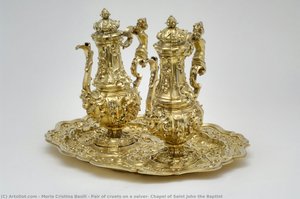
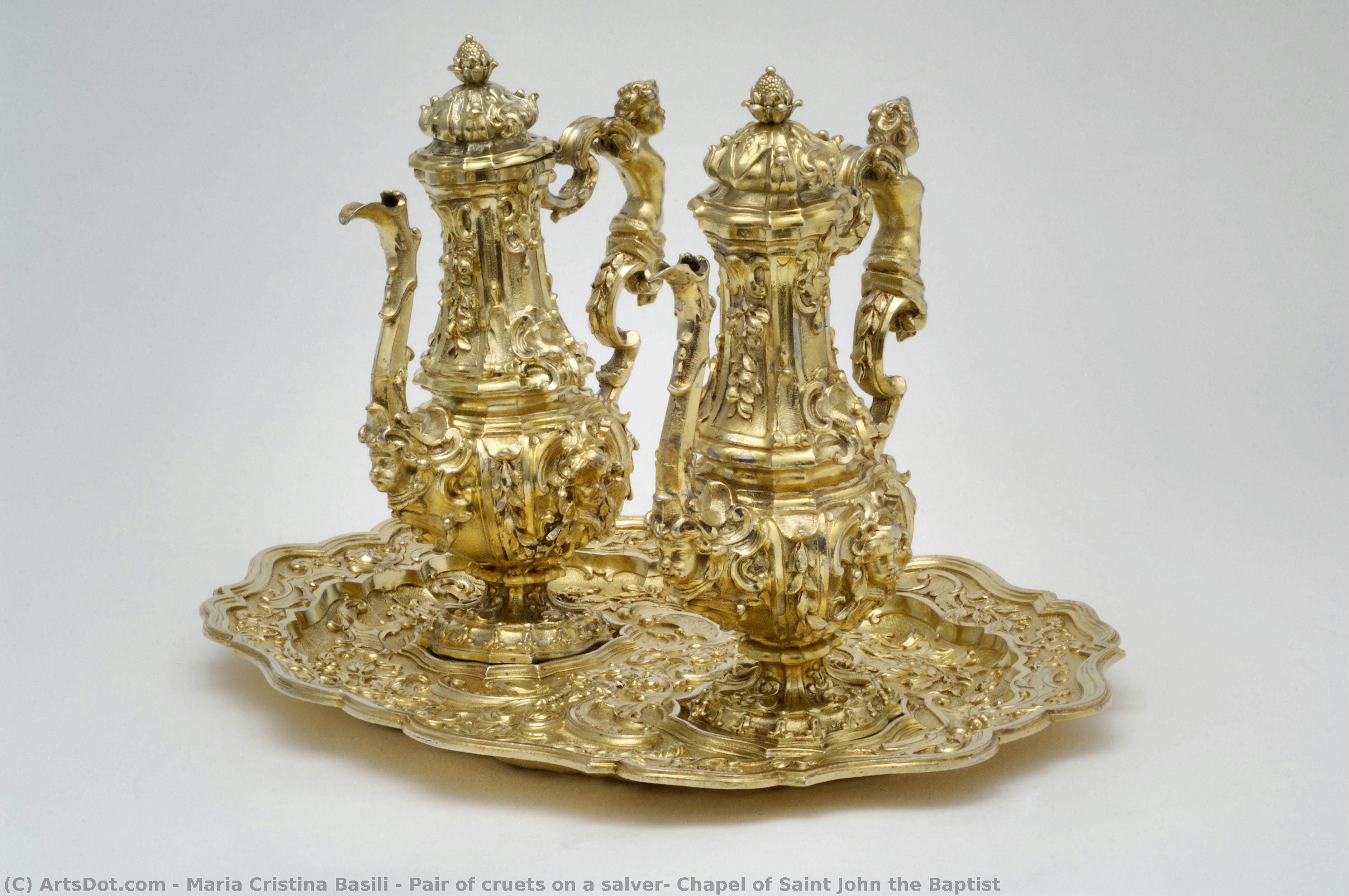
Pair of cruets on a salver, Chapel of Saint John the Baptist


 Read More
Giclée / Art Print
Museum-quality giclée or canvas print with fast production and flexible finish options. ( Buy Hand Made Painting Buy Image)




































Pick from our preset sizes that match the artwork's original proportions.

You may enter your own dimensions to fit a specific frame or space. If your selected size does not match the original image's proportions, we will either crop the artwork or extend the image with a mirrored or solid-fill edge. A digital mockup will be sent for your approval before production begins.
Please note that the on-screen preview does not reflect the actual cropping or extension. Only the mockup will accurately show the final composition.
While custom sizes are available, we recommend selecting a dimension from the predefined list to preserve the original proportions.
Worldwide Delivery () in 2 weeks instead of standard 4/5 weeks. (4 September)

Free Worldwide Express Shipping

High-Quality Linen Canvas

Full Shipping Insurance

Customs Tax Refund Guarantee

True Color Matching Guarantee

60-Day Return Policy (Defects Only)

100% Money-Back Guarantee

Bulk Discount Offer
 Glass option is only available in size under 110 CM

Pair of cruets on a salver, Chapel of Saint John the Baptist
Giclée / Art Print
Reproduction Size
-


Total Price
$ 63
Related Artworks









Artist Biography
A Legacy in Silver: The Artistry of Maria Cristina Basili
In the shimmering annals of the Venetian Baroque, few names evoke the intricate splendor of metalwork quite like Maria Cristina Basili, an artisan also known by the name Antonio Gigli. To study the work of Basili is to step into a world where light and shadow dance upon polished surfaces, capturing the very essence of eighteenth-century opulence. While biographical records from this era often remain shrouded in the mists of time, the enduring brilliance of Basili’s contributions to silverwork provides a window into a period defined by unparalleled craftsmanship and collaborative genius.
The origins of this remarkable talent can be traced back to Rome, Italy, where the foundations of a master craftsman were laid. It is believed that during the first half of the eighteenth century, Basili honed his exquisite skills within the prestigious workshop of Luigi Valadier. This atelier was far more than a mere studio; it was a vibrant crucible of innovation, a place where the boundaries of silversmithing and sculpture were constantly pushed. Immersed in such an environment, Basili would have absorbed the rigorous academic traditions of the time while simultaneously embracing the experimental spirit that characterized the transition into the height of the Baroque era.
The Grandeur of Collaborative Masterpieces
The true significance of Basili’s career lies in his ability to merge technical precision with a profound sense of narrative and religious devotion. His most enduring legacy is inextricably linked to the monumental Communion Vase, commissioned for the Saint John the Baptist’s Chapel in Venice. This project was not merely an exercise in metalwork but a grand artistic synthesis that required the coordination of the era's greatest minds. Working under the direction of Valadier, Basili contributed to a masterpiece that brought together the silver-chasing expertise of the silversmith with the painterly brilliance of masters such as Giovanni Battista Tiepolo and Alessandro Falconetti.
The creation of such liturgical objects demanded an extraordinary level of detail, where every curve of the silver had to harmonize with the painted scenes it accompanied. Through this work, Basili helped define the aesthetic of Venetian Baroque, a style that sought to overwhelm the senses and inspire awe through:
- Intricate Chasing: The delicate manipulation of metal to create lifelike textures and ornate patterns.
- Symbolic Depth: The use of precious materials to reflect the divine glory of the subjects depicted.
- Architectural Harmony: Ensuring that the silver vessels functioned as sculptural extensions of the chapel's grandeur.
Historical Significance and Artistic Impact
Though the specific dates of Basili’s life remain elusive, his impact on the history of Italian decorative arts is undeniable. As a craftsman who bridged the gap between Roman training and Venetian execution, he represents the interconnected nature of European artistry during the 1700s. His work stands as a testament to a time when the distinction between "fine art" and "decorative craft" was beautifully blurred, allowing for the creation of objects that were simultaneously functional, sculptural, and deeply spiritual.
Today, the remnants of Basili’s skill—seen in pieces such as the pair of cruets on a salver—serve as vital historical documents. They remind us of a period when the hands of an artisan could transform cold, hard silver into a vessel of light and devotion, ensuring that the legacy of the Baroque era continues to shine through the meticulous mastery of the silversmith's art.
maria cristina basili
Italy
Quick Facts
- Artistic Movement Or Style: Baroque
- Artists Or Movements Influenced By This Artist: ['Tintoretto']
- Artists Who Influenced This Artist: ['Luigi Valadier']
- Full Name: Maria Cristina Basili
- Nationality: Italian
- Notable Artworks: ['The Communion Vase']
- Place Of Birth: Rome, Italy