

 Preview
 Send
Send Share
Share
 Details

 Download
 Similars
 X-Ray
X-Ray Diaporama
A.T.M.O.T.W.


 Read More
Purchase a high-resolution, enhanced digital image, far superior to the online preview.
Each file is meticulously prepared by our in-house specialists using advanced tools and expert manual retouching. We ensure every image has exceptional clarity, precise color accuracy, and fine detail.
The final file is delivered via email within 72 hours, optimized for immediate use in professional, editorial, and print environments. This is the same quality trusted by top-tier design studios, publishers, and galleries.
Digital Image
Download a high-resolution file for personal display, printing, and creative projects. ( Buy Print Buy Hand Made Painting)
Included in Every Digital Image Order
Expert Digital Delivery, Guaranteed
When you choose ArtsDot.com, you're not just getting an image - you're receiving a professionally enhanced digital artwork, crafted with precision and backed by a satisfaction guarantee. Here's everything that comes with your order, automatically:

Fast Email Delivery
Your high-resolution digital image file will be emailed to you within 72 hours of ordering - ready for immediate use.

AI-Enhanced Digital File
Your artwork is professionally optimized using advanced AI tools and manual editing, ensuring maximum detail, clarity, and color accuracy.

Free Lifetime Re-Delivery
Accidentally deleted or lost your file? No worries - we'll resend it to you anytime, free of charge.

No Import Fees - Ever
Enjoy your artwork instantly with zero customs, duties, or delivery fees - digital downloads are always tax-free.

Color Accuracy Guarantee
We ensure your digital image reflects the original colors as closely as possible using professional tools and color management.

100-Day Satisfaction Guarantee
If you're not satisfied with your digital image, we'll revise it or refund 100% within 100 days - no questions asked.

100% Money-Back Guarantee
Not satisfied? Get a full refund within 100 days of receiving your digital file - no questions asked.

Bulk Order Discounts
Buy 3 images, save 10% - Buy 5, save 15% - Buy 10+, save 20%. Great for creative projects, galleries, and agencies.
The Genesis of a Concrete Dialogue
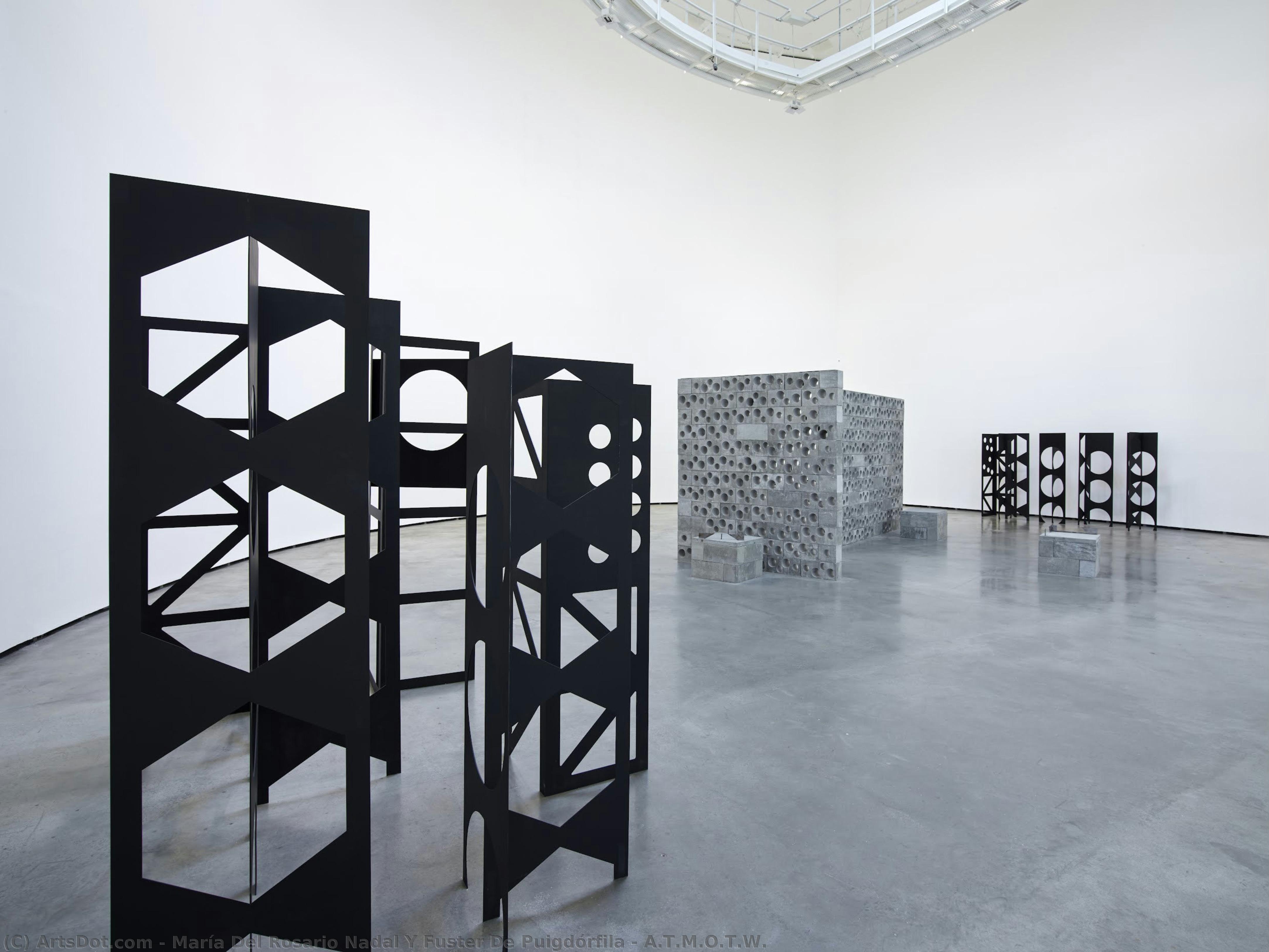
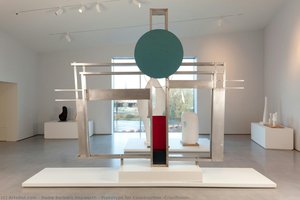
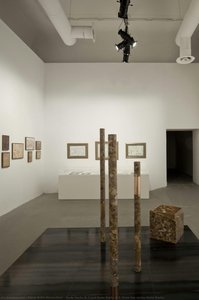
Xabier Salaberria’s “A.T.M.O.T.W.” (All The Material Of The World) isn't merely an assemblage of sculptures; it’s a carefully orchestrated invitation to contemplate the very nature of representation and the layered history embedded within modern art. Born in 1969, Salaberria has spent his career dissecting the conventions of sculpture, particularly its relationship to architecture and the industrial age. This piece, conceived specifically for the 2013 exhibition “Garmendia, Maneros Zabala, Salaberria,” operates as a deliberate deconstruction, drawing upon a rich tapestry of influences – from the pioneering Rietveld Pavilion’s geometric elegance to the monumental scale of Basque architectural traditions. The installation resides within a starkly minimalist museum space, its concrete forms acting as both echoes and critiques of the building's own structure, creating a dialogue between the external and internal realms.
A Symphony of Geometric Forms
The visual impact of “A.T.M.O.T.W.” is immediately arresting – a controlled chaos of interlocking squares, rectangles, and circular apertures rendered in smooth, grey concrete. Each sculpture possesses a distinct presence, ranging from the imposing solidity of some pieces to the more delicate intricacy of others. The repetition of these fundamental geometric shapes isn’t simply decorative; it speaks to the serialization inherent in mass production – a key element Salaberria interrogates throughout his work. Notice how the openings within the forms aren't merely absences, but active participants in the composition, inviting viewers to step into and interact with the space. The deliberate use of negative space is as crucial as the solid form itself, fostering a sense of openness and encouraging contemplation.
Echoes of Modernism and Beyond
Salaberria’s choice of concrete isn't arbitrary. Concrete, a material synonymous with the Industrial Revolution and the rise of modern architecture, carries significant historical weight. By utilizing this material, he directly engages with the legacy of movements like De Stijl and Bauhaus, whose emphasis on geometric abstraction and functional design profoundly shaped 20th-century art and architecture. However, “A.T.M.O.T.W.” transcends a simple homage to these precedents. The inclusion of references to Basque sculpture – a tradition deeply rooted in the region’s history and identity – subtly shifts the focus towards local context while simultaneously acknowledging the broader global dialogue surrounding modernism. The installation also subtly nods to the architectural principles of Gerrit Rietveld, whose pavilion exemplified a revolutionary approach to space and form.
A Space for Reflection: The Museum as Stage
More than just an artistic statement, “A.T.M.O.T.W.” transforms the museum itself into a subject of inquiry. The title – "All The Material Of The World" – suggests a vastness and accumulation of knowledge, mirroring the museum’s role as a repository of cultural artifacts. By placing his sculptures within this institutional setting, Salaberria prompts viewers to consider how museums represent and interpret history, challenging the traditional notion of the museum as a neutral space for objective display. The two chairs strategically positioned within the installation invite a pause, encouraging visitors to engage with the artwork on a more personal level – to contemplate its meaning and their own relationship to it. The stark lighting further enhances this contemplative atmosphere, casting dramatic shadows that emphasize the three-dimensionality of the forms.
Capturing the Essence: Photographic Details
- Overall Impression: A black and white photograph presenting a concrete sculpture installation within a modern museum space. The composition is dominated by several large-scale sculptures arranged across the room, with stark lighting creating strong contrasts between light and shadow.
- Composition: Utilizes a wide-angle perspective to capture the entirety of the installation and its surroundings. Sculptures are strategically positioned throughout the frame, guiding the viewer's eye. The chairs add a human element.
- Color Palette: Monochromatic – shades of gray and black emphasize forms and textures, contributing to formality and restraint.
- Lines & Shapes: Strong vertical and horizontal lines define architecture and sculptures. Geometric shapes (squares, rectangles, circles) are repeated, creating order and rhythm.
- Textures: Concrete sculptures exhibit a rough texture contrasting with the polished floor, adding depth and dimension.
- Lighting: Directional light from an unseen source casts sharp shadows, highlighting three-dimensionality.
- Perspective & Depth: Wide-angle lens creates spaciousness and depth within the room. Linear perspective enhances the illusion of distance.
Related Artworks
Artist Biography
María del Rosario Nadal y Fuster de Puigdorfila: A Convergence of Art, Architecture, and Basque Identity
Xabier Salaberria’s work is a compelling exploration at the intersection of art, design, and architecture – a space where history, memory, and the tangible world collide. Born in San Sebastián, Spain, in 1969, María del Rosario Nadal y Fuster de Puigdorfila (known as Rosario Nadal) has cultivated a singular artistic practice deeply rooted in her Basque heritage while simultaneously engaging with broader contemporary concerns. Her journey, marked by both personal and professional transitions – including a marriage to Prince Kyril of Preslav and her role at the prestigious Colección Jumex – reveals an artist constantly seeking new dialogues and perspectives. Initially trained in fine art, Nadal’s career evolved into one of strategic curation and independent consulting, shaping her unique approach to understanding and presenting contemporary art.Early Life and Influences: Basque Roots and European Connections
Rosario Nadal's lineage is rich with historical significance. Born into the Spanish nobility through her maternal family, tracing back to the Aztec Emperor Montezuma II, she inherited a legacy of cultural connection and artistic patronage. Her upbringing in Palma de Mallorca instilled within her an appreciation for both traditional craftsmanship and European artistic movements. Crucially, her marriage to Prince Kyril introduced her to a world beyond Spain – a journey that profoundly influenced her perspective on global art and design. This exposure extended to Princeton University, where she earned a degree in physics, demonstrating a surprisingly analytical mind alongside her burgeoning artistic sensibilities. The combination of Basque identity, aristocratic heritage, and academic rigor forms the bedrock of Nadal’s creative vision.A Practice Defined by Concrete and Layered Meaning
Nadal's work is instantly recognizable for its use of concrete – a material she often employs to create monumental, textured sculptures that evoke both Brutalist architecture and the rugged landscapes of her native Basque Country. Her most celebrated piece, “A.T.M.O.T.W.” (Atmosphere of Time), exemplifies this approach. This imposing concrete installation, exhibited at the Guggenheim Museum Bilbao and Artium, is not merely a sculpture; it’s an architectural statement layered with symbolic meaning. The work references Basque art history, particularly the modernist movement, while simultaneously exploring themes of memory, time, and the relationship between humans and their environment. Salaberria's meticulous attention to detail – from the precise arrangement of aggregates to the subtle variations in texture – reveals a deep understanding of material properties and their expressive potential.Beyond Sculpture: Advisory Roles and Contributions to Contemporary Art
While her sculptural work is undoubtedly central to Nadal’s artistic identity, her career extends far beyond individual creations. She has served as an independent art advisor, guiding private collectors in navigating the complexities of the contemporary art market. Her role as deputy director of Colección Jumex, a leading private collection showcasing international contemporary art, demonstrates her commitment to fostering dialogue and promoting innovative artistic voices. This position allows her to curate exhibitions, acquire significant works, and contribute to the ongoing evolution of the art world. Furthermore, her involvement with institutions like the Barcelona Museum of Contemporary Art and Museo Nacional Centro de Arte Reina Sofía highlights her dedication to supporting and expanding access to contemporary art.Recognition and Legacy: A Rising Star in the Art World
María del Rosario Nadal y Fuster de Puigdorfila’s work has garnered significant recognition within the art community. Ranked among the top 10,000 artists by Artfacts, she is a respected figure whose influence extends beyond her own creations. Her unique blend of artistic vision, historical awareness, and professional acumen positions her as a key player in shaping the landscape of contemporary art. Her ongoing work continues to explore the intersections of art, architecture, and culture, solidifying her place as an artist deeply connected to both her Basque roots and the global art scene. The combination of her personal life – including her past marriage to Prince Kyril – adds another layer of intrigue to her story, further cementing her status as a compelling and multifaceted figure in the world of art.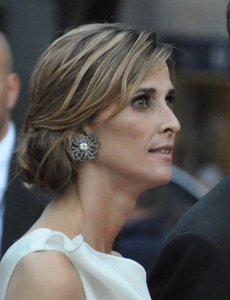
maría del rosario nadal y fuster de puigdórfila
1969 - , Spain
Quick Facts
- Artistic Movement Or Style: Contemporary Art, Design & Architecture
- Date Of Birth: 1969, San Sebastián, Spain
- Full Name: María del Rosario Nadal y Fuster de Puigdorfila
- Nationality: Spanish
- Notable Artworks: ['A.T.M.O.T.W.']
- Place Of Birth: San Sebastián, Spain