

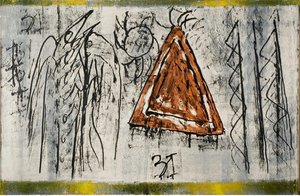
![Anónimo 1 (homenaje A Los Desaparecidos Y Torturados Dentro De Los Hechos Violentos Durante El Gobierno De Turbay Ayala) (anonymous 1 [homage To Those Disappeared And Tortured In Violent Incidents]) — María Evelia Marmolejo](/media/artworks/images-full/3c/52/3c52480318020bde2c248485abea64b6.jpg)
 Preview
 Send
Send Share
Share
 Details

 Download
 Similars
 X-Ray
X-Ray Diaporama
Anónimo 1 (Homenaje a los desaparecidos y torturados dentro de los hechos violentos durante el gobierno de Turbay Ayala) (Anonymous 1 [homage to those disappeared and tortured in violent incidents])
 1981
1981 29.0 x 21.0 cm
 Hammer Museum
 Read More
Hand Made Oil Reproduction
Hand-painted oil on canvas in your size and frame, made to order by our artists. ( Buy Print Buy Image)




































Pick from our preset sizes that match the artwork's original proportions.

You may enter your own dimensions to fit a specific frame or space. If your selected size does not match the original image's proportions, we will either crop the artwork or extend the painting with additional hand-painted elements. A digital mockup will be sent for your approval before production begins.
Please note that the on-screen preview does not reflect the actual cropping or extension. Only the mockup will accurately show the final composition.
While custom sizes are available, we recommend selecting a dimension from the predefined list to preserve the original proportions.
After order, ArtsDot.com team will email client for instructions and provide a mockup preview
Worldwide Delivery () in 3/4 weeks instead of standard 5 weeks. (29 August). No compromise on quality.

Free Worldwide Express Shipping

High-Quality Linen Canvas

Full Shipping Insurance

Customs Tax Refund Guarantee

True Color Matching Guarantee

60-Day Return Policy (Defects Only)

100% Money-Back Guarantee

Bulk Discount Offer
 Glass option is only available in size under 110 CM

Anónimo 1 (Homenaje a los desaparecidos y torturados dentro de los hechos violentos durante el gobierno de Turbay Ayala) (Anonymous 1 [homage to those disappeared and tortured in violent incidents])
Reproduction Medium
Reproduction Size
-


Total Price
$ 263
Related Artworks




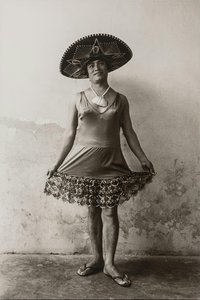
Artist Biography
María Evelia Marmolejo: A Radical Voice Through Performance
Born in Pradera, Colombia, in 1958, María Evelia Marmolejo’s artistic journey is inextricably linked to the turbulent political and social landscape of her homeland. From a young age, she experienced firsthand the pervasive inequalities and violence that shaped Colombian society – an experience that would profoundly inform her radical feminist performance art. Initially drawn to theater through neighborhood classes and workshops, Marmolejo quickly recognized performance as a potent vehicle for challenging established norms and confronting uncomfortable truths. Rejecting the constraints of traditional academic art, she embraced a visceral, often confrontational approach, utilizing her own body as both subject and instrument.
Marmolejo’s early artistic development was marked by a rejection of conventional expectations. Her studies at the Universidad de Santiago de Cali in 1978-80 were abruptly curtailed when her experimental installations – notably “Tendidos” (1979), a stark piece featuring hanging pads and blood – were deemed unacceptable by the faculty. This dismissal, rather than deterring her, solidified her commitment to performance as a direct and unmediated form of expression. Influenced by pioneering figures like Lygia Clark, Yeni and Nan, and Carlos Zerpa, she began to develop a unique style characterized by ritualistic elements, bodily engagement, and a deliberate provocation of the audience.
The Birth of Feminist Performance in Colombia
Crucially, Marmolejo is widely credited with staging the first feminist performance art piece in Colombia in 1981 – “Anónimo 1” (Anonymous 1). This groundbreaking work, performed at the Plazoleta del Centro Administrativo Municipal in Cali, served as a direct response to the political violence and disappearances occurring under the government of Julio César Turbay Ayala. The performance involved Marmolejo walking over a white paper stained with her own blood, symbolizing the suffering endured by countless women. This act was not merely aesthetic; it was a deliberate attempt to expose the brutality of state repression and challenge patriarchal structures within Colombian society.
Following this pivotal moment, Marmolejo’s work became increasingly focused on themes of gender inequality, colonialism, and political oppression. She continued to push boundaries with her performances, often incorporating elements of self-harm – cutting herself and healing the wounds – as a means of confronting trauma and demanding recognition. Her 1985 performance, “América,” at the Plaza de Colón in Madrid, further underscored this commitment, utilizing her own pregnancy as a metaphor for the exploitation and dispossession experienced by indigenous populations during the "discovery" of the Americas. These performances were not simply artistic events; they were acts of political resistance, demanding public attention to critical social issues.
A Transnational Journey & Continued Innovation
In 1985, facing escalating political instability in Colombia, Marmolejo sought refuge in Madrid, where she studied video and television. This period marked a shift towards exploring new media while retaining her core artistic concerns. She later relocated to New York City in 1996, pursuing further studies at the City University of New York. Despite periods of relative silence during her career, Marmolejo has consistently returned to performance, demonstrating an enduring commitment to her chosen medium and a willingness to engage with contemporary issues.
Her recent work continues to grapple with themes of gender, colonialism, and social justice, often employing ritualistic practices and incorporating elements of the body as both subject and object. Marmolejo’s performances are characterized by their raw emotionality, confrontational nature, and a deep engagement with the historical and political realities of Latin America. She has exhibited her work in prestigious institutions worldwide, including the Museum of Modern Art of Bogota, the Museum of Modern Art Cartagena, and the Contemporary Art Museum Guayaquil, solidifying her position as a significant figure in contemporary art.
Legacy & Historical Significance
María Evelia Marmolejo’s contribution to the art world extends far beyond individual artworks. She is recognized for pioneering feminist performance art in Colombia, challenging conventional notions of artistic expression and demanding social change through direct engagement with political issues. Her willingness to expose her own body as a site of resistance has served as an inspiration for countless artists working across disciplines. Marmolejo’s legacy lies not only in the powerful impact of her performances but also in her unwavering commitment to using art as a tool for activism and social justice, ensuring that her voice continues to resonate within the broader context of contemporary artistic discourse.
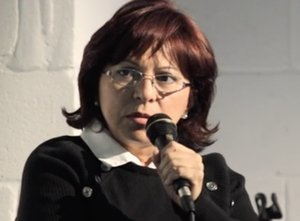
maría evelia marmolejo
1958 - , Colombia
Quick Facts
- Artistic Movement Or Style: Radical feminist performance art
- Artists Or Movements Influenced By This Artist: ['Feminist performance art']
- Artists Who Influenced This Artist:
- Lygia Clark
- Yeni and Nan
- Carlos Zerpa
- Date Of Birth: 1958
- Full Name: Maria Evelia Marmolejo
- Nationality: Colombian
- Notable Artworks:
- Anónimo 1 (1981)
- Tendidos (1979)
- Sesquilé (1985)
- Place Of Birth: Pradera, Colombia
![Anónimo 1 (Homenaje a los desaparecidos y torturados dentro de los hechos violentos durante el gobierno de Turbay Ayala) (Anonymous 1 [homage to those disappeared and tortured in violent incidents])](/media/artworks/images-thumb/60/e7/60e7a57602bb2f416a8bfb994367abfa.jpg)

