 Preview
 Send
Send Share
Share
 Details

 Download
 Similars
 X-Ray
X-Ray Diaporama
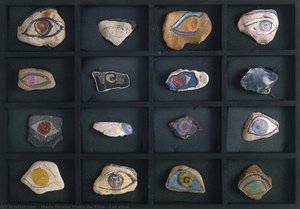
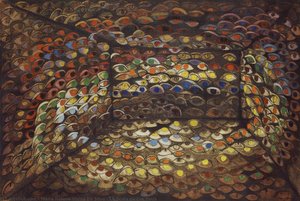
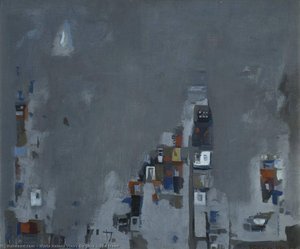
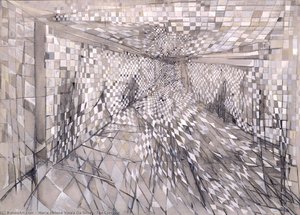
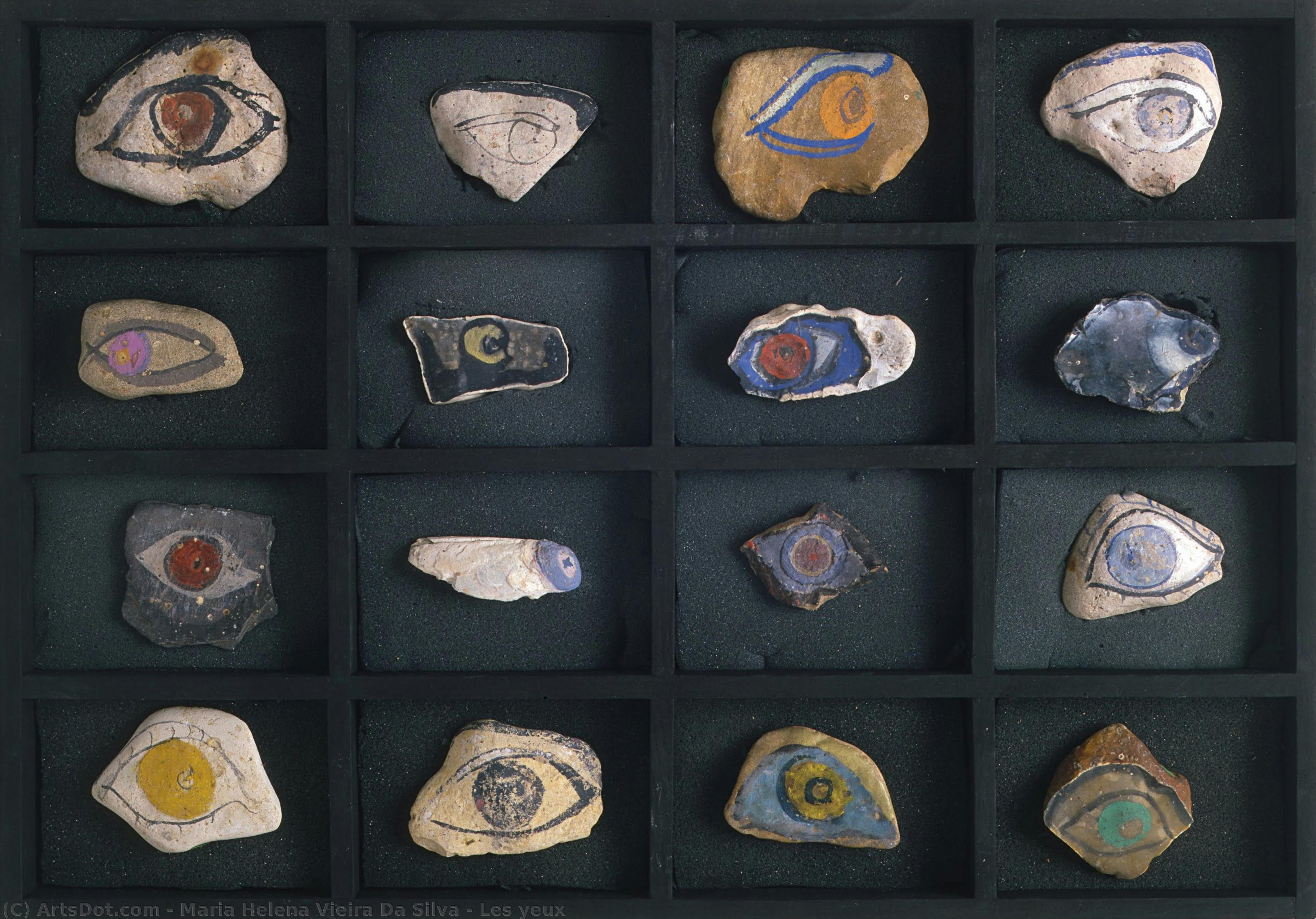
Les yeux
 1953
1953 38.0 x 54.0 cm
 Read More
Hand Made Oil Reproduction
Hand-painted oil on canvas in your size and frame, made to order by our artists. ( Buy Print Buy Image)




































Pick from our preset sizes that match the artwork's original proportions.

You may enter your own dimensions to fit a specific frame or space. If your selected size does not match the original image's proportions, we will either crop the artwork or extend the painting with additional hand-painted elements. A digital mockup will be sent for your approval before production begins.
Please note that the on-screen preview does not reflect the actual cropping or extension. Only the mockup will accurately show the final composition.
While custom sizes are available, we recommend selecting a dimension from the predefined list to preserve the original proportions.
After order, ArtsDot.com team will email client for instructions and provide a mockup preview
Worldwide Delivery () in 3/4 weeks instead of standard 5 weeks. (21 August). No compromise on quality.

Free Worldwide Express Shipping

High-Quality Linen Canvas

Full Shipping Insurance

Customs Tax Refund Guarantee

True Color Matching Guarantee

60-Day Return Policy (Defects Only)

100% Money-Back Guarantee

Bulk Discount Offer
 Glass option is only available in size under 110 CM

Les yeux
Reproduction Medium
Reproduction Size
-


Total Price
$ 263
Related Artworks







Artist Biography
A Life Woven in Layers: The World of Maria Helena Vieira da Silva
Maria Helena Vieira da Silva, born in Lisbon in 1908, was an artist whose life and work were defined by a constant negotiation between abstraction and figuration, a dance between the seen and the imagined. From a young age, she displayed a remarkable aptitude for drawing and painting, embarking on formal studies at the Academia de Belas-Artes in Lisbon at just eleven years old. This early immersion in artistic training was merely the foundation for a broader European education; she sought guidance from some of the most influential figures of her time – Fernand Léger’s lessons in painting, Antoine Bourdelle’s insights into sculpture, and Stanley William Hayter’s expertise in engraving all contributed to the multifaceted nature of her developing style. These formative years weren't confined to studios; a cosmopolitan upbringing exposed her to avant-garde movements like Futurism and the Ballets Russes, sparking an early curiosity for innovative forms of expression.The Parisian Crucible: Forging a Unique Visual Language
Paris became Vieira da Silva’s artistic home in the late 1920s, a city teeming with creative energy and intellectual ferment. It was here, amidst the vibrant art scene, that she truly began to forge her distinctive visual language. Her marriage to fellow artist Árpád Szenes further enriched this period, creating a collaborative partnership that would endure throughout their lives. The 1930s saw Vieira da Silva experimenting with increasingly abstract forms, yet she resisted complete abandonment of representation. This tension – the pull between recognizable imagery and pure abstraction – became a defining characteristic of her work. She engaged in lively debates within artistic circles like “Amis de Monde,” grappling with the political implications of art and the role of the artist in a rapidly changing world. The outbreak of World War II forced a temporary relocation, first to Lisbon and then to Brazil, but Paris remained her spiritual center. It was during this period that she began developing the complex, layered compositions for which she would become renowned – intricate arrangements of small rectangles, suggestive of architectural spaces or urban landscapes, imbued with a sense of mystery and spatial ambiguity.Abstraction & Beyond: Influences and Artistic Development
Vieira da Silva’s artistic development was shaped by a diverse range of influences. The structural rigor of Paul Cézanne resonated deeply within her work, particularly his exploration of form and perspective. The fragmented forms and spatial distortions of Cubism also left an indelible mark, informing her approach to composition and the depiction of space. However, she wasn’t simply mimicking these masters; rather, she synthesized their lessons into something entirely new. Her art transcends categorization, existing in a fascinating liminal space between abstraction and figuration. Her paintings often evoke cityscapes – not literal representations, but rather impressions of urban life, with its labyrinthine streets, towering buildings, and hidden corners. These aren’t places we recognize directly, but spaces that feel strangely familiar, resonating with our own experiences of navigating the modern world. The influence of her childhood memories of Lisbon, particularly the intricate patterns of *azulejo* tiles, can also be detected in the recurring motifs and textures within her compositions.Recognition & Legacy: A Pioneer of Post-War Art
After returning to Paris following the war, Vieira da Silva’s work gained increasing international recognition. She exhibited at prestigious venues like the Art of This Century Gallery in New York, alongside other leading figures of the post-war art world. In 1966, she achieved a historic milestone by becoming the first woman to receive France's Grand Prix National des Arts, solidifying her position as a major force in contemporary art. Beyond painting, Vieira da Silva demonstrated remarkable versatility, exploring various mediums including printmaking, tapestry design, ceramic decoration, and stained glass – notably creating stunning windows for the St. James Church in Reims. Her contribution to abstract art lies not only in her unique aesthetic but also in her ability to synthesize diverse influences into a cohesive and deeply personal vision. The establishment of the Árpád Szenes-Vieira da Silva Foundation in Lisbon in 1994 ensured that her legacy, along with that of her husband, would be preserved for future generations. Today, her work can be found in prominent museum collections worldwide, including the Museu Calouste Gulbenkian in Lisbon, a testament to her enduring impact on the art world. Vieira da Silva’s paintings continue to captivate viewers with their enigmatic beauty and intellectual depth, reminding us of the power of art to explore the complexities of space, perception, and the human experience.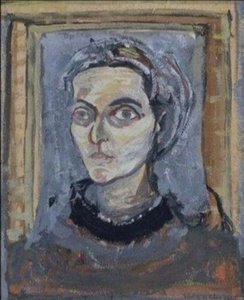
Maria Helena Vieira da Silva
1908 - 1992 , Portugal
Quick Facts
- Artistic Movement Or Style: Abstract Art, Art Informel
- Artists Or Movements Influenced By This Artist: ['Art Informel']
- Artists Who Influenced This Artist:
- Paul Cézanne
- Fernand Léger
- Antoine Bourdelle
- Date Of Birth: 1908
- Date Of Death: 1992
- Full Name: Maria Helena Vieira da Silva
- Nationality: Portuguese-French
- Notable Artworks:
- Autoportrait
- Le Mirador
- City of Towers
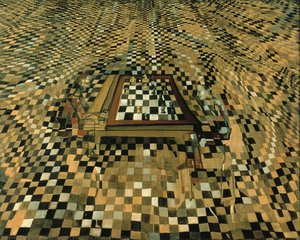
- La partie d’échecs
- Place Of Birth: Lisbon, Portugal
![La Forge [The Forge]](/media/artworks/images-thumb/45/8e/458e27890c20b8bbfc9c807b26e4ee72.jpg)