

 Preview
 Send
Send Share
Share
 Details

 Download
 Similars
 X-Ray
X-Ray Diaporama
Short dress


 Read More
Purchase a high-resolution, enhanced digital image, far superior to the online preview.
Each file is meticulously prepared by our in-house specialists using advanced tools and expert manual retouching. We ensure every image has exceptional clarity, precise color accuracy, and fine detail.
The final file is delivered via email within 72 hours, optimized for immediate use in professional, editorial, and print environments. This is the same quality trusted by top-tier design studios, publishers, and galleries.
Digital Image
Download a high-resolution file for personal display, printing, and creative projects. ( Buy Print Buy Hand Made Painting)
Included in Every Digital Image Order
Expert Digital Delivery, Guaranteed
When you choose ArtsDot.com, you're not just getting an image - you're receiving a professionally enhanced digital artwork, crafted with precision and backed by a satisfaction guarantee. Here's everything that comes with your order, automatically:

Fast Email Delivery
Your high-resolution digital image file will be emailed to you within 72 hours of ordering - ready for immediate use.

AI-Enhanced Digital File
Your artwork is professionally optimized using advanced AI tools and manual editing, ensuring maximum detail, clarity, and color accuracy.

Free Lifetime Re-Delivery
Accidentally deleted or lost your file? No worries - we'll resend it to you anytime, free of charge.

No Import Fees - Ever
Enjoy your artwork instantly with zero customs, duties, or delivery fees - digital downloads are always tax-free.

Color Accuracy Guarantee
We ensure your digital image reflects the original colors as closely as possible using professional tools and color management.

60-Day Satisfaction Guarantee
If you're not satisfied with your digital image, we'll revise it or refund 100% within 60 days - no questions asked.

100% Money-Back Guarantee
Not satisfied? Get a full refund within 60 days of receiving your digital file - no questions asked.

Bulk Order Discounts
Buy 3 images, save 10% - Buy 5, save 15% - Buy 10+, save 20%. Great for creative projects, galleries, and agencies.
Collectible Description
Short Dress - A Reflection of Brazilian Modernism
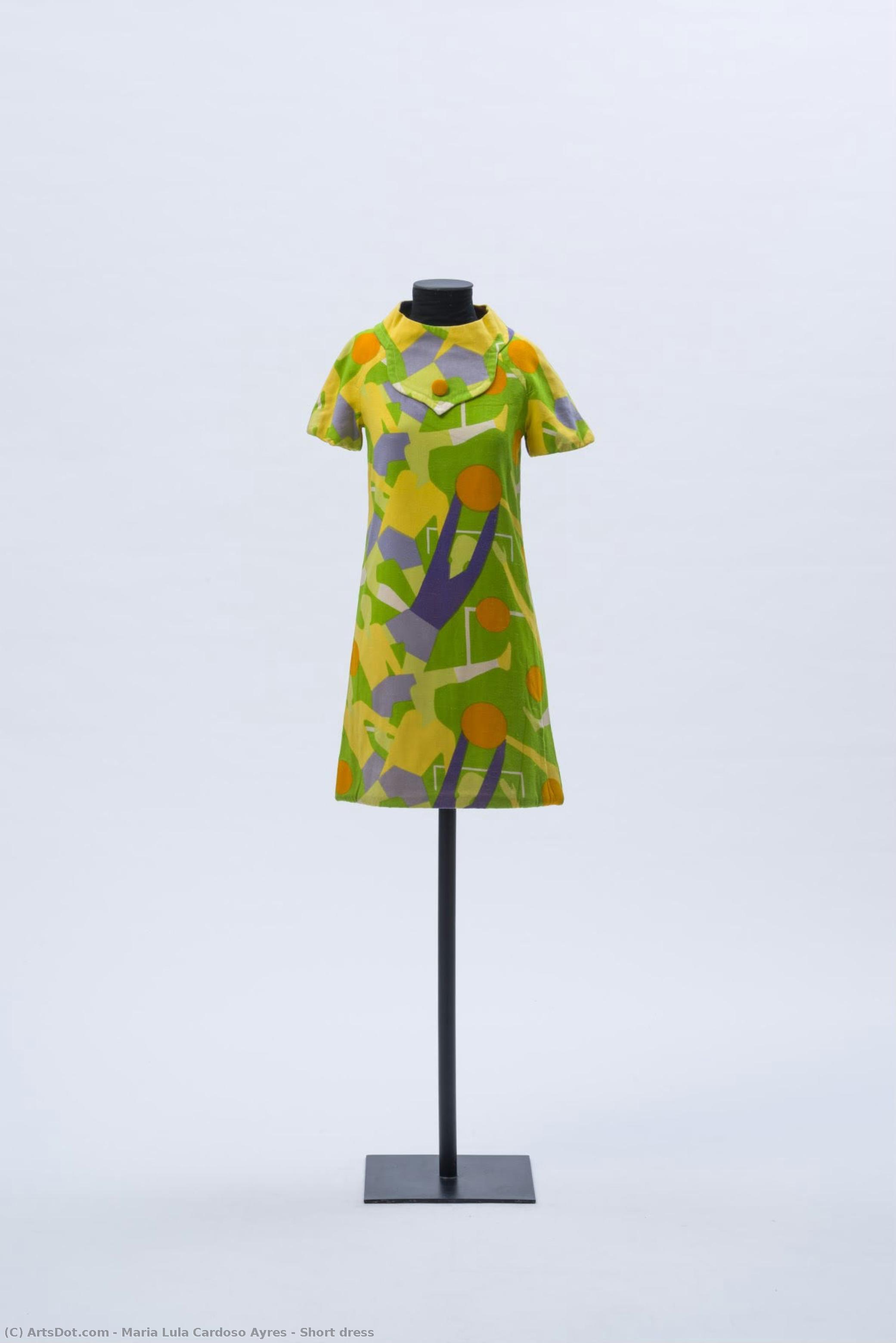
The artwork "Short Dress," created by Maria Lula Cardoso Ayres in 1966, stands as an emblem of Brazilian textile art during the vibrant era of mid-century modernism. More than just a garment, it embodies the spirit of innovation and artistic dialogue that characterized São Paulo’s cultural landscape at the time—a testament to Pietro Maria Bardi's vision for MASP’s Rhodia Collection. This collection aimed to showcase the confluence between art and fashion, recognizing the transformative potential of collaborative projects driven by visionary minds like Lívio Rangan.- Artist: Maria Lula Cardoso Ayres (1932-2018)
- Year Created: 1966
- Museum: Museu de Arte de São Paulo Assis Chateaubriand (MASP)
- Movement/Style: Abstract Expressionism & Figurative Art
- Material: Bouclê synthetic fabric
Composition & Color Palette: Embracing Bold Geometric Forms
The composition is strikingly simple yet profoundly effective, centering on a mannequin positioned against a pristine white backdrop—a technique favored by photographers of the time to maximize focus and minimize distractions. This symmetrical arrangement underscores the dress’s elegance and draws immediate attention to its design. Furthermore, Ayres employed a bold color palette dominated by yellow, accented with splashes of green, orange, and purple. These hues are distributed in an irregular pattern—a deliberate departure from rigid geometric forms—creating visual interest and mirroring the spirit of abstract expressionism prevalent during the period. The inclusion of grey adds depth to the overall aesthetic.Symbolic Significance: Celebrating Brazilian Identity
“Short Dress” transcends its materiality, serving as a symbol of Brazilian cultural pride and artistic ambition. Ayres’s work aligns with São Paulo Museum of Art's Rhodia Collection’s mission—to explore the intersection between art and industry—demonstrating how creative endeavors can propel societal progress. The dress’s design embodies optimism and energy, reflecting the dynamism of Brazil during the 1960s—a time marked by rapid urbanization and cultural experimentation. Ayres's incorporation of geometric shapes—circles—further emphasizes this connection to modern artistic principles.Technique & Craftsmanship: A Legacy of Innovation
Ayres’s technique showcases meticulous attention to detail, reflecting the dedication to craftsmanship that characterized Brazilian textile art in the mid-century era. The fabric was skillfully draped onto the mannequin, highlighting its texture and form—a testament to Ayres's artistic vision and her mastery of material manipulation. The resulting image captures a moment frozen in time, embodying the aesthetic ideals of MASP’s Rhodia Collection and securing Ayres’s place as a pioneer of Brazilian textile art.Related Artworks
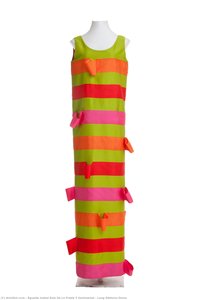
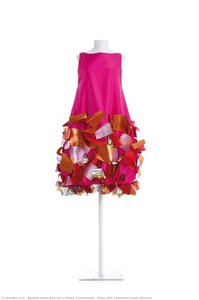
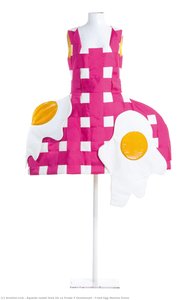
Artist Biography
The Vibrant Legacy of Maria Lula Cardoso Ayres
In the heart of Pernambuco, where the rhythms of Brazilian culture pulse with an unmistakable vitality, the name Maria Lula Cardoso Ayres resonates as a symbol of artistic innovation and cultural preservation. Born in Recife in 1932, Ayres emerged not merely as a creator of objects, but as a weaver of identities. Her life’s work served as a bridge between the ancestral echoes of Brazil and the sophisticated movements of European modernism. Guided by the early mentorship of the German stained-glass artist Heinrich Moser, she developed an aesthetic sensibility that honored regional traditions while fearlessly embracing the avant-garde. This unique duality allowed her to transform everyday mediums into profound explorations of color, form, and national spirit.
The trajectory of Ayres’s career was marked by a restless, brilliant curiosity. Her formative years were shaped by exposure to Surrealism and Expressionism during her studies abroad, experiences that infused her work with a complex layer of psychological depth and structural experimentation. Yet, despite the allure of international trends, her heart remained anchored in the soil of Brazil. This commitment was most tangibly realized through her establishment of the ‘Escola de Belas Artes do Recife.’ Through this institution, she sought to nurture a new generation of artists, ensuring that the creative pulse of Pernambuco would continue to beat with strength and autonomy long after her own brush had rested.
A Tapestry of Color and Form
Perhaps the most enchanting chapter of Ayres’s legacy lies in her revolutionary approach to textile art. She possessed a singular ability to treat fabric as a canvas for high art, most notably through her iconic short dresses. These garments were far more than mere fashion; they were wearable compositions that utilized bold geometric patterns and kaleidoscopic hues to dance across the body. In these textiles, one finds a masterful application of color theory, where each thread and pattern serves to explore the tension between abstraction and figuration. Her designs captured a sense of movement and joy, reflecting a deep fascination with how visual rhythm can mirror the lively spirit of Brazilian life.
Beyond the tactile intimacy of her textiles, Ayres commanded much larger scales through her monumental mural paintings. These works functioned as visual chronicles of Pernambuco’s identity, capturing the essence of the landscape and its people in sweeping, impactful strokes. Her murals were not merely decorations for walls but were profound architectural interventions that brought art into the public consciousness. Whether working with the delicate intricacies of fabric or the expansive surfaces of a wall, her technique remained rooted in a deliberate exploration of visual composition, making her a true pioneer of multidisciplinary expression.
Historical Significance and Enduring Influence
The historical importance of Maria Lula Cardoso Ayres extends far beyond the boundaries of her physical creations. She stood at a pivotal moment in Brazilian art history, navigating the complex tensions between regional identity and national recognition. Her ability to synthesize the local—the folk, the traditional, and the cultural—with the global—the abstract and the modern—helped redefine what it meant to be a Brazilian artist in a rapidly changing world. She challenged the notion that regional art was merely "folklore," proving instead that it could be a sophisticated vehicle for profound artistic discourse.
Today, her influence can be felt in the continued vibrancy of the Pernambucan art scene and in the enduring legacy of the school she helped found. Her life remains a testament to the power of artistic devotion:
- Cultural Preservation: A lifelong dedication to honoring and elevating Brazilian regional traditions.
- Interdisciplinary Mastery: The seamless blending of textile design, mural painting, and educational leadership.
- Aesthetic Innovation: The introduction of bold, geometric abstraction into the realm of wearable art and public spaces.
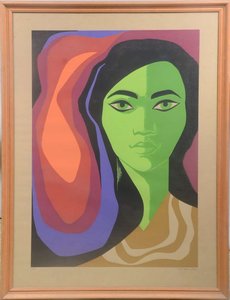
maria lula cardoso ayres
1932 - 2018 , Brazil
Quick Facts
- Artistic Movement Or Style: Abstract Expressionism & Figurative Art
- Artists Or Movements Influenced By This Artist: ['São Paulo Museum of Art']
- Artists Who Influenced This Artist: ['Heinrich Moser']
- Date Of Birth: 1932
- Full Name: Maria Lula Cardoso Ayres
- Nationality: Brazilian
- Notable Artworks: ['Folclore 2']
- Place Of Birth: Recife, Brazil

