

 Preview
 Send
Send Share
Share
 Details

 Download
 Similars
 X-Ray
X-Ray Diaporama
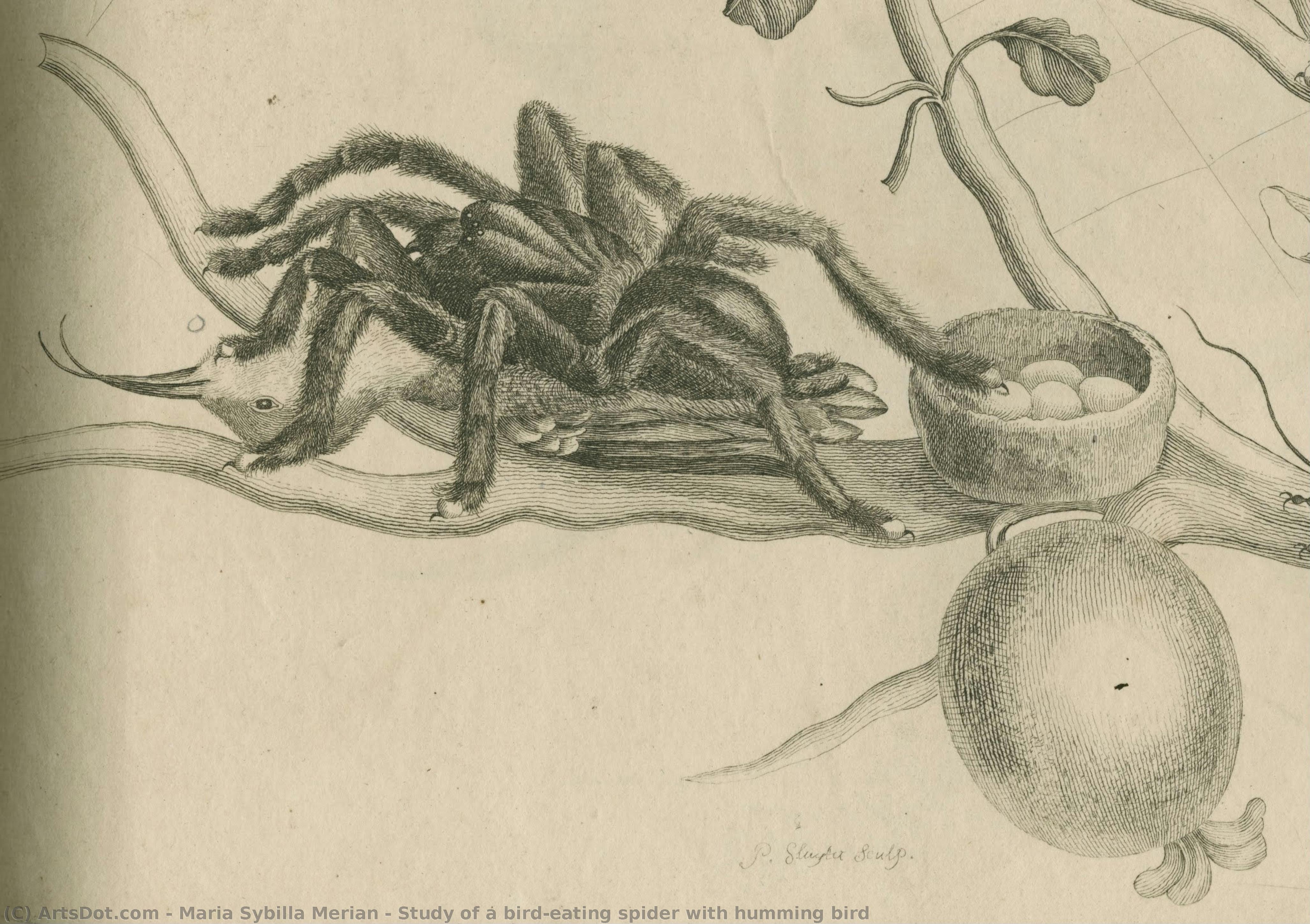
Study of a bird-eating spider with humming bird


 Read More
Purchase a high-resolution, enhanced digital image, far superior to the online preview.
Each file is meticulously prepared by our in-house specialists using advanced tools and expert manual retouching. We ensure every image has exceptional clarity, precise color accuracy, and fine detail.
The final file is delivered via email within 72 hours, optimized for immediate use in professional, editorial, and print environments. This is the same quality trusted by top-tier design studios, publishers, and galleries.
Digital Image
Download a high-resolution file for personal display, printing, and creative projects. ( Buy Print Buy Hand Made Painting)
Included in Every Digital Image Order
Expert Digital Delivery, Guaranteed
When you choose ArtsDot.com, you're not just getting an image - you're receiving a professionally enhanced digital artwork, crafted with precision and backed by a satisfaction guarantee. Here's everything that comes with your order, automatically:

Fast Email Delivery
Your high-resolution digital image file will be emailed to you within 72 hours of ordering - ready for immediate use.

AI-Enhanced Digital File
Your artwork is professionally optimized using advanced AI tools and manual editing, ensuring maximum detail, clarity, and color accuracy.

Free Lifetime Re-Delivery
Accidentally deleted or lost your file? No worries - we'll resend it to you anytime, free of charge.

No Import Fees - Ever
Enjoy your artwork instantly with zero customs, duties, or delivery fees - digital downloads are always tax-free.

Color Accuracy Guarantee
We ensure your digital image reflects the original colors as closely as possible using professional tools and color management.

60-Day Satisfaction Guarantee
If you're not satisfied with your digital image, we'll revise it or refund 100% within 60 days - no questions asked.

100% Money-Back Guarantee
Not satisfied? Get a full refund within 60 days of receiving your digital file - no questions asked.

Bulk Order Discounts
Buy 3 images, save 10% - Buy 5, save 15% - Buy 10+, save 20%. Great for creative projects, galleries, and agencies.
Collectible Description
A Glimpse into Surinam’s Wild Heart: Maria Sibylla Merian's ‘Study of a Bird-Eating Spider with Hummingbird’
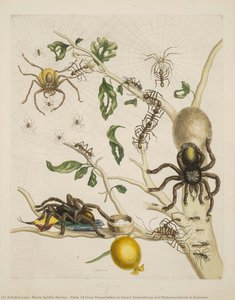
Maria Sibylla Merian’s “Study of a Bird-Eating Spider with Hummingbird,” a meticulously rendered plate from her seminal 1705 work *Metamorphosis Insectorum Surinamensium*, is far more than a simple depiction of two creatures sharing a branch. It's a window into the vibrant, teeming world of colonial South America and a testament to Merian’s revolutionary approach to natural history illustration – one rooted in patient observation, scientific rigor, and an undeniable artistic passion. The image captures a moment of precarious balance, a collision of predator and prey rendered with astonishing detail and imbued with a subtle drama that continues to captivate viewers centuries later.
The Artist’s Journey & A Revolutionary Approach
Born in Frankfurt in 1647, Maria Sibylla Merian defied the societal constraints placed upon women of her era. Initially trained as a still life painter by her stepfather, Jacob Marrel, she quickly developed an insatiable curiosity about the natural world. Driven by a desire to understand the transformations of insects – a concept largely unexplored in scientific circles at the time – Merian embarked on a daring expedition to Surinam in 1699. This journey, funded largely through her own efforts and supported by a small group of patrons, marked a pivotal moment in both her life and the history of natural science. Unlike many of her contemporaries who relied solely on secondhand accounts or imported specimens, Merian immersed herself directly within the ecosystem, meticulously documenting its flora and fauna firsthand. This direct observation is immediately apparent in the richness and accuracy of this particular plate.
A Study in Contrasts: Spider & Hummingbird
The composition itself is a masterclass in visual storytelling. The imposing figure of the bird-eating spider, likely a *Avicularia* species (a Guyanan Pinktoe), dominates the foreground, its charcoal-colored body and rust-tinged legs contrasting sharply with the vibrant hues of the surrounding foliage. Its focused attention on the hummingbird hovering delicately above is both unsettling and mesmerizing. The hummingbird, rendered in exquisite detail – showcasing its iridescent wings and ruby throat – represents a fleeting moment of beauty amidst the spider’s predatory intent. This juxtaposition isn't merely aesthetic; it speaks to Merian’s fascination with metamorphosis and the cyclical nature of life and death within the natural world. The inclusion of the army ants, forming a living bridge between twigs, adds another layer of complexity, highlighting the intricate web of interactions that define this ecosystem.
Technique & The Legacy of Copperplate Engraving
Merian’s illustration is a remarkable achievement in copperplate engraving. Each tiny detail – from the delicate hairs on the spider's legs to the texture of the fruit bowl – was painstakingly etched onto a metal plate and then meticulously printed. This technique, favored for its precision and ability to reproduce fine lines and intricate patterns, allowed Merian to capture the nuances of her observations with unparalleled accuracy. The use of chiaroscuro—the dramatic interplay of light and shadow—further enhances the image’s depth and realism, drawing the viewer's eye to the central drama of predator and prey. The plate’s placement within *Metamorphosis Insectorum Surinamensium* demonstrates Merian’s commitment to illustrating not just individual specimens but also their life cycles and ecological relationships.
Symbolism & A Window into a Changing World
Beyond its scientific value, “Study of a Bird-Eating Spider with Hummingbird” carries profound symbolic weight. It reflects the colonial encounter between Europe and South America – a meeting of vastly different worlds and perspectives. Merian’s detailed documentation serves as both an act of observation and a form of assertion: she was not merely recording what she saw, but actively shaping our understanding of this exotic landscape. The image also speaks to themes of vulnerability, resilience, and the delicate balance of nature – concepts that resonate powerfully even today. Reproductions of this artwork offer a tangible connection to Merian’s groundbreaking work and invite us to contemplate the wonders—and complexities—of the natural world.
Related Artworks

Artist Biography
A Life Unfurled: The Botanical Brilliance of Maria Sibylla Merian
Maria Sibylla Merian, born in Frankfurt in 1647, was a figure remarkably ahead of her time—a naturalist, scientific illustrator, and an artist whose dedication to meticulous observation transformed our understanding of the insect world. Her story isn’t simply one of artistic talent; it's a testament to unwavering curiosity, courageous exploration, and a profound connection to the natural world that defied the conventions of 17th and early 18th-century society. Growing up amidst the bustling trade and intellectual currents of Frankfurt, Merian’s initial exposure to art came through her family. Her father, Matthäus Merian the Elder, was a renowned engraver and publisher, providing a foundation in visual representation. However, it was her stepfather, Jacob Marrel, a skilled still life painter, who actively fostered her artistic inclinations, encouraging her drawing and painting skills from a young age. This early nurturing wasn’t limited to technique; Merian developed an intense fascination with insects, meticulously collecting and studying them—a pursuit considered unusual, if not eccentric, for a woman of that era. Even as a child, she didn't merely depict butterflies and caterpillars; she sought to understand their complete life cycles, a revolutionary approach in a time when the prevailing belief was spontaneous generation – the idea that insects simply arose from mud or decaying matter.From European Gardens to Surinamese Rainforests
Merian’s artistic career blossomed alongside her scientific investigations. She received formal training from Marrel and his pupil, Abraham Mignon, honing her skills in rendering botanical details with exquisite precision. Her early works focused on the flora of Europe, culminating in publications like *Neues Blumenbuch* (“New Book of Flowers”), showcasing her talent for floral illustration. However, it was her groundbreaking work on insect metamorphosis that truly set her apart. Published in 1679 and 1683, *Der Raupen wunderbare Verwandelung und sonderbare Blumennahrung* ("The Wonderful Transformation of Caterpillars and Their Peculiar Nourishment from Flowers") documented the life cycles of European insects with unprecedented accuracy. Each plate wasn’t just a beautiful image; it was a carefully researched record of an insect's development, its host plant, and its interactions within its environment. But Merian harbored a deeper ambition: to study insects in their natural habitat, free from the constraints of European gardens. This led to an extraordinary undertaking—a self-funded expedition to Dutch Guiana (modern-day Suriname) in 1699, accompanied by her daughter Dorothea. For two years, she immersed herself in the rainforests, documenting the exotic insects, plants, and animals with unwavering dedication, despite facing harsh conditions and considerable personal risk.Metamorphosis Surinamensis: A Legacy of Observation
The culmination of Merian’s South American journey was *Metamorphosis Insectorum Surinamensium* (1705), a monumental work that cemented her legacy as a pioneering naturalist and illustrator. This two-volume publication presented detailed depictions of the insects of Suriname, their life cycles, and their relationships with the surrounding flora. Unlike previous natural history illustrations which often focused on isolated specimens, Merian’s plates depicted insects interacting with their host plants, showcasing a holistic understanding of ecological connections. Her illustrations weren't merely scientific records; they were vibrant works of art, imbued with a sense of wonder and appreciation for the beauty of the natural world. The work was revolutionary not only for its artistic quality but also for its scientific accuracy. Merian challenged existing beliefs about insect behavior and development, providing compelling evidence against spontaneous generation. She meticulously documented previously unknown species, contributing significantly to the field of entomology. *Metamorphosis Insectorum Surinamensium* became a landmark publication, influencing generations of naturalist illustrators and scientists.A Lasting Impact on Art and Science
Maria Sibylla Merian’s influence extends far beyond the realm of natural history illustration. Her work bridged the gap between art and science, demonstrating that meticulous observation and artistic skill could be powerful tools for scientific discovery. She challenged societal norms by pursuing her passion for natural history with unwavering determination, paving the way for future female scientists and artists. David Attenborough has rightly recognized Merian as a pivotal figure in entomology, acknowledging her groundbreaking contributions to our understanding of insect life cycles. Her legacy continues to inspire artists, scientists, and nature enthusiasts alike. Today, her original illustrations are highly prized possessions of museums and private collectors worldwide. Reproductions of her work—like “Plate 70 from Dissertation in Insect Generations and Metamorphosis in Surinam” or the exquisite detail found in "Erucarum Ortus, Alimentum Et Paradoxa Metamorphosis"—allow us to appreciate her artistic skill and scientific insight. Maria Sibylla Merian’s life was a testament to the power of curiosity, observation, and a deep reverence for the natural world—a legacy that continues to resonate centuries after her passing.- Key Contributions: Published her first book of natural illustrations in 1675; documented evidence on the process of metamorphosis and plant hosts of 186 European insect species; traveled to Dutch Guiana in 1699 to study tropical insects; published *Metamorphosis Insectorum Surinamensium* in 1705.
- Notable Works: *Metamorphosis Insectorum Surinamensium* (1705), *Erucarum Ortus, Alimentum Et Paradoxa Metamorphosis*, “Fennel”, and "Plate 70 from Dissertation in Insect Generations and Metamorphosis in Surinam".
- Influences: Her stepfather Jacob Marrel, a still life painter; the scientific curiosity of her era.
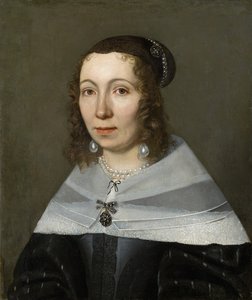
maria sybilla merian
1647 - 1717 , Italy
Quick Facts
- Artistic Movement Or Style: Natural History Art
- Artists Or Movements Influenced By This Artist:
- Naturalist Illustrators
- Entomology
- Artists Who Influenced This Artist:
- Jacob Marrel
- Abraham Mignon
- Date Of Birth: April 2, 1647
- Date Of Death: January 13, 1717
- Full Name: Maria Sibylla Merian
- Nationality: German
- Notable Artworks:
- Metamorphosis Insectorum Surinamensium
- Erucarum Ortus
- Fennel
- Plate 70 from Dissertation...
- Place Of Birth: Frankfurt, Germany

