 Preview
 Send
Send Share
Share
 Details

 Download
 Similars
 X-Ray
X-Ray Diaporama
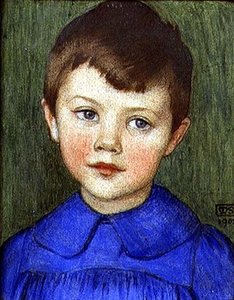
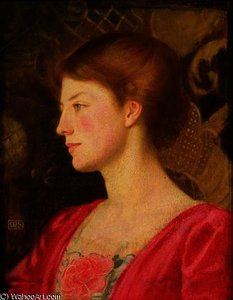
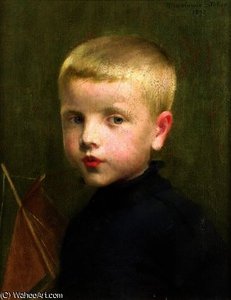
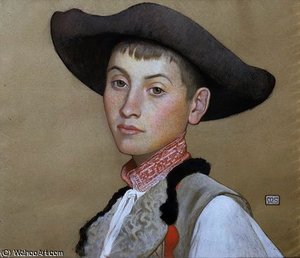
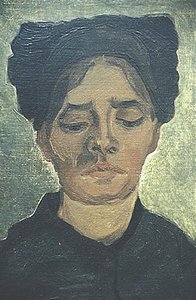
Portrait Of Anthony Stokes
 Read More
Giclée / Art Print
Museum-quality giclée or canvas print with fast production and flexible finish options. ( Buy Hand Made Painting Buy Image)




































Pick from our preset sizes that match the artwork's original proportions.

You may enter your own dimensions to fit a specific frame or space. If your selected size does not match the original image's proportions, we will either crop the artwork or extend the image with a mirrored or solid-fill edge. A digital mockup will be sent for your approval before production begins.
Please note that the on-screen preview does not reflect the actual cropping or extension. Only the mockup will accurately show the final composition.
While custom sizes are available, we recommend selecting a dimension from the predefined list to preserve the original proportions.
Worldwide Delivery () in 2 weeks instead of standard 4/5 weeks. (23 August)

Free Worldwide Express Shipping

High-Quality Linen Canvas

Full Shipping Insurance

Customs Tax Refund Guarantee

True Color Matching Guarantee

60-Day Return Policy (Defects Only)

100% Money-Back Guarantee

Bulk Discount Offer
 Glass option is only available in size under 110 CM

Portrait Of Anthony Stokes
Giclée / Art Print
Reproduction Size
-


Total Price
$ 63
Related Artworks





Artist Biography
A Life Painted in Rustic Light: The Story of Marianne Preindelsberger Stokes
Marianne Preindlsberger Stokes, born in Graz, Austria, in 1855, was an artist whose life and work beautifully bridged the gap between Victorian naturalism and a burgeoning sense of national identity. Though she would eventually become known for paintings imbued with symbolic weight – even embodying the spirit of French liberty through her iconic depictions – her artistic journey began rooted in the meticulous observation of everyday life. Early studies at the Graz Drawing Academy provided a foundation, but it was a unique scholarship, awarded nearly a century after its inception to the most promising Styrian art student, that truly launched her career. This prize allowed her to pursue formal training in Munich under Wilhelm Lindenschmit the Younger, marking the first step on a path that would lead her through France and ultimately to England.From Brittany to the Newlyn School: Finding Her Artistic Voice
Paris became central to Stokes’ development during the 1880s. She studied under several prominent artists – Dagnan-Bouveret, Courtois, and Colin – absorbing their techniques while simultaneously forging her own distinct style. Her early Parisian works, often painted *en plein air* in Brittany, revealed a fascination with rustic scenes and the lives of rural communities. It was here she met Helene Schjerfbeck, a Finnish painter with whom she shared a creative kinship and embarked on painting expeditions that would shape their artistic perspectives. The influence of Jules Bastien-Lepage is palpable in these early works; Stokes embraced his naturalist approach, capturing the dignity and quiet beauty of working people. However, her style wasn’t merely imitative. A subtle romanticism began to emerge, hinting at a deeper symbolic undercurrent that would become increasingly prominent throughout her career. In 1885, marriage brought her to England and a new chapter in her life – and the adoption of the name ‘Mrs. Adrian Stokes’. This move also introduced her to the Newlyn School, a group of artists dedicated to portraying rural life with unflinching realism. While not strictly aligned with their aesthetic principles, she found resonance in their commitment to depicting authentic experiences.Themes of Faith, Labor and National Identity
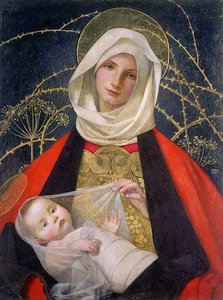
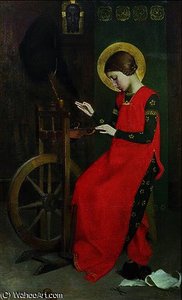
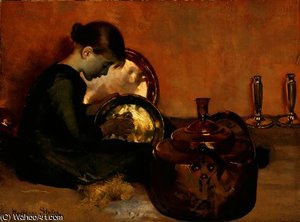
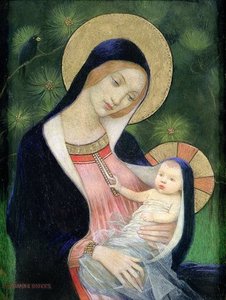
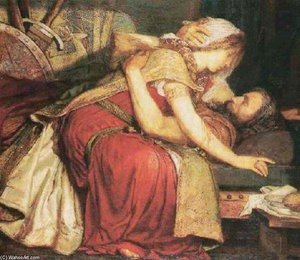
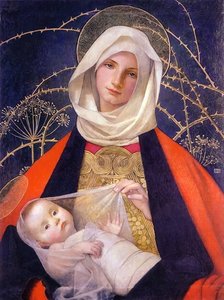
Stokes’ oeuvre is characterized by a compelling blend of religious symbolism, depictions of everyday labor, and an emerging sense of national identity – particularly Slovak culture. Paintings like “St. Elizabeth Spinning Wool for the Poor” are not simply representations of biblical scenes; they are meditations on faith, charity, and the dignity of work. Her attention to detail is remarkable, capturing the textures of fabrics, the play of light, and the emotional weight of her subjects’ expressions. "Madonna and Child", with its Italian Renaissance inspiration, showcases a delicate floral detail alongside symbolic thorns, adding layers of meaning to the traditional motif. Beyond religious themes, Stokes frequently depicted scenes from Slovak life, reflecting a growing interest in preserving cultural traditions and celebrating the beauty of rural communities. Her work often features women engaged in domestic tasks – polishing pans, spinning wool, caring for children – elevating these everyday activities to subjects worthy of artistic attention.A Legacy Beyond Representation: The Personification of Liberty
While Stokes enjoyed recognition during her lifetime—exhibiting at the Royal Academy and other prestigious venues—her lasting legacy extends beyond the confines of Victorian painting circles. Her work, particularly in later years, began to embody a spirit of republican ideals, culminating in her iconic personification of French liberty and reason. This association, though perhaps not fully realized during her lifetime, has cemented her place in cultural history. The Phrygian cap, a symbol of freedom since antiquity, frequently appears in her depictions of the French Republic, transforming her paintings into powerful statements of national identity and political aspiration. Stokes’ ability to imbue seemingly simple scenes with such profound symbolic weight is a testament to her artistic skill and her deep engagement with the cultural currents of her time. She died in London in 1927, leaving behind a body of work that continues to captivate and inspire, reminding us of the enduring power of art to reflect—and shape—our understanding of the world around us.Major Achievements & Historical Significance
- Early Recognition: Awarded a scholarship for her painting *Mutterglück*, enabling studies in Munich.
- Salon Exhibitions: Successfully exhibited at the Paris Salon, gaining recognition for works like *Reflection*.
- Newlyn School Association: While not a core member, her work resonated with the Newlyn School’s focus on realistic depictions of rural life.
- Symbolic Depth: Developed a unique style blending naturalism with religious and national symbolism.
- Personification of Liberty: Became an iconic representation of French liberty and reason, solidifying her place in cultural history.
marianne preindelsberger stokes
1855 - 1927 , Austria
Quick Facts
- Artistic Movement Or Style: Rustic Naturalism, Symbolism
- Artists Who Influenced This Artist:
- Jules Bastien-Lepage
- Pascal Dagnan-Bouveret
- Date Of Birth: 1855
- Date Of Death: 1927
- Full Name: Marianne Preindelsberger Stokes
- Nationality: Austrian-British
- Notable Artworks:
- Polishing Pans
- St. Elizabeth Spinning Wool
- Madonna and Child
- Place Of Birth: Graz, Austria