 Preview
 Send
Send Share
Share
 Details

 Download
 Similars
 X-Ray
X-Ray Diaporama
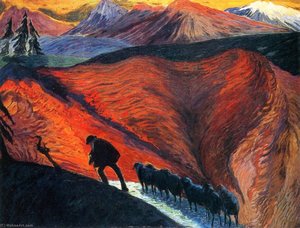
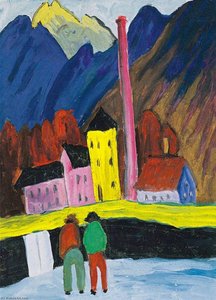
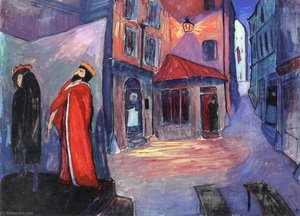
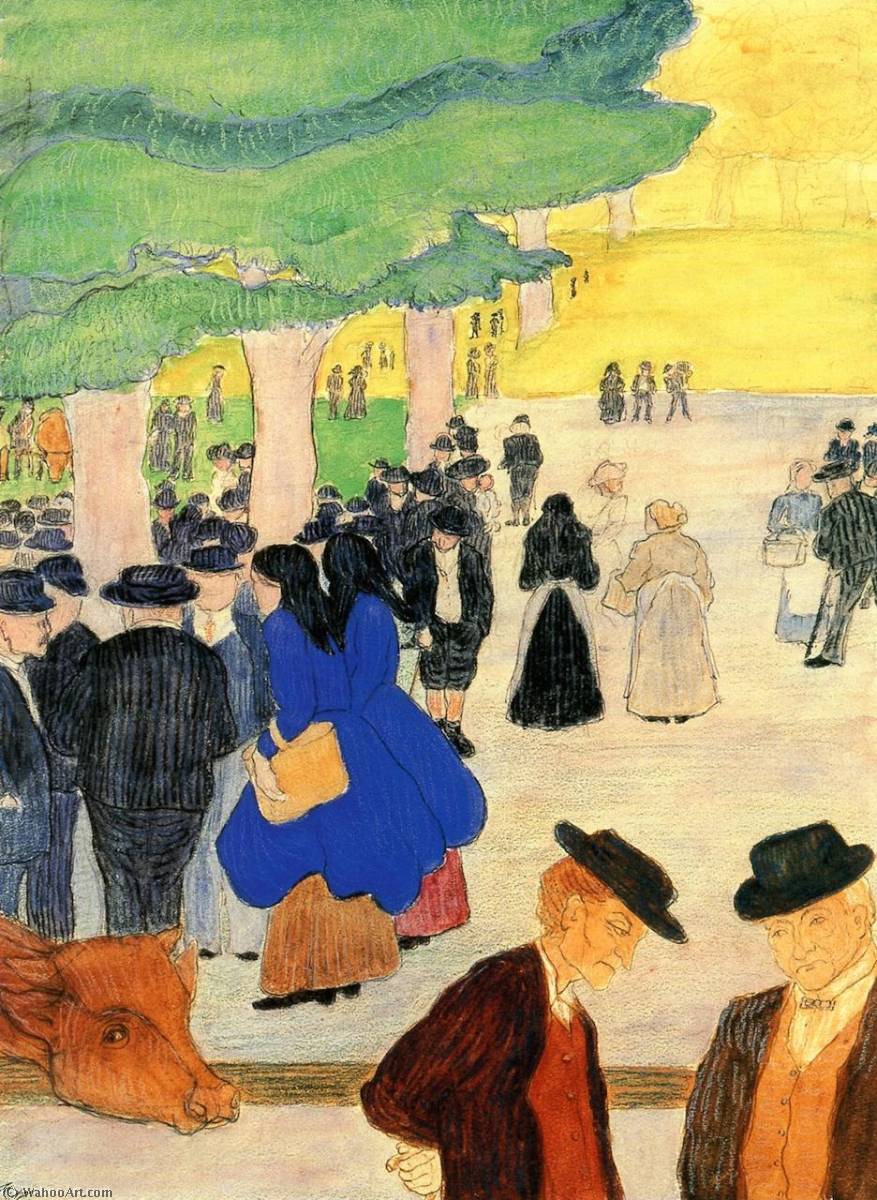
Livestock Market

 Read More
Hand Made Oil Reproduction
Hand-painted oil on canvas in your size and frame, made to order by our artists. ( Buy Print Buy Image)




































Pick from our preset sizes that match the artwork's original proportions.

You may enter your own dimensions to fit a specific frame or space. If your selected size does not match the original image's proportions, we will either crop the artwork or extend the painting with additional hand-painted elements. A digital mockup will be sent for your approval before production begins.
Please note that the on-screen preview does not reflect the actual cropping or extension. Only the mockup will accurately show the final composition.
While custom sizes are available, we recommend selecting a dimension from the predefined list to preserve the original proportions.
After order, ArtsDot.com team will email client for instructions and provide a mockup preview
Worldwide Delivery () in 3/4 weeks instead of standard 5 weeks. (16 August). No compromise on quality.

Free Worldwide Express Shipping

High-Quality Linen Canvas

Full Shipping Insurance

Customs Tax Refund Guarantee

True Color Matching Guarantee

60-Day Return Policy (Defects Only)

100% Money-Back Guarantee

Bulk Discount Offer
 Glass option is only available in size under 110 CM

Livestock Market
Reproduction Medium
Reproduction Size
-


Total Price
$ 263
Related Artworks

Artist Biography
A Pioneer of Expressionism: The Life and Art of Marianne von Werefkin
Marianne von Werefkin, born Marianna Wladimirowna Werewkina in Tula, Russia, in 1860, stands as a pivotal yet often overlooked figure in the genesis of Expressionism. Her journey was one of relentless artistic exploration, personal sacrifice, and unwavering dedication to her craft, unfolding against the backdrop of immense social and political change. Born into a family steeped in military tradition – her father, General Vladimir Werefkin, and her mother, Yelizaveta Daragan, an amateur painter herself – young Marianna displayed an early inclination towards art, beginning to paint at the age of fourteen following a period of illness. These initial works were not mere depictions of the visible world but rather visualizations of inner visions, hinting at the deeply personal and emotive core that would define her later artistic output. Formal training followed, most notably under the tutelage of Ilya Repin in St. Petersburg, where her talent was immediately recognized. Repin’s influence instilled within her a foundation in Russian Realism, a style she initially embraced, focusing on portraiture and scenes from contemporary life.From Realism to Radical Innovation
A dramatic turning point arrived in 1888 with a hunting accident that severely damaged Werefkin’s right hand. Forced to adapt and paint with her left, this physical challenge inadvertently propelled her towards new artistic horizons. While undergoing medical treatment in Germany, she encountered the burgeoning avant-garde movements of Western Europe, sparking a shift away from the constraints of Realism. This period marked the beginning of a profound stylistic evolution, as Werefkin began to explore Symbolist and ultimately Expressionist modes of expression. The influence of artists like Paul Gauguin and Louis Anquetin, with their emphasis on flattened forms and bold color, became increasingly apparent in her work. Simultaneously, she found resonance in the emotionally charged paintings of Edvard Munch, whose explorations of anxiety and alienation mirrored her own burgeoning artistic concerns. It was in Munich that Werefkin truly came into her own, becoming a central figure in a vibrant circle of artists including Wassily Kandinsky, Alexej von Jawlensky, Gabriele Münter, and Franz Marc – individuals who would collectively shape the landscape of early Expressionism. In 1909, she co-founded the Neue Künstlervereinigung München (NKVM), a group that served as a crucial precursor to the more famous Blue Rider collective.Themes of Humanity and Inner Worlds
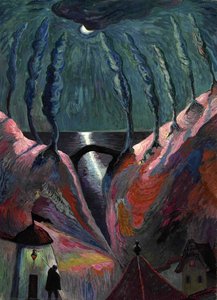
Werefkin’s artistic vision was characterized by an intense focus on the human condition, particularly the experiences of women. Her paintings often depict figures – frequently female – set within evocative landscapes, imbued with a sense of psychological depth and emotional resonance. Social commentary frequently underpinned her work, reflecting her keen awareness of societal inequalities and injustices. However, her explorations extended beyond the purely social; Werefkin was deeply interested in spirituality and the search for meaning in a rapidly changing world. This is evident in works like “Fantastic Night,” where dreamlike imagery and dramatic composition create an atmosphere of mystery and introspection. Her later style, developed during her years in Ascona, Switzerland (where she settled after the outbreak of World War I), became increasingly bold and simplified, characterized by vibrant colors and flattened forms. Even as financial difficulties plagued her final years, she continued to paint prolifically, producing striking landscapes and even venturing into poster design. Beyond her painting, Werefkin was a prolific writer, leaving behind a significant body of work in the form of “Letters to an Unknown Man,” offering invaluable insights into her artistic philosophy and personal struggles.A Lasting Legacy: Recognition and Influence
For many years, Marianne von Werefkin’s contributions were overshadowed by those of her male contemporaries. Her complex relationship with Alexej von Jawlensky – marked by both artistic collaboration and personal hardship – often relegated her to the role of a supporting figure in his narrative. However, in recent decades, there has been a growing recognition of her unique artistic voice and pivotal role in the development of Expressionism. She was not merely an associate of Kandinsky and Jawlensky; she was a driving force behind the movement’s intellectual and aesthetic innovations, a pioneering theorist who fostered artistic exchange through her influential salon in Munich. Her bold use of color, expressive brushwork, and unflinching exploration of human emotion have resonated with subsequent generations of artists exploring abstraction and emotional intensity. Werefkin's legacy extends beyond her paintings; she stands as an inspiring example of a woman artist who overcame significant obstacles to pursue her creative vision, paving the way for future generations of female painters to claim their rightful place in art history. Her work continues to captivate and challenge viewers, reminding us of the power of art to illuminate the complexities of the human experience.Key Works
- Self-Portrait in a Sailor's Blouse (1893): An early example showcasing her realist skills and strong personality.
- Fantastic Night (circa 1906-1907): A tempera painting that blends reality with fantasy, demonstrating her move towards Expressionism.
- The Living and the Dead (1915): Reflects themes of mortality and spirituality during a turbulent period.
- Meeting (1916): A work that exemplifies her simplified forms and vibrant color palette.
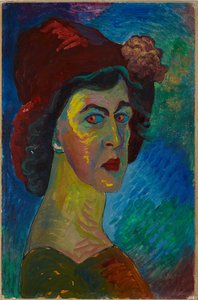
Marianne von Werefkin
1860 - 1938 , Russia
Quick Facts
- Artistic Movement Or Style: Expressionism, Symbolism
- Artists Or Movements Influenced By This Artist:
- Wassily Kandinsky
- Alexej von Jawlensky
- Early Expressionism
- Artists Who Influenced This Artist:
- Ilya Repin
- Paul Gauguin
- Edvard Munch
- Date Of Birth: September 10, 1860
- Date Of Death: February 6, 1938
- Full Name: Marianne von Werefkin
- Nationality: Russian-German-Swiss
- Notable Artworks:
- Self-Portrait in a Sailor's Blouse
- Fantastic Night
- The Living and the Dead
- Meeting
- Place Of Birth: Tula, Russia