 Preview
 Send
Send Share
Share
 Details

 Download
 Similars
 X-Ray
X-Ray Diaporama
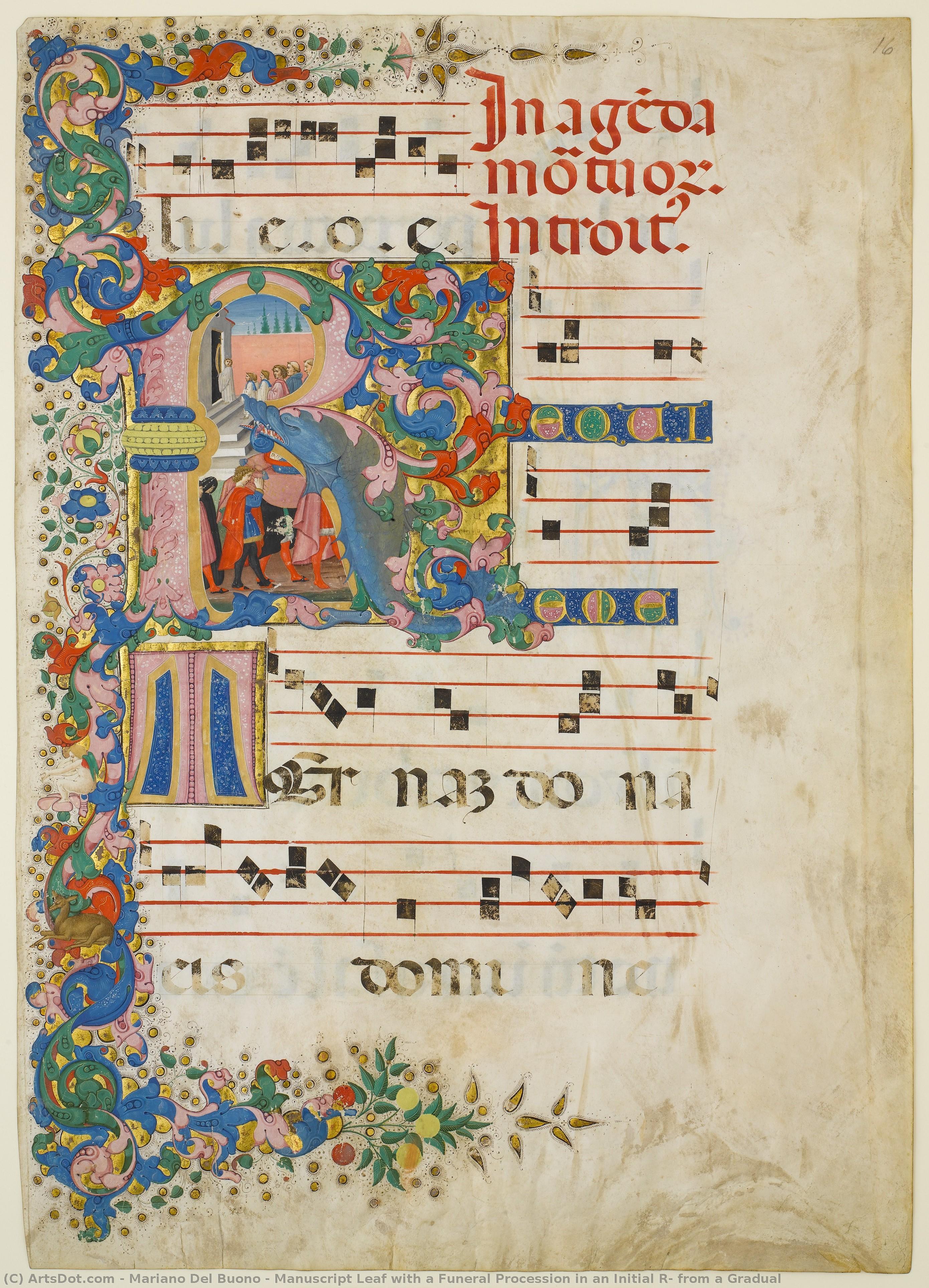
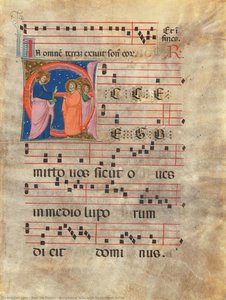
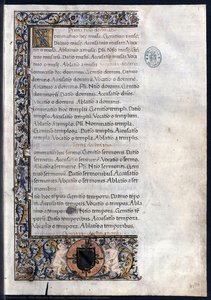
Manuscript Leaf with a Funeral Procession in an Initial R, from a Gradual
 Renaissance
 401
401 72.0cm x 51.0cm
 Read More
Purchase a high-resolution, enhanced digital image, far superior to the online preview.
Each file is meticulously prepared by our in-house specialists using advanced tools and expert manual retouching. We ensure every image has exceptional clarity, precise color accuracy, and fine detail.
The final file is delivered via email within 72 hours, optimized for immediate use in professional, editorial, and print environments. This is the same quality trusted by top-tier design studios, publishers, and galleries.
Digital Image
Download a high-resolution file for personal display, printing, and creative projects. ( Buy Print Buy Hand Made Painting)
Included in Every Digital Image Order
Expert Digital Delivery, Guaranteed
When you choose ArtsDot.com, you're not just getting an image - you're receiving a professionally enhanced digital artwork, crafted with precision and backed by a satisfaction guarantee. Here's everything that comes with your order, automatically:

Fast Email Delivery
Your high-resolution digital image file will be emailed to you within 72 hours of ordering - ready for immediate use.

AI-Enhanced Digital File
Your artwork is professionally optimized using advanced AI tools and manual editing, ensuring maximum detail, clarity, and color accuracy.

Free Lifetime Re-Delivery
Accidentally deleted or lost your file? No worries - we'll resend it to you anytime, free of charge.

No Import Fees - Ever
Enjoy your artwork instantly with zero customs, duties, or delivery fees - digital downloads are always tax-free.

Color Accuracy Guarantee
We ensure your digital image reflects the original colors as closely as possible using professional tools and color management.

60-Day Satisfaction Guarantee
If you're not satisfied with your digital image, we'll revise it or refund 100% within 60 days - no questions asked.

100% Money-Back Guarantee
Not satisfied? Get a full refund within 60 days of receiving your digital file - no questions asked.

Bulk Order Discounts
Buy 3 images, save 10% - Buy 5, save 15% - Buy 10+, save 20%. Great for creative projects, galleries, and agencies.
Collectible Description
Related Artworks
Artist Biography
The Illuminated World of Mariano Del Buono
Mariano del Buono, a name perhaps less instantly recognizable than some of his Renaissance contemporaries, nevertheless occupies a fascinating and important niche in the history of Florentine art. Born in Florence in 1433 and passing away in 1504, his life coincided with a period of immense artistic ferment—the High Renaissance was dawning, yet Del Buono’s work remains firmly rooted in the traditions of late Gothic illumination, skillfully adapted to embrace emerging humanist sensibilities. He wasn't primarily a painter of grand altarpieces or monumental frescoes; instead, he excelled as an illuminator of manuscripts, creating exquisitely detailed and vibrant scenes for both Christian and Jewish patrons—a testament to his versatility and the relatively tolerant cultural climate of Florence at the time.A Life Dedicated to the Page
Details regarding Del Buono’s early life are scarce, a common fate for artists working in the intimate sphere of manuscript illumination. Unlike fresco painters who often left behind extensive workshop records and public commissions, illuminators frequently worked on smaller-scale projects for private clients, leaving fewer traces in historical documentation. What we do know is gleaned from surviving works and contemporary accounts. He appears to have established a successful workshop, producing a considerable number of illuminated manuscripts throughout his career. His ability to cater to diverse religious communities—creating both Christian graduals and Jewish prayer books—suggests a pragmatic approach to patronage as well as a remarkable openness to different cultural traditions. This willingness to work across faiths is particularly noteworthy in an era often marked by religious tension, hinting at a degree of social acceptance and artistic freedom within Florence’s artisan guilds.Blending Gothic Tradition with Renaissance Flourishes
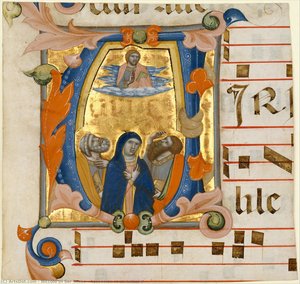
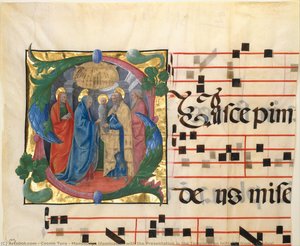
Del Buono's style represents a compelling synthesis of late Gothic aesthetics and the burgeoning innovations of the early Renaissance. His figures retain a certain elegance and decorative quality characteristic of the International Gothic style, evident in their flowing draperies and refined facial features. However, he also demonstrates an increasing awareness of Renaissance principles—a growing interest in naturalism, spatial depth, and anatomical accuracy. This is particularly visible in his depictions of landscapes and architectural settings, which exhibit a more realistic treatment of perspective and detail than earlier Gothic illuminations. His use of color is exceptionally rich and nuanced, employing vibrant hues and delicate shading to create luminous and captivating scenes. The Manuscript Leaf with a Funeral Procession, for example, showcases his mastery of composition and narrative detail, while the Manuscript Leaf with the Dedication of a Church reveals his ability to imbue religious subjects with emotional depth and symbolic meaning.Patronage and Artistic Legacy
The diversity of Del Buono’s clientele speaks volumes about his reputation as a skilled and reliable craftsman. He worked for prominent Florentine families, monastic communities, and members of the Jewish community, fulfilling commissions that ranged from elaborate liturgical books to personalized prayer manuscripts. This broad patronage base allowed him to maintain a thriving workshop and experiment with different artistic styles and techniques. While he didn’t produce works on the scale of Leonardo da Vinci or Michelangelo, his influence can be seen in the work of other Florentine illuminators who followed in his footsteps. His ability to seamlessly blend tradition and innovation helped to shape the development of manuscript illumination during a pivotal period in art history. His legacy lies not in groundbreaking stylistic departures but in the consistent quality and refined beauty of his creations, offering a glimpse into the artistic practices and religious diversity of Renaissance Florence.Rediscovering Del Buono: A Modern Appreciation
For centuries, Del Buono remained relatively obscure, overshadowed by more celebrated artists of the period. However, in recent decades, there has been a growing appreciation for his work, fueled by scholarly research and increased access to digitized manuscript collections. His illuminations are now recognized as important examples of Florentine Renaissance art, offering valuable insights into the cultural and religious landscape of 15th-century Italy.- His meticulous attention to detail and vibrant color palettes continue to captivate viewers.
- The subject matter—often depicting scenes from both Christian and Jewish traditions—highlights his openness and adaptability.
- His work serves as a reminder of the importance of manuscript illumination as an art form during the Renaissance, bridging the gap between medieval tradition and modern artistic expression.