 Preview
 Send
Send Share
Share
 Details

 Download
 Similars
 X-Ray
X-Ray Diaporama
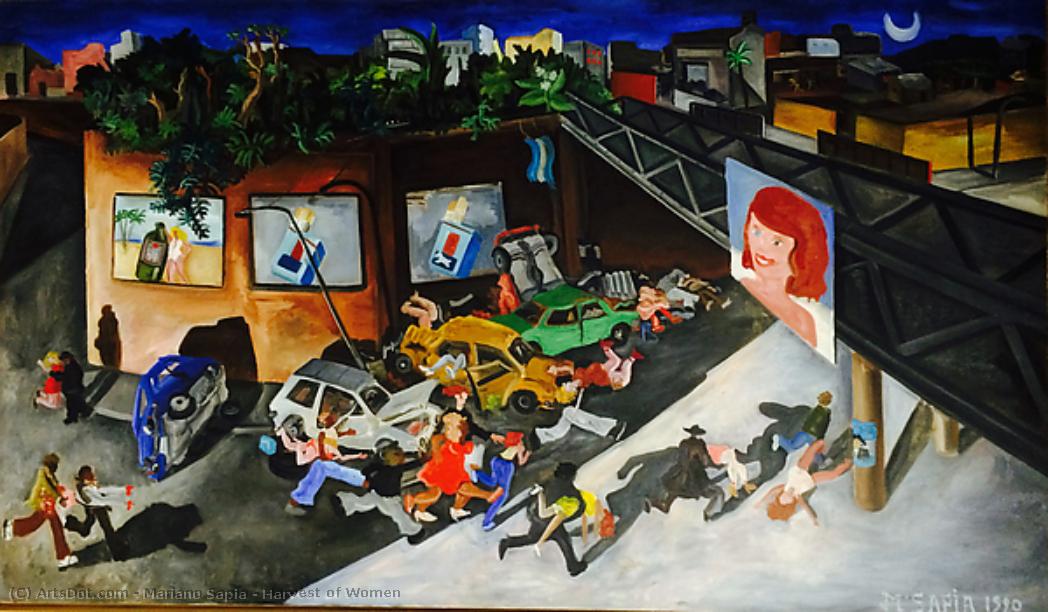
Harvest of Women
 1990
1990 117.0 x 200.0 cm
 Read More
Hand Made Oil Reproduction
Hand-painted oil on canvas in your size and frame, made to order by our artists. ( Buy Print Buy Image)




































Pick from our preset sizes that match the artwork's original proportions.

You may enter your own dimensions to fit a specific frame or space. If your selected size does not match the original image's proportions, we will either crop the artwork or extend the painting with additional hand-painted elements. A digital mockup will be sent for your approval before production begins.
Please note that the on-screen preview does not reflect the actual cropping or extension. Only the mockup will accurately show the final composition.
While custom sizes are available, we recommend selecting a dimension from the predefined list to preserve the original proportions.
After order, ArtsDot.com team will email client for instructions and provide a mockup preview
Worldwide Delivery () in 3/4 weeks instead of standard 5 weeks. (29 August). No compromise on quality.

Free Worldwide Express Shipping

High-Quality Linen Canvas

Full Shipping Insurance

Customs Tax Refund Guarantee

True Color Matching Guarantee

60-Day Return Policy (Defects Only)

100% Money-Back Guarantee

Bulk Discount Offer
 Glass option is only available in size under 110 CM

Harvest of Women
Reproduction Medium
Reproduction Size
-


Total Price
$ 438
Related Artworks










Artist Biography
A Dream Weaver of Buenos Aires: The World of Mariano Sapia
Mariano Sapia, born in the vibrant city of Buenos Aires, Argentina, in 1964, is a painter whose work exists in a captivating space between reality and reverie. He isn’t merely depicting scenes; he's constructing worlds—fragile, beautiful, and often imbued with a subtle undercurrent of melancholy. Sapia emerged during a period when Latin American art was grappling with its identity post-dictatorship, seeking new avenues for expression beyond overt political statements. While acknowledging the social context, Sapia chose to explore the internal landscapes of human experience, focusing on urban life, female figures, and the power of symbolic imagery. His paintings aren’t grand narratives but intimate glimpses into moments suspended in time, inviting viewers to project their own emotions and interpretations onto the canvas.Early Influences and Artistic Development
Sapia's artistic journey wasn’t one of immediate recognition. He honed his skills through dedicated study and observation, absorbing influences from a diverse range of sources. While he acknowledges the impact of European masters like Surrealists René Magritte and Max Ernst—artists who similarly blurred the lines between dream and waking life—his work possesses a distinctly South American sensibility. The bustling streets of Buenos Aires, with their unique blend of European architecture and Latin passion, became his primary source of inspiration. Early works often featured solitary figures navigating anonymous cityscapes, rendered in muted tones that evoked a sense of isolation and longing. He quickly developed a mastery of oil painting, employing meticulous detail and subtle gradations of color to create an atmosphere of ethereal beauty. His technique wasn’t about photographic realism but rather about capturing the *feeling* of a place or moment—the way light filters through rain-soaked streets, the weight of unspoken emotions in a crowded room.Recurring Themes and Symbolic Language
Several key themes consistently appear throughout Sapia's oeuvre. The female figure is central to his work, often depicted as enigmatic and powerful presences—sometimes vulnerable, sometimes defiant, always captivating. These women aren’t simply portraits; they are archetypes, embodying a range of emotions and experiences. Urban landscapes serve as both backdrop and character, reflecting the complexities and contradictions of modern life. Sapia's paintings are rich in symbolism, drawing on personal memories, literary references, and cultural motifs. Recurring elements like birds, flowers, and architectural fragments add layers of meaning to his compositions, inviting viewers to decipher their hidden narratives. “Harvest of Women” (1990), perhaps his most iconic work—and now part of the collection at The Metropolitan Museum of Art in New York—exemplifies this symbolic depth. The painting depicts a group of women amidst a field of wheat, evoking themes of fertility, abundance, and the cyclical nature of life.Collaborations and Recognition
Sapia’s artistic reach extends beyond the canvas. He has collaborated with musicians, most notably Beto Vazquez Infinity, creating artwork for their album “Beyond Space Without Limits.” These collaborations demonstrate his ability to translate his visual language into other mediums, further expanding his creative horizons. His work has been exhibited in numerous galleries and museums throughout Argentina and internationally, gaining recognition from critics and collectors alike. While he maintains a relatively low profile, preferring to let his paintings speak for themselves, Sapia’s influence on contemporary Argentine art is undeniable. He represents a generation of artists who sought to move beyond traditional boundaries, embracing personal expression and exploring the complexities of the human condition. ArtNexus magazine has featured him in multiple articles, highlighting his unique vision and artistic legacy.Historical Significance and Lasting Impact
Mariano Sapia’s contribution to contemporary art lies not in making bold statements but in creating evocative experiences. He doesn't offer answers; he poses questions—about identity, memory, and the nature of reality. His paintings are a testament to the power of imagination, reminding us that beauty can be found even in the most unexpected places. In an era dominated by digital imagery and instant gratification, Sapia’s meticulous technique and subtle symbolism stand as a powerful counterpoint—a call for slow contemplation and emotional connection. He has secured his place as a significant figure in South American art, inspiring a new generation of artists to explore their own inner worlds and translate them onto the canvas. His work continues to resonate with audiences worldwide, offering a glimpse into the dreamlike landscapes of a truly unique artistic vision.
mariano sapia
1964 - , Argentina
Quick Facts
- Artistic Movement Or Style: Dreamlike painting
- Date Of Birth: 1964
- Full Name: Mariano Sapia
- Nationality: Argentine
- Notable Artworks: ['Harvest of Women']
- Place Of Birth: Buenos Aires, Argentina