

 Preview
 Send
Send Share
Share
 Details

 Download
 Similars
 X-Ray
X-Ray Diaporama
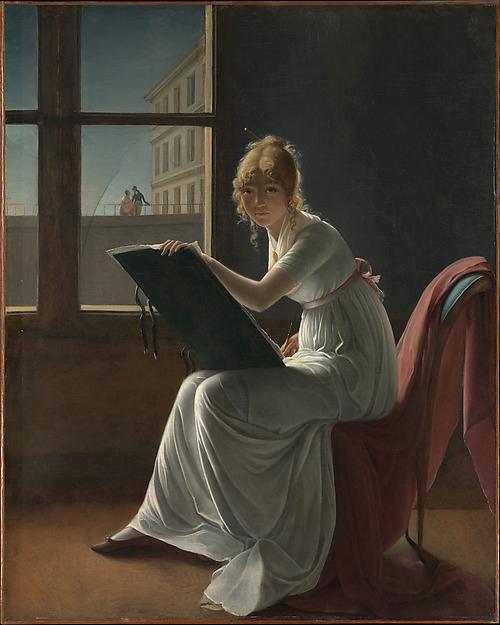
Charlotte du Val d'Ognes (died 1868)
 1801
1801 161.0 x 129.0 cm
 Read More
Purchase a high-resolution, enhanced digital image, far superior to the online preview.
Each file is meticulously prepared by our in-house specialists using advanced tools and expert manual retouching. We ensure every image has exceptional clarity, precise color accuracy, and fine detail.
The final file is delivered via email within 72 hours, optimized for immediate use in professional, editorial, and print environments. This is the same quality trusted by top-tier design studios, publishers, and galleries.
Digital Image
Download a high-resolution file for personal display, printing, and creative projects. ( Buy Print Buy Hand Made Painting)
Included in Every Digital Image Order
Expert Digital Delivery, Guaranteed
When you choose ArtsDot.com, you're not just getting an image - you're receiving a professionally enhanced digital artwork, crafted with precision and backed by a satisfaction guarantee. Here's everything that comes with your order, automatically:

Fast Email Delivery
Your high-resolution digital image file will be emailed to you within 72 hours of ordering - ready for immediate use.

AI-Enhanced Digital File
Your artwork is professionally optimized using advanced AI tools and manual editing, ensuring maximum detail, clarity, and color accuracy.

Free Lifetime Re-Delivery
Accidentally deleted or lost your file? No worries - we'll resend it to you anytime, free of charge.

No Import Fees - Ever
Enjoy your artwork instantly with zero customs, duties, or delivery fees - digital downloads are always tax-free.

Color Accuracy Guarantee
We ensure your digital image reflects the original colors as closely as possible using professional tools and color management.

60-Day Satisfaction Guarantee
If you're not satisfied with your digital image, we'll revise it or refund 100% within 60 days - no questions asked.

100% Money-Back Guarantee
Not satisfied? Get a full refund within 60 days of receiving your digital file - no questions asked.

Bulk Order Discounts
Buy 3 images, save 10% - Buy 5, save 15% - Buy 10+, save 20%. Great for creative projects, galleries, and agencies.
Related Artworks










Artist Biography
Caspar David Friedrich: A Soulscape in Shadow and Light
Caspar David Friedrich, a name synonymous with the Romantic movement’s most profound explorations of nature and the human spirit, remains an artist whose work continues to resonate deeply within us. Born on September 5th, 1774, in Greifswald, a small town on the Baltic coast of Germany, Friedrich's life was marked by both artistic brilliance and personal tragedy – experiences that inextricably shaped his vision and ultimately defined his enduring legacy.
His early years were shadowed by profound loss. The deaths of his mother and brother at a young age instilled in him a sense of melancholy and an acute awareness of mortality, themes that would become central to his artistic output. This sensitivity, coupled with a deep reverence for the natural world – fostered during his childhood explorations of the Baltic coast – laid the foundation for a unique approach to landscape painting. Initially trained as a printmaker, Friedrich’s talent quickly shifted towards capturing the sublime beauty and spiritual weight of nature. He honed his skills at the Copenhagen Academy of Fine Arts, immersing himself in the works of Dutch masters like Jacob van Ruisdael and Jan Vermeer, whose atmospheric techniques profoundly influenced his own style.
The Language of Landscape
Friedrich’s artistic language is instantly recognizable – a masterful blend of meticulous detail and evocative atmosphere. He eschewed the conventional heroic landscapes favored by earlier generations, instead focusing on solitary figures dwarfed by vast, brooding vistas. These weren't scenes of triumphant conquest but rather meditations on human insignificance in the face of nature’s immensity. His paintings are saturated with a sense of mystery and introspection, inviting viewers to contemplate their own place within the universe.
Key elements of his style include the use of dramatic lighting – often employing a cool, diffused light that casts long shadows and creates an ethereal quality – and the incorporation of symbolic motifs. Mountains, forests, lakes, and ruins frequently appear in his works, each imbued with layers of meaning. The solitary figure, often depicted walking or contemplating, represents humanity’s yearning for connection with something greater than itself. His meticulous attention to detail, particularly in rendering textures like bark, stone, and water, adds a remarkable sense of realism to these intensely emotional scenes.
Themes of Spirituality and Mortality
Friedrich's work is profoundly spiritual, though he rarely depicted explicitly religious subjects. Instead, he used the landscape as a vehicle for exploring themes of faith, mortality, and the relationship between humanity and God. The “Cross in the Mountains” (1808-1809), perhaps his most famous painting, exemplifies this approach. The solitary figure contemplating the cross against a dramatic mountain backdrop isn’t a depiction of Christian martyrdom but rather an allegory for human existence – a moment of quiet reflection amidst the vastness and indifference of nature.
His fascination with ruins—often ancient castles or crumbling churches—served as potent symbols of decay, loss, and the transience of earthly power. These remnants of the past offered Friedrich a poignant reminder of humanity’s fleeting existence in contrast to the enduring strength of nature. He frequently incorporated these elements into his landscapes, creating scenes that evoke both beauty and melancholy.
A Late Recognition and Enduring Influence
Despite achieving considerable success during his lifetime, Friedrich's work was largely overlooked by the public following his death in 1840. It wasn’t until the late 19th century, with the rise of Symbolism, that his paintings were rediscovered and celebrated for their emotional depth and artistic innovation.
Artists like Arnold Böcklin and Edvard Munch drew heavily from Friedrich's evocative landscapes, further cementing his place as a pivotal figure in the development of modern art. Today, Caspar David Friedrich’s work continues to captivate audiences worldwide, offering a timeless meditation on the beauty, mystery, and profound significance of the natural world – and our own place within it.
Key Works
- The Abbey in the Oakwood (1808)
- Tree Tracing Clouds (1810)
- Wanderer Above the Sea of Fog (1818)
- Monk by the Sea (1838)
- The Haystacks (1827)
His paintings are held in major museums worldwide, including the Kunsthalle Hamburg, the Neue Nationalgalerie in Berlin, and the Metropolitan Museum of Art in New York.

marie denise villers
1774 - 1821
Quick Facts
- Artistic Movement Or Style: Romanticism
- Artists Or Movements Influenced By This Artist:
- Symbolism
- Romanticism
- Artists Who Influenced This Artist:
- J.M.W. Turner
- Joshua Reynolds
- Date Of Birth: September 5, 1774
- Date Of Death: May 7, 1840
- Full Name: Caspar David Friedrich
- Nationality: German
- Notable Artworks:
- Wanderer above the Sea of Fog
- The Monk by the Sea
- Abbey in the Oakwood
- Place Of Birth: Greifswald, Germany

