

 Preview
 Send
Send Share
Share
 Details

 Download
 Similars
 X-Ray
X-Ray Diaporama
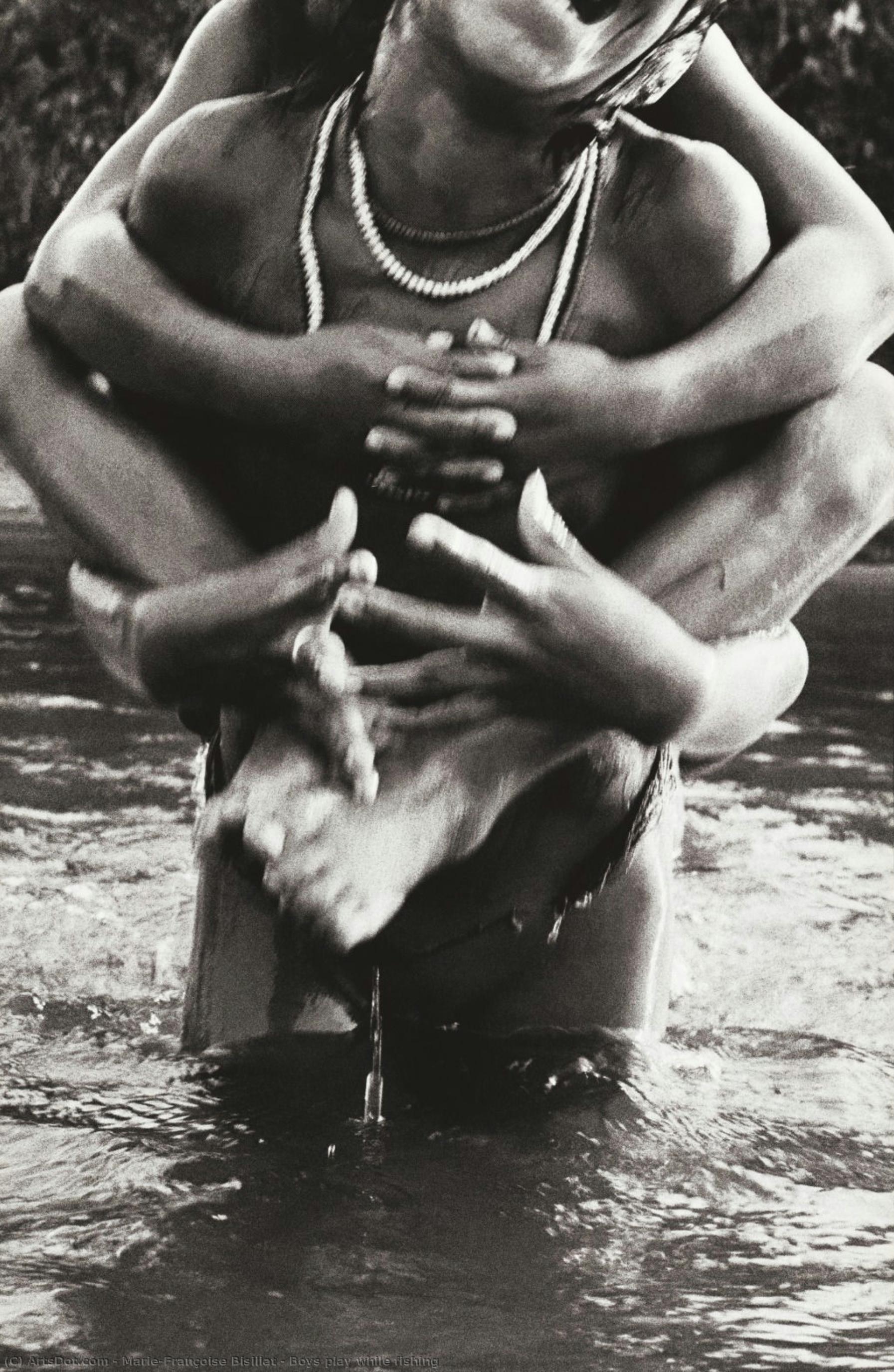
Boys play while fishing


 Read More
Purchase a high-resolution, enhanced digital image, far superior to the online preview.
Each file is meticulously prepared by our in-house specialists using advanced tools and expert manual retouching. We ensure every image has exceptional clarity, precise color accuracy, and fine detail.
The final file is delivered via email within 72 hours, optimized for immediate use in professional, editorial, and print environments. This is the same quality trusted by top-tier design studios, publishers, and galleries.
Digital Image
Download a high-resolution file for personal display, printing, and creative projects. ( Buy Print Buy Hand Made Painting)
Included in Every Digital Image Order
Expert Digital Delivery, Guaranteed
When you choose ArtsDot.com, you're not just getting an image - you're receiving a professionally enhanced digital artwork, crafted with precision and backed by a satisfaction guarantee. Here's everything that comes with your order, automatically:

Fast Email Delivery
Your high-resolution digital image file will be emailed to you within 72 hours of ordering - ready for immediate use.

AI-Enhanced Digital File
Your artwork is professionally optimized using advanced AI tools and manual editing, ensuring maximum detail, clarity, and color accuracy.

Free Lifetime Re-Delivery
Accidentally deleted or lost your file? No worries - we'll resend it to you anytime, free of charge.

No Import Fees - Ever
Enjoy your artwork instantly with zero customs, duties, or delivery fees - digital downloads are always tax-free.

Color Accuracy Guarantee
We ensure your digital image reflects the original colors as closely as possible using professional tools and color management.

60-Day Satisfaction Guarantee
If you're not satisfied with your digital image, we'll revise it or refund 100% within 60 days - no questions asked.

100% Money-Back Guarantee
Not satisfied? Get a full refund within 60 days of receiving your digital file - no questions asked.

Bulk Order Discounts
Buy 3 images, save 10% - Buy 5, save 15% - Buy 10+, save 20%. Great for creative projects, galleries, and agencies.
Related Artworks








Artist Biography
Frank Auerbach: A Life Painted in Thick Emotion
Born in Berlin in 1931, Frank Auerbach’s life was profoundly shaped by the tumultuous events of the early 20th century. His Jewish heritage led to his family's escape from Nazi Germany in 1939, a harrowing journey that instilled within him a deep sense of displacement and resilience. This experience, coupled with the loss of his parents during World War II, formed the bedrock of his artistic vision – an intensely personal exploration of grief, memory, and the human condition. Auerbach’s early years were spent at a progressive boarding school in Shropshire, a haven for Jewish refugee children, fostering a sense of community amidst uncertainty. His formal art training began at St Martin's School of Art in London, where he found mentorship with David Bomberg, a pivotal figure who encouraged him to develop his own distinctive style.
Auerbach’s artistic journey was initially met with skepticism. His work, characterized by its extraordinarily thick application of paint – often applied directly from the tube with minimal blending – defied conventional notions of painting. Critics initially dismissed it as bordering on sculpture, a reaction rooted in the sheer physicality and tactile quality of his canvases. However, figures like David Sylvester recognized the profound emotional depth beneath the surface, arguing that Auerbach’s paintings were not merely representations but expressions of raw feeling, imbued with a unique psychological intensity. This recognition was further solidified by Kossoff, who described Auerbach's work as “painterly images, not sculptural ones,” emphasizing their inherent painting qualities and their ability to evoke powerful emotional responses.
Auerbach’s studio in London became his sanctuary, a space where he meticulously developed his signature technique. He relied on a small group of recurring models – his wife Julia, Juliet Yardley Mills ('J.Y.M.'), and Stella West ('E.O.W.') – whose presence provided the foundation for his emotionally charged portraits and figure studies. These figures were not rendered with photographic accuracy but rather as vessels for expressing Auerbach’s inner world. The limited palette—primarily ochres, reds, and blacks—contributed to the paintings' somber mood and heightened their expressive power. He rarely ventured far from London, preferring the familiarity of his surroundings and the comfort of his established routines.
The School of London and Emotional Intensity
Auerbach’s work is inextricably linked to the “School of London,” a group of British artists who emerged in the mid-20th century. While distinct from the more abstract tendencies of some contemporaries, Auerbach shared with figures like Leon Kossoff and Peter Blake a commitment to depicting urban life and exploring themes of alienation and social consciousness. However, unlike many of his peers, Auerbach’s focus remained firmly rooted in personal experience and emotional expression. His paintings are not concerned with objective representation but rather with conveying the subjective realities of grief, loneliness, and the struggle for identity.
The influence of David Bomberg is particularly evident in Auerbach's early work. Bomberg’s emphasis on direct application of paint and his willingness to embrace expressive brushwork paved the way for Auerbach’s distinctive style. However, Auerbach ultimately forged his own path, developing a technique that was both intensely personal and profoundly moving. His paintings are characterized by their raw emotionality, their tactile quality, and their ability to evoke a sense of vulnerability and empathy.
Recurring Motifs and Symbolic Language
Despite the seemingly simple subject matter—portraits of his models, often rendered in intimate close-ups—Auerbach’s paintings are rich in symbolic meaning. The recurring presence of his models – Julia, J.Y.M., and Stella – represents not just individuals but also facets of Auerbach's own psyche. Their faces, often partially obscured or distorted, become vehicles for expressing his deepest emotions. The use of dark colors—ochres, reds, and blacks—evokes a sense of melancholy and loss, reflecting the artist’s personal history and his broader engagement with themes of mortality and remembrance.
Furthermore, Auerbach's paintings are often imbued with a sense of spatial ambiguity. The figures seem to emerge from a hazy, undefined space, suggesting a state of disorientation or emotional turmoil. This deliberate blurring of boundaries contributes to the paintings’ unsettling yet captivating quality, inviting viewers to contemplate the complexities of human experience.
Legacy and Recognition
Despite initial criticism, Frank Auerbach's work gradually gained recognition as a significant contribution to British art. His retrospective at the Hayward Gallery in 1978 marked a turning point in his career, bringing him widespread acclaim and establishing him as one of the leading figures of the School of London. His paintings are now held in major collections around the world, including the Tate Collection and the British Museum.
Auerbach’s legacy extends beyond his individual achievements. His willingness to embrace emotional intensity and to reject conventional artistic norms paved the way for subsequent generations of artists who sought to explore the subjective realities of human experience. His paintings continue to resonate with viewers today, offering a powerful testament to the enduring power of art to express the deepest emotions of the human heart.

marie-françoise bisiliat
1931 - 2014 , France
Quick Facts
- Artistic Movement Or Style: Op art
- Artists Or Movements Influenced By This Artist:
- Minimalism
- Geometric Abstraction
- Artists Who Influenced This Artist:
- Jackson Pollock
- Yves Klein
- Date Of Birth: 24 April 1931
- Full Name: Bridget Louise Riley
- Nationality: British
- Notable Artworks:
- Conversation
- The Red Lines
- Black and White
- Prismatic
- Place Of Birth: Norwood, London

