 Preview
 Send
Send Share
Share
 Details

 Download
 Similars
 X-Ray
X-Ray Diaporama
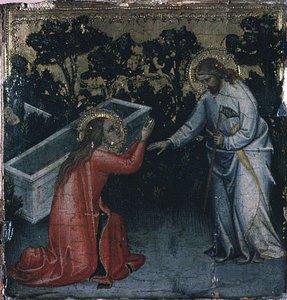
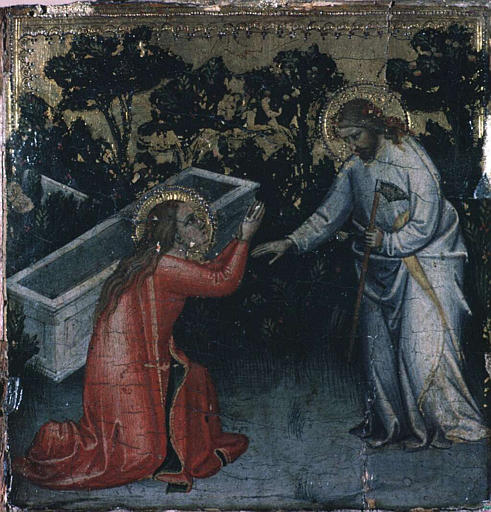
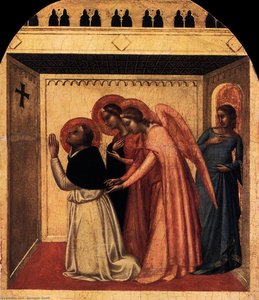
NOLI ME TANGERE
 Read More
Hand Made Oil Reproduction
Hand-painted oil on canvas in your size and frame, made to order by our artists. ( Buy Print Buy Image)




































Pick from our preset sizes that match the artwork's original proportions.

You may enter your own dimensions to fit a specific frame or space. If your selected size does not match the original image's proportions, we will either crop the artwork or extend the painting with additional hand-painted elements. A digital mockup will be sent for your approval before production begins.
Please note that the on-screen preview does not reflect the actual cropping or extension. Only the mockup will accurately show the final composition.
While custom sizes are available, we recommend selecting a dimension from the predefined list to preserve the original proportions.
After order, ArtsDot.com team will email client for instructions and provide a mockup preview
Worldwide Delivery () in 3/4 weeks instead of standard 5 weeks. (21 August). No compromise on quality.

Free Worldwide Express Shipping

High-Quality Linen Canvas

Full Shipping Insurance

Customs Tax Refund Guarantee

True Color Matching Guarantee

60-Day Return Policy (Defects Only)

100% Money-Back Guarantee

Bulk Discount Offer
 Glass option is only available in size under 110 CM

NOLI ME TANGERE
Reproduction Medium
Reproduction Size
-


Total Price
$ 288
Related Artworks





Artist Biography
A Florentine Visionary of the Gothic Twilight
Mariotto di Nardo, a name perhaps less resonant than those of his Renaissance successors, nevertheless occupies a crucial position in the transition between the elegant world of late Gothic painting and the burgeoning naturalism that would define the 15th century. Born in Florence around 1365, Mariotto flourished during a period of immense artistic ferment, working amidst the grandeur of the Duomo, the devotional spaces of Santa Maria Maggiore, and the civic pride embodied by the Orsanmichele. His career, spanning from approximately 1394 to 1424, reveals an artist deeply rooted in tradition yet subtly anticipating the innovations that lay ahead. He wasn’t merely a follower of established styles; he was a skilled interpreter and adapter, infusing his work with a distinctive sensibility that captivated his contemporaries and continues to intrigue art historians today. While biographical details remain scarce—the personal life of Mariotto di Nardo remains largely shrouded in mystery—his artistic legacy speaks volumes about the evolving aesthetic landscape of Florence.Family, Apprenticeship, and Early Influences
Mariotto’s lineage placed him firmly within a family of artisans. He was the grandson of Andrea di Cione, better known as Orcagna, a celebrated sculptor and painter whose monumental works graced both Florence and Pisa. His father, Nardo di Cione, served initially as a stonecutter in Siena and Volterra before establishing himself as a painter, becoming Mariotto’s first teacher. This familial connection to artistic craftsmanship undoubtedly shaped the young Mariotto's early development, instilling in him a respect for technical skill and a keen eye for detail. The influence of Orcagna’s dramatic compositions and refined draftsmanship is subtly discernible in Mariotto’s work, though he would forge his own path. Beyond his immediate family, Mariotto absorbed the stylistic currents prevalent in Florence during his formative years. He demonstrated clear affinities with Spinello Aretino, whose dynamic figures and vibrant color palettes left an indelible mark on his early paintings, as well as Niccolò di Pietro Gerini, another prominent Florentine artist of the time. Later in his career, a gentle influence from Lorenzo Monaco can be observed, particularly in the increased elegance and refinement of his figures.A Prolific Workshop and Diverse Commissions
Mariotto di Nardo quickly established himself as a highly sought-after painter in Florence. Documents reveal a steady stream of commissions, attesting to his popularity among both public institutions and private patrons. He was actively involved in decorating the Florence Cathedral, though much of this work has unfortunately been lost or obscured over time. His altarpieces were particularly prized, with notable examples created for the chapel of the Madonna della Neve in 1398 and for the cathedral itself around 1402-1404. These commissions demonstrate his mastery of panel painting techniques and his ability to create devotional images that resonated deeply with contemporary audiences. Beyond altarpieces, Mariotto’s versatility extended to fresco decoration, as evidenced by his work at Santa Maria Maggiore and Orsanmichele—two of Florence's most important churches. He also undertook commissions for illuminated manuscripts, a testament to his skill in delicate draftsmanship and refined color application. His workshop was evidently busy and successful; he was a member of both the Physicians and Apothecaries Guild and the Company of Saint Luke, indicating his standing within Florentine society.Stylistic Innovations and Lasting Legacy
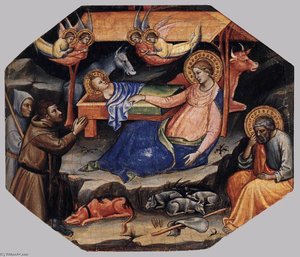
While firmly rooted in the Gothic tradition, Mariotto di Nardo wasn’t simply a replicator of established forms. He introduced subtle yet significant innovations that foreshadowed the artistic developments of the early Renaissance. One notable characteristic of his work is his experimentation with oblique perspective—a technique that created a sense of depth and spatial recession without fully embracing the mathematical rigor of linear perspective. His figures, while still possessing a degree of Gothic elongation, exhibit a newfound nervous energy and emotional intensity. He also favored deserted, rocky landscapes as backdrops for his compositions, adding a dramatic and evocative quality to his scenes. As his career progressed, Mariotto’s style evolved, becoming more refined and elegant. He moved away from the bold, powerful figures of his earlier works towards lighter, more graceful forms, influenced by Lorenzo Monaco. Despite later criticisms regarding a perceived repetitiveness in his compositions, Mariotto di Nardo left an enduring mark on Florentine painting. His work represents a crucial link between the Gothic past and the Renaissance future, demonstrating a willingness to experiment with new techniques and expressive possibilities while remaining deeply connected to the artistic traditions of his time. He introduced novel gothic techniques that would influence artists for years to come.Surviving Masterpieces
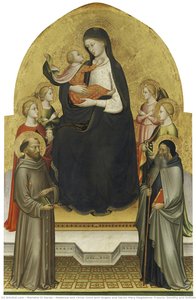
Fortunately, a substantial body of work attributed to Mariotto di Nardo has survived, allowing us to appreciate the breadth and depth of his talent. Key examples include the altarpiece for the church of S. Donnino at Villamagna, still in situ, showcasing his early mastery of composition and color; the triptych of the Assumption of the Virgin at Fiesole’s Fontelucente Church, a testament to his skill in creating dynamic and emotionally resonant scenes; and several polyptychs housed in Florentine museums, including those from the convent of S. Gaggio and the Certosa del Galluzzo. These works, along with numerous other paintings and fragments, offer invaluable insights into the artistic sensibilities of a pivotal moment in Italian art history—a time when tradition and innovation converged to shape the course of Western painting. His legacy continues to inspire awe and admiration among those who appreciate the beauty and complexity of Florentine Gothic art.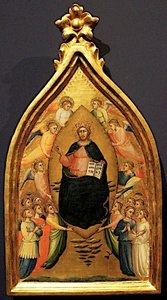
Mariotto di Nardo
1365 - 1424 , Italy
Quick Facts
- Artistic Movement Or Style: Florentine Gothic
- Artists Or Movements Influenced By This Artist: ['Lorenzo Monaco']
- Artists Who Influenced This Artist:
- Spinello Aretino
- Niccolo di Pietro Gerini
- Date Of Birth: 1365
- Date Of Death: 1424
- Full Name: Mariotto di Nardo
- Nationality: Italian
- Notable Artworks:
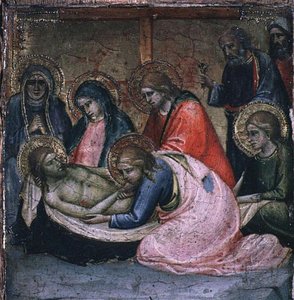
- Deploration
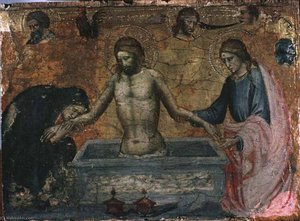
- Christ au Sepulcre
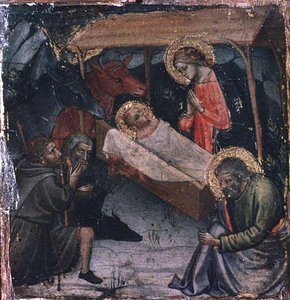
- Scenes from Life of Christ
- Place Of Birth: Florence, Italy