

 Preview
 Send
Send Share
Share
 Details

 Download
 Similars
 X-Ray
X-Ray Diaporama
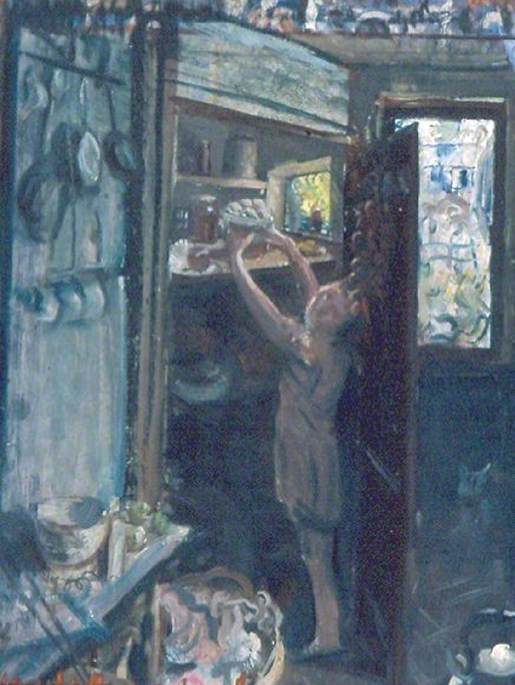
Molly in the Pantry (preparatory study)
 1932
1932 51.0 x 39.0 cm
 Reading Museum - Town Hall
 Read More
Purchase a high-resolution, enhanced digital image, far superior to the online preview.
Each file is meticulously prepared by our in-house specialists using advanced tools and expert manual retouching. We ensure every image has exceptional clarity, precise color accuracy, and fine detail.
The final file is delivered via email within 72 hours, optimized for immediate use in professional, editorial, and print environments. This is the same quality trusted by top-tier design studios, publishers, and galleries.
Digital Image
Download a high-resolution file for personal display, printing, and creative projects. ( Buy Print Buy Hand Made Painting)
Included in Every Digital Image Order
Expert Digital Delivery, Guaranteed
When you choose ArtsDot.com, you're not just getting an image - you're receiving a professionally enhanced digital artwork, crafted with precision and backed by a satisfaction guarantee. Here's everything that comes with your order, automatically:

Fast Email Delivery
Your high-resolution digital image file will be emailed to you within 72 hours of ordering - ready for immediate use.

AI-Enhanced Digital File
Your artwork is professionally optimized using advanced AI tools and manual editing, ensuring maximum detail, clarity, and color accuracy.

Free Lifetime Re-Delivery
Accidentally deleted or lost your file? No worries - we'll resend it to you anytime, free of charge.

No Import Fees - Ever
Enjoy your artwork instantly with zero customs, duties, or delivery fees - digital downloads are always tax-free.

Color Accuracy Guarantee
We ensure your digital image reflects the original colors as closely as possible using professional tools and color management.

60-Day Satisfaction Guarantee
If you're not satisfied with your digital image, we'll revise it or refund 100% within 60 days - no questions asked.

100% Money-Back Guarantee
Not satisfied? Get a full refund within 60 days of receiving your digital file - no questions asked.

Bulk Order Discounts
Buy 3 images, save 10% - Buy 5, save 15% - Buy 10+, save 20%. Great for creative projects, galleries, and agencies.
Related Artworks
Artist Biography
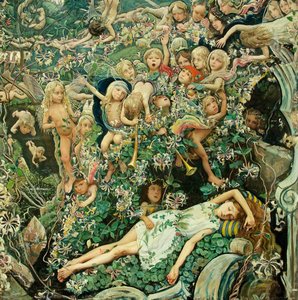
Mark Lancelot Symons: A Visionary of Faith and Modernity
Mark Lancelot Symons (1887-1935) remains a compelling, if somewhat enigmatic, figure in British art. Born into a devout Catholic family steeped in artistic tradition – his father, William Christian Symons, was a decorative designer known for his work at Westminster Cathedral – Symons’ life and career were shaped by a complex interplay of faith, artistic ambition, and a willingness to challenge conventional perceptions. He wasn't merely a painter; he was a communicator, attempting to bridge the gap between religious belief and contemporary experience through a uniquely expressive and often unsettling visual language.
Symons’ early life provided him with an exceptional foundation. Educated at a private school in Penzance and later at the Slade School of Fine Art, he initially pursued a path towards priesthood, exhibiting a rigorous dedication to his faith. However, health issues intervened, curtailing this ambition and leading him instead to embrace painting as a means of expressing his spiritual convictions. This shift was significantly influenced by his wife, Constance Gerber, who recognized his artistic potential and encouraged him to pursue it with renewed vigor. His family’s connection to the Catholic Church – including his brother Thomas Symons becoming a monk at Downside Abbey – instilled in him a deep understanding of religious iconography and symbolism, which would profoundly inform his later work.
The Early Years: Pre-Raphaelite Echoes and Religious Devotion
Symons’ artistic development during the 1920s and early 1930s is characterized by a fascinating synthesis of influences. He was deeply affected by the Pre-Raphaelites, particularly their emphasis on luminous color, detailed rendering, and evocative storytelling. This influence is readily apparent in his early works, such as ‘Molly in the Pantry’ (1927) and ‘Baby Ann’s Breakfast’ (1930), both of which depict domestic scenes imbued with a dreamlike quality and a palpable sense of spirituality. These paintings are not simply representations of everyday life; they are carefully constructed allegories, exploring themes of innocence, faith, and the mysteries of existence.
However, Symons’ artistic vision quickly evolved beyond mere imitation of Pre-Raphaelite aesthetics. He began to incorporate elements of Expressionism, utilizing bold brushstrokes, distorted perspectives, and a deliberately unsettling palette to convey emotional intensity and psychological depth. This shift is particularly evident in ‘The Last Supper (preparatory study)’ (1933), a powerful depiction of the crucifixion that eschews traditional representations of suffering for a claustrophobic and emotionally charged portrayal of the event. The painting’s muted colors, dramatic lighting, and unsettling composition create an atmosphere of profound unease, forcing the viewer to confront the brutal reality of Christ's sacrifice.
Westminster Cathedral and Controversy
Symons’ most significant commission came in 1930 when he was tasked with decorating a chapel within Westminster Cathedral. This project provided him with an unprecedented opportunity to showcase his artistic talents on a grand scale, but it also ignited considerable controversy. His mosaics, particularly the ‘Veronica’ panel depicting Mary presenting Christ's wounds, were widely criticized for their unconventional style and perceived irreverence. Critics accused Symons of distorting religious iconography and sacrificing spiritual depth in favor of stylistic innovation.
The controversy surrounding his Westminster Cathedral work significantly shaped Symons’ career trajectory. While he continued to exhibit at the Royal Academy and receive commissions, his reputation was tarnished by the negative publicity generated by the mosaics. Despite this setback, Symons remained steadfast in his artistic vision, continuing to explore themes of faith, mortality, and the human condition through a series of emotionally charged paintings that challenged conventional notions of religious art.
A Legacy of Unconventional Faith
Mark Lancelot Symons’ legacy is one of profound complexity. He was an artist who dared to question established artistic conventions and to express his deeply held faith in a manner that was both challenging and profoundly moving. His work, often characterized by its unsettling imagery and emotional intensity, continues to provoke debate and inspire contemplation. He stands as a testament to the power of art to engage with complex spiritual questions and to offer new perspectives on timeless themes.
Symons’ final years were marked by illness and a growing sense of isolation. He died in 1935, leaving behind a body of work that is both remarkable for its originality and poignant for its exploration of the human condition. His paintings remain powerful reminders of the enduring relevance of faith, art, and the ongoing quest to understand our place in the world.
mark lancelot symons
1887 - 1935
Quick Facts
- Artistic Movement Or Style: Pre-Raphaelite, Religious
- Artists Or Movements Influenced By This Artist:
- Watts
- Symbolism
- Artists Who Influenced This Artist:
- Sargent
- Brabazon
- Date Of Birth: 1887
- Date Of Death: 1935
- Full Name: Mark Lancelot Symons
- Nationality: English
- Notable Artworks:
- Were You There?
- The Last Supper
- Molly in the Pantry
- Place Of Birth: Hampstead, England

