 Preview
 Send
Send Share
Share
 Details

 Download
 Similars
 X-Ray
X-Ray Diaporama
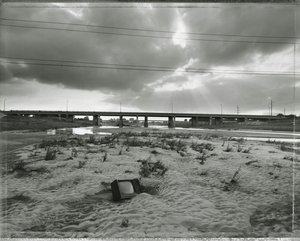
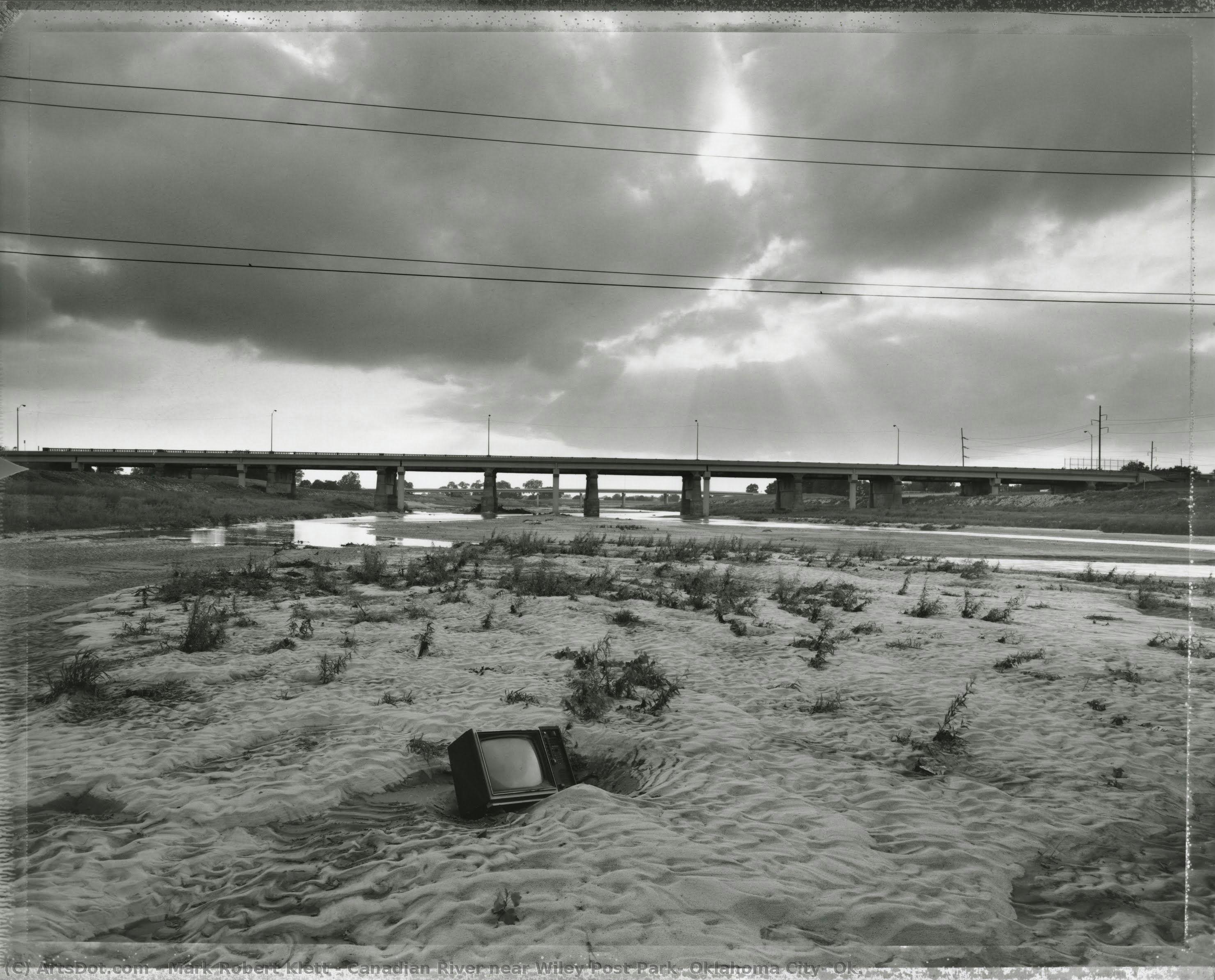
Canadian River near Wiley Post Park, Oklahoma City, Ok.
 1991
1991 40.0 x 49.0 cm
 Oklahoma City Museum of Art
 Read More
Giclée / Art Print
Museum-quality giclée or canvas print with fast production and flexible finish options. ( Buy Hand Made Painting Buy Image)




































Pick from our preset sizes that match the artwork's original proportions.

You may enter your own dimensions to fit a specific frame or space. If your selected size does not match the original image's proportions, we will either crop the artwork or extend the image with a mirrored or solid-fill edge. A digital mockup will be sent for your approval before production begins.
Please note that the on-screen preview does not reflect the actual cropping or extension. Only the mockup will accurately show the final composition.
While custom sizes are available, we recommend selecting a dimension from the predefined list to preserve the original proportions.
Worldwide Delivery () in 2 weeks instead of standard 4/5 weeks. (29 August)

Free Worldwide Express Shipping

High-Quality Linen Canvas

Full Shipping Insurance

Customs Tax Refund Guarantee

True Color Matching Guarantee

60-Day Return Policy (Defects Only)

100% Money-Back Guarantee

Bulk Discount Offer
 Glass option is only available in size under 110 CM

Canadian River near Wiley Post Park, Oklahoma City, Ok.
Giclée / Art Print
Reproduction Size
-


Total Price
$ 63
Related Artworks







Artist Biography
The Geologist of Memory: The Visionary Landscapes of Mark Klett
To look through the lens of Mark Klett is to witness a profound dialogue between the enduring earth and the fleeting passage of human time. Born in Albany, New York, in 1952, Klett’s artistic identity was forged at a unique intersection of scientific rigor and poetic observation. Before he ever sought to capture the soul of a landscape through a camera, he studied the bones of the earth itself, earning a degree in geology from St. Lawrence University in 1974. This foundational training in the earth sciences provides the silent architecture for his photographic practice; where others might see only a scenic vista, Klett perceives the tectonic shifts, the erosive histories, and the meticulous textural nuances that define a place. His work does not merely document scenery; it interrogates how the physical world holds the echoes of our collective memory.
Klett’s transition from the empirical study of geology to the expressive realm of fine art was solidified during his time at the Visual Studies Workshop in Rochester, where he earned his MFA in 1977. It was during this formative period that he began to develop a methodology that would become his hallmark: the practice of rephotography. As the chief photographer for the Rephotographic Survey Project between 1977 and 1979, Klett embarked on an ambitious mission to revisit the iconic compositions of nineteenth-century pioneers like Timothy O’Sullivan and William Henry Jackson. By meticulously locating the original tripod positions of these historical surveyors, he created a visual bridge across centuries. This technique allowed him to present the landscape not as a static entity, but as a living, breathing subject that bears the scars and signatures of human intervention, cultural shifts, and environmental change.
A Tapestry of Time and Transformation
The brilliance of Klett’s oeuvre lies in his ability to blend irony, criticism, conservationism, and a residual pastoral romanticism. He belongs to a lineage of photographers who consider human activity an inseparable component of the natural landscape. His images often capture the subtle tension between the majestic permanence of the American West and the ephemeral traces of human presence—a fence line, a road, or a changing shoreline. Through his lens, the landscape becomes a palimpsest, where new layers of history are written over the old, yet the underlying geological truth remains visible to the trained eye. This approach invites the spectator into a state of deep contemplation, asking us to reflect on our own impact on the world we inhabit.
Throughout his illustrious career, Klett has achieved significant recognition within the global art community, marked by numerous prestigious accolades and institutional honors:
- Fellowships: Recipient of multiple grants from the Guggenheim Foundation, the National Endowment for the Arts, and the Pollock-Krasner Foundation.
- Academic Legacy: Served as a distinguished Regents’ Professor Emeritus at Arizona State University, contributing decades of expertise to the study of photographic technology and practice.
- Exhibition History: His work has been showcased in premier institutions, including the Museum of Modern Art (MoMA) in New York, the Smithsonian American Art Museum, and the Art Institute of Chicago.
- Literary Contributions: The author or co-author of nearly twenty influential books, including the reflective Seeing Time: Forty Years of Photographs.
The Enduring Significance of the Rephotographed View
Beyond the technical mastery of his compositions, Klett’s historical significance resides in his role as a visual researcher. His projects, such as the Third View Project, have pushed the boundaries of what landscape photography can achieve, moving it away from simple representation toward a complex, interdisciplinary form of inquiry. By treating the photograph as a tool for investigating the relationship between place, culture, and history, he has helped redefine the genre for a contemporary era. His work serves as both a warning and a celebration—a meticulous record of what remains and a poignant meditation on what is lost to the relentless march of time.
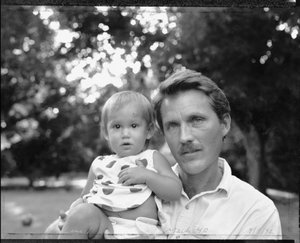
mark robert klett
1952 - , United States of America
Quick Facts
- Artistic Movement Or Style: Landscape Photography
- Artists Or Movements Influenced By This Artist: ['Contemporary Landscape']
- Artists Who Influenced This Artist: ['New Topographics photographers']
- Date Of Birth: September 9, 1952
- Full Name: Mark Robert Klett
- Nationality: American
- Notable Artworks: ['Canadian River near Wiley Post Park']
- Place Of Birth: Berkeley, United States