

 Preview
 Send
Send Share
Share
 Details

 Download
 Similars
 X-Ray
X-Ray Diaporama
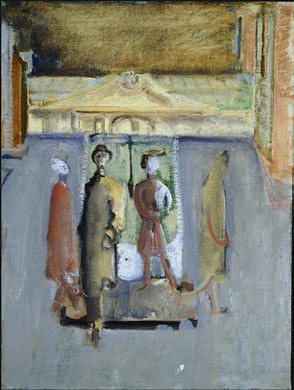
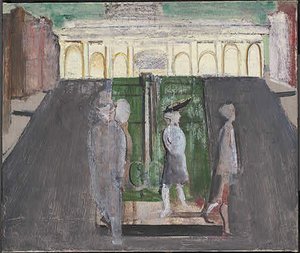
Untitled (four figures in a plaza)

 Read More
Purchase a high-resolution, enhanced digital image, far superior to the online preview.
Each file is meticulously prepared by our in-house specialists using advanced tools and expert manual retouching. We ensure every image has exceptional clarity, precise color accuracy, and fine detail.
The final file is delivered via email within 72 hours, optimized for immediate use in professional, editorial, and print environments. This is the same quality trusted by top-tier design studios, publishers, and galleries.
Digital Image
Download a high-resolution file for personal display, printing, and creative projects. ( Buy Print Buy Hand Made Painting)
Included in Every Digital Image Order
Expert Digital Delivery, Guaranteed
When you choose ArtsDot.com, you're not just getting an image - you're receiving a professionally enhanced digital artwork, crafted with precision and backed by a satisfaction guarantee. Here's everything that comes with your order, automatically:

Fast Email Delivery
Your high-resolution digital image file will be emailed to you within 72 hours of ordering - ready for immediate use.

AI-Enhanced Digital File
Your artwork is professionally optimized using advanced AI tools and manual editing, ensuring maximum detail, clarity, and color accuracy.

Free Lifetime Re-Delivery
Accidentally deleted or lost your file? No worries - we'll resend it to you anytime, free of charge.

No Import Fees - Ever
Enjoy your artwork instantly with zero customs, duties, or delivery fees - digital downloads are always tax-free.

Color Accuracy Guarantee
We ensure your digital image reflects the original colors as closely as possible using professional tools and color management.

60-Day Satisfaction Guarantee
If you're not satisfied with your digital image, we'll revise it or refund 100% within 60 days - no questions asked.

100% Money-Back Guarantee
Not satisfied? Get a full refund within 60 days of receiving your digital file - no questions asked.

Bulk Order Discounts
Buy 3 images, save 10% - Buy 5, save 15% - Buy 10+, save 20%. Great for creative projects, galleries, and agencies.
Collectible Description
A Moment of Quiet Contemplation: Exploring Mark Rothko’s Untitled (Four Figures in a Plaza)
Mark Rothko's "Untitled (Four Figures in a Plaza)" stands as a testament to the profound impact abstract expressionism can have on capturing human emotion and experience. Painted sometime between 1949 and 1950, this monumental canvas embodies Rothko’s signature style—large rectangular blocks of color layered upon one another—a technique that prioritizes feeling over representation. The artwork's serene atmosphere invites viewers to consider themes of solitude and connection amidst the complexities of urban life.The Canvas: Color as Emotion
The painting itself is dominated by four horizontal rectangles of muted hues – predominantly shades of reddish-brown, ochre, and amber—that bleed subtly into each other. Rothko eschewed traditional brushstrokes, opting instead for a velvety surface achieved through meticulous application of thin washes of pigment. This method creates an illusion of depth and luminosity, as if the colors themselves are radiating outwards from within the canvas. The deliberate lack of discernible contours contributes to the painting’s contemplative mood, encouraging viewers to focus on the interplay of color and texture rather than visual details. It's a masterful demonstration of how color can communicate emotion directly—a feeling of quiet stillness and understated melancholy.Context Within Abstract Expressionism
Rothko’s work emerged during the height of American abstract expressionism, a movement that sought to liberate painting from representational constraints and explore the subconscious mind. Artists like Jackson Pollock and Willem de Kooning similarly embraced spontaneous gesture and materiality, rejecting academic conventions in favor of visceral responses to artistic creation. However, Rothko distinguished himself through his unwavering commitment to color as primary expressive medium. Unlike many contemporaries who experimented with gestural abstraction, he painstakingly crafted his canvases to achieve a state of meditative calm—a goal reflected in the very composition itself. The influence of Zen Buddhism is palpable; the rectangles represent islands of contemplation amidst an expansive space.Symbolism and Spatial Arrangement
The placement of the four figures within the plaza contributes significantly to the artwork’s symbolic resonance. Standing apart from one another, they convey a sense of isolation yet simultaneously suggest a shared experience—a moment of quiet reflection in a public setting. The bench and chair serve as anchors for the scene, grounding the figures physically while emphasizing their vulnerability. Rothko's deliberate use of space reinforces this idea; the rectangles don’t simply occupy the canvas but seem to emanate outwards, enveloping the viewer in an aura of tranquility. This spatial arrangement invites contemplation on themes of human presence and solitude within a larger environment.Emotional Impact: A Window into Inner Reflection
Ultimately, “Untitled (Four Figures in a Plaza)” succeeds in conveying a powerful emotional response—a feeling of profound peace and introspection. The muted colors evoke associations with earth tones and autumnal landscapes, fostering a sense of groundedness and acceptance. Rothko’s masterful technique ensures that the painting remains visually engaging without resorting to overt visual stimulation. Instead, it invites viewers to engage in a dialogue with their own emotions and perceptions—a testament to the enduring power of abstract art to communicate universal human experiences. It's an artwork designed not just to be seen but felt.Related Artworks
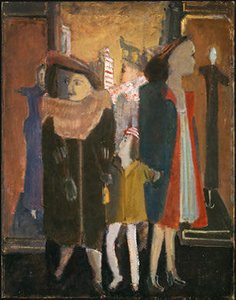
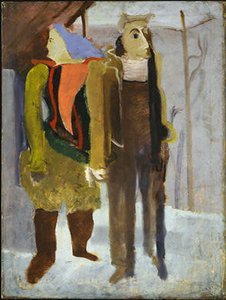
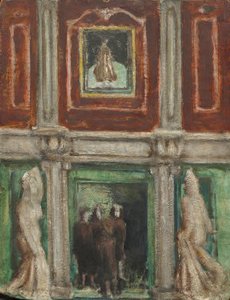
Artist Biography
Early Life and the Seeds of Artistic Vision
Mark Rothko, born Markus Yakovlevich Rothkowitz in Dvinsk, Latvia, in 1903, carried within him from the outset a sense of displacement that would profoundly shape his artistic journey. His early years were marked by the anxieties of a Jewish family living within the Pale of Settlement, shadowed by pogroms and political unrest. This atmosphere instilled a deep sensitivity to human suffering, a theme that would resonate throughout his oeuvre. The 1913 immigration to Portland, Oregon, represented not just a geographical shift but a cultural upheaval for the young Rothko. While his father, a pharmacist and intellectual with socialist leanings, fostered a home filled with debate and learning, the loss of Jacob Rothkowitz shortly after their arrival cast a long shadow. This early experience of loss, coupled with the challenges of assimilation, fueled a lifelong exploration of existential themes – mortality, trauma, and the search for meaning in a chaotic world. Though he excelled academically at Yale University, Rothko found himself drawn more to the vibrant energy of New York City, abandoning formal studies to pursue his passion for art at the Art Students League. These formative years laid the groundwork for an artistic vision that would ultimately challenge conventional notions of painting and redefine the emotional power of color.From Figurative Beginnings to Abstract Expressionism
Rothko’s initial artistic explorations were firmly rooted in realism, depicting urban scenes and portraits with a keen eye for detail. However, these early works already hinted at the psychological depth that would become his hallmark. As the 1940s unfolded, and the world grappled with the horrors of World War II, Rothko’s art underwent a dramatic transformation. Influenced by Surrealism and mythology, he began to move away from representational imagery, seeking instead to express universal human emotions through symbolic forms. This period saw the emergence of multi-form paintings – canvases populated by ambiguous, biomorphic shapes that seemed to hover between figuration and abstraction. These works were not merely experiments in form; they were deeply felt responses to the anxieties and uncertainties of a world at war. By the late 1940s, Rothko had arrived at his signature style: large-scale canvases featuring rectangular blocks of color that appeared to float and resonate with one another. He stripped away all vestiges of recognizable imagery, focusing instead on the pure emotional impact of color and form. This marked a pivotal moment in the development of Abstract Expressionism, and established Rothko as a leading figure in this groundbreaking movement.The Color Field and the Pursuit of Transcendence
Rothko’s mature work is defined by what came to be known as “Color Field” painting – vast expanses of luminous color that envelop the viewer in an immersive experience. These paintings are not about *what* they depict, but rather *how* they make you feel. Rothko believed that art should engage the viewer viscerally, bypassing intellectual analysis and speaking directly to the emotions. He meticulously layered thin washes of paint, creating subtle variations in tone and texture that seemed to emanate from within the canvas. The edges of his rectangular forms are often blurred, allowing them to blend and interact with one another, creating a sense of depth and movement. Rothko deliberately avoided titles beyond numbers – “No. 1,” “No. 6” – encouraging viewers to confront the paintings without preconceived notions and allow their own emotional responses to guide their experience. He sought to create a space for contemplation, a sanctuary where viewers could connect with something larger than themselves. His ambition was nothing less than to evoke profound spiritual experiences through the language of color.Major Achievements and Lasting Legacy
Among Rothko’s most significant achievements are “No. 10 (1950),” a pivotal work that exemplifies his evolving style, and the Seagram Murals (1958). Commissioned for the Four Seasons Restaurant in New York City, these murals were ultimately rejected by Rothko, who felt they would be compromised by their intended environment. He instead donated them to the Tate Gallery in London, where they continue to inspire awe and contemplation. Perhaps his most ambitious project was the Rothko Chapel (1971) in Houston, Texas – a non-denominational sanctuary housing fourteen of his paintings. Designed as a space for quiet reflection, the chapel is considered a sacred place by many, embodying Rothko’s belief in the spiritual power of art. Rothko's influence on subsequent generations of artists has been immense. He paved the way for Minimalist art and continues to inspire contemporary painters who explore the emotional possibilities of abstraction. Despite struggling with depression throughout his life, culminating in his tragic suicide in 1970, Mark Rothko remains one of the most important and influential artists of the 20th century – a master of color whose work continues to resonate with audiences around the world.The Enduring Power of Emotional Resonance
- Rothko’s paintings are celebrated for their ability to convey universal human emotions—tragedy, ecstasy, despair, and hope.
- His exploration of color as a vehicle for emotional expression revolutionized abstract painting.
- The Rothko Chapel stands as a testament to his belief in the spiritual power of art.
- He remains a pivotal figure in Abstract Expressionism and a major influence on contemporary artists.
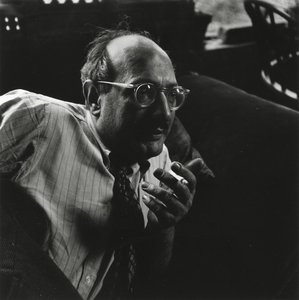
Mark Rothko
1903 - 1970 , Latvia
Quick Facts
- Artistic Movement Or Style: Color Field Painting
- Artists Or Movements Influenced By This Artist:
- Minimalism
- Abstract Expressionism
- Date Of Birth: September 25, 1903
- Date Of Death: February 25, 1970
- Full Name: Mark Rothko
- Nationality: American
- Notable Artworks:
- No. 10 (1950)
- Seagram Murals
- Rothko Chapel
- White Center
- Place Of Birth: Daugavpils, Latvia

