

 Preview
 Send
Send Share
Share
 Details

 Download
 Similars
 X-Ray
X-Ray Diaporama
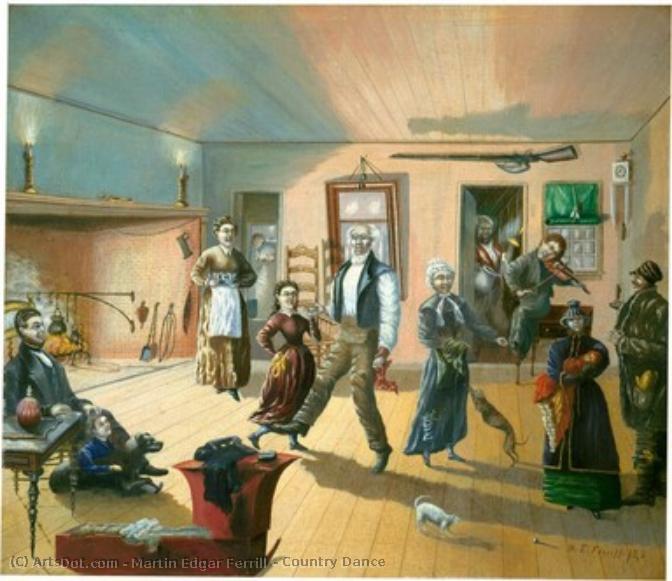
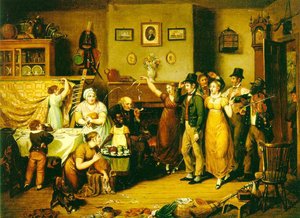
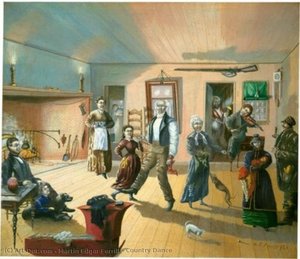
Country Dance
 1883
1883 73.0 x 84.0 cm
 Read More
Hand Made Oil Reproduction
Hand-painted oil on canvas in your size and frame, made to order by our artists. ( Buy Print Buy Image)




































Pick from our preset sizes that match the artwork's original proportions.

You may enter your own dimensions to fit a specific frame or space. If your selected size does not match the original image's proportions, we will either crop the artwork or extend the painting with additional hand-painted elements. A digital mockup will be sent for your approval before production begins.
Please note that the on-screen preview does not reflect the actual cropping or extension. Only the mockup will accurately show the final composition.
While custom sizes are available, we recommend selecting a dimension from the predefined list to preserve the original proportions.
After order, ArtsDot.com team will email client for instructions and provide a mockup preview
Worldwide Delivery () in 3/4 weeks instead of standard 5 weeks. (17 August). No compromise on quality.

Free Worldwide Express Shipping

High-Quality Linen Canvas

Full Shipping Insurance

Customs Tax Refund Guarantee

True Color Matching Guarantee

60-Day Return Policy (Defects Only)

100% Money-Back Guarantee

Bulk Discount Offer
 Glass option is only available in size under 110 CM

Country Dance
Reproduction Medium
Reproduction Size
-


Total Price
$ 463
Related Artworks
Artist Biography
Early Life and Origins in Lansingburgh
Martin Edgar Ferrill, a name perhaps unfamiliar to many, represents a fascinating corner of American folk art history. Born in either 1836 or 1837 within the northern division of Troy, New York—specifically the village of Lansingburgh—Ferrill’s roots were firmly planted in the burgeoning landscape of 19th-century America. His parents, Matthew and Eliza Ferrill, had emigrated from Ireland before 1835, seeking new opportunities on American soil. Lansingburgh would remain his lifelong home, a quiet backdrop against which he quietly developed a unique artistic vision. While documented details about his early life are scarce, the fact that his father was a brush maker suggests an initial exposure to the tools and materials of the trade—a foundation that may have subtly influenced his later work.
A Brush Maker Turned Painter
For much of his life, Ferrill’s profession was listed in Troy directories as simply “brush maker,” following in his father's footsteps. Later records occasionally identify him as an "agent," a term whose precise meaning remains elusive. It wasn’t until his death certificate designated him an “artist” that the full extent of his creative pursuits came to light, raising questions about when he formally transitioned from craftsman to painter. This ambiguity adds to the mystique surrounding Ferrill; was painting a lifelong passion pursued alongside his more practical occupation, or a later-life endeavor? What is certain is that during his lifetime, he created a small but compelling body of work—genre scenes depicting winter life in rural America.
Capturing Rural Life: Style and Themes
Ferrill’s paintings are characterized by their naïve style, a directness and simplicity that eschews academic polish. He wasn't concerned with strict realism or dramatic composition; instead, he focused on capturing the essence of everyday life—the charm of country dances, the bustle of winter activity, the warmth of domestic interiors. His scenes are filled with detail, yet possess an almost childlike quality, evoking a sense of nostalgia and tranquility. The popularity of winter subjects during the 19th century is undeniable, fueled by lithographs from publishers like Currier and Ives, which often romanticized rural life. While Ferrill’s work shares similarities with these popular prints, he never directly copied another artist's style; his paintings possess a unique voice—a quiet observation of American life.
Rediscovery and Recognition
For many years, Martin Edgar Ferrill remained largely unknown outside of local circles. However, the discovery of just four attributed paintings brought him to the attention of art historians and collectors. His most prominent work, Sleighing Scene, now resides in the collection of the Detroit Institute of Arts, offering a glimpse into his artistic world. The painting’s inclusion in museum collections—along with works held by the National Gallery of Art in Washington—has sparked renewed interest in his life and legacy. The fact that a piece from 1873 depicting what is believed to be Lansingburgh was chosen for the cover of *The Rotarian* magazine further underscores his ability to capture a specific sense of place and time.
Historical Significance and Enduring Appeal
Martin Edgar Ferrill’s significance lies not in groundbreaking innovation, but in his authentic portrayal of 19th-century American life. He offers a valuable window into the everyday experiences of rural communities—a perspective often overlooked by more prominent artists of the period. His paintings are a testament to the power of observation and the enduring appeal of simple subjects. Though he lived a relatively quiet life, his work continues to resonate with viewers today, offering a glimpse into a bygone era and reminding us of the beauty found in the ordinary. He represents a vital strand within the broader tapestry of American folk art—a testament to the artistic spirit that flourished beyond the confines of formal training and established institutions.
martin edgar ferrill
1836 - 1897 , United States of America
Quick Facts
- Artistic Movement Or Style: Naive Landscape/Folk Art
- Date Of Birth: 1836 or 1837
- Date Of Death: 1897
- Full Name: Martin Edgar Ferrill
- Nationality: American
- Notable Artworks: ['Country Dance']
- Place Of Birth: Lansingburgh, USA

