

 Preview
 Send
Send Share
Share
 Details

 Download
 Similars
 X-Ray
X-Ray Diaporama
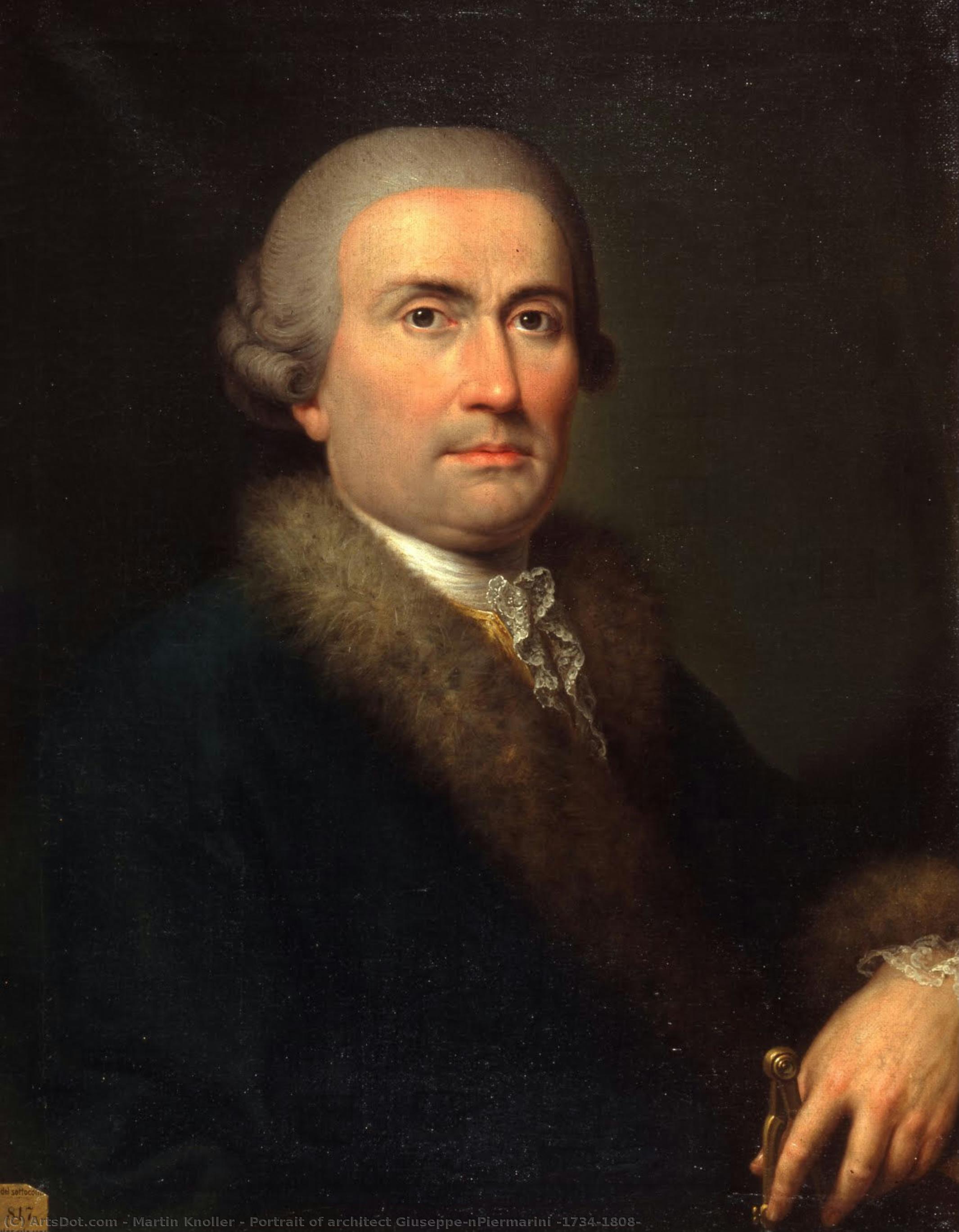
Portrait of architect Giuseppe\nPiermarini (1734-1808)


 Read More
Purchase a high-resolution, enhanced digital image, far superior to the online preview.
Each file is meticulously prepared by our in-house specialists using advanced tools and expert manual retouching. We ensure every image has exceptional clarity, precise color accuracy, and fine detail.
The final file is delivered via email within 72 hours, optimized for immediate use in professional, editorial, and print environments. This is the same quality trusted by top-tier design studios, publishers, and galleries.
Digital Image
Download a high-resolution file for personal display, printing, and creative projects. ( Buy Print Buy Hand Made Painting)
Included in Every Digital Image Order
Expert Digital Delivery, Guaranteed
When you choose ArtsDot.com, you're not just getting an image - you're receiving a professionally enhanced digital artwork, crafted with precision and backed by a satisfaction guarantee. Here's everything that comes with your order, automatically:

Fast Email Delivery
Your high-resolution digital image file will be emailed to you within 72 hours of ordering - ready for immediate use.

AI-Enhanced Digital File
Your artwork is professionally optimized using advanced AI tools and manual editing, ensuring maximum detail, clarity, and color accuracy.

Free Lifetime Re-Delivery
Accidentally deleted or lost your file? No worries - we'll resend it to you anytime, free of charge.

No Import Fees - Ever
Enjoy your artwork instantly with zero customs, duties, or delivery fees - digital downloads are always tax-free.

Color Accuracy Guarantee
We ensure your digital image reflects the original colors as closely as possible using professional tools and color management.

60-Day Satisfaction Guarantee
If you're not satisfied with your digital image, we'll revise it or refund 100% within 60 days - no questions asked.

100% Money-Back Guarantee
Not satisfied? Get a full refund within 60 days of receiving your digital file - no questions asked.

Bulk Order Discounts
Buy 3 images, save 10% - Buy 5, save 15% - Buy 10+, save 20%. Great for creative projects, galleries, and agencies.
Collectible Description
A Glimpse into Milanese Enlightenment Genius
This captivating portrait offers us an intimate encounter with Giuseppe Piermarini, the visionary architect whose hand shaped much of Milan's grand architectural narrative during the late eighteenth century. Depicted by Martin Knoller in the years between 1775 and 1779, the painting transcends a mere likeness; it is a historical document imbued with the spirit of Enlightenment rationalism applied to stone and structure. Piermarini, whose genius was evident in his designs for monumental works like La Scala Theatre and the Palazzo di Brera, is presented here not just as a man, but as an intellectual force—a master craftsman whose mind wrestled with the very geometry of urban life.
The Symbolism of Craft and Intellect
Observe the subtle yet potent details that anchor this portrait in its professional context. Piermarini is shown holding one hand upon a set of compasses, an unmistakable emblem of his trade. These tools are more than mere props; they symbolize precision, measurement, and the rigorous application of mathematical principles to art. In an era where architecture was transitioning from Baroque flourish toward Neoclassical clarity, this gesture speaks volumes about Piermarini's commitment to functionality and rational allocation of space—a concern that defined his revolutionary approach to theatre design. The dark, rich background serves a crucial artistic function, allowing the luminous figure and the symbolic tools to emerge with dramatic clarity, focusing all attention on the confluence of man and intellect.
Martin Knoller's Masterful Technique
The execution by Martin Knoller reveals an artist deeply versed in both Baroque drama and emerging Neoclassical restraint. While Knoller’s training roots lie in the grand traditions of Salzburg and Vienna, his handling here demonstrates a refined balance. The rendering of Piermarini’s wig and ruffled collar speaks to the period's elevated sense of formality, yet the underlying structure remains crisp and balanced—a visual echo of the architectural principles Piermarini championed. Knoller captures the sitter with an air of sophisticated importance; the gaze directed outward suggests a man accustomed to being observed, his achievements awaiting recognition.
Echoes for the Modern Collector
For the discerning collector or designer whose taste leans toward historical gravitas and intellectual depth, this reproduction offers more than just decoration. It is an artifact of cultural ambition. Owning this piece connects one tangibly to the golden age of Milanese design—a time when public spaces were reimagined for maximum human experience. The portrait whispers tales of grand openings, critical reviews, and the enduring power of visionary planning. It serves as a sophisticated focal point, suggesting that within any great space, there is always an underlying structure, a brilliant mind at work.
Related Artworks

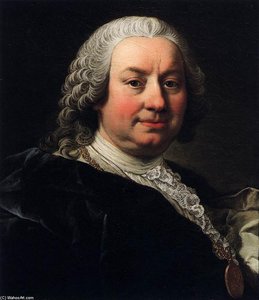
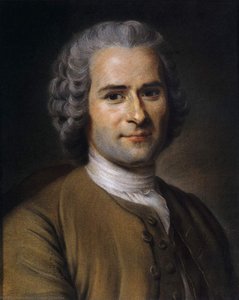
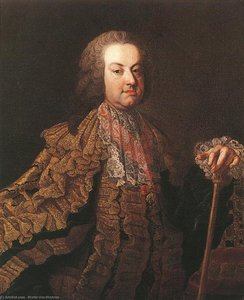

Artist Biography
Martin Knoller: Life and Legacy
Early Life and Education
Martin Knoller (1725 – 1804) was an Austrian-Italian painter, primarily active in Italy, renowned for his fresco work. Born in Steineck im Brenner, near Innsbruck, Austria, he received his initial artistic training under the tutelage of Paul Troger and Michelangelo Unterberger in Salzburg and Vienna. These masters instilled in him a foundation in Baroque techniques that would later inform his distinctive style.
Artistic Development and Influences
In 1755, Knoller journeyed to Rome, a pivotal moment in his artistic development. Exposure to the burgeoning Neoclassical movement profoundly influenced his work. He studied under Anton Raphael Mengs and engaged with the writings of Johann Joachim Winckelmann, absorbing their emphasis on classical ideals of form and composition. While retaining elements of Baroque drama, Knoller’s style increasingly incorporated clarity, balance, and a refined aesthetic sensibility.
Key Characteristics and Style
Knoller's art occupies an interesting space between the Baroque and Rococo periods, with the latter often prevailing in his paintings rather than his frescoes. He specialized in both frescoes and altarpiece paintings. His compositions frequently feature groups of figures, always ensuring the principal subject is prominently located in the foreground. A hallmark of his work is the use of bright, vibrant colors, particularly in clothing, adding a sense of life and dynamism to his scenes.
- Emphasis on Figure Groups: Knoller excelled at depicting dynamic interactions between figures.
- Vibrant Color Palette: His use of color adds energy and visual interest.
- Clear Composition: He favored well-ordered arrangements, avoiding the excessive drama of High Baroque.
- Masterful Perspective: Knoller demonstrated a strong understanding of perspective, creating realistic spatial depth.
Major Achievements and Commissions
Knoller’s breakthrough came with his completion of “The Glory of St Stephen” in 1754 at the parish church of Anras in East Tyrol. However, it was through the patronage of Karl Joseph von Firmian, the Imperial Governor of Lombardy under Maria Theresa, that Knoller achieved widespread recognition. Von Firmian commissioned him to paint frescoes for the Palazzo Firmian-Vigoni, a significant undertaking that showcased Knoller’s talent and cemented his reputation.
Later Life and Legacy
From 1793 until his death in 1804, Knoller served as a professor at the Brera Academy of Fine Arts in Milan. Among his pupils was Giuseppe Mazzola, who continued to propagate Knoller’s artistic principles. While not as widely celebrated as some of his contemporaries, Martin Knoller left behind a substantial body of work that reflects the transition between Baroque exuberance and Neoclassical restraint. His frescoes and altarpieces remain important examples of 18th-century Italian art.
Historical Significance
Knoller’s significance lies in his ability to synthesize diverse artistic influences – Baroque, Rococo, and Neoclassicism – into a unique and compelling style. He represents a transitional figure whose work embodies the changing aesthetic sensibilities of his time. His emphasis on clarity, balance, and vibrant color continues to resonate with art enthusiasts today.

Martin Knoller
1725 - 1804 , Austria
Quick Facts
- Birth Date: 1725
- Birth Place: Steineck im Brenner, Austria
- Death Date: 1804
- Influenced: ['Giuseppe Mazzola']
- Influenced By:
- Paul Troger
- Michelangelo Unterberger
- Anton Raphael Mengs
- Johann Joachim Winckelmann
- Movement:
- Baroque
- Rococo
- Neoclassicism
- Name: Martin Knoller
- Nationality: Austrian-Italian
- Notable Works:
- The Glory of St Stephen
- Palazzo Firmian-Vigoni frescoes

