 Preview
 Send
Send Share
Share
 Details

 Download
 Similars
 X-Ray
X-Ray Diaporama
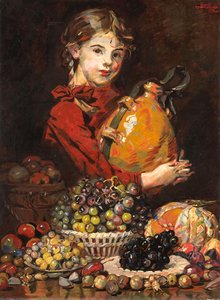
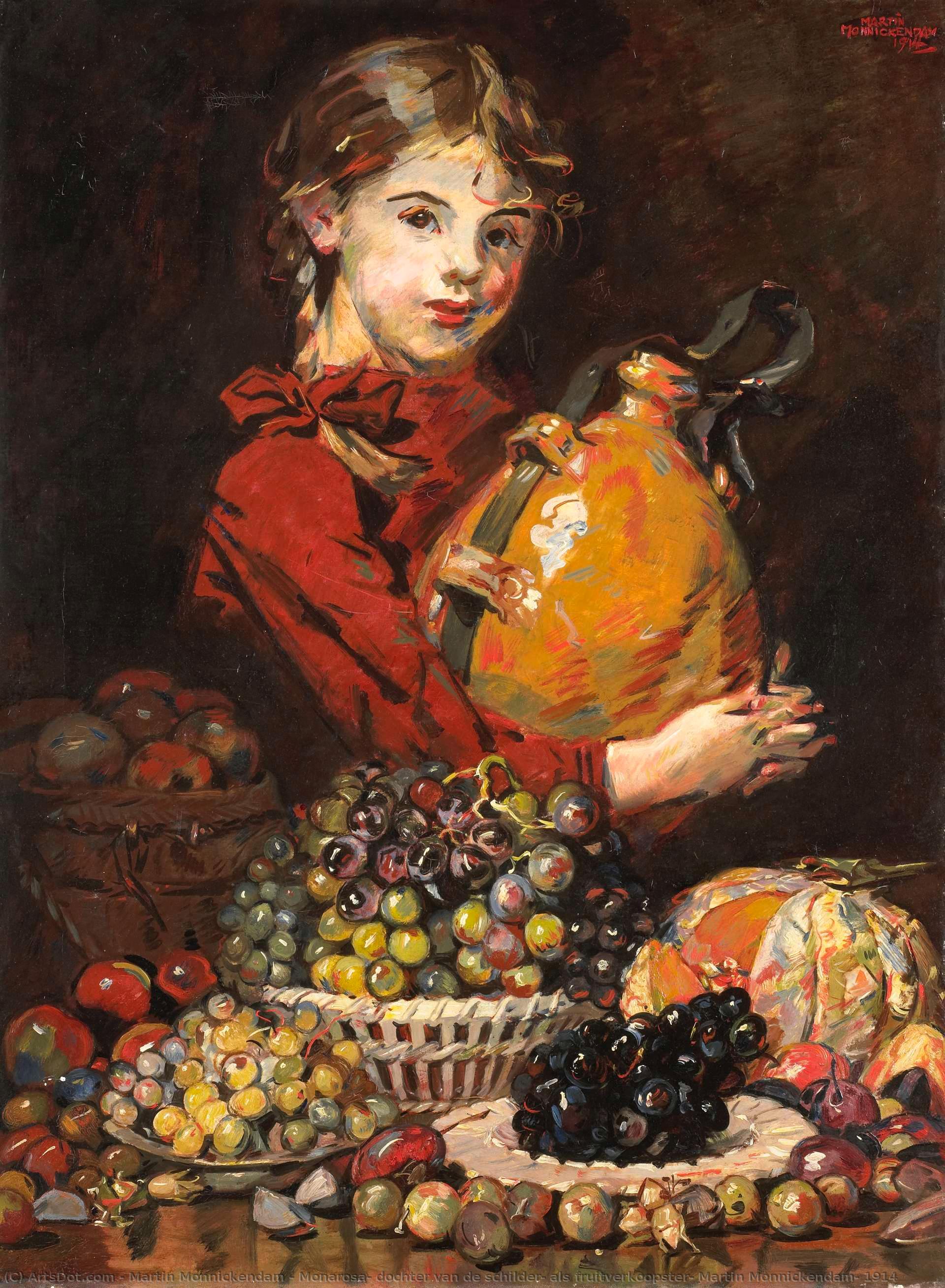
Monarosa, dochter van de schilder, als fruitverkoopster, Martin Monnickendam, 1914
 1914
1914 91.0 x 67.0 cm
 Read More
Hand Made Oil Reproduction
Hand-painted oil on canvas in your size and frame, made to order by our artists. ( Buy Print Buy Image)




































Pick from our preset sizes that match the artwork's original proportions.

You may enter your own dimensions to fit a specific frame or space. If your selected size does not match the original image's proportions, we will either crop the artwork or extend the painting with additional hand-painted elements. A digital mockup will be sent for your approval before production begins.
Please note that the on-screen preview does not reflect the actual cropping or extension. Only the mockup will accurately show the final composition.
While custom sizes are available, we recommend selecting a dimension from the predefined list to preserve the original proportions.
After order, ArtsDot.com team will email client for instructions and provide a mockup preview
Worldwide Delivery () in 3/4 weeks instead of standard 5 weeks. (24 August). No compromise on quality.

Free Worldwide Express Shipping

High-Quality Linen Canvas

Full Shipping Insurance

Customs Tax Refund Guarantee

True Color Matching Guarantee

60-Day Return Policy (Defects Only)

100% Money-Back Guarantee

Bulk Discount Offer
 Glass option is only available in size under 110 CM

Monarosa, dochter van de schilder, als fruitverkoopster, Martin Monnickendam, 1914
Reproduction Medium
Reproduction Size
-


Total Price
$ 263
Artwork Description
Related Artworks







Artist Biography
Early Life and Artistic Beginnings
Martin Monnickendam, a name perhaps less widely celebrated than some of his contemporaries, nevertheless occupies a fascinating niche in the landscape of early 20th-century Dutch painting. While biographical details remain somewhat sparse, what *is* known paints a picture of an artist deeply connected to his immediate surroundings and particularly attuned to the lives of ordinary people. Born in The Hague (the exact year remains undocumented), Monnickendam emerged during a period of significant artistic ferment, as traditional academic styles gave way to new modes of expression—Impressionism, Pointillism, and nascent forms of modern abstraction were all vying for dominance. He didn’t fully align with any single school but rather forged his own path, characterized by a gentle realism imbued with a subtle poetic sensibility. His early works often depicted scenes of daily life in and around The Hague, capturing the atmosphere of bustling markets, quiet canals, and the everyday routines of its inhabitants.A Focus on Domesticity and Portraiture
Monnickendam’s artistic focus quickly gravitated towards domestic interiors and portraiture, particularly those featuring women and children. He possessed a remarkable ability to convey not just physical likeness but also the inner lives of his subjects. His paintings are rarely grand or ostentatious; instead, they offer intimate glimpses into moments of quiet contemplation, familial warmth, and the simple pleasures of life. A compelling example is “Monarosa, daughter of the painter, as a fruit seller,” from 1914. This work transcends a mere depiction of a young girl engaged in commerce; it’s a poignant study of childhood innocence, resilience, and perhaps even a subtle commentary on social realities. The composition is carefully balanced, with Monarosa positioned centrally, her gaze meeting the viewer's directly, creating an immediate connection.Technique and Influences
Monnickendam’s technique is characterized by a delicate brushstroke and a muted palette, often employing soft earth tones and subtle gradations of light and shadow. While he wasn’t a strict adherent to any particular artistic movement, one can detect echoes of the Hague School in his work—a group known for its realistic depictions of Dutch landscapes and peasant life. However, Monnickendam's paintings are less concerned with topographical accuracy than with capturing mood and atmosphere. He also demonstrates an affinity for Impressionist principles, particularly in his use of light and color to create a sense of immediacy and vibrancy. It’s possible he was influenced by artists like Isaac Israëls, who similarly focused on scenes of everyday life and portraiture.Later Years and Legacy
Details regarding Monnickendam's later career are limited, but his continued production of portraits and domestic scenes suggests a sustained commitment to his artistic vision throughout his life. He remained active until his death (the exact date is currently unknown), consistently refining his technique and exploring the nuances of human emotion. While he may not have achieved widespread fame during his lifetime, Martin Monnickendam’s work offers a valuable window into early 20th-century Dutch society and a testament to the power of quiet observation. His paintings are now appreciated for their sensitivity, intimacy, and subtle beauty—qualities that resonate with viewers even today.Major Achievements & Historical Significance
- Capturing Everyday Life: Monnickendam’s most significant achievement lies in his ability to elevate the ordinary to the level of art, imbuing scenes of daily life with a sense of dignity and grace.
- Intimate Portraiture: His portraits are not merely representations of physical likeness but rather insightful studies of character and emotion.
- Subtle Realism: He developed a unique style characterized by delicate brushwork, muted palettes, and a focus on mood and atmosphere.
- Social Commentary: While not overtly political, his work often hints at the social realities of early 20th-century Dutch society.
Quick Facts
- Artistic Movement Or Style: Realism
- Date Of Death: Living
- Full Name: Martin Monnickendam
- Nationality: Dutch
- Notable Artworks:
- Monarosa, daughter...
- Fruit seller