 Preview
 Send
Send Share
Share
 Details

 Download
 Similars
 X-Ray
X-Ray Diaporama
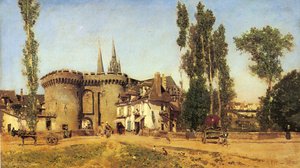
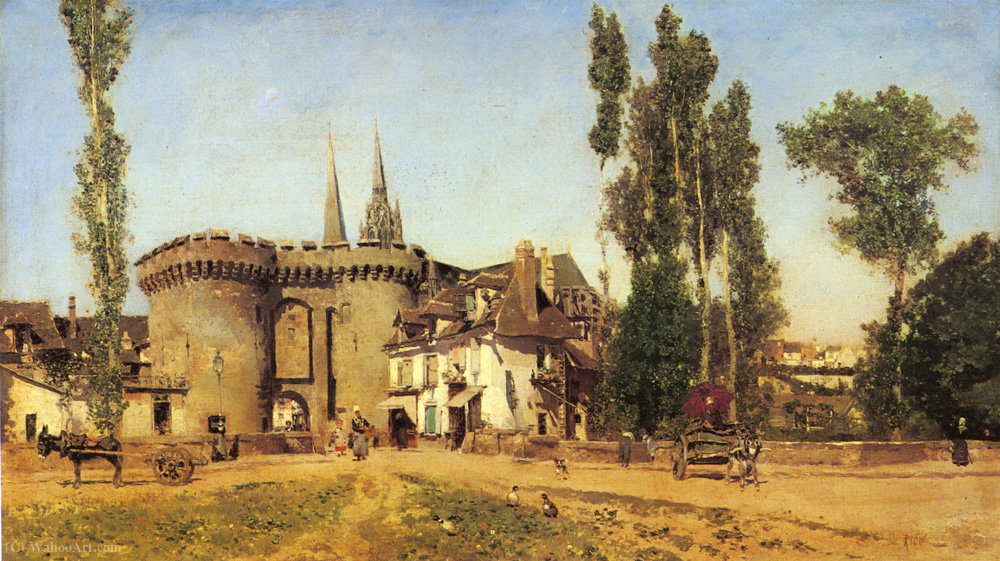
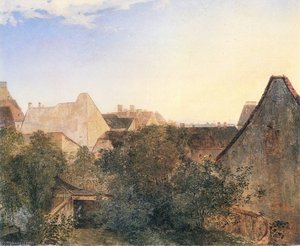
The Village of Chartres
 Read More
Hand Made Oil Reproduction
Hand-painted oil on canvas in your size and frame, made to order by our artists. ( Buy Print Buy Image)




































Pick from our preset sizes that match the artwork's original proportions.

You may enter your own dimensions to fit a specific frame or space. If your selected size does not match the original image's proportions, we will either crop the artwork or extend the painting with additional hand-painted elements. A digital mockup will be sent for your approval before production begins.
Please note that the on-screen preview does not reflect the actual cropping or extension. Only the mockup will accurately show the final composition.
While custom sizes are available, we recommend selecting a dimension from the predefined list to preserve the original proportions.
After order, ArtsDot.com team will email client for instructions and provide a mockup preview
Worldwide Delivery () in 3/4 weeks instead of standard 5 weeks. (24 August). No compromise on quality.

Free Worldwide Express Shipping

High-Quality Linen Canvas

Full Shipping Insurance

Customs Tax Refund Guarantee

True Color Matching Guarantee

60-Day Return Policy (Defects Only)

100% Money-Back Guarantee

Bulk Discount Offer
 Glass option is only available in size under 110 CM

The Village of Chartres
Reproduction Medium
Reproduction Size
-


Total Price
$ 263
Related Artworks
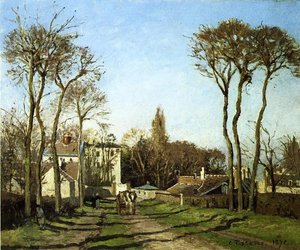
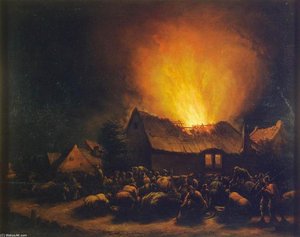
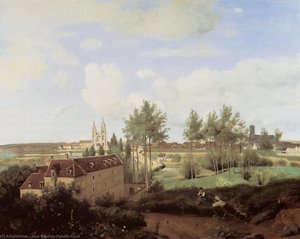
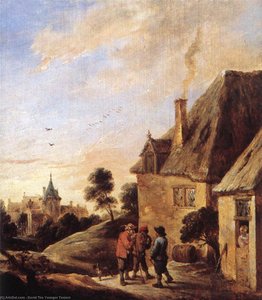
Artist Biography
Edward Burne-Jones: A Dreamer of Myth and Beauty
Edward Burne-Jones (1833–1898) wasn’t merely a painter; he was a conjurer of dreams, a weaver of mythic tapestries rendered in vibrant color and profound emotion. Born in Birmingham, England, into a family steeped in artistic tradition – his father was a renowned horticulturist – Burne-Jones’s early life fostered an appreciation for beauty and meticulous detail that would profoundly shape his distinctive style. Initially destined for the priesthood, he found himself drawn to the burgeoning world of Pre-Raphaelitism, a movement characterized by its reverence for medieval art, its focus on literary subjects, and its rejection of academic conventions. His formative years at Oxford University, alongside William Morris and John Ruskin, exposed him to these ideals, setting the stage for his artistic trajectory. Burne-Jones’s genius lay not in replicating reality but in transforming it—in imbuing his scenes with a potent blend of romanticism, symbolism, and an almost otherworldly quality. He sought to capture not just what *was*, but what *could be*, creating images that resonated with the deepest yearnings of the human spirit.Early Influences and Artistic Development
Burne-Jones’s artistic journey began with a deliberate rejection of the prevailing trends of his time. Unlike the more overtly narrative style of Rossetti, he favored a more classical approach, drawing inspiration from Botticelli and other Renaissance masters. His early works, such as *The Legend of King Arthur* (1862), demonstrate this influence—elongated figures, luminous colors, and a sense of timeless beauty that immediately captivated audiences. However, Burne-Jones wasn’t simply an imitator; he infused these classical forms with his own unique vision, creating a style that was both elegant and emotionally charged. He meticulously studied anatomy and color theory, striving for perfect proportions and a harmonious palette. Crucially, he rejected the fleeting effects of Impressionism, preferring instead to create images that felt enduring and monumental—fitting for the grand scale of his subjects. His early training at Oxford, coupled with informal lessons from Rossetti and Ruskin, provided him with a solid foundation, but it was through self-study and relentless experimentation that he truly honed his distinctive style.Mythic Subjects and Symbolism
Burne-Jones’s artistic output is overwhelmingly dominated by mythological and Arthurian subjects—a deliberate choice reflecting his deep engagement with the Pre-Raphaelite ethos. He wasn't interested in simply depicting heroic tales; he sought to explore the underlying emotions and psychological complexities of these stories. His paintings are rich in symbolism, each element carefully chosen to convey a deeper meaning. Figures like Iseult, Tristan, and Lancelot became recurring motifs, embodying themes of love, betrayal, loss, and redemption. The landscapes he painted—often bathed in an ethereal light—served as backdrops for these dramatic narratives, contributing to the overall sense of mystery and enchantment. Burne-Jones’s ability to evoke powerful emotions through seemingly simple compositions is a testament to his artistic skill and his profound understanding of human psychology. His work wasn't merely decorative; it was profoundly evocative, inviting viewers to contemplate timeless questions about love, loss, and the nature of beauty.The Height of Recognition and Legacy
The late 1870s marked a turning point in Burne-Jones’s career, with the groundbreaking exhibition at the Grosvenor Gallery in London. His monumental paintings—including *King Arthur and Prince Valiant* (1878) and *The Lady of Shalott* (1888)—received widespread acclaim, catapulting him to international fame. He became a celebrated figure, admired for his technical skill, his dramatic compositions, and his ability to capture the spirit of mythic narratives. However, Burne-Jones’s success wasn't without its critics. Some found his style overly ornate or even morbid, lamenting what they perceived as a lack of realism or human warmth. Despite these criticisms, his influence on subsequent generations of artists was undeniable. The ethereal beauty and symbolic richness of his paintings inspired countless painters, illustrators, and designers—particularly in France, where he became a key figure in the Symbolist movement. His work continues to be studied and admired for its technical brilliance, its evocative power, and its enduring appeal.A Lasting Impact on Art and Design
Burne-Jones’s legacy extends far beyond his individual paintings. His meticulous attention to detail, his mastery of color, and his profound understanding of symbolism influenced the development of decorative arts—particularly stained glass and textiles. He collaborated with William Morris's firm, designing stunning tapestries and windows that embodied the Pre-Raphaelite aesthetic. His work as a designer demonstrated his ability to seamlessly integrate artistic principles into practical applications, creating objects of both beauty and function. Even today, Burne-Jones’s paintings continue to captivate audiences with their dreamlike quality and their profound exploration of human emotion. He remains a pivotal figure in the history of art—a visionary artist who dared to create images that transcended the boundaries of reality and transported viewers to realms of mythic beauty.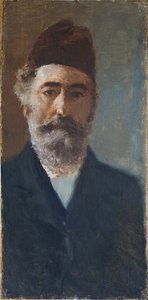
martin rico ortega
1833 - 1908
Quick Facts
- Artistic Movement Or Style: Painting
- Artists Who Influenced This Artist: ['Jean-Baptiste Regnault],\n "Artists or movements influenced by this artist": ["First Empire"]\n}']
- Date Of Birth: 13 March 1774
- Date Of Death: 6 July 1833
- Full Name: Pierre-Narcisse Guérin
- Nationality: French
- Notable Artworks:
- Return of Marcus Sextus
- Phaedra and Hippolytus
- Andromache and Pyrrhus
- Aurora and Cephalus
- Place Of Birth: Paris, France