

 Preview
 Send
Send Share
Share
 Details

 Download
 Similars
 X-Ray
X-Ray Diaporama
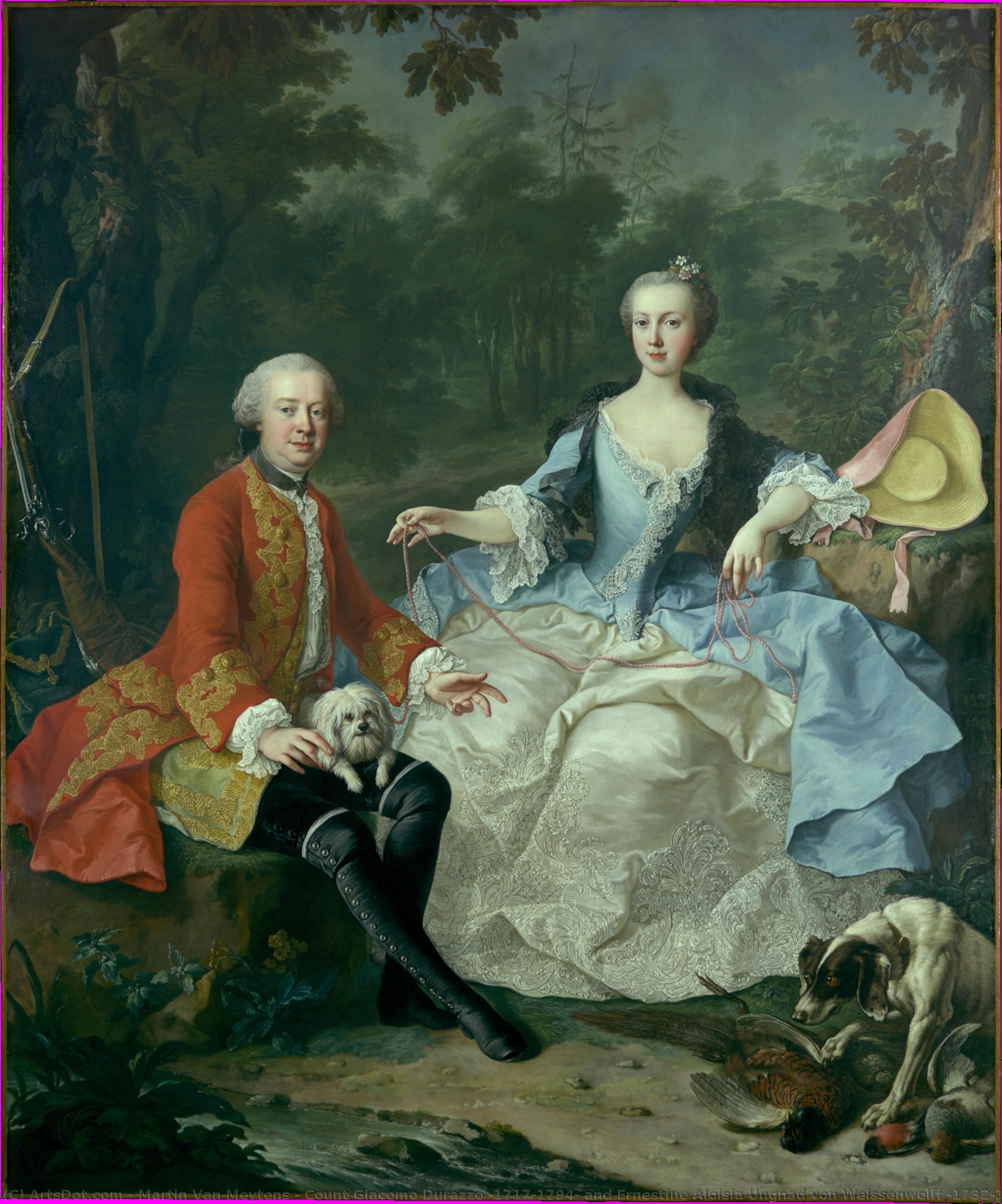
Count Giacomo Durazzo (1717–1794) and Ernestine Aloisia Ungnad von Weissenwolff (1732–1794)
 Oil On Canvas
- WallArt
- Baroque Rococo
 1760
1760 229.0 x 191.0 cm
 Metropolitan Museum of Art
 Read More
Purchase a high-resolution, enhanced digital image, far superior to the online preview.
Each file is meticulously prepared by our in-house specialists using advanced tools and expert manual retouching. We ensure every image has exceptional clarity, precise color accuracy, and fine detail.
The final file is delivered via email within 72 hours, optimized for immediate use in professional, editorial, and print environments. This is the same quality trusted by top-tier design studios, publishers, and galleries.
Digital Image
Download a high-resolution file for personal display, printing, and creative projects. ( Buy Print Buy Hand Made Painting)
Included in Every Digital Image Order
Expert Digital Delivery, Guaranteed
When you choose ArtsDot.com, you're not just getting an image - you're receiving a professionally enhanced digital artwork, crafted with precision and backed by a satisfaction guarantee. Here's everything that comes with your order, automatically:

Fast Email Delivery
Your high-resolution digital image file will be emailed to you within 72 hours of ordering - ready for immediate use.

AI-Enhanced Digital File
Your artwork is professionally optimized using advanced AI tools and manual editing, ensuring maximum detail, clarity, and color accuracy.

Free Lifetime Re-Delivery
Accidentally deleted or lost your file? No worries - we'll resend it to you anytime, free of charge.

No Import Fees - Ever
Enjoy your artwork instantly with zero customs, duties, or delivery fees - digital downloads are always tax-free.

Color Accuracy Guarantee
We ensure your digital image reflects the original colors as closely as possible using professional tools and color management.

60-Day Satisfaction Guarantee
If you're not satisfied with your digital image, we'll revise it or refund 100% within 60 days - no questions asked.

100% Money-Back Guarantee
Not satisfied? Get a full refund within 60 days of receiving your digital file - no questions asked.

Bulk Order Discounts
Buy 3 images, save 10% - Buy 5, save 15% - Buy 10+, save 20%. Great for creative projects, galleries, and agencies.
Collectible Description
Count Giacomo Durazzo (1717–1794) and Ernestine Aloisia Ungnad von Weissenwolff (1732–1794): A Portrait of Viennese Aristocracy
Martin van Meytens’s captivating portrait, “Count Giacomo Durazzo and Ernestine Aloisia Ungnad von Weissenwolff,” offers a rare glimpse into the opulent world of 18th-century Vienna. Completed around 1760, this double portrait transcends mere likeness; it's a meticulously constructed tableau vivant, brimming with symbolic detail and reflecting the social dynamics of the Habsburg court. The scene unfolds on a richly appointed bench, bathed in soft light that emphasizes the subjects’ elegant attire and the luxurious textures surrounding them. The painting isn’t simply a record of two individuals; it’s an embodiment of status, wealth, and the carefully orchestrated performance of aristocratic life.
Subject and Composition: A Stage for Social Display
At the heart of the composition are Count Giacomo Durazzo, a Genoese diplomat deeply embedded in Viennese society, and his wife, Ernestine Aloisia Ungnad von Weissenwolff. They sit side-by-side, their hands gently clasped – a gesture that speaks volumes about marital harmony and social standing within the intricate web of courtly relationships. Notably, they are not posed in a traditional formal manner. Instead, they appear relaxed, almost engaged in conversation, suggesting an intimacy rarely depicted in portraits of this era. The inclusion of three dogs—a lively spaniel near the left side, a stately hound on the right, and a more distant terrier—adds to the scene’s charm and reinforces the image of a comfortable, well-managed estate. An apple resting at the bottom right corner is a subtle yet significant detail; it alludes to the biblical story of Adam and Eve, hinting at themes of temptation, knowledge, and perhaps even the fleeting nature of earthly pleasures – concepts relevant to the aristocratic lifestyle.
Van Meytens’s Technique: Baroque Detail and Illusionistic Depth
Martin van Meytens, a pivotal figure in Austrian Baroque art, masterfully employs techniques characteristic of his era. The painting is executed in oil on canvas, utilizing a rich palette dominated by deep reds, blues, and golds – colors associated with wealth and power. Van Meytens’s attention to detail is remarkable; the fabrics are rendered with exquisite realism, showcasing intricate embroidery, shimmering silks, and the subtle sheen of velvet. He skillfully uses *chiaroscuro*—the dramatic contrast between light and shadow—to sculpt the figures' forms and create a sense of three-dimensionality. The background, though relatively simple, is meticulously painted to suggest an expansive estate, with hints of foliage and architectural elements that contribute to the overall illusionistic depth. The artist’s use of *sfumato*, a technique involving subtle gradations of tone, softens edges and creates a hazy atmosphere, further enhancing the painting's sense of realism.
Historical Context: Diplomacy, Opera Reform, and Habsburg Grandeur
The portrait’s creation coincides with a pivotal moment in Viennese history. Count Giacomo Durazzo was serving as director of the imperial theaters from 1754 to 1764, playing a crucial role in promoting Gluck's innovative reforms within Italian opera. This period marked a significant shift away from the elaborate, declamatory style of Handel and towards a more melodic and dramatic approach. Durazzo’s position at court also reflects the broader cultural landscape of the Habsburg empire – a center of artistic patronage and political intrigue. The portrait itself is a testament to the importance of diplomacy and social connections within this complex environment. It's a visual record of a man deeply involved in shaping Viennese culture, alongside his wife, representing the stability and refinement expected of an aristocratic couple.
A hand-painted reproduction by ArtsDot.com captures the essence of this remarkable artwork, allowing you to experience its beauty and historical significance firsthand. The meticulous detail and vibrant colors faithfully recreate Van Meytens’s masterful technique, bringing Count Durazzo and Ernestine Aloisia Ungnad von Weissenwolff to life in your own space.
Related Artworks


Artist Biography
A Legacy of Habsburg Splendor: The Life of Martin van Meytens
In the grand, gilded corridors of the eighteenth-century European courts, few artists captured the essence of imperial majesty as profoundly as Martin van Meytens. Born in Stockholm, Sweden, in 1695, Meytens was a painter whose very identity was woven from the diverse artistic threads of Europe. The son of the talented Martin Meytens the Elder, he inherited a profound understanding of the craft, nurtured by an artistic lineage that stretched from The Hague to the Swedish capital. His early life was defined by a restless, scholarly pursuit of excellence, leading him on a transformative journey through the cultural epicenters of London, Paris, and ultimately, Vienna. This cosmopolitan upbringing allowed him to absorb the evolving aesthetics of his era, transitioning seamlessly from the delicate precision of miniature portraiture to the sweeping, dramatic grandeur of large-scale oil paintings.
As he settled in Vienna, Meytens did not merely become a resident artist; he became the visual chronicler of the Habsburg Empire. His arrival in the Austrian capital coincided with a period of immense political and cultural significance, and his talent quickly ascended to meet the demands of the most powerful figures in Europe. By 1730, his mastery of oil painting had matured, allowing him to move beyond the intimate scale of miniatures to capture the monumental presence of royalty. His rise was so complete that he eventually served as the Director of the Viennese Academy of Fine Arts, a testament to his influence and authority within the artistic community. Even his mentorship of figures like Franz Xaver Messerschmidt underscores his role as a cornerstone of the Austrian Baroque movement.
Technique, Light, and the Art of Presence
The brilliance of Meytens’ work lies in his ability to balance the rigid requirements of courtly propaganda with a deeply humanistic touch. While his subjects were often symbols of state power, Meytens sought to imbende them with a psychological depth that transcended mere likeness. He was a master of chiaroscuro, utilizing the dramatic interplay of light and shadow to create a sense of three-dimensional volume and emotional weight. This technique allowed him to illuminate the intricate textures of silk, lace, and ermine, making the opulence of the Habsburg court feel tangible to the viewer.
His compositions were rarely simple; they were carefully orchestrated stages designed to reflect the status of his patrons. Through a meticulous attention to detail, he integrated elaborate decorative elements—from heavy drapery to ornate architectural backdrops—that mirrored the lavish aesthetic of the era. This stylistic approach ensured that every portrait was not just a record of a face, but an immersive experience of Baroque splendor. His ability to capture both the external glitter of the court and the internal dignity of the individual remains his most enduring technical achievement.
Historical Significance and Enduring Masterpieces
The historical importance of Martin van Meytens cannot be overstated, as his canvases serve as vital windows into the twilight of the Baroque and the dawn of the Rococo. His portraits of Maria Theresa and Emperor Francis I stand as monumental achievements of the mid-eighteenth century, documenting the faces of an era that shaped the map of Europe. Through his brush, the political stability and cultural zenith of the Habsburgs were immortalized, providing a visual language for an empire at its height.
His influence resonated far beyond the borders of Austria, leaving a stylistic imprint on generations of portraitists who followed. The following highlights represent the pinnacle of his artistic journey:
- The Mastery of Self-Representation: His 1745 Self-Portrait serves as a breathtaking example of Rococo elegance, showcasing his ability to depict both his own identity and his elevated social status through intricate detail.
- Imperial Documentation: The portrait of Emperor Francis I (1750) exemplifies his skill in capturing the gravity and grandeur required for the Holy Roman Emperor.
- The Queen's Majesty: His depictions of Queen Maria Theresa remain some of the most iconic images of the eighteenth century, blending royal iconography with a profound sense of character.
Ultimately, Martin van Meytens was more than a court painter; he was an architect of memory. By capturing the fleeting brilliance of the Habsburg court through light, shadow, and unparalleled detail, he ensured that the splendor of a vanished world would remain eternally vibrant in the annals of art history.
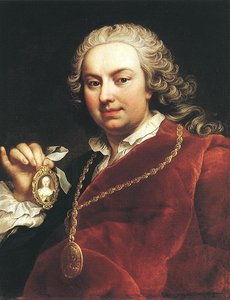
Martin van Meytens
1695 - 1770 , Sweden
Quick Facts
- Artistic Movement Or Style: Baroque portraiture
- Artists Or Movements Influenced By This Artist: ['Giovanni Gabriele Cantone']
- Artists Who Influenced This Artist: ['']
- Date Of Birth: Stockholm, Sweden (1695)
- Date Of Death: 1770
- Full Name: Martin van Meytens
- Nationality: Swedish
- Notable Artworks:
- Self-Portrait
- Emperor Francis I
- Portrait of the Holy Roman Emperor Francis I.
- Place Of Birth: Stockholm

