 Preview
 Send
Send Share
Share
 Details

 Download
 Similars
 X-Ray
X-Ray Diaporama
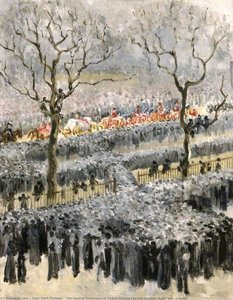
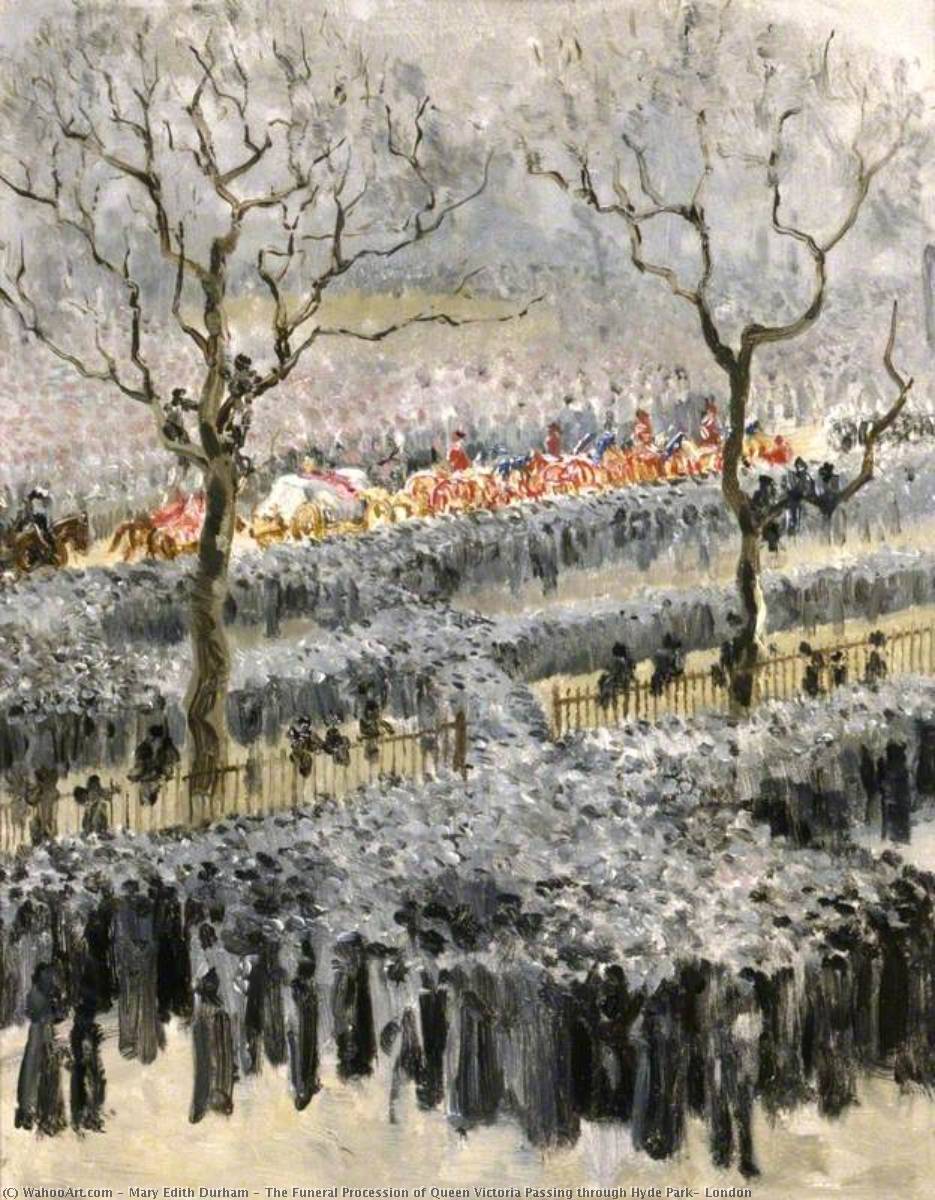
The Funeral Procession of Queen Victoria Passing through Hyde Park, London
 1901
1901 36.0 x 30.0 cm
 Read More
Hand Made Oil Reproduction
Hand-painted oil on canvas in your size and frame, made to order by our artists. ( Buy Print Buy Image)




































Pick from our preset sizes that match the artwork's original proportions.

You may enter your own dimensions to fit a specific frame or space. If your selected size does not match the original image's proportions, we will either crop the artwork or extend the painting with additional hand-painted elements. A digital mockup will be sent for your approval before production begins.
Please note that the on-screen preview does not reflect the actual cropping or extension. Only the mockup will accurately show the final composition.
While custom sizes are available, we recommend selecting a dimension from the predefined list to preserve the original proportions.
After order, ArtsDot.com team will email client for instructions and provide a mockup preview
Worldwide Delivery () in 3/4 weeks instead of standard 5 weeks. (27 August). No compromise on quality.

Free Worldwide Express Shipping

High-Quality Linen Canvas

Full Shipping Insurance

Customs Tax Refund Guarantee

True Color Matching Guarantee

60-Day Return Policy (Defects Only)

100% Money-Back Guarantee

Bulk Discount Offer
 Glass option is only available in size under 110 CM

The Funeral Procession of Queen Victoria Passing through Hyde Park, London
Reproduction Medium
Reproduction Size
-


Total Price
$ 363
Related Artworks





Artist Biography
A Life Immersed in the Balkans: The World of Mary Edith Durham
Born in London in 1863, Mary Edith Durham was a woman whose life defied easy categorization. She wasn’t simply an artist, nor solely an anthropologist, but a compelling blend of both – a traveler, writer, and fervent advocate for a region that captured her imagination: the Balkans. The eldest of nine children born to Arthur Edward Durham, a respected surgeon, she received a solid early education at Bedford College beginning in 1878, demonstrating aptitude in both academic pursuits and artistic expression. This foundation led her to formal training at the Royal Academy of Arts, where she honed considerable talent as a draughtswoman and painter. Her early work found practical application in illustrating scientific publications, notably contributing detailed drawings to the *Cambridge Natural History*’s volume on amphibians and reptiles – a testament to her keen observational skills and meticulous technique. However, it was a journey undertaken for health reasons that would irrevocably alter the course of her life, leading her towards an enduring fascination with the rugged landscapes and complex cultures of the Balkan Peninsula.From Artistic Observation to Anthropological Engagement
Following years spent caring for her ailing mother, Durham’s physician recommended travel as a restorative measure. A voyage along the Dalmatian coast in 1900 sparked an immediate and profound connection with the region. This wasn't merely tourism; it was the beginning of a deep immersion into a world largely unexplored by Western eyes. From 1900 onwards, Durham embarked on extensive travels throughout the Balkans, focusing particularly on Albania – then a politically volatile and culturally isolated territory. Unlike many travelers of her time, she didn’t remain an aloof observer. She actively engaged with local communities, participating in relief efforts, meticulously documenting folklore and folk art, and earning their trust through genuine respect and empathy. This commitment led to her election as a Fellow of the Royal Anthropological Institute and frequent contributions to the journal *Man*, establishing her as a respected voice within anthropological circles. Her approach was groundbreaking for its time, prioritizing firsthand experience and cultural sensitivity over detached academic analysis. She wasn’t simply studying these cultures; she was living amongst them, learning from them, and advocating for their well-being.Championing Albania: Writings and Advocacy
Durham is perhaps best known today for her literary contributions, most notably *High Albania* (1909). This seminal work remains an invaluable resource for understanding Albanian customs, societal structures, and the dramatic landscape of northern Albania. It’s a book imbued with both scholarly rigor and passionate observation, offering a nuanced portrait of a people struggling to maintain their identity amidst political turmoil. Beyond *High Albania*, she authored seven books on Balkan affairs, each contributing to a greater understanding of the region's intricate history and diverse cultures. However, her work extended beyond mere documentation; Durham became an unwavering advocate for Albanian unity and independence. She passionately championed their cause, tirelessly lobbying British officials to support their aspirations during a period of intense political maneuvering and foreign intervention. This dedication earned her the affectionate title “Mbretëresha e Malësoreve” – "Queen of the Highlanders" – from the Albanian people themselves, a testament to the deep respect and gratitude they held for her efforts.Controversies and Lasting Legacy
Durham’s journey wasn't without its complexities and controversies. Her views evolved over time, initially expressing admiration for Serbia before becoming a staunch supporter of Albanian independence. This shift inevitably led to clashes with those who favored a unified Yugoslav state, resulting in criticism from pro-Serb and pro-Yugoslav intellectuals who questioned her objectivity and accused her of bias. The renowned author Rebecca West famously described Durham as championing a “pet Balkan people,” a critique that underscored the perceived partiality of her advocacy. Despite these criticisms, Durham’s work remains historically significant for its detailed ethnographic observations and its contribution to understanding Albanian culture in the early 20th century. Her collections – textiles, photographs, sketches – are preserved in institutions like the Pitt Rivers Museum (Oxford) and the British Museum, providing invaluable resources for researchers today. She died in 1944, but her legacy endures; Albanians continue to recognize her as a national heroine, acknowledging her unwavering support during a period of profound political instability and foreign interference. Her life stands as a powerful example of how artistic talent, anthropological curiosity, and passionate advocacy can converge to create a lasting impact on the world.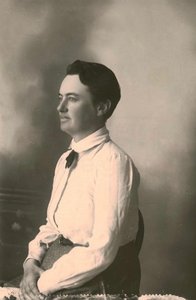
Mary Edith Durham
1863 - 1944 , United Kingdom
Quick Facts
- Artistic Movement Or Style: Anthropological art
- Date Of Birth: 1863
- Date Of Death: 1944
- Full Name: Mary Edith Durham
- Nationality: British
- Notable Artworks:
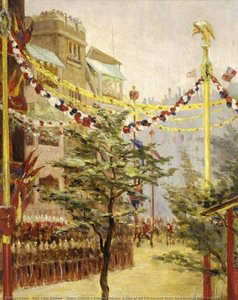
- Queen Victoria's Jubilee
- Funeral Procession Victoria
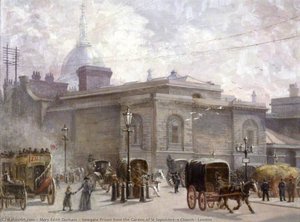
- Newgate Prison
- Place Of Birth: London, UK