 Preview
 Send
Send Share
Share
 Details

 Download
 Similars
 X-Ray
X-Ray Diaporama
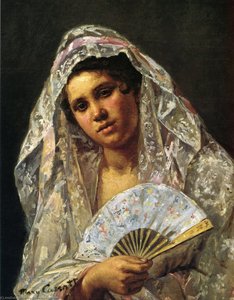
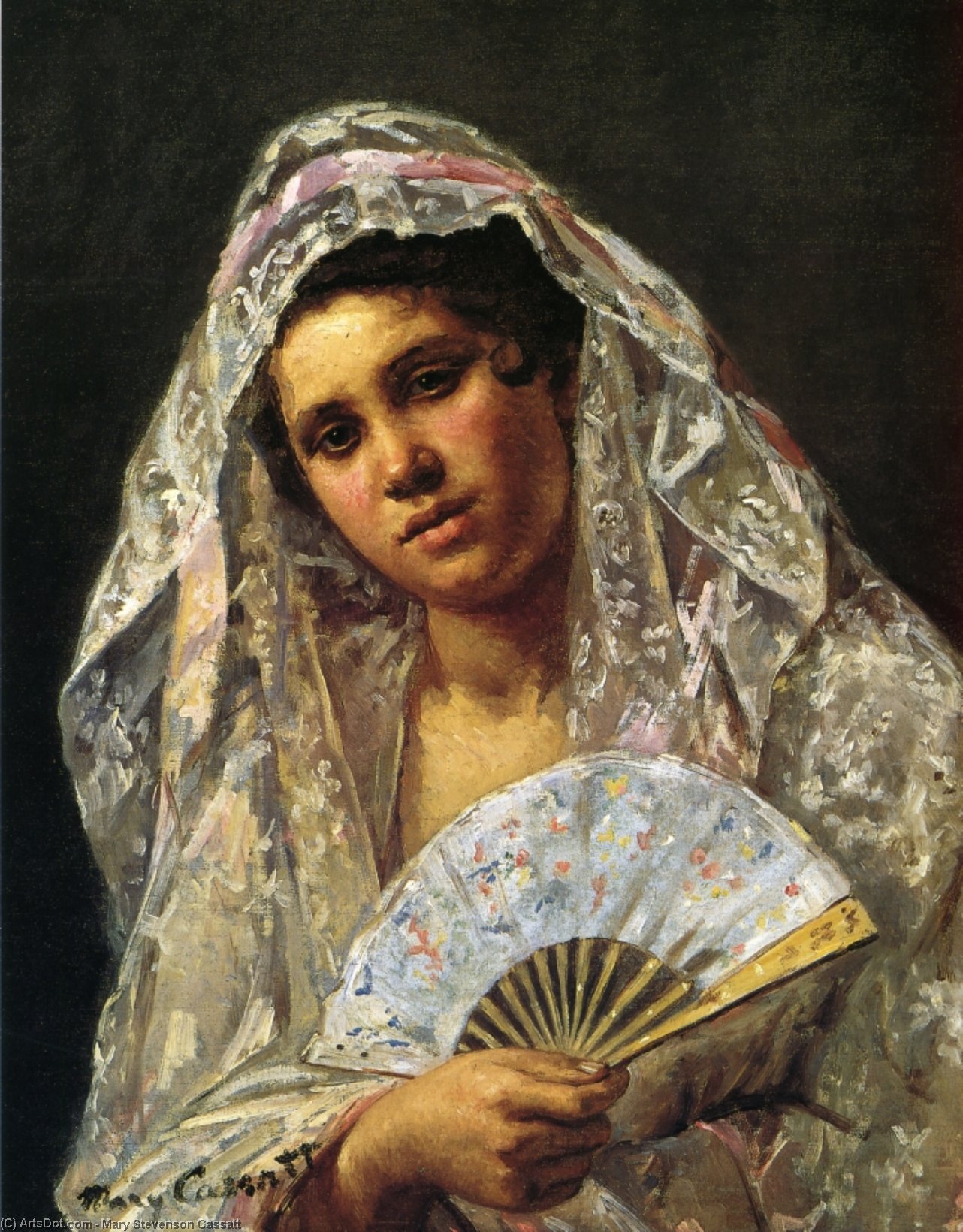
A Seville Belle


 Read More
Hand Made Oil Reproduction
Hand-painted oil on canvas in your size and frame, made to order by our artists. ( Buy Print Buy Image)




P118B $10

P118H $10

P118W $10

P438Z $10

P508JH $12

P508YH $12

P805H $10

P805Z $10

P919BZ $10

P919G $10

P919XJ $10

P959ZH $10

P968JZ $12

W106C $8

W218G $10

W218JH $8

W218Y $10

W307PJ $10

W316G $10

W316PJ $8

W316Y $10

W398PJ $8

W4111J $10

W500HY $15

W500JH $15

W692G $12

W849H $8

W940BG $15

W953PJ $8




Pick from our preset sizes that match the artwork's original proportions.

You may enter your own dimensions to fit a specific frame or space. If your selected size does not match the original image's proportions, we will either crop the artwork or extend the painting with additional hand-painted elements. A digital mockup will be sent for your approval before production begins.
Please note that the on-screen preview does not reflect the actual cropping or extension. Only the mockup will accurately show the final composition.
While custom sizes are available, we recommend selecting a dimension from the predefined list to preserve the original proportions.
After order, ArtsDot.com team will email client for instructions and provide a mockup preview
Worldwide Delivery () in 3/4 weeks instead of standard 5 weeks. (23 August). No compromise on quality.

Free Worldwide Express Shipping

High-Quality Linen Canvas

Full Shipping Insurance

Customs Tax Refund Guarantee

True Color Matching Guarantee

60-Day Return Policy (Defects Only)

100% Money-Back Guarantee

Bulk Discount Offer
 Glass option is only available in size under 110 CM

A Seville Belle
Reproduction Medium
Reproduction Size
-


Total Price
$ 263
Artwork Description
A Window Into Victorian Elegance
In the delicate interplay of light and shadow captured within Mary Stevenson Cassatt’s 1873 masterpiece, "A Seville Belle," we find much more than a mere portrait; we encounter a profound meditation on femininity and the quiet dignity of the Victorian era. As one gazes upon the central figure, a woman draped in luminous white linen, there is an immediate sense of being invited into a private, contemplative moment. Cassatt, an American virtuoso who found her artistic soul in the heart of France, utilizes a masterful pyramidal composition to anchor our attention. This structural choice does not merely organize the canvas; it creates a sense of stability and grace, drawing the eye upward toward the subject's face, where a subtle emotional resonance lingers, inviting the viewer to wonder about the thoughts behind her steady gaze.
The technique employed here is a breathtaking precursor to the full flowering of Impressionism. While the painting retains a remarkable level of realism—evident in the meticulous rendering of the delicate folds of fabric and the intricate texture of the fan held before her face—there is an unmistakable ethereal quality achieved through soft brushstrokes and a palette of muted pastels. The light does not simply strike the subject; it seems to emanate from within the scene, playing across the patterned wall in the background to create a sense of depth that feels both intimate and expansive. For the discerning collector or interior designer, this interplay of light and texture offers a sophisticated atmospheric quality, making the piece a versatile centerpiece capable of bringing a sense of timeless tranquility to any curated space.
The Impressionist Gaze and Historical Resonance
To understand "A Seville Belle" is to understand the revolutionary spirit of its creator. Emerging during a period of significant artistic upheaval, Cassatt was a key figure in the movement that sought to break free from the rigid constraints of academic tradition. Unlike many of her contemporaries who focused on grand historical narratives or social hierarchies, Cassatt turned her lens toward the private, domestic spheres of women’s lives. In this work, she avoids the performative displays of status common in Victorian portraiture, choosing instead to portray her subject as an individual possessed of her own interiority. The presence of the fan and the delicate pink ribbon around her neck serve as subtle symbols of grace and refinement, yet they never overshadow the psychological depth of the sitter.
For those seeking to adorn their homes with art that tells a story of resilience and beauty, this painting serves as an enduring emblem of the Impressionist legacy. It captures the ephemeral—the fleeting effect of light on cloth, the momentary stillness of a pose—and renders it permanent. Whether viewed as a historical document of 19th-century elegance or as a stunning example of coloristic mastery, "A Seville Belle" continues to captivate. It remains an essential acquisition for anyone who appreciates art that transcends time, offering a sophisticated touch of history and a soulful connection to the delicate beauty of the human experience.
Related Artworks
Artist Biography
A Life Dedicated to Impressionism and Domesticity
Mary Stevenson Cassatt, a name forever linked with intimate portrayals of women and children within the radiant world of late 19th-century Impressionism, forged an exceptional path as an American artist who discovered her artistic sanctuary in France. Born on May 22, 1844, in Allegheny City, Pennsylvania – now part of Pittsburgh – Cassatt’s upbringing was steeped in privilege and a cultivated awareness of culture. Her family, with roots tracing back to French Huguenots, placed high value on education and travel, instilling within young Mary a cosmopolitan perspective that would profoundly shape her artistic vision. While societal norms often confined women to domestic spheres, Cassatt's mother, Katherine Kelso Johnston, actively encouraged her daughter’s burgeoning interest in art, recognizing and nurturing a talent that defied convention. This early support proved invaluable as Cassatt navigated the challenges of pursuing a professional career within a male-dominated field.
From Philadelphia to Parisian Immersion
Cassatt's formal artistic training commenced at the Pennsylvania Academy of the Fine Arts in Philadelphia at the age of fifteen, a bold step for a young woman during the Civil War era. Despite encountering skepticism and subtle discouragement from some instructors and fellow students, she persevered through years of diligent study. However, feeling constrained by the academy’s deliberate pace and traditional methods, Cassatt sought broader horizons. A pivotal moment arrived in 1866 when she relocated to Paris, accompanied by her mother and family friends as chaperones. This move marked a turning point in her artistic development. She studied privately with established artists affiliated with the École des Beaux-Arts, including Jean-Léon Gérôme, absorbing technical skills while simultaneously immersing herself in the burgeoning Parisian art scene. It was during this period that Cassatt began to gravitate towards the innovative ideas of the Impressionists, a group challenging academic conventions and striving to capture the fleeting moments of modern life. A particularly significant relationship blossomed with Edgar Degas, who recognized her exceptional talent and invited her to exhibit alongside the Impressionist circle. Their connection extended beyond exhibition; Degas became a mentor, encouraging Cassatt’s exploration of printmaking techniques, especially color aquatint, which would become an integral part of her artistic repertoire. He profoundly influenced her compositional choices, particularly in his emphasis on asymmetrical arrangements and cropped figures – elements that would come to define her unique style.
Capturing Modern Womanhood: Style and Themes
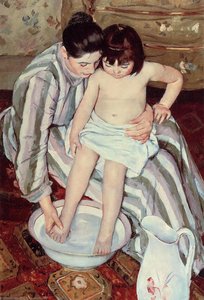
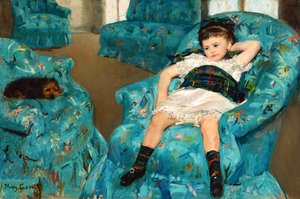
Cassatt’s artistic style evolved to embrace the hallmarks of Impressionism – visible brushstrokes, a focus on light and color, and a commitment to depicting contemporary life. Yet, she infused her work with a distinct clarity and precision that set it apart from some of her contemporaries. Unlike many male Impressionists who favored landscapes or Parisian nightlife, Cassatt centered her art around the social and private worlds of women, particularly mothers and children. She portrayed scenes of domesticity – bathing rituals, tea parties, quiet moments of connection – with remarkable intimacy and psychological depth. Her paintings are not merely depictions of everyday life; they are sensitive explorations of maternal bonds, female relationships, and the complexities of modern womanhood. Key works like The Boating Party (1894), The Child’s Bath (in various versions), and Little Girl in a Blue Armchair exemplify her ability to capture fleeting moments with both technical skill and emotional resonance. Furthermore, Cassatt was deeply influenced by Japanese *ukiyo-e* woodblock prints, evident in her compositions' flattened perspective, bold color choices, and elegant simplicity. This Japonisme influence added another layer of sophistication to her already distinctive style, influencing her use of pattern and the arrangement of forms within a space. She admired the way these prints captured everyday life with such directness and grace, qualities she sought to emulate in her own work.
Legacy and Historical Significance
Mary Cassatt’s contributions to the art world extend far beyond her captivating paintings and masterful prints. Often recognized as one of the “three great ladies” of Impressionism, alongside Berthe Morisot and Marie Bracquemond, she shattered barriers for women artists and paved the way for future generations. She played a vital role in bridging American and European art, introducing Impressionist ideas to an American audience and significantly contributing to the development of American Impressionism. Her work offered a nuanced and sympathetic portrayal of women’s lives during a period when they were often marginalized or stereotyped in art. Her depictions of motherhood are particularly celebrated for their honesty and emotional depth, challenging conventional representations and celebrating the strength and tenderness of maternal love. Today, her works are held in prestigious museums worldwide, including the Art Institute of Chicago (The Child’s Bath), the National Portrait Gallery in London (a portrait by Degas), and countless other institutions, ensuring that her legacy continues to inspire and resonate with audiences around the globe. She remains a powerful symbol of artistic independence and a testament to the enduring power of art to illuminate the human experience.
Further Exploration
- Online Resources: Explore Mary Cassatt’s life and work further through resources like Wikipedia (https://en.wikipedia.org/wiki/Mary_Cassatt) and ArtsDot.
- Museum Collections: Discover her masterpieces in renowned museums worldwide, including the Art Institute of Chicago and the National Portrait Gallery in London.
- Related Artists: Delve into the works of Edgar Degas, Berthe Morisot, and Marie Bracquemond to understand the broader context of Impressionism and the contributions of women artists during this period.
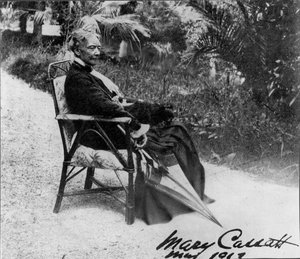
Mary Stevenson Cassatt
1843 - 1926 , United States of America
Quick Facts
- Artistic Movement Or Style: Impressionism
- Artists Or Movements Influenced By This Artist: ['American Impressionism']
- Artists Who Influenced This Artist:
- Edgar Degas
- Jean-Léon Gérôme
- Date Of Birth: May 22, 1844
- Date Of Death: 1926
- Full Name: Mary Stevenson Cassatt
- Nationality: American
- Notable Artworks:
- The Boating Party
- Child's Bath
- Little Girl in Blue Armchair
- Place Of Birth: Pittsburgh, USA
Related Articles

White on Canvas: 10 Masterpieces & Timeless Elegance for Your Home Decor
Explore 10 iconic white paintings by Monet, Whistler & Rothko! Discover the stories behind these serene masterpieces and their impact on art history. Find museum-quality reproductions for your home decor at .
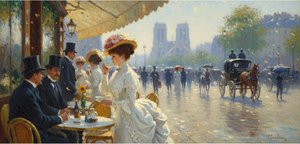
Impressionistic Realism's Finest: 10 Masterpieces for Your Home | ArtsDot
Journey through Impressionistic Realism with 10 iconic masterpieces by Monet, Renoir & Van Gogh. Explore art history, techniques & find museum-quality reproductions for your home at ArtsDot.com. Discover all masterpieces online!
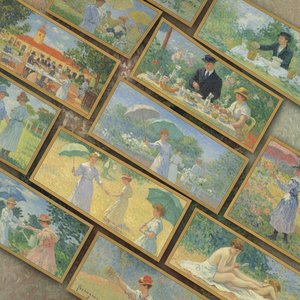
Renoir's Masterpieces: Explore 25 Iconic Paintings & Bring Art Home | ArtsDot
Explore 25 iconic Pierre-Auguste Renoir paintings! Discover the stories behind Impressionist masterpieces like 'Dance at Le Moulin de la Galette' & 'Luncheon of the Boating Party'. Find museum-quality art reproductions and elevate your home decor with ArtsDot.com.